
Translated material
The State Duma approved amendments to the law on local self -government: mayors will be selected by decision of governors
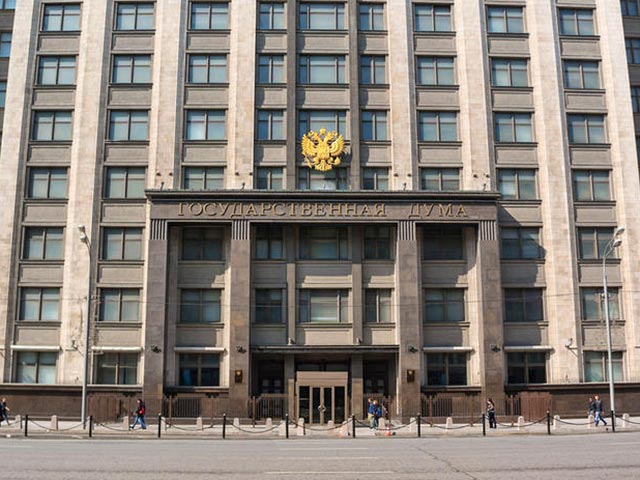
The State Duma Committee on the federal structure and local self -government on Thursday approved the amendments to the bill on municipal reform, recommending to adopt it in the second and third, final, reading on May 20. By virtue, the law may enter in early June. According to the Chairman of the Committee Viktor Kidyev, the deputies decided that the mayors could nevertheless be elected by the population, but the governors would finally determine the voting procedure, the Vedomosti newspaper writes.
The bill prepared by a group of members of the United Russia faction, led by Vyacheslav Timchenko, was adopted by the State Duma in the first reading on April 15. According to RBC Daily , its main innovation was the approval of the new model of local self -government - the city district with intracity division. They provided for the abolition of direct elections of mayors and deputies of city thoughts.
From the district councils it was proposed to delegate deputies of city thoughts, and of them, in turn, to choose the heads of cities. At the same time, the institute of city managers for this model was supposed to be mandatory. Currently, municipalities are divided into several types: into urban districts and municipal areas that have rural and urban settlements.
The reform caused harsh criticism of representatives of many regions of the country, the newspaper Moscow Komsomolets notes. As a result, the Kremlin prepared a large package of amendments, and on May 15, members of the specialized Duma committee approved them without discussion, the newspaper writes.
The amendments identified two options - multi -stage elections or direct election of mayors and deputies. The scheme will be selected in the regions. There are several options to choose from. The city municipal council can be created from among the deputies of the intracity districts, and can be elected by the population in direct elections. In the first case, regions can introduce representative offices for areas depending on their number.
The method of empowering mayors of cities will also determine the power of the subject of the federation. Two methods are spelled out in the bill - the elections by the population or the election of the city council from among local deputies. The elected mayor can lead the city administration, and he cannot be elected by the deputies: he will become the head of the City Council, and the executive power will be transferred to the city manager. The subject of the Federation will determine the sources of budget revenues of the intracity districts in cities.
A significant part of the amendments corresponds to what, after the first reading, the Institute of Social, Economic and Political Studies (ISEPI), which was close to the Kremlin), told Vedomosti Deputy Head of the Institute, Alexander Glakeov. He called the amendments rational and reasonable, and also noted that the legislation not only provided variability to the regions, but also added an option in which the mayor is elected by the people, but remains the head of the administration.
State Duma deputy Dmitry Gudkov criticized the adopted amendments, noting that now the elections of mayors are given to the governors and they will be able to single -handedly withdraw mayors. The parliamentarian himself proposed electing deputies of the City Duma only directly and cancel the institute of city managers. In turn, the head of Yekaterinburg, Evgeny Roizman, expressed the opinion that the reform was invented with the only purpose - the abolition of direct elections of mayors.
Political scientist Mikhail Vinogradov told RBC Daily that the bill was originally ploting as a absenteeism, and its authors wanted to show that the right to decide was not given to federal and municipal authorities, but to the regions.