
Translated material
Swamp infinity
The investigation in the "case of May 6" was extended until November - it means that there will be new detentions and arrests
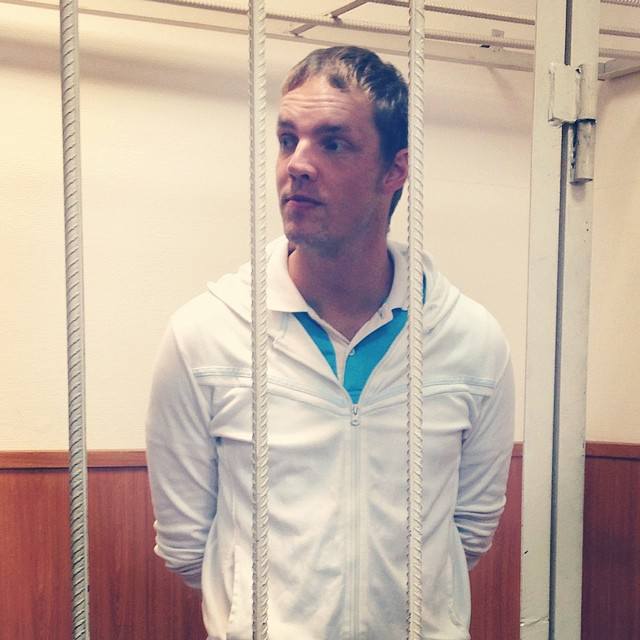
Dmitry Ishevsky, born in 1983
Part 2 of Art. 212 ("Participation in the riots"), part 1 of Art. 318 ("Application of violence against a representative of the authorities")/Photo: Margarita Zhuravlev/"Rain"
"Participation in the riots" - Art. 212 of the Criminal Code of Russia belongs to the category of serious crimes against public security and public order. It provides for a ten -year statute of limitations. About the same may be investigated by the "swamp business". Until it is closed, not one of those who was May 6, 2012 in Bolotnaya Square will be able to feel safe. Everyone may be at risk - among those to whom they will come with a search or call for interrogation. And so happened with the 30-year-old Muscovite Dmitry Ivsky. He became the thirtieth person involved in the "Mass Massage Affairs on May 6."
Ishevsky is not a civil activist and not an opposition, but he went to protest rallies and was detained at one of them. At the first interrogation, the investigator suggested that Ishevsky testify that his business was considered in a special order, he did not agree.
On May 28, the judge of the Basmanny Court of Moscow Arthur Karpov took Ishevsky in custody. Explaining the need for an arrest for the new “swamp” defendant, investigator Dmitry Gorelov said that, while on Bolotnaya Square on May 6, 2012, Ivski threw hard objects at least four times, tore off the helmet from one of the law enforcement officers, and also interfered with the detention of other participants in the action.
"
The effect of intimidation worked, especially against the background of public depression due to events in Ukraine
"
An additional circumstance, allowing, according to the investigator, to take Ishevsky in custody, was that he worked abroad, learned on the flight attendant, which means that he would fly abroad and in the future could hide from the investigation. Ishevsky’s arguments that he had taken away a passport and he could not leave Russia, they did not make any impression on the judge.
How many times over the past two years we have read and heard similar accusations! And then in court they saw the so -called victim police officers who could not really recognize the defendants and explain what and from whom they “suffered”.
“What the victims say in court is not important, the main thing is to hold accountable,” explains the head of the Rosuznik project Sergey Vlasov, who provides legal assistance to the detainees in the “swamp case”. - The investigation is still extended until November, it can continue to extend it. And this means that searches, detention and arrests will continue. ”
At the very beginning of the investigation, says Sergey Vlasov, the investigators watched the kilometers of photo and video materials. The investigation is interested in those who were detained on May 6, 2012 in administrative order, and those who somehow took part in clashes with police officers. In the risk zone - people who were taken on other protests and did not “twist” on Bolotnaya on May 6, although they were there, as in the case of Ivhevsky.
The third category of people who can become defendants in the “swamp business”, such as Alexei Gaskarov, are famous activists or opposition.
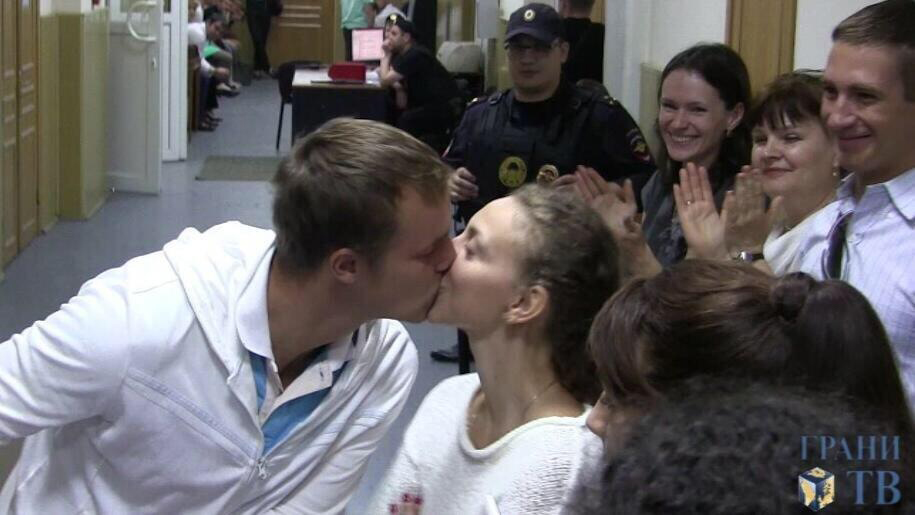
Dmitry and Maria Ishevsky before a court hearing. Basmanny Court, May 28, 2014 /Photo: Video Screenshot Grani.ru
| *Cm. "Swamp and forgotten", The New Times No. 17 of May 26, 2014 |
Ishevsky is defended by lawyer Dmitry Dubrovin: he defended Dmitry Rukavishnikov, amnestied in December last year, and Denis Lutskevich, convicted of 3.6 years of the colony. The “swamp case”, Dubrovin believes, continues because the trial turned out to be very promising for the Investigative Committee: in the spring, the case was successfully driven through the court, the version of the prosecution was confirmed, and now, in the second process, in the Zamoskvoretsky court* everything is going on the dancing. “The first, second wave of searches, detentions, arrests passed. Now the third wave has gone. SK employees need to work out their bonuses, salaries, titles, ”the lawyer is sure.
"Swamp business" grows like a snowball. This was also happening with the Yukos case, according to which more than three dozen people were detained, arrested or criminalized in absentia.
We have to admit: the initiators of the “Affairs of the Massions of May 6” achieved their own, the effect of intimidation worked, especially against the background of public depression due to events in Ukraine. Almost no one goes to court hearings in the “swamp case”, and the opposition has not been conducting unauthorized rallies for a long time.
The society is inspired by a simple thought: it is dangerous to go to stocks, they can be detained, arrest, and put it. Moreover, people with crusts of the UK can come for you in a few years, when you already forget that it once happened on May 6, 2012 in Bolotnaya Square.