
Translated material
Archives of our time: "Epsilon-Salon"
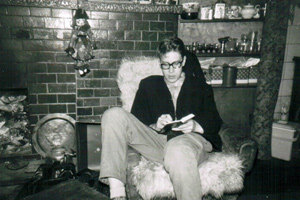
From all that they write and talk about the 1980s today-in books, articles, memories, necrologues and epitaphs-the most difficult thing is to realize that it was 30-35 years ago.
With predictably sclerotic properties of our memory and its chronic sentimentality, with personal neurosis, phobias and mania that have grown over many years (it is still believed that this is made up and offered like damage) our memories are what happened almost yesterday. That is why it seems, it seems, so sharply old in the external image and the psychosoma-sopyric likeness. That is why we are all the same, yesterday, - recklessly open to each other and sincere.
So it seems.
“Monday begins on Saturday” - it pleases, it is a motto and a call of youth. “We will live until Monday” is already a sacramental question. Not only the health, goodness of stars, but also the relationship.
A rare group (flow, direction, creative initiative) manages to survive until Monday. And today, a significant reason to talk about this: “Epsilon-Salon” 30 years.
***
In the spring of 1984, I accidentally got to the “critic diary” in the Central House of Artists - periodic meetings, held under the strict leadership of Stanislav Lesnevsky. Thirty people gathered in one of the rooms of the CDL (saturated with a sour party shower and restaurant incense and restaurant incense). Young and not very writers, critics, members of the joint venture, close to official literature and those who still thought about how ready to do without officialdom. Others, from underwriting, had such meetings, as they say, in view.
In the process of a long discussion of some acute literary question, the topic was focused: "How much does a person need to arise a literary generation?" Inquisitive "how much?" It was not listed on the official agenda, but only this moment of discussion I remembered from the whole evening.
The large -scale “generation” meant a literary association and every creative group plus not always creative parties. I do not remember hot controversy, but the conclusion was obvious: "One."
One bright and creative, habitually expressed now, personality is enough to make the next "-ym". This one, of course, is “not a warrior in the field”, it is overgrown with like -minded people, manifestos, promotions, collective collections, gatherings and performances. However, he is Breton, Ellington, Marinetti, Timothy, Kerouac, Dylan, Vysotsky, Brodsky, Picasso, Prokofiev, Pushkin, Prigov, Parshchiks (add to the taste of Vyskida: Gendeleev, Losev, Vs. Nekrasov ...) - is self -sufficient, and the “direction” was unlikely to take place without him. In the chosen fates - we take above - generation.
In the case of the creative group "Epsilon-Salon" he was represented by a couple. Poets, intellectuals Nikolai Baytov and Alexander Barash created a magazine 30 years ago, which came out of seven to nine copies (depending on the thickness of the cigarette papigeria). So many pages, and no more, broke the letters of the typewriter, so that the seventh -nine specimens turned out to be “blind” and poorly readable.
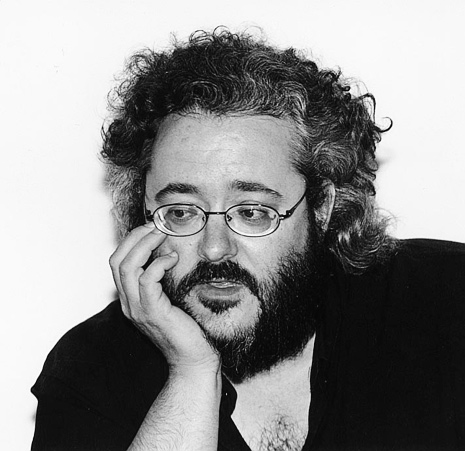 Alexander Barash
In the “History of Madness in the Classical Age,” Michelle Foucault argues that in medieval Europe they did not know crazy, until they began to build crazy houses. Prior to this, the phenomenon of insanity was simply not revealed, it did not exist.
Before the advent of the Epsilon-Salon magazine, there was no Epsilon-Salon group. There were Kolya Baytov and Sasha Barash-shy, but ambitious novice publishers, respecting each other, as well as a small group of Moscow-Petersburg authors. As it turned out, this was quite enough to go down in history.
In the history of unofficial poetry of the mid-80s, in which, with all its diversity, and leaving a mark, and it was not easy to figure it out.
The obsessive division of unofficial poetry into conceptual and metarealistic, already consisted of critics and culturalists Boris Groys, Mikhail Epstein and Konstantin Kedrov, did not clarify the situation. To reduce the literary diversity to the black and white stop-frame “concept-metalism” (“metametaphora” by Kedrov) seemed natural withdrawal from entropy, but this did not become more clearly.
With the previous period, it was easier. В четкой табели о рангах от групп и школ не было отбоя: неоклассицизм (И. Бродский, В. Кривулин, Е. Шварц, ...), объединение Черткова (Л. Чертков, С. Красовицкий, В. Хромов, ...), Лианозовская группа (Г. Сапгир, И. Холин, Вс. Некрасов, Е. Кропивницкий, ...), «филологическая школа» (Л. Лосев, V. Ufland, L. Vinogradov, S. Kulle, ...), ...
By the mid-1980s, the far-fetched confrontation of the conceptualists (Nekrasov, A. Monastyrsky, Dm. Al. Prigov, L. Rubinstein, V. Sorokin, ...) and metarealists (I. Zhdanov, A. Eremenko, A. Parshchikov, A. Aristov, Yu. Arabs, I. Kutik, ...) of the attention of critics have lost their "Moscow time", "polystyrene". (by the definition of Nina sincere) The chicks of the nest of Kirill Kovalji from "Youth", DOOS (K. Kedrov, E. Katsyuba, L. Khodynskaya), "Paradigm" (A. Alchuk, G. Tsvel), etc., etc.
We will not forget that the magazine “A -I” published by Igor Shelkovsky in Paris proposed to the Western gallerys and Slavists a Soviet neo -fiction, represented exclusively by the concept. No one could jump into the non -conformist car later. The authors of eight colorful numbers “A -I” (1979-1986) and compiled a canonical list of generals and generalissimums of the actual unofficial culture of that historical time.
It was necessary to somehow live with this for those who did not determine themselves in the coordinates of the above directions. It was already not enough to declare himself outside the dominant official aesthetics. It was necessary with all that pyette, which existed in relation to, for example, to the authors of “a-I” or the scandalous almanac “Metropol”, to somehow distance themselves from them.
The idea to create a group on aesthetic interests came to the head of many, but the thought of the then still not articulated PR (now Public Relations ) visited units.
The magazine is PR in action. Equally as the sensational Moscow “bulldozer exhibition” in September 1974, masterpieces of social art or three-letter “X * Y” in front of the mausoleum, laid out from flexible bodies of performanists (Osmolovsky group).
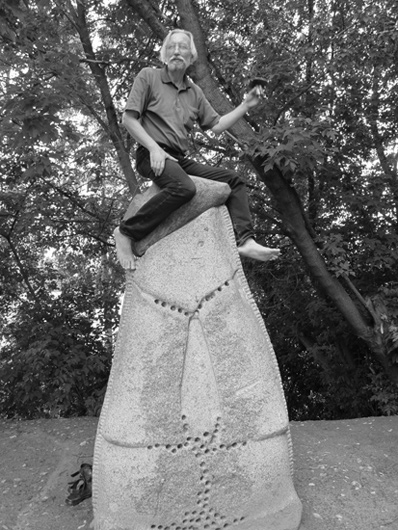 Nikolai Baytov
There would be a magazine, and there would be a group. And this turned out to be a true strategic step.
A Moscow (practically the only one at that time) appeared an independent magazine that met the aesthetic aspirations of its founders. And on its basis, the author’s composition of the magazine arose and corresponding to the views of Baytov and Barash.
It was hard to understand what united them. It would seem that there was no question of any single platform. But there was a feeling that like-minded people were published in Epsilon Salon.
So it was.
***
I recall our meeting (N. Baytov, A. Barash, G. Katsov) on the TPP-16, on Khoroshevskoye Shosse. This was a carefree time, which is already reflected in the “written testimony” of a number of authors. Our team of VOKhR, a typical example of a generation of janitors and watchmen (head of the shift of G. Katsov, valiant guards: writers A. Barash, A. Turkin, M. Dzyubenko, Jazzman A. Kirichenko, director of “Parallel Cinema” I. Aleinikov, artist L. Zubkov), was replaced once every three days, surrendering to each other for all working days.
We guarded the thermal power center is hardly worthy of the Mausoleum, but not a single drunken or half-drunk infection in all those years on the CHP-16 and went out (workers gracefully passed in alcohol delirium through the passing, but it was customary to turn a blind eye).
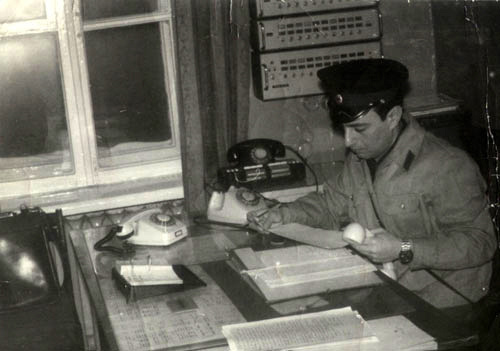 Gennady Katsov on TPP-16
In the days when our shift stood on the shift (what a style at once!), Any indecency occurred at the CHP. Often, from afar, poets and artists in an hour or two, Igor Aleinikov and his younger brother Gleb, shot part of their “parallel” films, Tubist and trumpeter Arkash Kirichenko after the next evening performance from the “Capella-Dixie”, and Lebedev, returned with a branded banner beer.
TPP-16 was an enterprise with an increased level of security. So that the enemy does not pass and the saboteur does not blow something, otherwise the three districts of Moscow will remain without light, heating, metro, street lighting.
The protection could be trusted.
On one of the shifts, most likely in 1985, Nikolai Baytov arrived at the TPP-16. The three of us retired in the “red corner”. There, surrounded by chairs, sun loungers, shedled by metal rods of windows and wall slogans Sasha Barash, Kolya Baytov and I discussed some other Epsilon Salon number and read their texts to each other. I read the stories. Some then entered one of the epsalon salon issues. Both plays and rhythmic texts. This was also the highlight of the magazine: a small circle of authors was represented in different genres separately.
Then I read the rhyme with the dedication of Sasha Eremenko, after which an awkward pause arose. They reverently conjured the concepts of conceptualists, my enthusiasm with a metarealistic drive seemed indecent. After I had to convince that “Moscow romantic conceptualism” is no less close to me.
***
Epsilon-Salon could not be called strictly periodic publication. He often went out with pauses of several months.
According to the aesthetic claims and the cultural terrain, “Epsilon-Salon” was like the unofficial Leningrad “Watches”, “37”, “Obvodnaya Canal”, “Mitin magazine” that had become popular in St. Petersburg Salons. Today we are talking about these magazines as elitist printed witnesses of the 1980s, and about the Epsilon Salon as a group of authors. In my opinion, united by coincidence of a number of circumstances.
Not “powerful”, but “a bunch”.
Already from the first numbers, V. Krupnik, I. Levshin, O. Dark, A. Kurgantsev (and articles were musician Sergey Letov, director Igor Aleinikov) took part in Epsilon-Salon. Publishers determined his aesthetics by publishing L. Rubinstein, Dm. Al. Prigova, devoting a separate number to V. Sorokin, after which those who somehow identified themselves were drawn to the magazine. So the Epsilon-Salon group appeared.
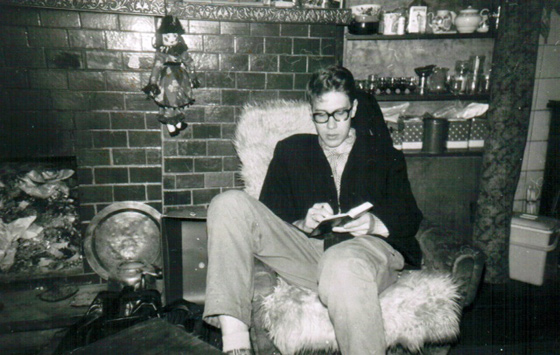 Igor Aleinikov
In the future, during the heyday of the Poetry club (1986-1989), which combined everyone and everyone, the authors of Epsilon-Salon were perceived as a certain literary association within the club, which in the encyclopedic foliant “Samizdat of the Century” (1997) received logical resolution (I bring from “Contents”):
"Epsilon-Salon"
Nikolai Baytov
Alexander Barash
Gennady Katsov
Igor Levshin
As already mentioned, the circle of the authors of the magazine was much wider. Just in the Encyclopedia “Samizdat of the Century”, conceptualists were identified in the group “Moscow Conceptualism”, S. Gandlevsky in “Moscow time”, in “STS-art”-T. Kibirov and M. Sukhotin [*] , in the “Poetry Club”-V. Strochkov, A. Levin, Yu. Gugolev, A. Turkin, in “Moscow of the 70s”-T. Shcherbina.
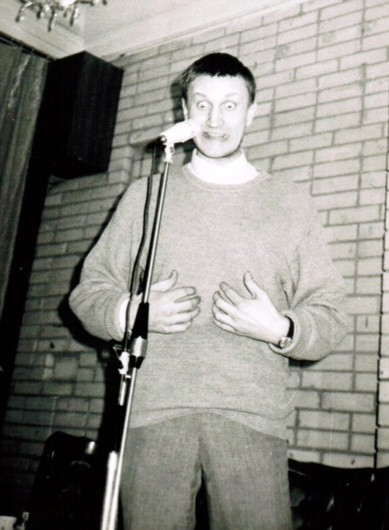 Andrey Turkin
The group lasted several years - in that active quality, characteristic of meetings, publishing projects, salon readings. In turn, they arranged copyright evenings. A salon was any apartment whose owner kindly agreed to receive guests. On average, twenty people gathered.
The first such meeting in my memory was held in the apartment of Misha Barash (on the Yaroslavl highway), Sashin's older brother. Misha is a thin, smiling, with a special sense of alliteration and the ability to invest in prose lines that are not overloaded with paths, a deep philosophical subtext (which is also characteristic of the poetics of his brother).
Dmitry Aleksandrovich Progov read the prose of Vladimir Sorokin. The author modestly sat in the corner of the room, moving away from the reader and concentratedly looking at the atmosphere of a bachelor apartment. In those years, Sorokin stuttered noticeably, and if it was possible to put up with this in communication, then reading aloud was contraindicated to him. Progov, however, remarkably pronounced not only his texts (I then learned from someone that Dm. Al. Taught melodeckamation almost in the theater on Taganka and Alla Demidova herself took lessons from him-for which I bought it, for that).
Gathered still dawn. Prigov read the fifth of the "norm". Letters to Martin Alekseevich were given an idea of Sorokin’s prose, although no one was warned that only the chapter from the volumetric text would be read.
Prigov read with rapture, losing, howling how they read the mantra, and choking on the farewell Abracadabra of the Sorokinsky syntax:
“Taga Modo Vata Modo. Tag Mogo Mara Pata. Tana threshold ... "
It was the theater of two actors: indifferent to what is happening Sorokin and Camulating, splashing saliva, to the finale of throwing the text to Faltset Dmitry Alexandrovich Prigov.
It was the evening of the two authors of Epsilon Salon.
***
One of the February evenings, I read the story “And you, Capernaum ...” those present-the authors of “Epsilon-Salon”, some musicians and artists unfamiliar to me. Lenya Zubkov, an artist with thin features, as if copied from the “self -portrait” of Dürer (from that 1500 years), provided his apartment on such an occasion.
I finished the story just a few days before reading. Reprinted from a draft on a type of day in two. I read at the evening for about an hour. I read, more and more wondering how the public has the patience of listening to a prose of this length.
The story is about the idiotic struggle of his heroes with a tiger. At first with a tiger from a cat family, then with a tiger shark and, on the code, with the fascist tiger tank. At the end, one of the heroes dies ...
I finished reading. Coffin silence. About a minute. Then the listeners began to rise and bring down into the kitchen.
There were already open wine bottles.
It was difficult for me to guess how such a reaction should be perceived.
They were also silent in the kitchen. Then one of the ladies said: "I still can’t leave." I breathed a sigh of relief.
Those who entered the circle of Epsilon Salon were distinguished by a certain intimate feature named “sensitivity”. In this I also see the merit of its creators.
***
Listenies-readings were held and, as they say, on the road. So, at a meeting with Yuri Mamleev, who first arrived in Moscow from Paris (the beginning of perestroika; the writers of emigration, at first timidly, fell into their homeland), I saw Epsilon-Salon in full force. The meeting with the philosopher and prose writer took place in the salon of Natasha Osipova on Pushkinskaya (perhaps I am mistaken, the matter is longing). By the way, at that evening, for some reason, I came up with a completely conceptual idea that a prose writer is not the name of the medicine.
Mamleev read his stories - with corpses, zombies, clones, infernal abysses, surrealism and other signs of the end of the world. I occasionally looked at Sorokin. He listened with a detachment, it seemed, without interest.
With Sasha Barash, we sincerely came to an agreement at the end of the evening that the Mamleevskaya prose is inaccurate in the current literary context. Argergard. By ear, at least.
In general, Sasha experienced the dialectics of the literary process with optimism. So, having enthusiastically deciding the Swedish Academy on the Nobel Prize in Literature for 1987, Barash remarked: “Brodsky now proved to everyone! And showed. Our business is to move on. ”
It sounded beautifully. I remember.
With Sasha Barash, I have developed the warmest and confidential relationship. After my departure from the USSR in January 1989, we only corresponded and called up. And in the summer of 1993 they spent several days together when I visited Israel. Sasha’s talk that a special Mediterranean poetic note, an unusual Levantine diction is close to him and Cavaphis has a certain influence on him, I perceived by that time for granted. Almost all Russian -speaking Israeli poets who I met in the United States and on my trip spoke in a similar spirit.
I was ready to share their experiences. Only in conversations with Sasha Barash to the Mediterranean was added another nicer note: it is a pity that he, having passed along the emigrant route (Moscow-Vienna-Rome), was not able to wrap in New York in 1989. Here we could do a lot together.
***
A special place in Epsilon-Salon was occupied by Igor Levshin. Always quiet, inconspicuous, he rarely read in public, in nasty cases he was strongly worried during reading.
I liked his poems and prose at once. He, as it turned out, was familiar with what I was doing. Igor wrote with compressed, tightly sealed phrases (point at the end - as a burner burn), with preychinsky laconicism and Sorokinsky details. If for Sasha Barash literary landmarks, according to his own definition, in those years were Mandelstam, Nabokov and Brodsky, then Levshin clearly gravitated towards Vvedensky, Sologub and Andreev. At least, so I felt it.
***
I will try to explain what allowed Epsilon-Salon not to get lost among many different literary movements of that time.
By the mid-1980s, “Conceptualism-Metarealism” brought by critics to the floodplain pair of antonyms, the literary situation annoyed many. It was necessary to somehow get rid of this.
In general, the sketch: conceptualism quotes expresses a certain social hero characteristic of mass consciousness (like pop art: the strokes “Marilyn” or the campbell's soup banks Warhol is a parallel to the Prigovsky “Militsaner” with Reagan). The background, the entourage with all the corresponding tools (metaphors, comparisons, epithets, etc.) here are of third -rate value. The hero is recognizable, he is emphasized in the mass consciousness. He is generally ready to consist of one quotes and direct speech. Такому персонажу, как в анекдоте, достаточно быть: а) широко узнаваемым; б) парадоксальным.
В метареализме все с точностью до наоборот. Поэтический троп — главное. Парадоксальная метафора, головоломное сравнение делают текст малоузнаваемым. Такой флоре и фауне, построчно мутирующей в тексте, герой не нужен вообще. За «глухими металлургическими лесами» взгляду сразу открывается «море, как склад велосипедных рулей». Мир есть декорация, в которой все всему подобно («в подстреленной птице плачет усталая пуля...»).
У концептуалистов же заштампованные декларации самодостаточны. Социально значимые коллективные образы, расхожие литературные и языковые шаблоны высказывают себя через концептуальные тексты. Что актуально и сегодня, когда цивилизация текста («все есть текст», текст себя проговаривает через нас) трансформировалась в цивилизацию образа (все есть образ, образ смотрит нами с билбордов, на ТВ, в интернете, Y ou T ube ). Все остальное не суть.
Собственно, классическая литература — это сюжетная последовательность реакций/рефлексий литературного героя на топографию пространства. Поскольку точка-образ придает перспективе глубину, то с ее появлением стартует отсчет времени (глубина = время; длительность, а не протяженность). Классическое произведение состоит, прежде всего, из взаимоотношений писателя со временем (допустим, «Онегин» как энциклопедия русской жизни или Дон Кихот как пародия на популярный в средневековой Испании образ рыцаря) и пространством (замкнутым, как у Кафки, или разъятым, как у Платонова). Что в одном из эссе определено Иосифом Бродским примерно так: литература — метафизическая истина, сообщенная на любом возможном наречии.
В 1980-х литературоведам и критикам повезло в определенном смысле: концептуалисты и метареалисты были крайне противоположны, разрабатывая образ (время) и интерьер (пространство) обособленно. То, что синтетически присуще традиционной литературе, распалось на два «-изма» — и критикам 1980-х можно было только позавидовать. Тут и структурализма не надо, факт распада очевиден.
Никакому литературному объединению за этой славой было не угнаться. Однако была еще одна тайная тропа к признанию, которой удачно и воспользовались отцы-основоположники «Эпсилон-Салона». Помогла не эстетика (замечательные, самобытные тексты Н. Байтова и А. Бараша естественным образом продолжали концептуальную традицию высказывания). Помогла этика.
Западные художники 1970-х противопоставляли концептуализм бунтарским направлениям 1960-х годов. То есть диаметральные establishment — non-official приобрели третью составляющую — underground . Картина из плоскости перешла в объем, получив третью координату.
В России начала-середины 1980-х общекультурная обстановка также намекала на существование трех мало сообщающихся между собой сфер: официальная культура, неофициальная и андерграунд. И если в официальной литературе все места были заняты членами Союза писателей СССР, а концептуалисты являли собой феномен неофициальной культуры (признанный на Западе литературный круг «А—Я»), то фигуры андерграунда существовали сами по себе, гордые и неприступные.
Помнится, в детстве родители покупали нам переводные картинки. Тусклая, невнятная бумажка опускалась на 30 секунд в теплую воду. Затем ее надо было приложить картинкой вниз к поверхности писчего листа или твердого предмета и, легко надавливая сверху тряпочкой, снять верхний влажный слой. На поверхности оставался яркий, медленно подсыхающий рисунок. То, что сделал «Эпсилон-Салон», было сродни проявлению такой картинки. Авторы московского андерграунда, не желавшие о себе заявлять никак, писавшие в стол и для узкого круга единомышленников, обособившихся как от официоза, так и от неофициалов, вышли в свет.
Подбить их на это было непросто. Дело в том, что существование в андерграунде — это крайне специфически проживаемая жизнь. Как кто-то сказал о русском андерграунде: единение подпольной борьбы с внутренним подпольем. В 1980-х годах все, что происходило в актуальной доперестроечной, достаточно тухлой московской культурной жизни, представителей андерграунда не волновало. Интерес категорически отсутствовал. Московский андерграунд был герметичной, автономной вселенной.
Об одной из ее малых «галактик» мы сегодня знаем благодаря «Эпсилон-Салону».
Согласитесь: большое дело.
Геннадий Кацов
Нью-Йорк, май 2014 г.
[*] С Мишей Сухотиным связана смешная история, о которой он, естественно, не догадывается. В 1994 году в Нью-Йорке вышла в свет моя книжка «Игры мимики и жеста». Один московский поэт, проживавший к тому времени уже в Нью-Йорке, позвонил мне по телефону, чтобы высказать свои претензии. Их было две, и речь шла о плагиате.
— У тебя есть текст с именами собственными («Русские в Нью-Йорке». — Г.К. ). Неужели ты не знаешь, что у меня написано стихотворение, в котором я перечислил имена и фамилии?
Поначалу я подумал, что поэт шутит. Или весьма не в себе. Мои доводы о том, что работать с именами собственными есть литературная традиция еще со времен Антиоха Кантемира и Симеона Полоцкого, а мои с поэтом тексты получились разными, поскольку у нас были разные задачи, — эти аргументы впечатления не произвели.
Следующая претензия прозвучала так: «Ты написал что-то такое в ключе “Сталин — это Ленин сегодня”, но ведь я написал раньше!»
It was funny. И не только потому, что я вовсе не обязан был знать и помнить тексты этого поэта.
Излишне было говорить, что не может быть у моего собеседника эксклюзива на хрестоматийную сталинскую формулу. И о том, что, кроме первоисточника, наши тексты не пересекаются и ничто иное их не объединяет. Они категорически разные как на первый, так и на второй взгляд.
В чем-то убедить моего собеседника не представлялось возможным. И здесь мне пришел на помощь Миша Сухотин. К его текстам незадолго до моего отъезда из СССР я стал относиться с большим интересом и сегодня, двадцать лет спустя, считаю его одним из наиболее значимых поэтов нашего времени.
Я напомнил моему телефонному собеседнику, что у Сухотина есть похожий текст, в духе моих с поэтом (из «Центонов», Tristia ):
Мы говорим Л, подразумеваем П (не Пушкин),
Мы говорим П, подразумеваем Л (не Лермонтов),
Мы говорим не Лермонтов, подразумеваем Лета, Лорелея...
— Если когда-нибудь ты решишь воспользоваться классическим дуплетом «Ленин» и «партия» из поэмы Маяковского, — порекомендовал я поэту, — не забудь получить разрешение у Сухотина. Он тебя опередил.
Дальнейший разговор с поэтом и наши последующие с ним отношения оказались бесперспективными.