
Translated material
Why are the Crimea not Sudeters
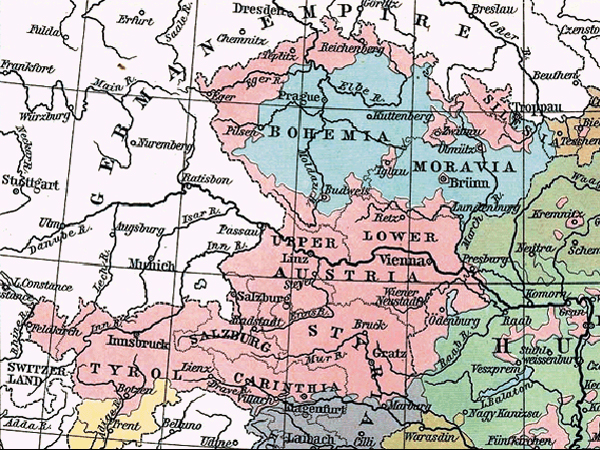
The story with Prince Charles, who compared the situations of Crimea and the Sudesta, turned out to be a little strange. Here, even surveys are conducted on the topic of rights or not, but the most banal remains behind the scenes: and, in fact, what and what is compared with?
The logic of comparison is understandable. If you decide that something is similar to what has already been, then from analogy you can get out the development of events. But the problem is that nothing is ever repeated. It’s like generals who are very fond of always preparing for the past war. Moreover, the situation with the Sudes is really completely different from the Crimean.
The topic arose in March when the Minister of Finance of Germany Wolfgang Shoible about Crimea said that " Hitler used similar methods in the Sudes ." Angel Merkel did not agree: " I am considering the annexation of Crimea as a separate case ." Well, yes, in her opinion, “it is definitely about violation of international law,” but this is another story. And the deputy chairman of the Parliamentary faction of the SDPG Rolf Mutsenchi reasonably explained that " the dubious parallels interferes with the efforts of the German government to resolve the crisis ." Well, yes, this is bad to act according to analogies, besides - far -fetched.
What are the Sudeters? Here is the shortest explanation (yes, from Wikipedia) “ The annexation of the Sudeten region is the first stage of the occupation of Czechoslovakia by Nazi Germany before the Second World War, carried out on October 1-10, 1938 with the silent consent of the UK, France and Italy in accordance with the Munich agreement.
In 1938, the Pronatisian Sudeten German Party provoked large riots in the border regions of Czechoslovakia, turning to the German leadership with a request for help. Taking advantage of the numerical and military advantage, Germany annexed the Sudeters, by 90 % inhabited by the Germans. According to the Munich Agreement of 1938, the Sudetsk Region became part of Nazi Germany ... "
Already about this certificate, it is clear that there are few similarities. Given, for example, the fact of the presence of a Munich agreement. As well as the lack of German military base in the judges. But it was even more confusing there.
It all started with the collapse of Austria-Hungary. Czechoslovakia gained independence, while almost a quarter of the population were the German -speaking Sudeters. They lived compactly in the Sudeten region and in a dispersed version in Slovakia. There were no special interethnic conflicts (with the Czechs).
In January 1933, Hitler became the chancellor of Germany. In the fall of the same year, the “German Patriotic Front” was created under the leadership of Konrad Genlein, the official requirement of which was the autonomy of the Sidet as part of federal Czechoslovakia, and unofficial (that is, the present) - the accession of the Sudeten region to the Third Reich. A year later, the first mass rally of the front was held, which gathered 20 thousand people. And Crimea had autonomy as part of Ukraine. Again, there was no political force in the Russian Federation that would act under the slogan to "return the Crimea."
Berlin began working with the Sudes (financing, party literature, agitators). The word "compatriots" was introduced into everyday life - despite the fact that in one state the Germans and the Sudeters never lived. Here yes, there is some similarity, about support - to recall only Luzhkov. But he did not lead to reunion. Well, the topic of "compatriots" has existed for a long time and completely stupid.
Next, a Sudetsk-German party took shape, which only did what stated the oppression of Prague of "compatriots." Well, Prague all the time satisfied Genlein's requests: a wide representation of ethnic Germans was ensured in national meetings, the rights of local self -government were expanded, education in their native language developed.
In February 1938, Hitler turned to the Reichstag with an appeal "to pay attention to the terrible living conditions of the German brothers in Czechoslovakia." In March, after Anschlus Austria, Genlein arrives in Berlin, where he receives new instructions. In April 1938, the Genleinov Party hosts the Carlsbad program, which contains the requirement of national-territorial autonomy, and in May puts forward a referendum to join the Sudeten lands to Germany. On May 22 - on the day of the municipal elections - a putsch was appointed in order to take control of the Sudeters and turn these elections into a plebiscite. At the same time, the Wehrmacht began the nomination of his divisions to the border.
Here, as it were, something close, but no. The Czechoslovak government carried out partial mobilization in the country, entered the army into the Sudeters, suppressed the Genleinites' performances by force. Well, Kyiv in his case did not do anything detailed.
Further, despite the fact that Prague agreed to the creation of German autonomous regions, on September 12, 1938, the NSDAP Congress adopted a resolution demanding that Czechoslovakia provide self -determination to the Sudeten Germans. In a speech at the congress, Hitler said that behind the "exhausted" Sudeten Germans "stands an armed German nation." On September 13, an armed uprising began in the Suddenes. Sounds again?
No. The Czech government introduced martial law in the regions inhabited by the Germans, put forward troops there and in two days the rebellion was suppressed, and Genlein fled to Germany. It is easy to compare with the actions of the Ukrainian military in the Crimea.
It would seem that everything. No, further, in fact, Nouhau arose, a media. Berlin began to spread pictures of the "atrocities of the Czech military." And television: Germany since 1936, from the Olympic Games in Berlin, began to use television for propaganda purposes. At the same time, Hitler, in any case, claimed that he wanted peace, but in this situation a war of the widest scale is possible. As a result, the West completely ceased to understand the situation. Well, yes, television is a sacred thing, used, but just in the case of Crimea it was not applied. And no “evidence” was presented then, this is not even a situation of Slavyansk.
Well, then, on September 9, the ambassadors of Britain and France handed the Czech Benes a demand for their governments to withdraw troops from the conflict zone and transfer to Germany the territories inhabited by "compatriots." And on September 30, the Munich Agreement was signed between Germany, Italy, France and Great Britain (Czechoslovakia was not present there in principle). Not only the Sudeten region departed from Czechoslovakia to Germany, but also all areas where the Germans theoretically amounted to over 50% of the population.
It is difficult to imagine similar actions of the West regarding the transfer of Crimea of Russia ... Well, according to trifles - for example, in the Sudestes there were no military bases of Germany, and the inhabitants of Crimea actually lived in the same state with the Russians. Autonomy did not arise in the judges, and in the Crimea - one way or another - the decisions made precisely existing structures (here we can see that there is nothing in common between the situations of Crimea and, for example, Lugansk). So nothing is similar here, except that after the collapse of empires, sometimes there is a playing out of the situation, in one way or another.