
Translated material
William Blank: "It is impossible to live with composer work even in Switzerland"
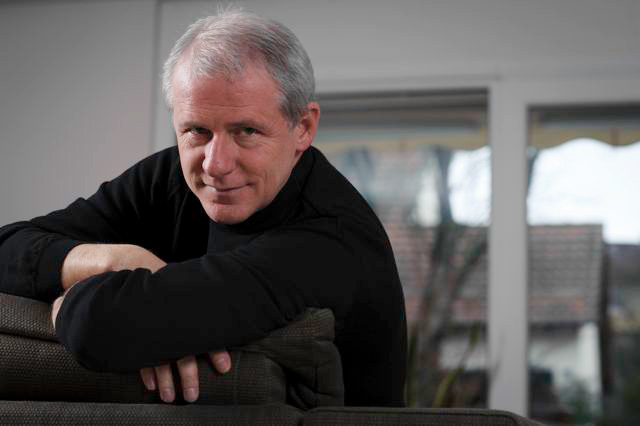
In St. Petersburg, the II International Festival Remusik began, which is dedicated to the music of Switzerland this year. Composer William Blank actively participated in the development of his program and conducts two concerts.
- Have you ever been to Russia before? What do you expect from meetings with the Russian public?
- Only once - a year ago, at the first Remusik festival. I have no special expectations-I already saw a public here the last time that modern music is very interesting. Then I conducted my works, and I liked it as they listened: very carefully. However, I would not call myself a conductor: an essay, conducting and teaching - three components of the same work: make music.
-Once you were a drummer in the legendary orchestra of Romanesque Switzerland-it is interesting if you take into account what difficult relations many modern composers have with the institute of the symphonic orchestra. Louis Andrissen, for example. But you just have many orchestral works. Why then is this a problem for many of your colleagues, is it only because of money?
- Oh, this is a long conversation. Since the first chamber symphony and the “lunar Pierrot” of Schoenberg, as well as the “wedding” of Stravinsky (written partly in the peak of gigantic symphonic compositions), many composers in one way or another have found the possibility of a lighter letter, distant from the heavyweight of a traditional large orchestra. But this was not an end in itself - thus evolved their language, which had less and less in common with large orchestras designed to perform a romantic and constant repertoire. Today, orchestras are gradually learning to play in a new way, closer to what the languages of modern composition require, and modern music is now studied in music schools.
It just seems very important to me to write again for orchestras (including because they turn to such a large audience) so that modern music is not locked in a kind of “ghetto”. Many composers of our time do not lose connection with the classical tradition, even if they are at the same time under the influence of electronic music or pop rock. In order to write for a symphonic orchestra, I am sure that today there are a lot of different opportunities, including the use of live electronics and non -standard compositions, the unusual location of the musicians on the stage. For my part, I can say that when symphonic orchestras performed my music (for example, in Japan, the USA or European countries), the audience took it very warmly, and this proves that it is also waiting for something new.
It seems to me important to write again for orchestras so that modern music is not locked in the ghetto.
- In the poster of the Remusik festival, you are one of the key figures - have you participated in the preparation of the program?
-Firstly, I sincerely admire the incredible efforts that the Petersburg Center Remusik is being made to promote modern music in the city. When I came a year ago, I realized that it was a representative picture of the international composition to present the local public for not one year. And I suggested the artistic director of the Festival Mehdi Hosseini several ideas about what and how to show in the context of the festival with maximum diversity. Secondly, given the importance of supporting the Pro Helvetia Swiss Foundation, I proposed to fulfill several bright works of Swiss composers at the festival, which today ahead of all in many areas, whether it is microchromatics or the use of new technologies.
- At the opening, you conducted the Swiss team Lemanic Modern Ensemble - is it true that in Switzerland there are a lot of such ensembles and the situation for their work is favorable?
- In the activities of this ensemble, three different aesthetics are harmoniously combined, representing three parts of the country - French, German, Italian. We really find wide support in numerous public and private funds. This is quite natural - the Switzerland government is actively involved in the process of development of universities, and therefore, in particular, we have as many as seven (!) Higher schools of music (with a population of only seven million) with developed departments of composition and modern music. Although it is impossible to live with composer work even in Switzerland.
-How was the program of the concert-opening formed, how were the plays, including the essay “Last and Lost” by Vladimir Tarnopolsky? Were you familiar with him and his music?
- As I said, my task was to present a wide panorama of the modern composition. “Opposite” (in quotation marks!) To each other, the manners of Michael Zharrel, Klaus Khuber, Deter Aman and my own plus the variety of the selected compositions of the ensemble convinced Mehdi Hossey that the program was folded successfully. Of course, the inclusion of works for the orchestra - or larger ensemble compositions - could affect the public even more, but this is a different scale of expenses. As for Tarnopolsky, his essay proposed to fulfill the festival, on the penultimate day of which is the “New Music Studio”, headed by Vladimir. Since I know his music and admire his role in the musical life of Russia, I decided that his aesthetics would successfully contrast with our Swiss.
- What is dear to you in Russian music and why?
- As for a musician with a “classic” education, Russian music is, of course, very important for me. Mussorgsky was an incredible modernist for his time, then Stravinsky played a similar role ... Later the situation became more difficult, because from the mid -thirties to the end of the eighties in Russia there were difficult times, which resulted in a rollback back. Composers such as Denisov, Schnitsky or Gubaidulin tried to go their own way, but the outlines of this picture are somewhat foggy for me, especially with respect to the younger composers, who are not known in Europe too much.
Boulez is a complex person, but demonize it is an exaggeration and simply a mistake.
- Following the program of Swiss music, you represent another, dedicated to French music. Is it possible to catch the difference between them with the naked ear?
- The difference is very large. As I said, Swiss music is under the direct influence of German and French aesthetics. The result is a kind of intersection, having come to which you hear echoes of different cultures. In turn, French music is full of French influences. Large figures such as Messian, Boulez or Grise gave a very powerful base to the next generation, there were no figures in Switzerland of such a scale. These are completely different ways of composition, and I can imagine that an unprepared listener can hear the difference.
“You mentioned Pierre Boulez very by the way, whose play“ Dérive 1 ”decorates your French program. Is it true that in France, without his support, young composers have almost no chance of making a career? How do you feel about his figure as a whole?
- Boulez is a complex person, but demonize it is an exaggeration and simply a mistake. As a composer, he was very radical and really supported young colleagues - for example, Philip Manuri, who made a serious career. But there are others, like Tristan Murai, who were knocked into people without any support. In my opinion, as composer Boulez carried out an amazing synthesis of the heritage of Messian and Weberne-just as Schunberg and Brahms and Wagner managed to make! As a conductor, he defended the interests of music of the twentieth century more than any other performer. At the same time, he founded IRCAM (Institute for Research and Coordination of Acoustics and Music in Paris. - Ed. ), The IntercontempoPorain ensemble, later the Lucerne Academy ... It remains to add that such works as “fold behind the fold” or “response” belong to the most perfect creations of the second half of the twentieth century.
- And did you hear the Moscow ensemble "Studio of New Music"?
- Yes, of course, both in the courses in Darmstadt and a year ago at the previous festival - then they presented an excellent program, these are very talented musicians. Then I met Sergey Chirkov, one of the key figures of the festival.
- On May 25, it is completed by Vortex - another Swiss ensemble of new music, already without your participation. How would you compare it with Lemanic Modern Ensemble ?
- Vortex represents another facet of modern music, they work a lot on the opening of new methods of the game in close cooperation with composers, among which there are the founders of this ensemble. They play without a conductor, actively use electronics and look for new sounds - often without looking back at any tradition. There is nothing to compare these two ensembles, they have different goals. And they naturally complement each other.
- One of your works was performed by the Moscow singer Natalya Zagorinskaya - Are you satisfied? Among the performers of your music are also real stars - Anthony Vit, Fabio Louisi, Pinhas Steinberg, Dennis Russell Davis, Hinz Holliger. What do you remember working with them?
- Working with Natalia was just amazing, such moments rarely happen. I wrote a very dense and presenting strict requirements for the score, but her ability to enter my musical world, extremely far from her usual repertoire, her sense of drama and, finally, her dedication on stage is absolutely unforgettable. As for cooperation with conductors, it was each time rich, especially if it was possible to talk about the meaning of music, and not just how to play, how to blow and so on. In this sense, both Louisi and Holliger were very attentive, and our joint work remained very important to me.
- And how did it happen that in 2003 you wrote the play “Exodes” by order of the UN?
- It was on a solemn occasion - a year earlier Switzerland joined the UN. I took the opportunity to write a very “polemic” essay, not at all a festive - this was my offer to immigrants around the world, dedicated to Kofi Annan, to whom I presented the first page of the score.
- How would you briefly explain what Swiss music is?
- For half a century, Swiss composers have developed incredibly rich languages. The lack of a long tradition has only spurred the growth of many styles, very original. At the same time, they are united by many similar features - first of all, the interest of composers in sound processing and complex forms. The program of the concert-opening gave a completely representative picture of different trends in today's Swiss music. And I was very glad to present her in the Mariinsky concert hall.