
Translated material
Comrade Government!
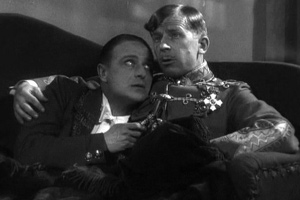
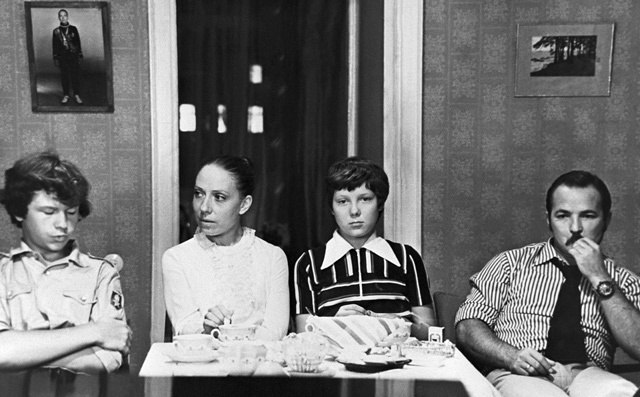 © ITAR-TASS FROM FROM THE WORDS AND WORDS ON THE UNDERNOWNTION OF THE SOWERS ACTIVITY
The day after tomorrow, on May 25, in the Moscow Museum of Cinema, as part of the retrospective of Gleb Panfilov, the film “I Assign the Words” will be shown. Taking advantage of the reason, Maxim Semenov talks about the unexpected relevance of this and four other Soviet films.
A month ago, in Sunday, Dmitry Kiselev, whose big fan I am, showed a huge interview with the artist Ilya Glazunov. This interview was distinguished by a certain degree of insanity, promised the speedy discovery of the Museum of Russian Office ( Sic !) And it was supposed to instill in the audience the idea of the greatness of the continuous course of Russian history. This plot is not much different from the usual plots of the Kiselev program and could hardly have remembered after, if not one part of the detail. The camera filmed the work of students of Academy Glazunov.
Students carefully tried to capture the appearance and pose of the model and did it with well -known skill. At the same time, their model was a real hussar. That is, a person dressed in a hussar uniform and with luxurious, albeit fake, mustache. There is probably nothing unusual in this work. I don’t know how artists engaged in historical painting are studying, and therefore I am ready to admit that writing people in the costumes of Ulan, Hussar or Elizabethan shepherds for them is a common thing. However, their work was placed in a very definite context and in this context it itself became a symbol. We listened to about one hundred centuries of our culture, while watching how completely modern people write a portrait of our other contemporary, which are tuned with hussar.
All this is a rather accurate metaphor of what has happened to our country in recent years. Having arisen from the void, the Russian Federation actively began to look for its origins. First of all, she turned to the time of the empire and kingdom, which the “guards” form of the Kremlin garrison, the reburial of the philosopher Ilyin and the miraculous gain of the Day of National Unity can serve as evidence. Glazunovites and military painters are actively writing portraits of kings and their servants, and monuments to the bishops and Stolypin are erected throughout Russia.
However, a complete return to the time of yati and Izhits is impossible. About seventy years of Soviet history separates us from them - the heritage that our power cannot and will not be able to completely abandon. (Re) constructing pre -Soviet experience, power is also the heiress and successor of a large number of Soviet civilian cults and traditions that successfully exist in modern Russian society.
Although the aesthetics of Soviet is a little lost against the backdrop of St. George Crosses and Susal gold, she looks at us from parliamentary meetings and party congresses, and also sounds in the tongue -tied syllable of official statements. It is impossible to abandon her completely. The Soviet state, with all the reservations, carried a huge humanistic, creative charge, gave the illusion of equality and promised eternal peace and prosperity to all representatives of future generations.
The current government uses memories of this charge, but does this not too actively, preferring to give the society “great shocks”. And in vain. Soviet culture and, above all, Soviet cinema has accumulated a huge number of forms and objects that could exalt the existing state and give humanity to its state brilliance.
If I were the government, I would begin to relieve Soviet tapes, adapting them to modern realities and modern propaganda. The benefit of the material is enough, and the cinema, as Trotsky pointed out in one of his famous article, is the better of the church that in the church they show the same thing from century to century, and in the cinema for a day you can watch anything and several times.