
Translated material
Marsh of EuroSceptics
Up to a third of the places in the new composition of the European Parliament, following the election of May 25, can receive radical parties and movements
What determined the current preferences of voters in the Old World - the New Times found out
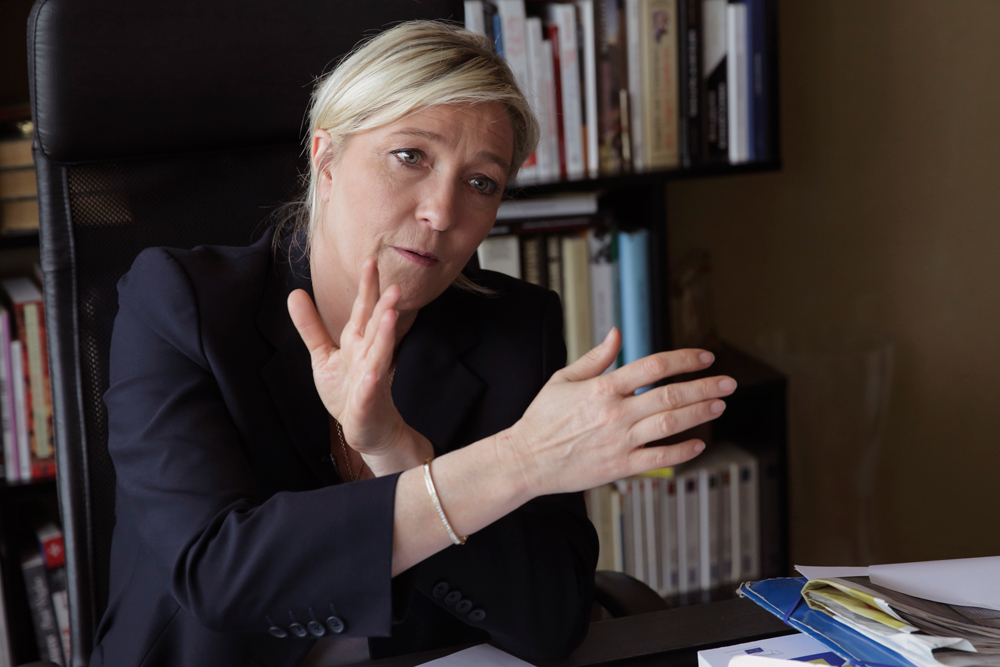 |
| In France, the National Front Marine Le Pen was the leader in election polls with 24% /photo: Philippe Wojazer /Reuters |
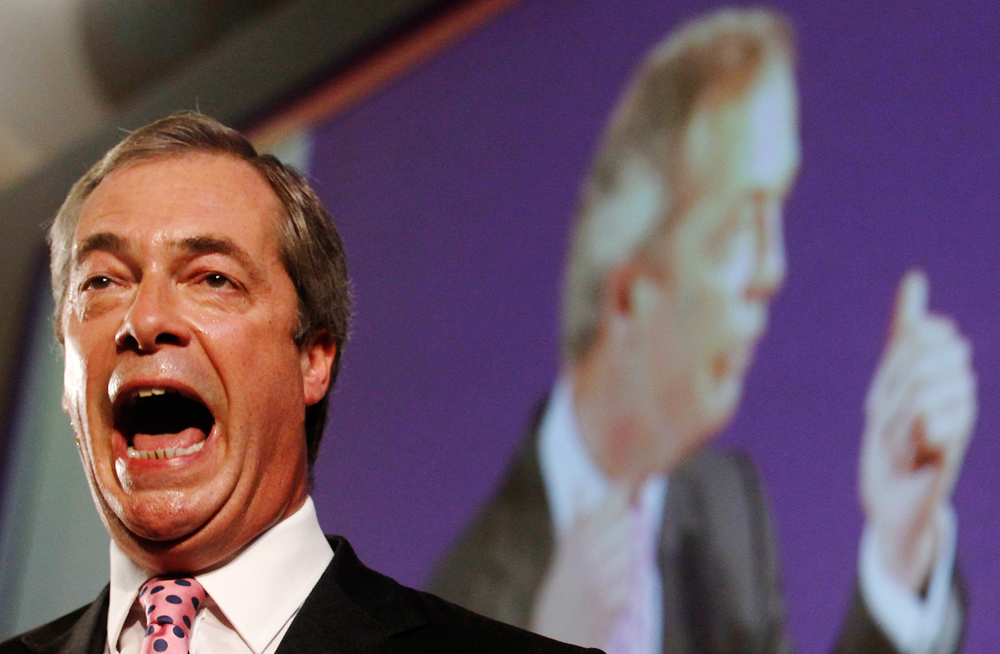 |
| The Independence Party of the United Kingdom, led by Nigel Faraj, received 27% /photo: Georges Gobet /AFP elections |
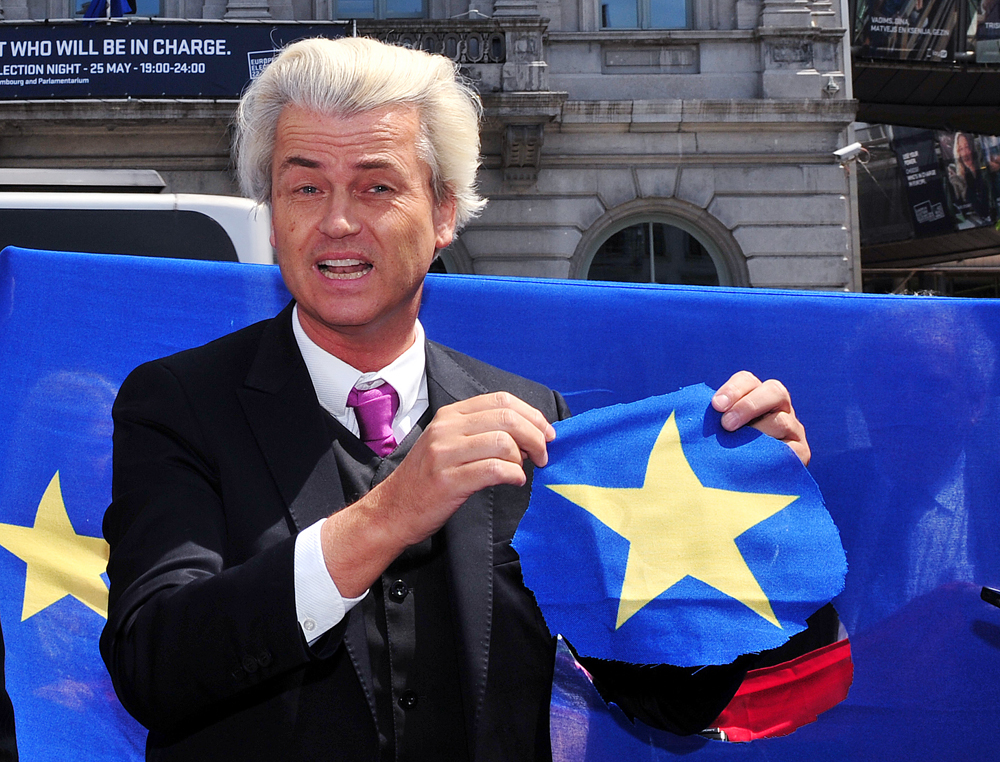 |
| The Netherlands Party of Freedom, led by Gerth Wilders Ecis-Pole, gave only 12.2% / photo: Luke Macgregor / Reuters |
This animated video was called - “Woteman” (voteman), voter. On it, the pumped up and hairy degenerate suddenly interrupts the sexual orgy and rushes to run to the polling station. Along the way, he tears the head of the man and beats everyone who comes under his arm to make them vote. The voutum of angry, because he wants his voice to be finally heard in Europe: after all, he did not go to previous elections and therefore could not somehow influence the European policy on climate change, agricultural subsidies, as well as the amount of cinnamon on his favorite bun, which is also regulated by the Brussels bureaucrats. And now he, vincial, longs for democratic revenge.
The video with very naturalistic scenes of sex and violence appeared on YouTube on May 12, and loaded it there not some fan user, but the Denmark parliament. The goal is to push the euro -writer more actively vote in the elections of the European Parliament. However, the flared scandal forced the cancer of the molens of the molens of the liquidolet to reverse - the video in the style of Quentin Tarantino was deleted a day later. But the aftertaste remained. For it is hardly better than in this commercial, to describe the mood with which the Europeans met on May 25, the day of the European elections.
"Basta Euro"
Annoon, anger, disappointment and a sense of proper power - all this will undoubtedly turn into great surprises after summing up the voting results. Sociologists predicted a failure to appear in almost 40%, but most of those who nevertheless came to the urns may well punish Europe of traditional parties (and hence the harsh tax measures), casting their vote in favor of the movements that advocate exiting the euro zone and even from the EU generally. The rating of EuroSrotics on the continent is growing rapidly. In France, the National Front Marin Le Pen is gaining, according to surveys, 22–23% of the vote is much more than the rating of the Union for the People’s Movement of the Popular Movement, and even more so the rating of the rapidly losing popularity of the Social Party of President Francois Hollande.
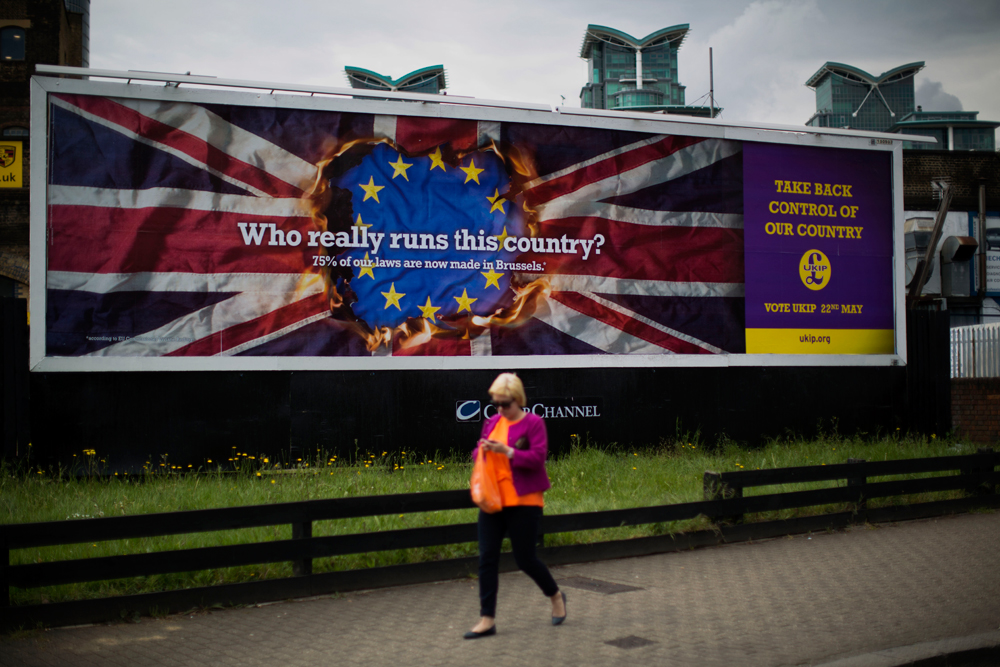
| *According to the results of the vote on May 22, UKIP scored 27%. |
A similar picture in the UK, where the rating of the Independence Party of the United Kingdom (UKIP), headed by the temperamental Eurodepa Nigel Faraja, is estimated at 30%, it is not exception that the UKIP will eventually whit out both the Tori and the Labor -Labor. The last two on election days also ranged in the region of 20-30%*.
In Italy, the “Movement of Five Stars”, led by ex-comedian Bepe Grillo, was gaining popularity-the role of a drive belt was played by both the economic crisis and the last judicial scandals with the participation of the ruling democratic party and the largest in the country of the Right Party “Forward, Italy” Silvio Berlusconi. But the extreme right “League of the North”, who once advocated the separation of the rich and advanced Italian north from the poor south, on the contrary, found a new life, armed with the slogan “Basta Euro”.
We will also not forget about the Party of Freedom of the Dutchman Gerthus Wilders, the Hungarian party “Yobbik”, which is headed by Gabor Vaughn, the Social Democratic Party of Austria, the Greek Greek Party “Golden Dawn” (this year, it produced it to European elections) and, finally, the Spanish “Party X”-the political wing of Indianados (“indignant”) The movements of Spanish EuroSrkeptics.
Explosive mixture
However, all this motley camp of political forces, obsessed with the idea of leaving the euro zone or at least sharply critical of the existing political structure of the European Union - extreme right, extreme left, nationalists, supporters of the free market, “posteological” and populist movements - is unlikely to be able to perform a united front so that their voice is clearly audible in Brussels and Brussels and Brussels are clearly heard and their voice is clearly heard and Strasbourg. Nevertheless, to get a third of 751 places in the European Parliament - this is quite on the shoulder. As a result, Europe will receive a lever of influence on large traditional parties, which, in turn, are divided, in fact, into two camps - socialist and legal -centric parties.
An explosive mixture of low turnout, populism and thirst for more effective democracy threatens to bring down the constructed castle of European institutions for centuries, in which the role of the major was still played by an elite consisting of technocrats (financial and political). Ordinary people today perceive this complex bureaucratic universe as something incomprehensibly far from national needs. Over the past eight years of deep economic depression, the general standard of living of peoples inhabiting the European community has fallen significantly. Officials and institutions close to the “little man”, and more intense economic growth are two large tasks that are facing the old light.
"
The rating of EuroSrotics on the continent is growing rapidly. In France, the National Front Marin Le Pen is gaining, according to surveys, 22–23 % of the vote
"
The level of unemployment in Europe has reached 11%: today it is the most burning problem in fact in all EU countries. GDP grows very slowly, adding a little more than 1%per year. While public debt jumped on average in the EU up to 90% of GDP (95% in the countries of the eurozone). There are also separate odious examples: in Greece, the state debt exceeded 170% of GDP, in Italy - 133% ... Europeans fully paid from their pocket for irresponsible decisions of those who are at the helm of the financial system. In 2010-2012, the governments of European countries laid out about four trillion euros from taxpayers in order to save the banks injured from the crisis. Valuable resources were distracted from the creation of new workplaces and investments, globalization has blurred the industrial sphere, weakening social protection. If in the last century social guarantees were the main conquest of the European geopolitical space, then today it, this space, is rapidly poor, aging and exhaling.
In truth, the ruling elite of Europe made an attempt to change something and democratize something. It is no accident that this year Europeans first choose candidates from various political camps for the post of chairman of the European Commission, the real Government of the EU, in which each of the 28 member countries is represented by the commissar. This is here, in Brussels, and not in national capitals, decisions are made on all key issues, although together with the body consisting of national governments, by the European Council.
But, on the other hand, the recognition of candidates for deputies of the European Parliament remains very low. The most famous of them-German Martin Schulz, a candidate from the European Socialist Party, and Luxembourger Jean-Claude Junker, nominated by the European People's Party-judging by their pre-election performances, could not get rid of Naftalin’s raid inherent in European bureaucrats, which seemed to fall to Earth from another planet.
In addition, Europe itself, paradoxically sounds, remains a reckless dream of democracy - after all, its only elected institution is parliament! - endowed with limited powers.
At the same time, indignation is growing about the useless expenses of the European bureaucratic machine: there are high salaries (along with prizes) of euros deputies-an average of € 8–12 thousand monthly, and the maintenance of the 40 thousandth personnel of Eurolandia, as the European Parliament with its swollen apparatus is called. And finally, the egregious fact of the presence of two parliamentary headquarters-in Brussels and Strasbourg-without much need. Judge for yourself: once a month, the European Parliament moves from Brussels to Strasbourg and vice versa, throwing a lot of money to maintain both buildings and on constant movements of five thousand employees and tens of thousands of documents between Belgium and France.
In a word, it is obvious to go on a diet and get rid of all the extra. However, so far this has been done only by ordinary taxpayers. The course to increase taxes and reducing government spending, imposed by all partners (including France) by the Chancellor of Germany Angel Merkel for a noble purpose - to establish financial balance in Europe - hits with a ricochet primarily for ordinary citizens.
The first areas opened on May 22. Maastricht, Netherlands/Photo: BAZ Czerwinski/ANP/AFP
Turning point
The policy of strict savings plunged into depression the economy of many EU countries. Therefore, the main task facing Italy, which is preparing to accept in July (for a period of six months. - The New Times) a chairmanship in the European Council in the semester from July to December - to convince Europe that without investment on economic growth can be forgotten.
The European Central Bank (ECB) took all conceivable measures to save the euro at the most difficult moment, between 2011 and 2012. However, the new fear of Europe is inspired by deflation - its effect negatively affects consumption and worsens the position of the most fought countries. At the same time, the euro continues to be too strong currency for the economy of most EU members.
Once a month, the European Parliament moves from Brussels to Strasbourg and vice versa
"
The economic revival of Europe also depends on the state of energy dossier and relations with Russia. The situation in Ukraine has sharply designated the problem that has already arisen in the past in connection with other geopolitical cataclysms - energy independence and diversification of hydrocarbons (Europe imports about 30% of the gas necessary from Russia). For example, the Italian Energy Giant ENI has recently changed its leadership, and one of the tasks of the new elite will be just the relocation of part of the hydrocarbon business (as well as Italian needs) away from hot geographical points: Russia in the East and North Africa in the south.
However, whether the current European political elite is able to solve the problem of diversification of energy supply is a big question. And therefore, on May 25, 2014, many in the Old World are regarded as a turning point, as a day that promises a chance to new political forces, critical of the EU in its current form, to become a fertile stimulus for Europe.
Altero Spinelli, the Italian politician and writer, standing at the origins of the European idea, wrote in the 40s of the XX century in “Ventoten Manifesto for United Europe”: “The upcoming path is not easy and unsafe. But it must be passed, and it will be so! " Europe has a single way out: reform to survive.