Date
Author
Александр Генис; Соломон Волков
Source

Preserved copy
Translated material
Pictures from the exhibition
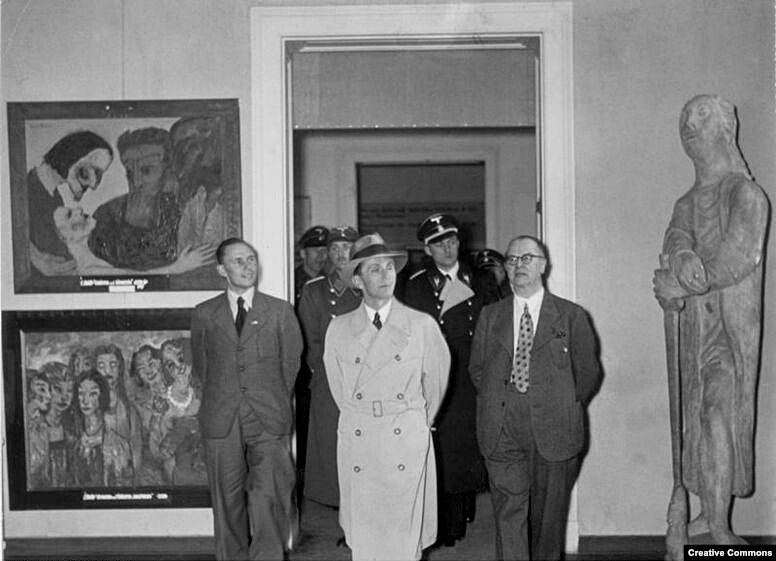
Nazis and German avant -garde
Alexander Genis: When it comes to art, I do not believe in coincidence. Somehow secretly it manages to always manage to be relevant. How else to explain that this spring in two large museums of the city there are exhibitions that are directly related to fascism? Naturally, today, when the comparison between the accession of Crimea Putin Putin and Austria Hitler has already become a common place, every story from the history of fascism seems to be instructive, sharp, painful, and therefore timely.
The first exhibition, arranged in the Guggenheim Museum, is dedicated to the Italian futurists, which in many ways served as an example of Mussolini. Ach has already talked about this in the previous issue of our “Pictures from the exhibition” .
Another exhibition organized by the Austro -German museum is “degenerative art: an attack on modernism in Nazi Germany in 1937” - will be the subject of our conversation today.
The background of this exhibition began in the 37th year, the time, which, in the words of the observer of the newspaper Izvestia, is associated with the era of “good Hitler until 1939”. I must say that this statement by Andranik Migranan, having got into the New York Times, caused considerable surprise in the city where they well remembered that the 39th year Hitler had already managed to arrange a “crystal night”, to create Dachau, to introduce Nuremberg racial laws and open the very exhibition of “degenerative art”, the memory of which refreshes the current one Exposition in New York. The unprecedented success of the exhibition forced the curators to extend its work for another two months. According to the museum calculations, 115,000 spectators will visit her. This is one of the records of the comparative new museum (he is only 13 years old).
(Music)
Alexander Genis: Having come to power, the Nazis confiscated from 20 state museums 20,000 works, representing in their opinion a degenerative, that is, harmful and immoral “Jewish art” (out of 112 artists, only six were Jews). To make the process visual, in 1937 the tour of “degenerative” art began on 11 German cities. All schools of modernism that arose according to the chronology of Hitler after 1910 fell into disgrace. In contrast to him, the Fuhrer opened an exhibition of truly German art, for which he himself selected work. This spring, the New York Museum of the Austrian and German modernism united both odious exhibitions into one contrast exposition.
The first visitors are met by the attack aircraft from the poster. The young man is strikingly different from the Oscar of the coconut from the posters of the exhibition. On this self -portrait, the artist portrayed himself a man without skin. It looks like a sofa without upholstery, with bare springs - only reactions, defenseless before pressure. Another thing is the young Nazi. On the scarlet background, a fighter in a brown shirt (they say that Hitler wanted to put them in black as Mussolini, but there were not enough fabric of the right color in the stores) resembles a clay golem at sunset. A square face without expression, eyes - as in a slot, a good mechanical body. A person’s scheme, as it should be on a poster that simplifies psychology before the slogan.
The same was the easel painting of the Nazis. The Triptikh Schmitts-Videnbruk (picture of 1941) depicts the warring Germany in the form of miners, soldiers from three genera of the army, a peasant and a bull. Only the latter has a human face and a meaningful look. The rest are one face. And everyone looks up, as if they had been dumbfounded, seeing something unbearable, perhaps the future.
In fairness, I must say that Giter himself preferred another. The passionate fan of antiquity, who promised the Hellenic ideal of the beautiful Reich, he hung up the “four elements” over his fireplace, or the natural -philosophical panel of Adolf Tsigler. Written in the style of academic mannerism, it is entirely composed of previous samples. Fire, earth, water and air symbolized naked virgins in melancholic poses. Hitler's favorite brought the serene thoughts about that idyllic eternity, which had no place in the paintings of others who filled the New York exhibition of artists.
Why did Hitler enraged modernism so? The fact that he did not transform his life, but distorted it, leading it away from the ideal. And the worse the reality was, the greater the varnishing was required from art in order to cover cracks that quickly turn into abysses. For Hitler, a good picture was a portrait of Dorian Gray, on the contrary. Never changing, he hid the nightmare of the environment under him, which was painted with horror and talent, the “degenerates” of the Weimar Republic. The rest of the exhibition is dedicated to them.
(Music)
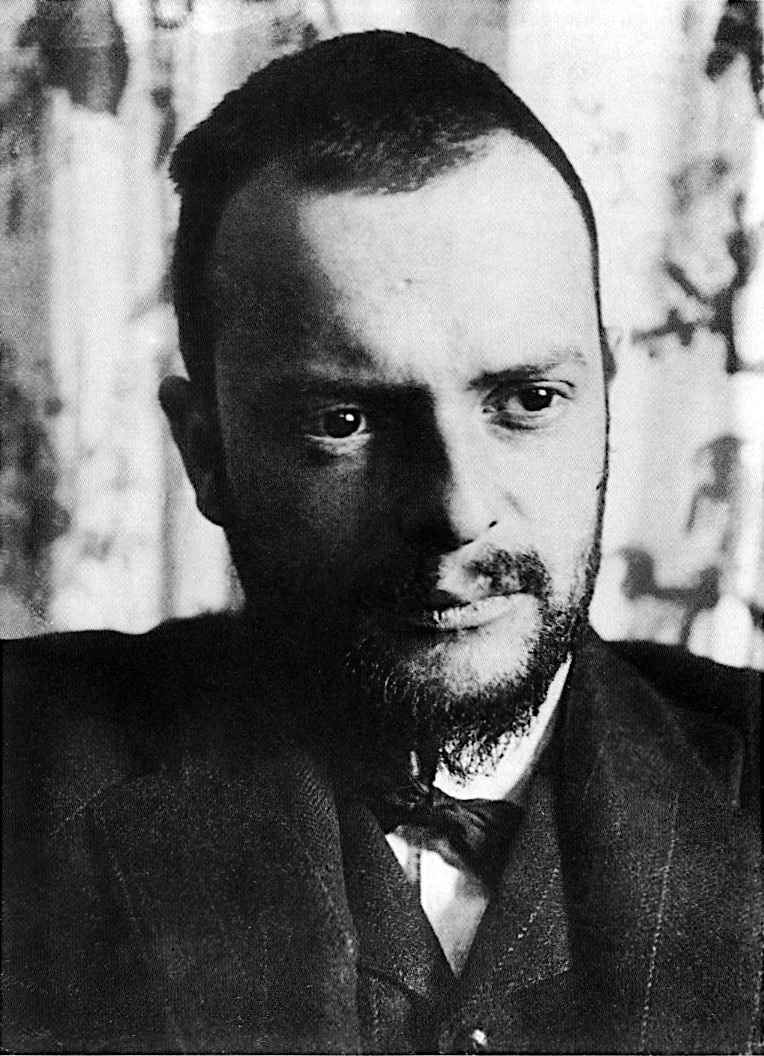
Other, more competent critics considered him, along with Picasso and Matisse, the founding father of contemporary art. Although Klee has never been to America, here his work found particularly sensitive heirs and fans. In particular, he had a serious impact on architecture (!) I did not make a reservation: it was no accident that the maestro of the American skyscraper Johnson gathered Klee's work.
Due to the First World War (the Swiss by the birth of Klee nevertheless fought in the German army for two years), Klee became known in America later than other European modernists. But his works quickly acquired influence and, as art historians say, prepared artists - and spectators - to the birth of an abstract expressionism school in America.
From the 1920s, American art lovers gathered and promoted by Klee. Then he was lucky with the Rockefeller family, who bought his work for the future Museum of Modern Art in New York (now everyone knows him from the abbreviation of Mom). In 1930, the director of the museum Alfred Barr dedicated to Klee the first personal exhibition in Moma. But the most hot fans of Klee in the Western Hemisphere was the most illustrious pair of artists from the New World - Mexicans Diego River and Frida Calo. “Maybe the wisest of all the artists,” said River, “Paul Klee was the greatest poet -child of our world.”
Klee's work is devoted to the solution of one problem: how to express the internal through the external. Not only a big artist, but also a famous teacher, he explained this problem to his students, comparing a picture with a tree.
“The roots go into the soil of reality,” he said, “its crown soars in the clouds. The roots are not like a crown, but the tree is the same.”
Klee plunged into the depths of reality to dig a treasure. In his works, things float in the darkness of the subconscious, where they - bypassing consciousness - rise and settle on canvas or paper
“Kandinsky,” Klee once said about his friend and mentor, “taught me how to go from prototypes to archetypes.”
All the work of Klee is a report on such a journey. They are mysterious, fascinating and diverse as a collection of fairy tales retolded by scientist mystic. They make a delicate and not obsessive skill of the artist skillful. At first it was a vibrating, and better to say - a dancing line of the drawing, which he studied at his first idol Van Gogh. Then the color came. Having visited Tunisia, he discovered the joy of pure colors, which did not leave him to death. For a long time and painfully dying in Zurich from a heart disease, when he was no longer able to eat or play the violin, he continued to write bright painting, which is difficult not to call fun.
One of these later paintings - the decoration of the entire exposition - depicts the grotesque solar system, where the slice of orange will replace the luminary, and the steep eggs rotating around it - planets. This astronomical still life is suspended in the airless space: it is certainly impossible, but it undoubtedly exists - like a dream, dream or fantasy.
(Music)
Alexander Genis: The German avant -garde, like everything that survived after the First World War, was strikingly different from the art of the “age of reliability” previous to her. The new one ceased to be young, for it did not believe that it would have time to grow. Without counting on interest, life was in a hurry to pump the good. Various and shameless, she did not find support for herself.
“Arriving in Berlin of the 20s,” wrote Elias Cannetti in his memoirs, “you fell into chaos, in which things swam like corpses, and people began to seem things.”
Thus, anticipating, as usual among large masters, coming cataclysms, the artist Ludwig Kirhner wrote the German capital on the eve of the war on the eve of the war.
The founder of the Most art group Kirkhner, having moved from the old Dresden to Berlin, was shocked according to him by the “Symphony of the Great City”. Berlin not burdened with a rich story lived in the past, like other German cities, but real, that it became terrible. Kyrkhner undertook to deliver this gamut of feelings in the unconnective name “Berlin Street” (The best work of the entire exhibition). Winter.
A rather trivial plot of the picture does not exhaust her plan. Kirkhner is not interested in a genre scene, but by the internal interaction of people with the city. Oblocking, like all expressionists, the nerve of the picture, the artist saturates with erotic energy to Berlin street. Having looked at, we will see that there is neither land nor heaven on the canvas. The figures swim in a thick lilac jelly, flooded with both the top and the bottom of the canvas. This background, like an alkov, delays us into a seductive adventure, which is why the city itself seems to be a sin, temptation, sweet poison.
In this picture, which critics are now considered the most important in the German vanguard, all the features of expressionism, which was the response of the Teutonic Muse to the Gallic Impressionism, concentrated. Both the other artists did not create according to the previous rules. But instead of the landscape of the objective brush of French impressionists, German expressionists wrote the landscape of the soul, seen by the inner gaze and distorted by them.
Considering expressionism purely national art, the Nazis first tolerated this rough and assertive style. But Hitler did not endure painting, changing reality, who insisted on unconditionally life -like art. Generated by the Nazis, Kirhner committed suicide in 1938.
(Music)
Alexander Genis: An exhibition of “degenerative” artists, in essence, is and is exhausting the history of the arts of Weimar Germany. This short era of German democracy torments us with its incompleteness: Belmo in the eye of history. Indeed, since the time of that first, Goethe Weimar in Germany, there were no talents, but they did not change the situation. Perhaps because the first German republic, corrupt and helpless, no one fell in love and regretted. It is immensely bright and very unhappy, it still seduces with an example and scares the lesson. In the end, we do not know whether the Weimar regime helped the emergence of Nazism. It is not known that he did not stop him.
Is this not the reason for our biased interest in the artists of the era, standing on the edge of the abyss, which we are now looking at again.
(Music)
Alexander Genis: Solomon, the German avant-garde, which is so generously represented in the Museum of Austro-German Modernism in New York at this exhibition of “degenerative art”, is not the first time for our attention, because we both are warmly interested in this time ...
Solomon Volkov: Favorite period in European culture, and in the world.
Alexander Genis: Weimar Germany attracts.
Solomon Volkov: I can’t do anything with myself - it attracts me like a magnet, this era.
Alexander Genis: Every time I go to this museum (and it is located in the very center of the museum mile) and I see that the queue is on the quarter-it is so many New Yorkers are interested in seeing this most “degenerative” art. In it we feel something rhyme with our time, this is always that anxiety, that fright ...
Solomon Volkov: Which is always with us.
Alexander Genis: In this museum, I always think that when the revolution occurred in Russia, it was still a country very far from the West, a country where the vast majority of people were illiterate, a country that only began to enter the cultural arena of the West. But fascism happened in Germany, the most civilized country of that time, the country, in with the country with the most developed culture, science and, of course, art. Therefore, what happened to the Germans is always a warning for Western culture. After all, Hitler could rise only thanks to democracy. If there were no democracy, as in the days of the 19th century, when monarchs reigned everywhere in Europe, then Hitler would never have reached the power. That is, Hitler is also a fruit of democracy, like Roosevelt, like Churchill, that’s what could be, what it can turn into. Maybe that's why with such attention the West dates back to this short period?
Solomon Volkov: There is another curious detail that I always stumble about and some people who like to talk about this period, forget. Parallels between fascist, Nazi and Bolshevik art, and communist art are very easily carried out. But these are completely unlawful parallels. It is no coincidence that Goebbels said: “We need our own film“ Bainstock Potemkin ”.” And where is he this "battleship Potemkin"? They understood that they needed a “battleship Potemkin”, they wanted to get it - and did not receive it.
Alexander Genis: How to say. For example, "Triumph of will."
Solomon Volkov: Leni Rifenshtal? Nothing of the kind.
Alexander Genis: I would not say so categorically. Or Olympia, which seems to me an even more significant film.
Alexander Genis: Because all this happened in the Weimar Germany of the 1920s, when the Germans had about the same heyday of talents. Since the time of the first Weimar, Weimar Goethe and Schiller, in Germany there has never been such an accumulation of artistic, wealth as in the 1920s, in Germany between Versailles and Hitler.
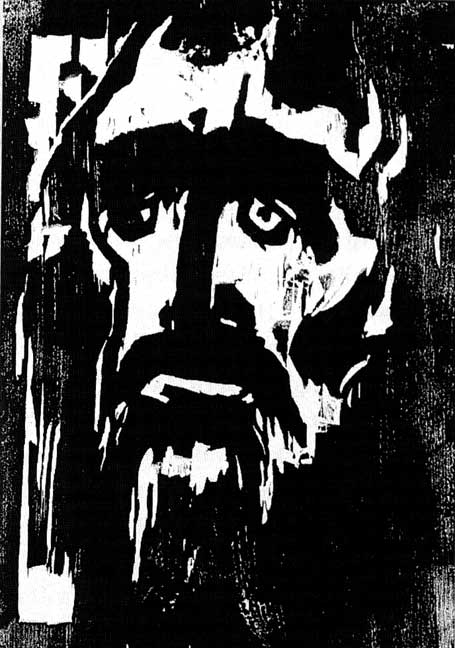
Solomon Volkov: You look at the difference in approaches. After all, this is really really curious and indicative. There was such a wonderful artist Emil Nolde, whose paintings were included in the exhibition of “degenerative art”, he was one of the first members of the Nazi party, almost number 10 with a ticket, his views were absolutely pronounced. However, he was forbidden to draw. He wrote letters to higher Nazi authorities, proving that he was a real Nazi and hates Jews.
Alexander Genis: Another scandalous story is connected with Nolde. He was one of the first and one of the best expressionists. I like his landscapes extremely.
Solomon Volkov: And Hitler rejected him.
Alexander Genis: Because Hitler had a plebeian taste, very conservative. He liked the postal cards that he sketched.
Solomon Volkov: Look, the Soviet leadership, Stalin in this case, he did not reject Mayakovsky.
Alexander Genis: Because Mayakovsky died in time. Well, what Stalin did with the very heyday of the art of the 1920s, it is better not to remember. And to finish with Nolde, it is worth recalling a strange story. Goebbels liked his paintings, because Nolde was an expressionist, and expressionism is Tevaton art. On the advice of Speer, who possessed an artistic taste and was a “city Nazi”, as he was called, Goebbels adorned his apartment with the works of Nolde. But one day Hitler rushed to visit him, and came into rabies. After that, Nolde was forbidden to draw, banned paintings. The whole war he used only watercolors, because the smell of oil could smell that he was engaged in the art forbidden to him. What were these forbidden work? Yes, the same expressive landscapes that are exhibited at this exhibition of "degenerative art."
Solomon Volkov: also - nude, genre scenes.
Alexander Genis: He was a very bright artist, and despite the Nazi party card, I really like him. But this is, of course, this is not about that, we are talking about other artists of the avant-garde. I must say right away that the vanguard in Weimar Germany was almost the entire left. That is, they were already politically enemies.
Solomon Volkov: It is also interesting here. In general, this period retains aroma and charm, in particular, for me because it is so complex and ambivalent and a clear attitude has not yet been developed for it, and thank God. All the time one or the other figure comes to the forefront, which at some point seemed completely forgotten. Or a negative attitude to the person was now perceived with a plus sign.
Such an interesting example for me is the fate of the German composer Hans Eisler. Of course, he sounds like an iceler in German and now a fashion has gone and write an “iceler” in Russian, but I will call him an Eisler in a russian. He was born in 1898 and died in 1962. Жизнь у него, поскольку творческая деятельность пришлась на весьма турбулентные годы, то и жизнь у него была бурной. Он учился у Арнольда Шенберга. Шенберг, мы знаем, был основателем, отцом так называемой нововенской школы — это авангардное для того времени немецкое направление, тремя главными фигурами этого движения являются сам Шенберг, тот, кто выдумал всю эту историю, как учитель, и два его самых знаменитых ученика Альбен Берг и Антон фон Веберн. Оба замечательные композиторы, каждого из которых я люблю по-своему, как и Шенберга, я должен сказать. Меня заподозрить в том, что мне не нравится эта музыка, нельзя. Но при этом в тени оставался еще один любимый ученик Шенберга — Эйслер, которого Шенберг считал выдающимся талантом.
Но Эйслер н не стал верным учеником. Один мой знакомый очень метко его окрестил «гадким утенком нововенской школы», хотя Эйслер никогда в лебедя не вырос. Во-первых, он был страшно некрасивый, он был с весьма своеобразной внешностью, можно представить себе, как он выглядел, если вспомнить замечательного артиста Евгения Леонова. Он учился у Шенберга с 1919 по 1923 год, но не пошел по этому ультрамодернистскому пути, хотя писал музыку, которую можно назвать авангардистской, но она авангардистская с таким острым углом, что называется, и тяготеет скорее к простым формам. Значит что-то было такое в его даровании, что заставляло его искать выхода своим творческим импульсам в простой и доходчивой музыке. И это совпало, как это очень часто бывает с политикой. Он вступил в ряды немецкой коммунистической партии в 1926 году, стали писать марши всякого рода и революционные песни. Считается, что Эйслер стал их писать, потому что вступил в ряды коммунистической партии. Моя позиция - прямо противоположная, я как раз считаю, что в большинстве случаев бывает так: человек вступает в партию, потому что ему хочется писать такого рода музыку, а не наоборот. Он находит политическую позицию, которая оправдывает...
Александр Генис: Его политические воззрения. Так говорил Синявский, между прочим.
Соломон Волков: Я в данном случае и вспоминаю Синявского.
Александр Генис: Я подумал еще о том, что трагедия Германии была в том, что в ней надо было быть либо коммунистом, либо фашистом, не было среднего пти. Слишком мало было тех, кто не принадлежал ни к тому, ни к другому лагерю.
Соломон Волков: Это была, если вы помните, сознательная и катастрофическая по своим результатам политика, которую инициировал Ленин и которую упорно продолжал Сталин, во многих отношениях действительно верный ученик Ленина. Ленин всегда считал, что главная для него опасность была как раз не крайне правые радикалы, а социал-демократическая средняя прослойка, ее он считал наиболее вредной. Он считал, что если уничтожить социал-демократов, то крайние радикалы сами себя уничтожат, поэтому весь огонь сосредотачивался на них. По указаниям из Кремля немецкие коммунисты никогда не шли на компромисс с социал-демократами, что как раз и привело Гитлера к власти.
Возвращаясь к Эйслеру, я должен сказать, что сочиненные им песни и марши до сих пор - а казалось бы, это весьма скоропортящийся продукт - на меня производят глубочайшее впечатление. Со многими этими маршами я живу, что называется, день и ночь, они звучат во мне, они помогают мне жить.
Александр Генис: Помните, Искандер однажды сказал, примерно так: человек, который не любил в детстве революционные песни, не заслуживает того, чтобы в старости их презирать.
Соломон Волков: Потрясающие, замечательные слова, шляпу снимаю перед мудрым Искандером. А сейчас я хочу показать примеры того, что делал Эйслер во всей этой ситуации. Потому что если мы опять-таки посмотрим на реальную сцену, то мы увидим, что это было очень популярное и влиятельное в то время левое искусство. Среди них были люди, которых я всю свою сознательную жизнь считал и буду считать гениями, вроде Брехта, Эйслера и режиссера Эрвина Пискатора. Вся эта группа художников создавала чрезвычайно эффективное и не устаревающее искусство.
Александр Генис: Именно поэтому сейчас в Нью-Йорке вновь идет «Трехгрошовая опера» Брехта. Она всегда своевременна.
Соломон Волков: Брехт вообще вечен. Эйслер тесно сотрудничал с Брехтом. Но сначала я хочу показать, какую урбанистскую, симфоническую музыку он сочинял: так называемая Маленькая симфония Эйслера; Это как раз 1932 год, политическая ситуация ясна. И вот Эйслер как бы уже на пути, он эмигрировал в 1933 году в Европу, поселился сначала в Лондоне. Потом в 1938 году переехал в Соединенные Штаты, где прожил до 1950 года, когда его фактически депортировали из страны. Это был разгул охоты на ведьм, Эйслера вместе с Брехтом вызывали на допросы в комиссию по расследованию антиамериканской деятельности. Это на самом деле, я считаю, довольно постыдная страница в послевоенной американской истории. Эйслер и Брехт не собирались поступаться своими левыми убеждениями, они покинули Соединенные Штаты, вернулись в Германскую демократическую республику, где оба заняли видные позиции, которые их, однако, не спасали от обвинений в формализме и всякого рода притеснениях.
Наследие и одного и другого, на мой взгляд, будет жить очень-очень долго. Брехт, конечно, гораздо более знаменит, Брехт считается классиком драматургии ХХ века. А об Эйслере подзабывают время от времени. Особенно, мне кажется, в современной России о нем нечасто вспоминают, хотя именно в России 1930-х годов музыка Эйслера была необычайно популярна, ее знали все. Сначала я хочу показать отрывок из Маленькой симфонии Эйслера.
(Music)
Соломон Волков: А теперь прозвучит музыка, которую в России начала 1930-х годов знали, как я уже сказал, все. Дело в том, что самым знаменитым кинопроизведением левого движения в Германии, предвоенного левого движения, стал фильм под названием «Куле Вампе», режиссером был такой Златан Дудов, фильм 1932 года. Что такое «Куле Вампе»? Это рабочий район в Берлине. Главную роль играл замечательный немецкий актер и певец, тоже, конечно же, коммунист, Эрнст Буш. Премьера этого фильма состоялась не в Берлине, а в Москве. И песню «Красный район Берлина» пели все в тогдашнем Советском Союзе. Причем, что интересно, в ее припеве звучат слова «левой, левой, левой» - это, конечно же, навеяно Маяковским, все эти слова «Красный район марширует», «рабочий народ марширует» характеризуют атмосферу и показывают, каково было влияние огромное Маяковского и на Эйслера с Брехтом, и на все то движение, которые мы сейчас называем РОТ-фронт. Итак, «Красный район».
(Music)
Соломон Волков: И еще одна песня из этого же фильма «Куле Вампе», которая показывает, то исполнение, которое мы сейчас услышим, что происходит с наследием Эйслера в современной Германии. В отличие от России, где все это искусство пользовалось в 1930-е годы, как я уже сказал, огромной популярностью, но сегодня о нем вспоминают крайне редко, в том числе произведения Эйслера звучат очень редко. Но в современной Германии есть довольно существенный культурный, сегмент, где вся эта культура пользуется авторитетом, уважением и любовью. Не случайно в Германии и в Италии функционируют реформированные, но тем не менее, по сути своей сохраняющие свое влияние коммунистические партии. Скажем, в Испании, что интересно, такого не произошло, а в Германии значительные, влиятельные культурные деятели, (и в Италии тоже), сохраняют свою привязанность к этой культуре 1930 годов и продолжают ее традиции.
Песня, которую я сейчас покажу, написана на слова Брехта, музыка Эйслера. «Песня солидарности» с припевом «Вперед, и не будем забывать», она звучит в исполнении видного современного немецкого музыканта Грубера, который замечательно ее интонирует, видно, что для него эта песня важна и что он находит в ней какой-то музыкальный витамин. Я думаю, что песня этого заслуживает. И как сопровождающий музыкальный элемент песня эта вполне могла бы прозвучать на той выставке немецкого «дегенеративного искусства», о которой вы, Саша, сегодня рассказали.
(Муцзыка