
Translated material
The era of voluntary resignations
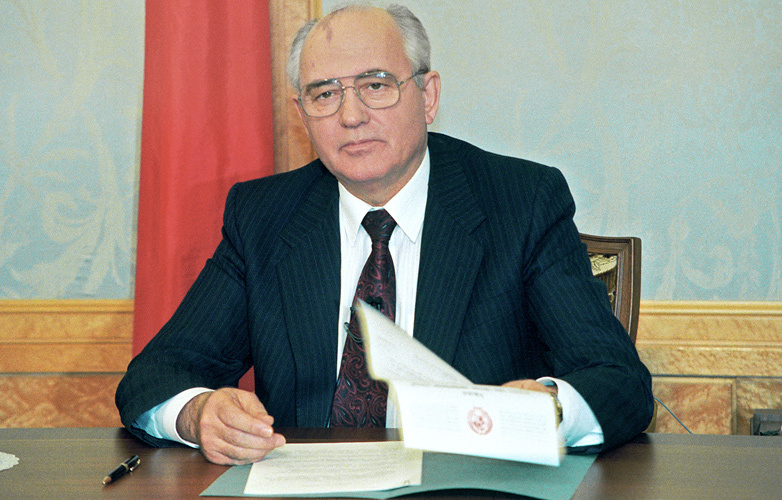
In the 90s, a rare practice of voluntary resignation spread in Russian public policy. The beginning of the era was marked by the departure of Mikhail Gorbachev from the post of President of the USSR, and its end was connected with the New Year's appeal of Boris Yeltsin, who announced that Russia should enter a new millennium with new politicians. However, for a variety of fundamental reasons, not only the presidents, but also ministers, the military, and the heads of the regions, resigned.
1.
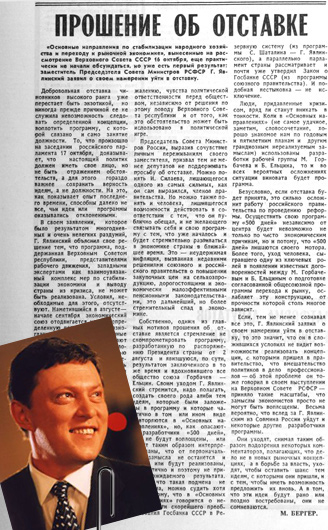 © Izvestia
Who: Grigory Alekseevich Yavlinsky.
From what post: First Deputy Chairman of the Council of Ministers of the RSFSR.
Date of resignation: October 17, 1990.
Why: in protest against the fact that the actual implementation of the group of economists developed by the group “500 days” did not begin.
What he did after the resignation: he headed the Center for Epicenter Economic and Political Studies, in 1993 became one of the founders of the Yabloko electoral bloc, and later headed the party of the same name.
Quote: “Considering itself one of the main authors of the program, which, although it was adopted, cannot be implemented, including due to the fault of the government in which I am consuming, I ask the Supreme Council of the RSFSR to accept my resignation” (from the letter of the Yavlinsky to the deputies of the Supreme Council of the RSFSR).
Letter G.A. Yavlinsky to the deputies of the Supreme Council of the RSFSR
2.
Who: Mikhail Sergeevich Gorbachev.
From what post: President of the USSR.
Date of resignation: December 25, 1991.
Why: in connection with the actual termination of the existence of the USSR.
What he did after the resignation: in January 1992 he created and headed Gorbachev-Fund.
Quote: “Due to the situation in connection with the formation of the Union of Independent States, I cease my activities as president of the USSR. I make this decision for fundamental reasons. I firmly advocated independence, independence of peoples, for the sovereignty of the republics, but at the same time for the preservation of the Union State, the integrity of the country. Events went on a different path ”(from the television point of M.S. Gorbachev).
3.
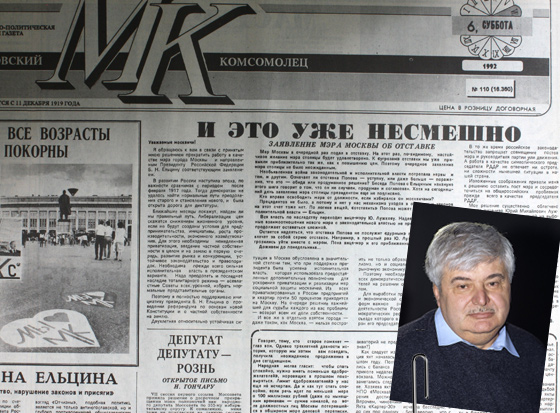 © Moscow Komsomolets
Who: Gabriel Kharitonovich Popov.
From what post: Mayor of Moscow.
Date of resignation: June 6, 1992.
Why: to solve social and economic problems on a all -Russian scale.
What he did after the resignation: he headed the Russian movement of democratic reforms, became the president of the free economic society and the International University in Moscow.
Quote:
“In the development of Russia, an era began, in importance, comparable to the period after 1917. Then the Democrats failed to find ways to overcome the old and the formation of the new, and the road for the dictatorship was opened.
The coming months will show if we will find the right path. The liberalization of prices will affect a decrease in living standards if the conditions for entrepreneurship, initiative, growth in performance, and economic management are not created. This requires immediate privatization, the introduction of private property as a whole and to land primarily, the development of the market and competition, sustainable legislation and law and order. First of all, a strong executive branch is necessary in the presidential version. It is necessary to overcome the last heritage of the totalitarian regime - omnipotent councils of all levels, to elect normal representative bodies ”(from the statement of Gabriel Popov about the resignation).
Presidential Decree on the resignation of G. Popov
The text of the statement of Gabriel Popov: “And this is no longer funny” (“Moscow Komsomolets” of June 6, 1992)
4.
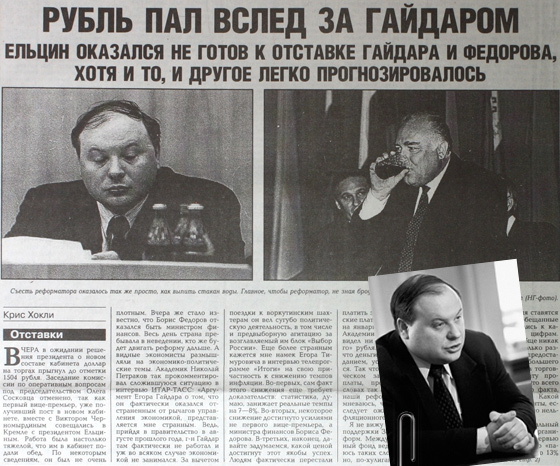 © "Independent Gazeta"
Who: Egor Timurovich Gaidar.
From what post: First Deputy Prime Minister.
Date of resignation: January 13, 1994.
Why: as a sign of disagreement with the economic policy. As an example, illustrating unacceptable actions, Gaidar cites the interbank agreement on the unification of the monetary systems of Russia and Belarus and the decision to build a new parliament building.
What he did after the resignation: since December 1993 - a deputy of the State Duma, chairman of the Russian Choice faction, from June 1994 - chairman of the Democratic Choice of Russia party. He was actively engaged in research and journalistic work, headed the Institute of Economic Problems of the Transition period (since 1999 - the Institute of Economics of the Transition period).
Quote: “I cannot be in the government and in opposition to it at the same time. I can’t be responsible for reforms, not having the opportunity to prevent actions similar to those that were said here, without the necessary levers for the consistent implementation of economic policy, which is convinced of the correctness of the correctness ”(from the letter of Yegor Gaidar to President Boris Yeltsin).
5.
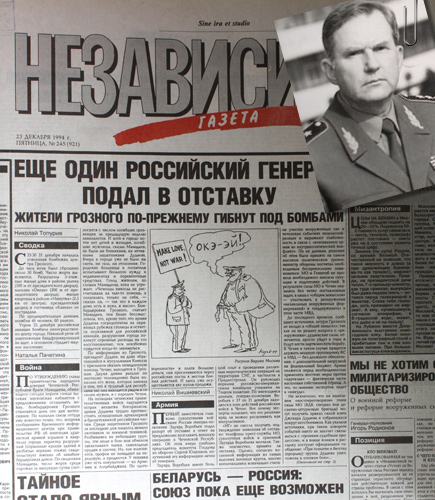 © "Independent Gazeta"
Who: Eduard Arkadievich Vorobyov.
From what post: First Deputy Commander -in -Chief of the Ground Forces of the Russian Federation.
Date of resignation: December 21, 1994.
Why: refused to participate in a military operation in Chechnya "due to its complete unpreparedness."
What he did after the resignation: since 1995 - a deputy of the State Duma (second and third convocations), a member of the political council of the Democratic Choice of Russia movement, since 1999 - a member of the ATP faction, took the post of deputy chairman of the State Duma Committee on Defense.
Quote: “The minister told me that I was disappointed in me and I need to file a resignation report. I replied that he was ready with me ”( from an interview with E. Vorobyov ).
6.
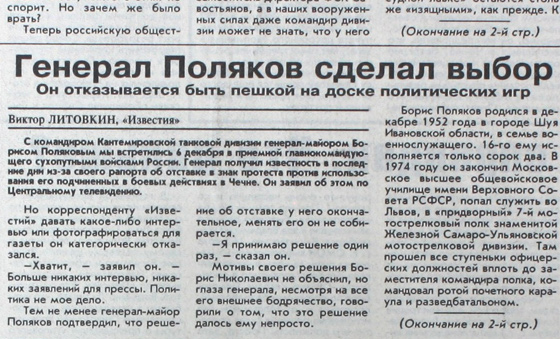 © Izvestia
Who: Boris Nikolaevich Polyakov.
From what post: commander of the 4th Guards Tank Kantemirov Division.
Date of resignation: December 3, 1994.
Why: in protest against the recruitment of the counterintelligence officers of his division for hostilities in Chechnya.
What he did after the resignation: commercial activities.
Quote: “Naturally, they didn’t go there on their own. Somehow it was organized. How? This is the case of those people who organized, and remains on their conscience. If they have courage, they must declare this ”(B.N. Polyakov, from an interview with the program“ Today ”on NTV, December 3, 1994).
7.
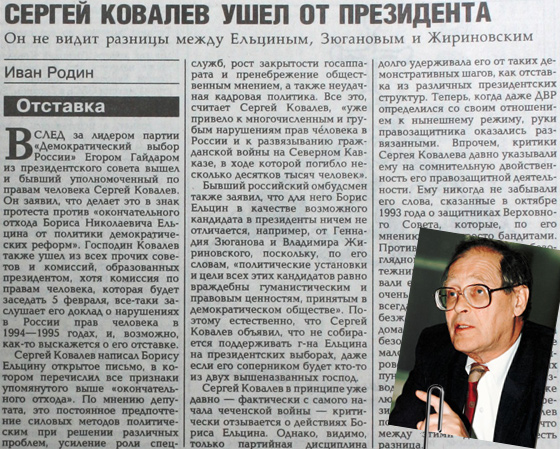 © "Independent Gazeta"
Who: Sergey Adamovich Kovalev.
From what post: Chairman of the Commission on Human Rights.
Date of resignation: January 24, 1996.
Why: in protest against the “departure of Boris Nikolaevich Yeltsin from the policy of democratic reforms”, violations of human rights and war in the North Caucasus.
What he did after the resignation: since December 1996 he headed the public organization “Institute of Human Rights”, in 1996-2003 - a member of the Parliamentary Assembly of the Council of Europe, and in 1999 he was elected to the State Duma according to the List of the ATP.
Quote: “For me personally is bitter and the fact that you betrayed yourself. I believed (and continue to believe) that even the secretary of the regional committee is able to become a man. In some periods, it seemed to me that you almost succeeded. But you refused this possibility - but you could. You have made your choice. Soon we will choose ”(from the open letter of S.A. Kovalev to President B.N. Yeltsin).
8.
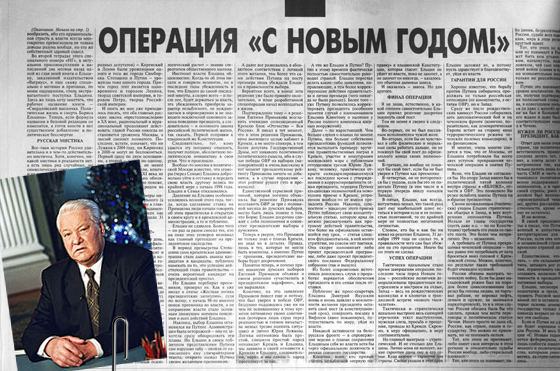 © "Independent Gazeta"
Who: Boris Nikolaevich Yeltsin.
From what post: President of the Russian Federation.
Date of resignation: December 31, 1999.
Why: to give the way to the new generation of politicians.
What he did after the resignation: on January 6, 2000 he headed the Russian delegation during a visit to Bethlehem, since April 2000 he officially retired.
Quote: “Today, on this unusually important day for me, I want to say a little more personal words than I say usually. I want to ask you for forgiveness for the fact that many of our dreams have not come true with you. And what seemed simple to us turned out to be painfully difficult. I apologize for not justifying some of the hopes of those people who believed that we could, in one jerk, in one fell swoop, can jump from a gray, stagnant, totalitarian past to a bright, rich, civilized future ”(from B.N. Yeltsin’s television).