
Translated material
Stories about the USSR
What the great writer says is becoming historical truth.
Lyudmila Ulitskaya, "Green Tent"
The history textbook is a useful and necessary thing, but sometimes it’s good to complement it and something else. For example, a good historical story or memoirs of participants in events. Such memoirs are usually written for adults and not so often turn into children's books. Of course, Soviet writers willingly remembered and even somehow tried to comprehend their pre-Soviet childhood, immediately came to the mind of “Konduit and Swabbani” by Leo Kassil, “Silver Coat of arms” of Korney Chukovsky, “The road goes to Dal ...” Alexandra Brushtein. The post -Soviet writers (and just those who lived at that time) did not immediately recall their Soviet childhood. It takes time, and you yourself need to calm down a little. However, recently, the memoir genre penetrated into children's literature.
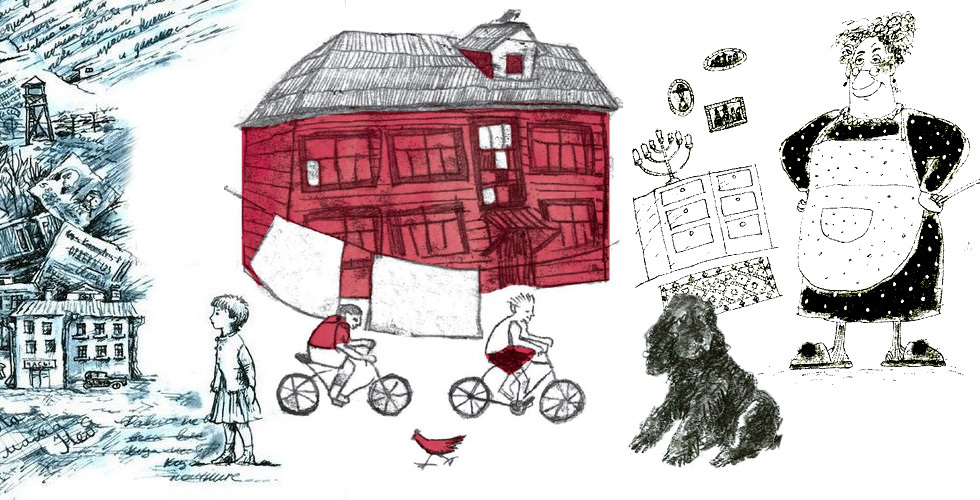
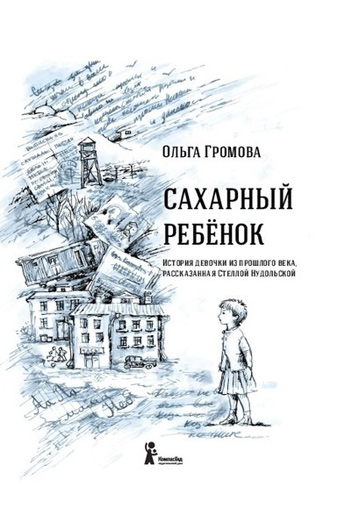
Perhaps one of the most remarkable and noticed novelties of this year was Olga Gromova’s “Sugar Child” (KOMPASGID Publishing House, 2014). This book opens up a completely new page - memories of the Stalin time for children. The first swallow of the theme of Stalinism in children's books was the “Stalinist nose” of Evgeny Yelchin, but “Sugar Child” is not a novel where the scope for imagination is possible, but a true story about the real life of a real person, Stella Nudolskaya. She herself was not able to write a book; She talked about her life, dictated the records, but this is still not enough for the text to turn into a book for children. This magical transformation managed Olga Gromova, and the book turned out to be such that it is impossible to break away and it is also difficult to cry too much.
 © Publishing House "Komapasgid"
The story of a girl is not just from good - from a beautiful family. Loving parents, caring nanny. The child was brought up on wonderful literature, taught to act correctly and think on his own. Poprazing Anatoly France, "suggesting that pleasure can be found only in good deeds, she was never refused pleasure." But happiness does not last long, the thirties, the times of the most “cannibalist”, dad (like many other dads at that time) is arrested, and mother and daughter turn into “members of the family of a traitor of the homeland”. What does a camp and unbearably difficult work mean, the bullying of the guards and inhuman conditions, and then the settlement in distant Kyrgyzstan, where Muscovites have to master a life that they did not even dream of.
I do not want to deprive the reader, young and adult (for, like any good children's book, this is an excellent reading for adults), the pleasure of their own discovery of this story. I will not retell the plot further, I will only say that the book is full of genuine suffering and genuine joy. Where it is especially difficult, where death from hunger, cold or illness lies literally every minute, there are always people who are ready to help those who are even harder. The immigrants, local Kyrgyz, exiled Ukrainians and Volga Germans, who settled there, help each other, and the Volga Germans, and with the outbreak of war, also evacuated from Belarus. Who is not in this “triumph of internationalism”, created by the Soviet government in the hope that people will hate each other and be afraid of this very power.
Elya, nicknamed the Kargizov “Kant Bala”, which means “sugar child” - such white -skinned girls in those parts see infrequently - manages not to become embittered, not to hate everyone and everything. She learns to speak Kyrgyz and in Ukrainian, remembers by heart the Kyrgyz epic “Manas” and almost becomes “Manaschi”, a storyteller. And when life is already starting to improve a little and mother finds the work of a chemistry teacher, she is fired for one careless word with the next monstrous formulation: “For the lack of pathos of socialist reality in the chemistry lesson.” Really, a very familiar approach, nothing new can be invented.
 © Publishing House "Scooter"
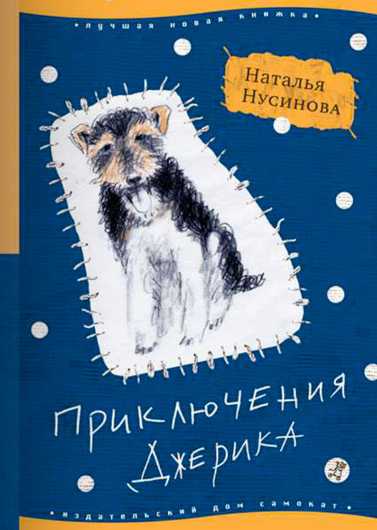
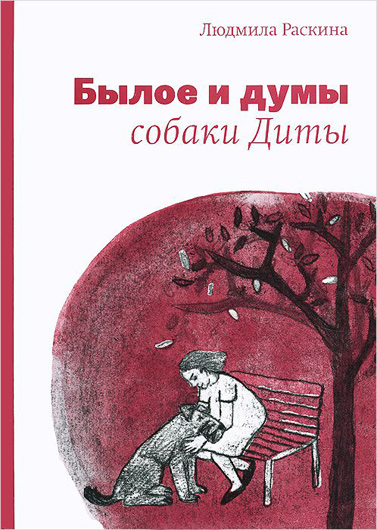
“Sugar child” is not the only memories of Soviet life that turned into a children's book. The other two books endure the reader during the “vegetarian”, in the seventies. This is the “Adventures of Jerick” by Natalia Nusinova (Samokat Publishing House, 2009) and “The Past and Duma of Dita’s Dogs” Lyudmila Poskinina (Publishing House “Pink Giraffe”, 2014). In both books, the main characters (and in one - even the narrator) are dogs, Jerik and Dita. Politics and everyday life are intertwined in these books exactly as they were intertwined then: the simplest things are densely knitted on politics. Natalya Nusinova is the daughter of the famous screenwriter Ilya Nusinov, which means that one cannot but tell in the book about how the film “Attention, Turtle!” How is it that a small creation of the letter “h” opposes Soviet tanks - is it not a hint of Czechoslovak events?
 © Publishing house "Pink Giraffe"
And Dita’s dog with taste describes the preparations for Mrs. Nixon's arrival in the “simple” English special school, where her little mistress is studying. According to these two books, in many details, you can imagine the life of those who were then called the "creative" and "technical" intelligentsia. Where people lived (a two -room apartment in Cheryomushki), what books stood on the shelves, that the grandmothers - mothers worked - prepared for lunch. And as slowly, in small portions, the children learned about the history of their family-which of the grandfathers-grandmothers, aunt and uncle sat in the camps, for which they planted (“Well, what are you bored. We plant for everything”).
 © Astrel Publishing House
And about the very recent past - “Mannyun” Narine Abgaryan (Astrel Publishing House, 2012), a terribly funny book with many continuations, slightly reminiscent of “Sandro from Cheghem”. You read in the subway, and people turn around, because it is simply impossible to restrain laughter. The funny adventures of two girls against the backdrop of real life are a shortage of products and goods, the preparations of pickles and jams for the winter and other memorable circle of the last years of the Soviet regime. From the frightening and sinister, power becomes absurd, absurd, surviving from the mind and already much less affects the life of two wonderful families - Armenian and Jewish - and their young representatives, Narine and Manuni.
So, memories of the Soviet past. I would like to continue to limit myself to the genre of memories.