
Translated material
Crimean human rights activists have difficulties
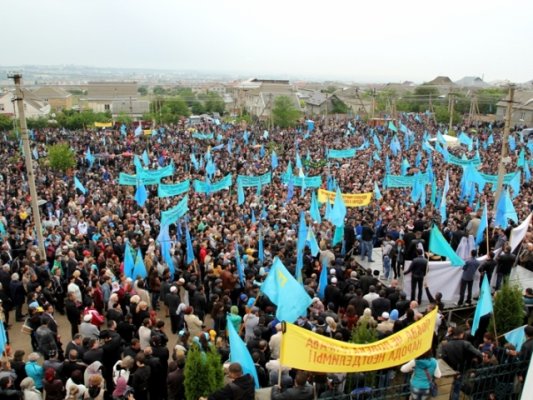
The first difficulty that the Crimean human rights activists with freedom of assembly arises is the absence of human rights defenders in the Crimea, who are ready to engage in this type of work systematically.
Our organization was engaged in this direction, disputing the judicial prohibitions (Crimea was the second region after Kharkov by the number of prohibitions of peaceful assemblies), disputing local decisions, helping activists and NPOs in organizing events. However, now we were forced to leave the territory of Crimea, since it is impossible for activists to stay unsafe and to operate openly (to work by the legal reception), given the abduction and torture of activists, arrests and accusations of terrorism.
Another difficulty lies in serious differences between Russian and Ukrainian legislation in the field of regulation of the right to peaceful meetings. In Ukraine, there is a notification procedure for holding peaceful assemblies, that is, in addition to notification to the executive body, no documents are required to submit. There is no coordination procedure and, even more so, permits (the presence of permissions surprises even people loyal to the Russian regime). In Ukraine, there is also no specialized law on freedom of assembly, but there is only Article 39 of the Constitution of Ukraine, which guarantees this right. Only the court can limit this right, according to the article.
At the same time, in violation of the Constitution of Ukraine on the territory of Crimea, local authorities made various decisions , but the disputing of such decisions in the courts always ended with success.
In Ukraine, there are also no articles that are “approximately similar” to the ban on peaceful assemblies, but they are not. For violation of the procedure for holding a peaceful assembly,Article 185–1 of the Code of Ukraine on Administrative Offenses is used. But the article refers to a violation of the “established procedure” of the organization or conducting measures, but there is no established order as such. If there is a court ban, and people have come out, this article is applied, it is believed that "the order was established by the court." (A more difficult article, “Failure to fulfill court decisions”, was not used in Ukrainian practice.) If this article is applied simply to the participants in the meetings (and this was), then cases are falling apart in court. In 100% of cases, if people disputed the protocols - they came to court, defended themselves, then they refused a fine. The size of the fine can be from 170 to 340 hryvnias (from 11 to 22 euros).
In Ukraine, the deadlines for which citizens must notify the authorities of holding a peaceful assembly are not established. The article of the Constitution only says that it is necessary to notify "in advance". The Constitutional Court of Ukraine on appeal of the Ministry of Internal Affairs explained this norm in decision N 4-RP/2001 dated 04/19/2001 :
“Determining the specific terms of early notification, taking into account the characteristics of the forms of peaceful assemblies, their mass, place, time, and the like, is the subject of legislative regulation.”
That is, at the moment, for the action, you can file a notification the day before the event and on the day of its holding. At the same time, the legislation contains a conflict: according to part 2 of Article 182 of the Code of Administrative Procedure of Ukraine, the court does not have the right to decide to restrict the right to freedom on the day of its implementation:
"The claim received on the day of the events determined by the first part of this article, or after that, remains without consideration."
That is, it is impossible to prohibit the holding of the meeting, the notification of which was received on the day of the conduct is impossible.
As for the actual compliance with Russian legislation in this area in the Crimea, it, like in the Russian Federation, is observed selectively-they prohibit the mourning rally and the Bekir Choban-zade conference, but they allow the Crimean Tulumbasa festival or the Holi paints festival.
Decisions can be disputed in the Court of Appeal of the Republic of Crimea. The appeals are submitted, but have not yet been considered. It is difficult to judge speed and effectiveness.