
Translated material
No, your voice is bad
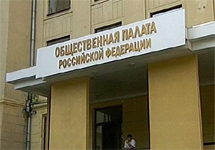
Voting on the Internet for candidates to the Public Chamber takes place with large -scale falsifications. This was reported in the blog of the leader of the Party of Progress Alexei Navalny.
Voting leaders in many categories are unknown people who are also not leading any election campaign. At the same time, almost three times more votes were presented for them than for such well -known leeces as actor Konstantin Raikin or TV presenter Nikolai Drozdov. The latter lead in the category "Culture and Creativity", gaining more than 15 thousand votes each. At the same time, in the category of "industry associations of producers" the head of the non -profit organization "Russian Poultry Union" Vladimir Fisinin received almost 42 thousand votes.
“Here it is, the real power of the Internet! The voices themselves appear from where and go to those who need it,” the blog says.
At first, the vote took place without violations. However, in mid -May, a massive stuffing of votes began. “Is it necessary to say that the unfortunate pair of independent candidates who formed the leaders of the vote, while it was real, became not just outsiders, but the deepest losers,” Navalny writes.
So, Grigory Melchonyans from the Voice association overtook the closest competitor. By the end of the vote, he gains a little more than 9 thousand votes. At the same time, the leader in the Countering Corruption category, the head of the Union of Consumers, Vladimir Slepak received more than 36 thousand votes.
“It seems to me that our small voting effort reached the goal. Having understood in which outsiders the power is in fair vote, they staged a fabrication of such a scale that Kadyrov with 99 percent of Putin at 99 percent of the appearance nervously smokes aside,” Navalny notes.
In total, 262 candidates in 14 areas of activity participate in the elections to the Public Chamber of Russia. A quarter of the composition of the Public Chamber is elected by Internet voting . About two million Russian citizens cast their votes for the candidates.
In 2012, online voting was used in the formation of a new composition of the Council on Human Rights . 83 people claimed 13 seats, released after the exit from the HRCs of a number of public figures. As a result, President Vladimir Putin proposed increasing the number of members of the Council by including all those who took the first three places in 13 online voting nominations.