
Translated material
The third chamber
On Friday, May 30, the first Internet voting for candidates for members of the Public Chamber is completed. In fact, this body does not have any real powers, however, the status of a member of the Public Chamber sometimes gives some advantage in solving specific problems or in lobbying any interests.
Until 2014, the Public Chamber was actually formed by the president of the country. The head of state appointed part of the members, those, in turn, selected the rest of the body.
In 2013, amendments were adopted, according to which the method of forming OP changed. Now each regional public chamber is appointed to his representative, 40 people are appointed by the president, and 43 are elected by Russians on Internet devices through the website of the Russian public initiative.
All candidates were divided into 14 areas of activity, for example, “Services and Consumer Market”, “Social Support of Citizens”, “Trade Unions”, “Development of Public Control”. Accordingly, candidates who will take the first three places in their groups will eventually be held in the Public Chamber.
Any Russian could vote on the public services website. A citizen could choose a candidate of each of the groups, that is, he had 14 votes.
Voting on the choice of members of the Public Chamber is the first experience of the state to transfer the electoral activity of Russians to the Internet. Earlier, online voting was held by the opposition-the elections to the coordination council of the opposition turned out to be the most massive. In addition, the votes of citizens are gathering on the website of the Russian public initiative under various proposals, which, after collecting 100 thousand signatures, can become bills.
The experience of the elections to the Public Chamber showed that in online there are no less problems than in organizing the usual elections.
After the publication of amendments to the law in the elections, quite a lot of candidates decided to take part, who are either openly opposition to the current government, or whose social activities are outside the framework of state ideology.
The co-chair of the Voosa, Grigory Melkonian, lawyer Mikhail Khodorkovsky Elena Lukyanova, children's human rights activist Boris Altshuler, and the head of the public organization “Right to Weapon”, Maria Butina, took part in the Internet.
In total, a little more than 2 million votes were cast for the candidates-that is, at least 150 thousand people took part in the Internet voting, but most likely more. Despite the fact that this figure seems to be not so small, in reality the winners do not look like some powerful public opinion leaders.
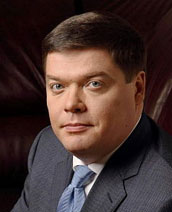 Alexander Ryavkin
The most votes in the elections were gained by Alexander Ryavkin, a permanent representative of the Ural Biomedical Closure of the Ural Biomedical Association in Moscow. But he also gained only 44 thousand votes - about the same is received by no one unknown candidates in the municipal elections to the capital.
During the voting, a violation that is quite familiar to ordinary elections was discovered when incomprehensible people on corporate buses were taken to the points where they could vote. Only instead of polling stations these were branches of Rostelecom or even the office of the Public Chamber itself - there it was possible to register on the public services website in a few minutes and, accordingly, take part in the vote.
After the complaints of candidate Elena Alshanskaya on May 15, for an attempt to buy voices, the organizers of the elections excluded Leonid Shafirov from the race of Rostov. Then the registration point on the public services portal opened under the Public Chamber was closed.
After some time, the Kuban boxer Dmitry Pirog was removed from the election for the use of the administrative resource. In total, five out of 267 candidates were removed, which is not so much, the Russian CEC sometimes “atrocities” is much stronger.
Without a reaction, many reports were left of how the employees of a company or students are forced to vote for a particular candidate - few dares to write official complaints, signing them with their own name, and without this it is impossible to start the proceedings and even more so to remove the candidate.
Of course, leaders of the Russian opposition, whose popularity among active Internet users, on average, is significantly higher than that of ordinary citizens, with great discontent perceived the news that several thousand votes were presented for “their” candidates, and several tens of thousands of unknown citizens. But here it is worth studying the election format closer.
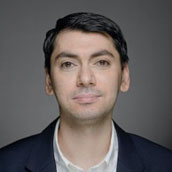 Grigory Melchonyants
It is also clear that the readers at the blog of Alexei Navalny, who campaigned to vote for Gregory of a small -nan, is much more than the head of the “Union of Consumers of Russia” by Vladimir Slepak, who, in the direction of “Development of public control”, overtook the co -chair of the “Voice” four times - received 36 thousand votes against nine.
However, if for the opposition participation in the elections to the Public Chamber is more likely a gesture - they themselves admit that this body has no authority and they are not very interesting, then the noticeable part of the winners, obviously, knew where and, most importantly, she knew why.
44 thousand votes of the Moscow representative of the Ural Pharmacists means that he understands what kind of lobbying opportunities to him will give him membership in the Public Chamber, in which cabinets he will be able to enter and in which television programs to participate.
Few people doubt that several years ago, representatives of the opposition could easily organize their supporters in such a way as to advance to the Public Chamber, if not all 43 elected members, then at least one person in each group. Now the maximum that they are capable of - several thousand votes of Grigory Melkonian, a man who really did a lot to develop the institution of transparent and honest elections in the country.
Even if a couple of tens of thousands of votes for competitors from the opposition candidates are wound, is it so important if the candidates themselves found only several thousand supporters? It seems that this question is the main result of the first online elections to the Public Chamber.