Date
Author
Егор Мостовщиков/ «Русский Репортер»
Source

Preserved copy
Translated material
Son Cousteau, grandson Cousteau
June 1, Fabin Cousteau, with the team, went to the depths of the ocean, where he will spend 31 days
The KUSTO team intends to live in the ocean on this base 31 days, which no one had done before. Fabyen Coustea is the grandson of Jacques-Yves Kousto, the son of Jean-Michel Kousto, the ocean groove, who lived in a flock of white sharks for four and a half months. His life, fears and why he again goes to the depths - in the essay The New Times
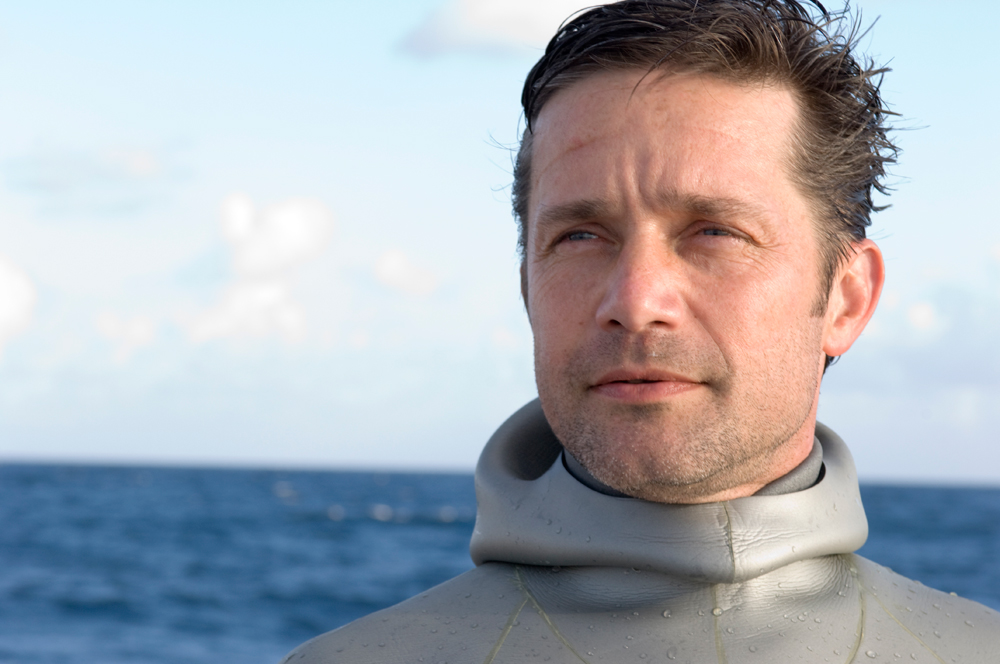
In the deprivations of the ocean life of Fabyen, only food is bored, but not very /photo: Carrie Vonderhaar
Everything will pass as usual: first, the question about grandfather, Jacques-Yves Kousto, then the question of childhood on the famous “Calipso”, and Fabyen Cousto as usual-as usual-the grandfather had two ships, the former Miner of Kalipso and the turbocharged “Alsion”, and yes, he grew up on board both ships. Then a couple more questions about the grandfather, his famous red cap and about why Fabien himself does not carry the same, and in general - why he is engaged in all this inexplicable madness, like the case when he lived in a flock of white sharks for more than four months. In anticipation of these infinitely asked questions, Fabyen Coustea is twisted in a chair, studies the black walls of the Tiny Studio of the New York Office of the BBC and exclaims cheerfully: “Here is even more closely than in the aquarium!” A young BBC employee is in vain trying to configure the equipment to contact the BBC head office in London, and does not react to the guest jokes.
“Do you have the Internet here? - Kousto chuckles and pretends to be twisting the console handles. - Maybe games? You know, I can talk to them with a French accent, if you want. I don’t know, then they will understand me? And I will understand their London accent? It will be funny! In general, I can talk to them in French. ”
In New York 10 o’clock in the morning, in London 15.00, but the London office does not hear anything, the radio station employee nervously understands the sound and strictly throws the oceanographer: “Let's better focus on the interview. English is preferable. " “Oh yes, I think, I can even do it in a dream,” Kousto is not offended at all.
Now, five weeks before June 1, the day when he and his colleagues will go to the depths, Kouzo has to communicate with reporters twice as much as usual. He knows by heart all the editorial office in the city, after the broadcasts squeamishly erases the generous television make -up from his face, slowly flowing out in the spring sun, answers with crumbling, almost formed words and adds jokes to the place. Fabyen Coustea applies to his fate as a test, because otherwise no one will know what he and his team are doing. Five weeks later, he and six more people will sail 9 miles from the Florida-Chis archipelago, chains of coral islands and reefs, put on diving costumes and aqualanges, dive from the boat, plunge into the Atlantic ocean to a depth of 20 meters and swim in the Aquarius underwater laboratory, one of several similar bases in the world. The Mission-31 will set a record: in the laboratory the size of a trolleybus, the Fabin Cousteau team will live and work 31 days. Before them, not a single person on earth has yet lived in the ocean for so long. Army conditions, loads, like the astronauts, three -tier beds, a common toilet, a narrow passage, a small kitchen, 10-12 hours of diving with scuba gear per day, and fish, yes, especially fish, they are silent and do not ask questions.
An employee of the BBC finally contacts London and passes the Coustean headphones. A greeting is heard in the ears, the Kousto responds to the peppy “hi!”, Pushes his glass of Starbuck, smiles on duty and prepares for the first issue, about his grandfather. Everything will pass as usual, perfectly, smoothly, and once again they will not ask him the most important question: what is the descendant of the two most famous oceanographers in the world and at the same time have stupidity to do the same?
But Fabyen Kuo has an answer to this.
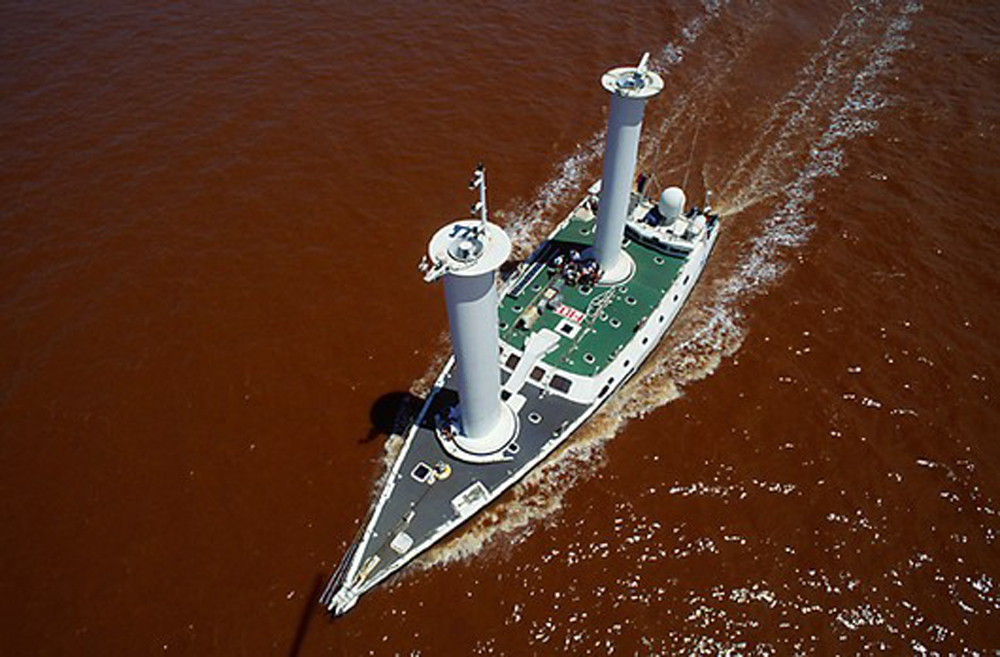
Jacques-Iv Coustea himself developed a turbo parus technology for Alsion. Water of Madagascar, April 1, 2003
Frenchman in New York
The Frenchman Fabyen Coustea, a native of Paris, spent most of his life in the United States of America. The family constantly moved, and Fabyen managed to change their place of residence 24 times. In recent years, he settled in New York, in the prestigious area of Brooklyn Heights, although he assures that at home he is mostly changing clothes and living in a suitcase. He speaks English without an accent, although he can “turn it on” it at any time, because the Americans find it “charming”. He thinks simultaneously in two languages, he also sees dreams in both languages, often uses sea terms in speech like “fishing” in the sense of “search”. Smiles and laughs in American, he writes dates in European-day, month, year. He loves to admit childishly, dresses like a New York diode in shirts, jeans and jackets with a bastard handbag and how a European wears a backpack with an umbrella sticking out of his pocket. Extremely educated and friendly, tall, in good shape, short gray hair, sometimes turning into silver. Instead of a typical iPhone in New York-Nokia Lumia, one of the main sponsors of Mission-31.
Fabyen Kuo does not have a salary. The family of his activity calls the "oceanographer-research" and "film maker". This means that he studies the world ocean, makes documentaries and leads a team of two dozen people. Kuo also runs its own non -profit company Plant A Fish, which is seeking to improve the aquatic ecosystem around the world by supporting and restoring the ocean flora and fauna. Movies, producing, performances at conferences and sometimes support for sponsors bring earnings. And although Kousto jokes that it is impossible to underestimate the luxury of salaries, insurance and pensions, he himself does not miss the times when he had all this: it was a period when he tried to convince himself that the ocean was not for him.
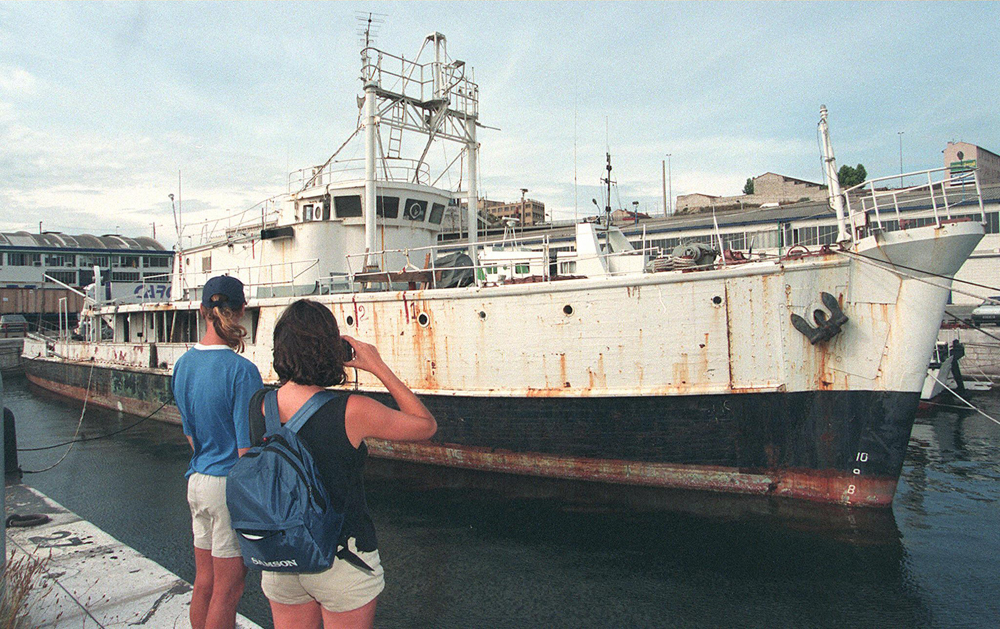
For more than 20 years, Calipso has been rebuilt from a pile of metal to a museum. The photo was taken in 1997
Roots
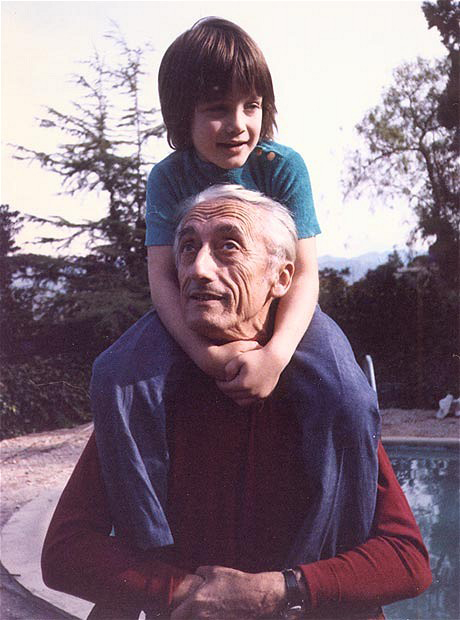 |
| Jacques-Ivan Cousteau with the grandson Fabyen. 1970 |
Fabyen was born in Paris in 1967. Two years earlier, his grandfather Jacques-Yve Kousto, even then the famous oceanographer, scientist and inventor of the scuba gear, received an Oscar for the documentary “World without Sun”. The film talked about the construction of the Cousto team of the world's first underwater house-the Conshelf Two base at a depth of 11 meters in the Red Sea, in the Shab-Rumi lagoon, where Jacques-Yve lived with the team for 30 days.
“My grandmother Simon was more on Calipso than grandfather and dad combined. In fact, she was a real captain of the ship, and it was thanks to her that my grandfather was so successful, she just didn’t go into the cell, ”says Fabin. “She was an amazing lady, was the first woman-Aqualangist, the first woman-Akvanavt.” Fabyena’s mother, Anna-Maria, was for many years an expeditionary photographer on board Calipso and Alsion. Father Fabin, Jean-Michel Kousto, an architect by education, but as a result, in 1979, after the death of his younger brother, Philip joined his father’s team. Philip was a favorite of a bush-sloomer, shot all his films with him and was supposed to become the main successor of the family business. Philip crashed near Lisbon on an amphibian plane PBY CATALINA. Crushed by grief, Jacques-Yve called his eldest son into business, and their partnership lasted 14 years. Jean-Michel Kousto eventually became an independent figure in the world of oceanography and environmental protection. Philip children are also engaged in oceanography, like Fabyen's sister - Selin. In general, the real clan, which, however, Fabyen does not intend to continue: he does not have and will not have children, because he does not want to be an ever -missing parent.
Jaws
Throughout his life, Fabyen grew among scientists, researchers, documentaries and oceanologists. “I did not know anything but childhood,” he says today. When he turned four years old, he “like a good French child” asked his dad to bring him a fried chicken from KFC, and while Jean-Michel was wiping along Los Angeles behind the fast food, Fabien made his first diving immersion. Upon his return, Jean-Michel discovered his son at the bottom of the pool, dividing one scuba gear with a family friend. “I was curious: I saw that all family members were diving, and I thought: well, let's see what it was at all,” Fabyen explains. A week later, he was presented with his own scuba gear, and the family went to dive on the coast of California. By the age of seven, Fabien dived professionally and constantly saw sharks nearby, and this was always completely natural. Sharks, says Coustea, a sign of a healthy ecosystem; Now he sees sharks much less often. Then the famous Belgian comic book “Tintin’s Adventures” fell into his hands. On the cover of the most beloved release of Fabin, the “Treasures of Blood Rokama”, the reconditioner-adventurer Tintin and his faithful dog to Mila are depicted, who plow the ocean bottom in an submarine that looks like a shark. The submarine looks deliberately cartoon - a stupid smile has a “shark”, his eyes are pulled out, and a glass dome grows from the back, in which Tintin and Mila are visible. This image forever crashed into the young Fabyen into the subcortex of the head: even today on his iPad-Mini case with this picture. Fabyen is sure: in the world there is no more motivation than children's fantasy.
"
“My grandmother was more on Calipso than a grandfather and dad combined. In fact, she was the real captain of the ship "
"
At the age of seven, Fabyen and his family traveled on a cruise airliner in the Atlantic Ocean. In the ship cinema, they twisted the recent premiere of “Jaw”, and Fabyen asked his parents to take him to a session, but the parents of the child, who had seen real sharks many times, strictly forbade him to watch the “jaws”. “Now you look at the“ jaws ”, and it is so funny. These are the 1970s! - Cousteau laughs. “But in those years, he forced many to be afraid of the ocean.” And they twisted this film on the ocean liner, of course. ” After listening to Rodney's instructions, Fabyen immediately made his way into the hall. Immediately after that, again, “being a smart French child”, he began to ask his parents questions, of which everything became clear. Fabin was punished for a month. “It was worth it! - recalls the oceanographer with a laugh. - I was fascinated, shocked by this incredible animal. It is fascinated by how it devoured boats, divers, rioles, budget. ” The film left the young Cousteau puzzled: how so, he himself saw sharks and they are not at all such ruthless killers. He finally understood what he wanted: to show the world the real life of sharks. And Fabyen realized how exactly he wants to do it-with the help of a Shark's submarine, like Tintin's.
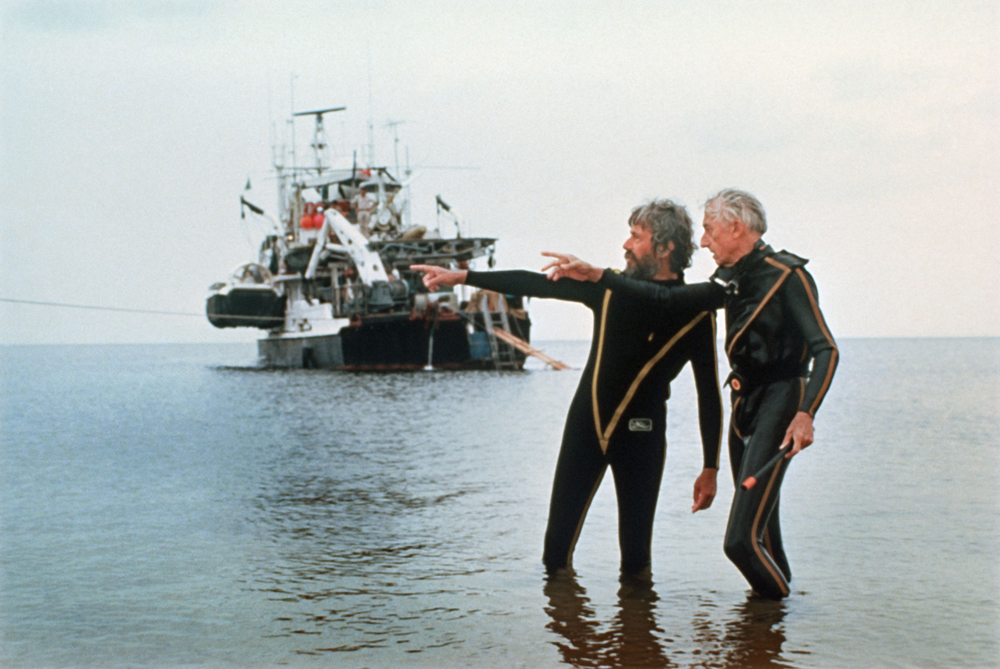
Jacques-Yves and Jean-Michel Kuso during an expedition to Calipso. Amazon, 1975
Choice
From the very beginning, Fabyen Coustea understood that he actually had no choice. He always knew what he wanted to do, but he knew that being the third generation in the illustrious dynasty and continuing their business - an activity for suicides. Then Fabyen decided to check: is the ocean really beckoned to him, as it seems to him? “I needed a test, proof - is they pulling, attracting, whether other things are puzzled.” He fundamentally did not go to study as an oceanologist and scientist, instead graduated from Boston University and received a bachelor's degree of environmental economics. He studied international marketing and business, worked as a sales agent in an art gallery, account manager, graphic designer. These were the days when he received a stable salary and was engaged in "traditional work." In his search, Fabyen came across only one phenomenon that fascinates him: vintage motorcycles. I never thought to become a racer, but I found a hobby for my whole life: when there is time, locks up in the garage, turns off the phone and dug for hours in a metal pile. “This is my Zen-Mother, sitting when no one can find me, take some simple thing like a motor, make it out, collect it back and breathe a completely new life into something that could go to a landfill otherwise. I love it very much, ”says Coustea. In general, no matter how he broke himself, no matter how he fought with himself, but in the end he came to what he had to come to: only the ocean makes him happy.
In the summer of 1997, a few months before the thirty years of Fabin, at the age of 87, Jacques-Iv Kousto died. After himself, he left 134 documentaries, 70 books, a new, pop-entertaining approach to science, environmental organizations with more than 300 thousand members, acadalanges, turboparus technology, a broken and flooded barge in Singapore "Calipso", family greatness and family drama. A few years before his death, Jacques began to sue his son Jean-Michel, who opened the Kousto hotel at Fiji. Kusto-day demanded that Kusto-Sin did not call his businesses the name “KUSTO”, but call them as it is: “Jean-Michel Kousto”. The scandal was fierce, the press was delighted. If you talk to Fabin, he is ready to remember this. According to him, the scandal turned out to be large mainly thanks to journalists, because in reality it was only an arbitration dispute, the meaning of which was to share the non -profit activity of the grandfather's environmental “Cousteau society” and the activities of the fatherly business. “Did this affect our family? Of course, it influenced. If we were normal people, non -public figures, this would be resolved as all the disputes in the family are resolved. ” The Kusto-Sin’s dispute lost, the hotel is called “Jean-Michel Kostya”, and in articles about the bush-day and a bush-son they write only this way: there were great disagreements between them in a common cause. Conflict of fathers and children in its purest form.
In the early 2000s, Kusto-Venuk made a choice: he threw everything and returned to the ocean. He says that this was a difficult solution: he perfectly understood what the expectations of the public he would face. Fabyen began to make films and, together with his father and sister, Selin created a three -year documentary series Ocean Adventures. And then he finally decided: the time has come for a submarine shark.
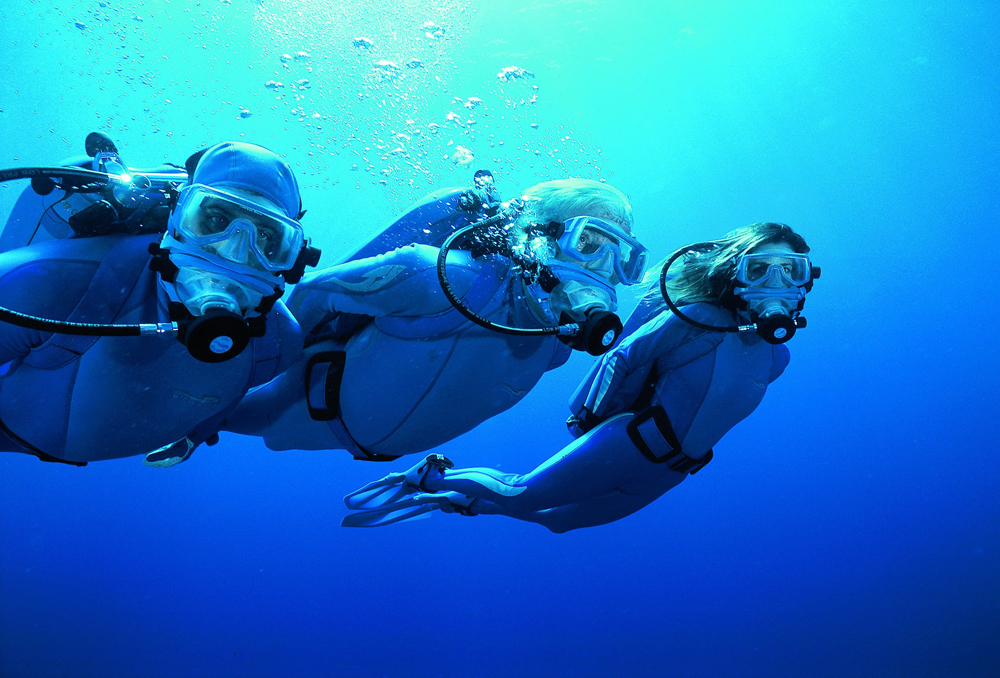
Family Coosto: Fabin, Selin and their father, Jean-Michel. 2007, work on Ocean Adventures
Floating horse
Troy was a real masterpiece of crazy engineering thought. The Square Submarine had to deceive the white sharks with its appearance so that they would think that next to them, if not their fellow tribesman, then at least a braided cousin from Australia, as Fabyen joked. Troy was not at all like a naive Tintin boat from Cousteau's childhood. It was a steel killer, huge, terrible, like death itself, almost "jaws." Evil acute muzzle, wide, devilish mouth. A frame of bent steel pipes, a spine of elastic plastic, the case is sheathed with thick latex, mixed with glass chips and glass, to simulate a rough skin of sharks. The folding head made of fiberglass, cameras in the “eyes”, disguised as fish, and a closed pneumatic system, chasing air, like blood through the veins, through the pistons of the tail and fins. The boat is not sealed, so Fabyen put on a diving suit, climbed into a womb, filled with water through a folding head, laid on his stomach and jaostics controlled this four -meter boat. Five hundred and forty -four kilograms of pure floating madness.
He always knew that being the third generation in the illustrious dynasty was a lesson for suicides
"
Troy took from Kuo three years of life. When he just began to look for people who would build a boat, they told him: a guy, you completely moved off the coils. Then there were the same crazy as Fabin, necessary for the construction of $ 100 thousand. They collected as they could. But when everything worked out, the group of Coustea went to the island of Guadelup, and every day Kousto climbed into this deep -sea mutant, sailed behind the marked flock, was introduced into it and for four and a half months in a row took off and studied its habits. “The only way to learn something new about these animals is to see their behavior when we are not nearby. When we do not sit in a cage, do not poke them with a stick, do not feed them, ”Kousto explains with a fanatical aspiration. - “Troy” was not just a fun device, she was a new way to study sharks, to camouflaged that we were not there, to swim like one of them. How do they communicate with each other? What reality surrounds them? How do they hunt when you do not stimulate them? " Fabyen says that during the time of his grandfather and father from sharks, they either simply kept aside, or killed away from sin, and he decided that it was just to stop being an aggressor. But was it terrible at least? “I was comfortable. They never touched the boat, did not show aggression, were relaxed. We learned that this is an animal that is more than three to five times more than us, maybe we are scared. ” The operation under the cover was a success: Fabyen shot 170 hours of unique material, most of which, mostly scientific and biological, was not included in his 2006 film “Demon's Mind” for the American public channel PBS. Television wanted sharks and spectacles, not science and new knowledge. The Cousteau, however, does not look upset: he still achieved his own.
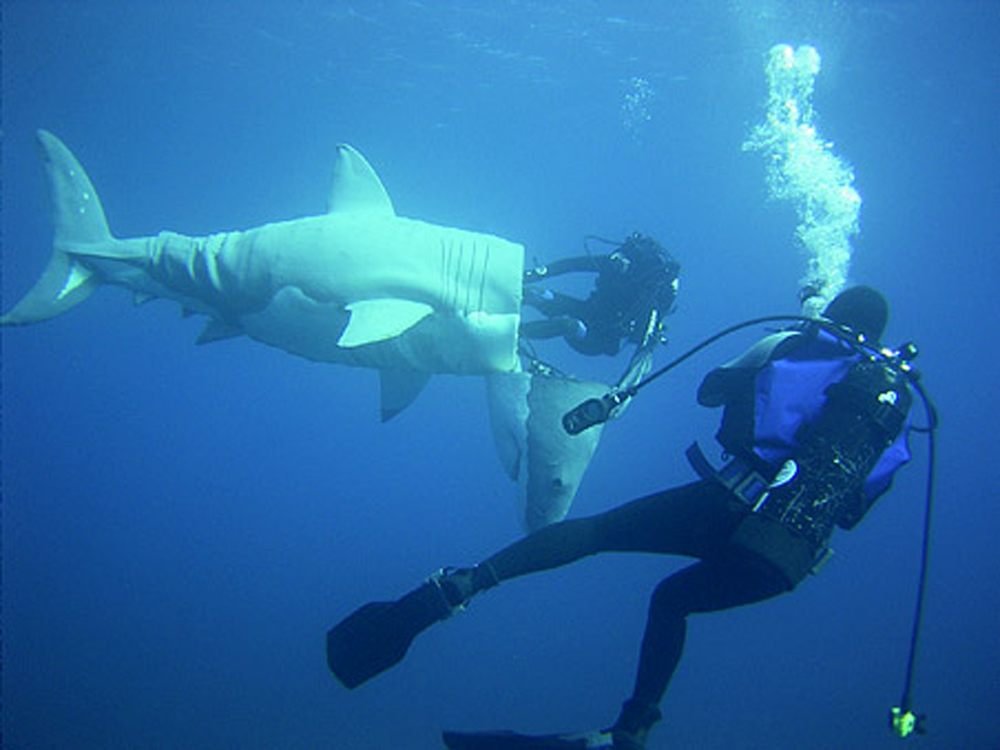
When Fabyen came up with a lodge shark, they told him that he was crazy. Guadelup water, 2006
Mission Florida-Chis
Life conditions under water are largely similar to life in space. A condition close to zero gravity, overload, semi -finished products, food in tubes or diluted in water, small living area and limitless silent something around. Actually, NASA often sends the astronauts to train in Aquarius, the Fabien base compares with the international space station, and people who live under water for some time call the aquanauts. There are several differences from life in space. Firstly, hair under water grows faster. Secondly, in the base itself there is still gravity, and since the aquanauts swim a lot, their legs do not atrophy like the astronauts. Thirdly, Fabyen laughs, if colleagues finally got, who you will find out very close in an open toilet, then you can always go to the ocean. The area is 3 by 14.5 meters, the pressure is three times more than for the ISS - three atmospheres, along the walls of the cabinets, equipment, multi -tiered beds, the passage is 70 centimeters, so that seven people will constantly touch each other. But there is Wi-Fi, and with it Facebook, Twitter, Instagram, Skype, E-mail. Is it possible to imagine, he asks Fabyen that his grandfather sits at the bottom of the ocean off the coast of Florida and led a video for schoolchildren in China on video communication? Of course not. And Fabyen will conduct such a lesson.
Until June 1, Fabyen visited Aquarius several times, but only for an hour; His team will beat the previous record of being on this database - 19 days. According to Fabin, in the world there are generally few people who lived under water for more than a few weeks. The only one who, after July 2, 2014, when Kusto and the team return to the surface, will be close to such a long stay under water is, of course, his own grandfather Jacques-Yve Kousto and Conshelf Two. True, the Fabin team will live twice as much at a depth, and therefore the pressure will be larger and the conditions are harder. The Fabin team is going to study the effect of climate change and pollution on the ocean, as well as the physiological and psychological influence of life under water, without the sun, on the person himself.
According to Fabyen Coustea, each new generation of people should stand on the shoulders of the previous one, take the best from them, but always interpret the surrounding reality in their own way. Jacques-Yve Kouso opened the ocean to the world. Jean-Michel Kousto devoted himself to the protection of the ocean as a single environment. Fabyen went on: he says that we should start thinking out of the box (go beyond the limits of stereotypes), because if you study the ocean just as it was studied before, you can’t find out anything new. Cousteau believes: the time has come for young, risky, impudent, self -confident and enthusiastic people, a lot of discoveries awaits them. “You can’t imagine how many white spots are still left in the ocean,” says Fabyen. “What we have learned over the past hundred years is less than five percent.” We know so negligible, only basic things. Biological species, climatic changes, geology, dynamics - we all do not understand this well. But this is precisely what leads our whole life, economics, technology, science, medicine. This planet is called "Earth", but should be called the "ocean".
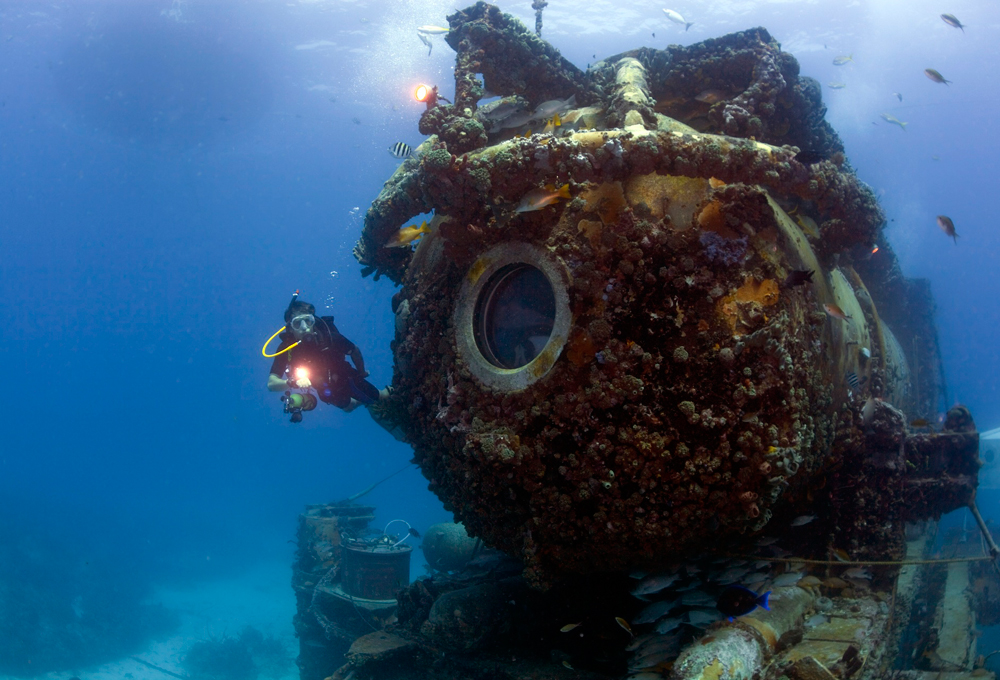
There are only a few similar Aquarius bases in the world. The size of a trolleybus and conditions, as on an ISS. Florida-Kis, 2014
The burden of the surname
There is a small office in the Brooklyn Heights area in Fabyena Coustea. This is a very ascetic room with white walls, a table, a white marker board and a corner shelf. Here, Fabyen works and gives a skype interview. That piece of the cabinet that is visible to a person in Skype is built so that the eye notice only the most important thing. Here are the Nokia phones, which the team will shoot research, here are the DOXA clock boxes, also sponsors, here the white board is painted with the last preparation points for the launch of the “mission-31”. Before the start of the project-three weeks, Fabyen had bags under the eyes, a slight unshaven face on his face, and he records everything on the board with small handwriting that must be finished before departure from New York on the archipelago. Then, finally, the mediatine before the launch, two weeks of test swims, endless repetitions of security protocols, training, rejection of communications, preparation for diseases, accidents, injuries, breakdowns, and repair. There is no time left to be nervous.
“This brings me up. I'm not my grandfather! But I have the feeling that people just want to see my grandfather "
"
If, among all this mess, to ask Fabyen Cousteau, which is usually not asked about him - about his conflict with the outside world, then he will have finished answers for the first time, mediachelha will fly away, and he will begin to choose words. All his life he is met and judged by his name. The surname, Kuwo says, on the one hand, opens the door, but on the other, when you enter this door, expectations from you are ten times higher than from others. And it would be okay, but often the surname often does not solve anything - in the end, the search for financing always for Fabin becomes a problem. But there is a constant comparison with the grandfather and the expectation of the best result. “But there is always only one first, one pioneer. People see only the result of decades of work and do not see my grandfather’s failures, and measure the current generation on this, I am simply dishonest, ”Coustea shares. Couuse seems that when people look at him, they might think one of two-either he was just lucky with the genes and he came to everything ready, or he does all this only because of his grandfather. “But this heritage is given along with heavy responsibility and the public with a biased performance,” he is stuck without worked out phrases. - Sometimes it leads me to fury. I'm not my grandfather! I am an independent personality! And I do what I dreamed of doing all my life, this is my world. But I have the feeling that people just expect to see my grandfather. This is my conflict - to be yourself and have the right to bear this surname. This is a privilege and burden. ” Fabyen Coustea smiles tiredly, really, not in American, not inhabited. In the end, he says, this is only the very beginning of his career, and there are still many crazy ocean feats ahead. Which ones, he refuses to say, he only said that he dreams of once exploring the oceans of Mars. And he hopes that he will also leave behind a trace.
Somehow in an interview, Fabyen Cousto quoted his grandfather, who said that there is only one way to shoot fish in the world-to become fish himself. Probably, this principle works in other cases: for example, to be a bush, you need to become a bush.
Photo: Carrie Vonderhaar, Georges Gobet/Afp, East News, Anne-Marie Cousteau, AFP, East News, Naglubine.com, Kip Evans, Missioin Blue