
Translated material
About extreme states of the mind
An insult, no matter what it is expressed, is always aimed at humiliating human dignity. So, it should be personally focused, since it is aimed at suppressing personality. But what is an insult among total depersonalization? In army barracks and camp huts, the position of a person is complicated by the fact that he, getting there, is already humiliated by the state, which appropriated the monopoly right to humiliate. The situation of prisoners and soldiers in Russia is determined not only by the restriction of their right to freedom - that is, subordinating the rules of service or execution of punishment - but also by understanding their condition as fundamentally humiliated, and by virtue of a certain a priori law of the state to suppress and humiliation.
Extreme reflexology
This law of the state is usually considered something self-evident and natural-that is why the Russian layman is amazed at the moment when he is faced with the ideas that prisoners and soldiers can also have some rights, and the inalienable minimum of such rights is the right to human dignity. What advantage can the criminal have? He is a criminal, but the zone is not a resort! What rights can a soldier have? The army again is not a resort! Here the boss, the deputy, the general has dignity, this is understandable. But what is the advantage of the “camp dust” or the characters of such an anecdote: “The truck rolled over ... - with people? “No, with the soldiers” ... a society in which human dignity is considered an estate privilege and is understood as “honor by the rank”, is devoid of experience in the perception of human life itself as something unconditionally valuable.
In this situation, people reflective, acutely experiencing humiliation from the state system and society, develop individual personality strategies: from confrontation to decide to die, but to remain a person, or, conversely, “take your conscience in a captin”, that is, temporarily abandon their cultural essence, closing in a marching shell, with which they can do everything, if only they were fed and not beaten.
In 2002, I introduced into a scientific circulation the concept of “extreme groups” [1] , distinguishing the subculture from the regime communities of Irwin Hoffmann, arising in the Russian army and in places of imprisonment [2] . Such groups are characterized by the extreme of the socio-anthropological state of their members, the beyond humiliation of a person, causing prohibitive response by the law of a compressed spring. Extreme groups as “regime communities of a Russian-camp type” are alternative systems of organized violence. To understand the nature of the alternatives that we are talking about, we should clarify what it is opposed to.
The official state system, collecting large groups of people behind the barbed wire for a long time, overwhelming the backs of them, putting it into uniforms, subordinates a single routine, immerses the civilian personality into a limal (from limen ( lat .) - “border”), or a border, a condition in which the individual is forced, in the figurative expression of Victor Turner, one of the auto authors' theory, “cross item The desert of undatus ” [3] . In a limited state, the subject of action is not a person, but the man-masse is a system, a brigade, a detachment. It doesn’t matter in the ranks that every specific person knows and means. A man in the system is a drill unit, and out of order this unit is “nonsense”, “zero”, as the singer of the young Soviet society said, who saw one huge system in it. In a strictly semiotic sense, we can say that in the total community a person does not matter. Thus, humiliation of a person in the total community is his humiliation in a semiotic vein, expressed in the reduction of the diversity of the meanings of a cultural person to a mono -Semic state of a combat unit. It is difficult to consider humiliation of this kind of insult due to the initial totalness and mass humiliation, as well as nonsense, the depersonalization of mass humiliating effects, inseparable from the general state of the total homogeneous environment. Such a quality of the environment does not imply a focused insult. Whether this condition is offensive or not - everyone gives an answer to this question, and individually. We can say that in total communities a way to maintain individuality is to maintain sensitivity to insults. In turn, individuality is resistance. Another question is - is collective resistance possible? Yes, but only within the framework of alternative systems that reproduce alternative hierarchies, laws, institutions of violence, suppression, humiliation of the same human person, which seems to these alternative systems - just like a totalitarian state - a source of danger.
In resistance to total depersonalization, the meaning of informal, tireless, alternative dominant-hierarchical social structures, growing in a dull "desert of unusability". The more dry this “desert”, the more branched, bizarre, more ugly the plant will be, the deeper its roots penetrate into some nourishing bowels, the higher its ability to resist. As you know, the state could not eradicate neither grandfature nor the camp system - in particular because their roots go into layers much deeper than the nature of the state.
You will answer for the bazaar!
The accumulations of a large number of people isolated for a long time from the information mainstream become a platform of a pure laboratory experiment, where we can observe algorithms for cultural evolution. Many researchers pay attention to the similarity of informal hierarchies and the principles of their organization with archaic primitive communities: symbolic detail in the representation of statuses, actualization of physiology as an instrument of power, a high role of taboo in the organization of domestic support and social interaction, and the victim institution. The practice of insults is also archaic in nature - a way of applying and perception.
Socium, formed under the influence of extreme factors and requiring mutual adaptation of individuals who do not have any positive motivation for interaction, develops special symbolic practices that contribute to the maintenance of a dynamic hierarchy, including peripheral substrate groups. One of these practices is the institution of insults-the institution of socio-semiotic, in which the movements of statuses, meanings, and entities are carried out.
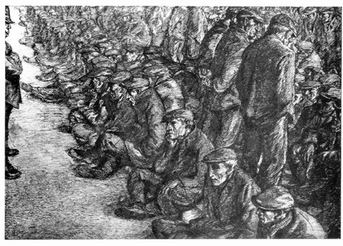
The regimen communities of the camp type are distinguished by a high level of domestic violence, due to the fact that there is a minimum minimum or there is no ordinary semiotic space between the bodies. Hence the high degree of physicality in the semantics of insults. If you try to make an insulting classifier in such communities, we will not find anything special. The definitions of opponents through metaphors denoting social and/or sexual antipodes prevail here. High -ranking males in extreme groups, as in living nature, demonstrate their social status through the representation of increased sexuality. A person is reduced to his own body. Such monemic reduction offends the personality, but only if the personality realizes this state precisely as the vast majority and destructive, and himself as a multidimensional polysemic phenomenon.
Insults in prisons and barracks are different than in open -type societies - more responsible, because customs require a “answer for the bazaar”, sometimes at the cost of life.
About the quality of the battle
This circumstance, however, does not mean that the dialogs and monologues of the convicts and soldiers are distinguished by the elegance of the syllable. They are saturated with swearing, and among the prisoners a special sophistication of battle is appreciated, as well as speech in general, which directly reflects and models high social status. However, unlike the situation of “large”, “normal” culture, swearing is not perceived here as an insult. Swearing in extreme groups is a fuse, it canalizes the insult into a non -hazardous, symbolic channel. The same words, phrases, expressions can serve as a personally focused insult, and non -ezadreznaya abuse, a “valve” for the release of the mental “pair”. Compare the insulting verbal adjective characterizing a specific addressee as a passive participant in oral-genital intercourse, and a non-ezadros-infinitive design used in the functions of interjection. In the first case, the camp community may demand that the participant in the conflict confirm what was said in practice, in the second-nothing will happen like that: the corresponding formula can be pronounced with impunity for any reason, for example, by knocking yourself by accident on the fingers or just because of a bad mood.
For insults, two active parties are needed: actively insulting and actively insulting. The thieves had an sophisticated technique of violence in relation to frarams. In the process of ordinary communication, the thieves suddenly begins to respond insulted to any harmless statement of Fraer, whose attempts to justify only exacerbate the conflict that arose from scratch. Once justifies, it means that it is to blame. “Invisibly offended” by the evil fraer, the thieves psychopathically plows himself, tears a shirt on himself and no longer screams, but “bliss”. This practice of staging insults is called - Blink.
In a similar way, repressive dominance in the army allows such a game: a humiliated soldier, tormented by representatives of a high -ranking group, screams from pain and swearing, without specifically addressing anyone. His tormentors attribute the victim’s abuse at their own expense, turning frank violence into an imaginary confrontation of equal - that is, trying to accept the pose of offended and give torture legitimacy, the nature of fair retribution “for the bazaar”.
Mat as a blessing
In this practice, it is customary to cover the opponent with “good obscenities”. The real goal is to legalize the violence of the highest caste in relation to the lower, the strengthening of the subordination of those who are humiliated. This is understandable: Fraer in the thieves world is a fundamentally alien. He can be insulted; It is possible, without losing the reputation, and passing himself for the one whom Fraer "insulted".
Offenders forgive only their own. This principle also acts in the practice of ritual humiliations, which, importantly, the humiliacs should not react as an insult.
Ethnographers, who were prisoners of Soviet prisons and camps, describe the Institute of “Research”, which, in their opinion, is a replica of archaic initiations. The “registration” is subjected to newly arrived prisoners, as a rule, those who came to jail for the first time. As in primitive initiations, a beginner is subjected to bullying and suffering, ritually designed as peculiar games and riddles, to which you need to know the correct answer in advance. However, if you read Proppa, Eliade, Levy-Strass, you can understand yourself that among the answers to the quest questions, you should choose one that will allow the cost of suffering to achieve something clean and high, while avoiding the temptations of low and dirty.
To eat a piece of soap or bread on a clean newspaper, bed on the toilet cover? We need to choose soap.
Be a pilot (fall from the upper bunks flat on a board with chess shapes) or tanker (crawl under the lower bunks)? It is preferable to be a pilot.
Pico in the eye or in the ass once? You need to choose an option with glealing your eyes with a sharpening blow.
According to the sociologist and anthropologist Lev Klein, who wrote in the Soviet camps the “Ethnography of the camp” [4] , they will not give you soap (soap in the deficit zone), they will catch the sharpening of sharpening when falling into the chessboard. Even if in the process of successful initiation it is ahead to be crippled, the further fate of the initiated will be much more prosperous than the one who has chosen an easy but incorrect way of defilement.

The most important thing: the subject should in no way show his dissatisfaction, irritation or God forbid a resentment against a new society and his wild customs. There is a saying in the camps: “Offended GR fuck” - a tough version of the popular saying: “They carry water on angry.” But if in the normal community this saying is by no means understandable, then in extreme groups of the camp type “offended” - the name of the caste “lowered”, which in the hut is given a filthy corner, “offender”.
The meaning of suppression of resentment in a closed localized community is in the prevention of those undesirable features of the individual’s behavior, from which the entire team may suffer in an extreme situation. Such a community expects mental resistance from him, the ability to forgive the neighbor for the sake of joint survival. Extreme groups allow us to trace in its extremely pure form an algorithm for “coercion to altruism” as one of the principles of cultural generation, which was simply and beautifully formulated by Robert Frost: “To live in society means forgiving.”
In general, the attitude of the prisoner to the world can be anything, but not offense. The language of the zone is filled with reducing nouns: “mother”, “hospital”, “boss”, etc., as if a person convinces himself of toy, fake, the frivolity of the brutal reality surrounding him, and it does not insult him.
Why do the offended turn the whole world into an “offender”?
In the regulatory system of a traditional society, there was always a place for insults, and conscious precisely as a “safety valve”, saving from deadly. Recall the Iliad, where Athena intervenes in the quarrel of Achilles and Agamemnon:
Cums discord, Peleon, and, contenting the angry heart, with evil words of the ulcer, but do not touch the sword with the hand.
In mythology, there is a special character-defender-a tricster, who assumes the role of a controller checking the universe for sustainability. To this end, he destroys the established order of things, offends the gods, violates the taboo. As a result, the world temporarily covers chaos, from which its entire system comes out updated.
If an important role is given to insult in mythorical practices, then resentment in traditional societies has always been considered worthy of contempt rather than compassion. This attitude to offended is understandable: society requires the mutual adaptation of its members, the constructive resolution of conflicts for the sake of joint survival. If everyone is offended by everyone, the war of everyone will begin, Bellum Omnia Contra Omnes. Therefore, the traditional society develops universal mechanisms for preventing grievances. They underlie the processes of socialization: the provocation of resentment produces mental stability in personality, humor promotes the neutralization of aggression.
One of the tasks of education and socialization in any cultural tradition is to form in a person the adequacy, adaptability, resistance, based on a system of positive identities that remains stable in traditional societies. Their destruction is produced by a cultural vacuum, in which entire peoples and states, offended by each other, can be subjects and objects of insults. Acute insufficiency of positive identities is compensated by the identity of the negative: "I do not know who I am, so I need an antipode." Under these conditions, resentment turns out to be a valuable compensatory mechanism, the image of an antipode offender becomes a criterion for identity. "We are not them, they are not us." Well, who, in fact, are we? - "Not them!"
The modern world is global, and in it the global scale acquires the number of all kinds of offended, who produce societies, where a cultural vacuum arose, where socialization mechanisms are destroyed by the power and intensity of global telecommunications. This is what Grigory Pomerantz said about this:
One of the problems that cannot be solved by high -precision missiles is billions of undergrowths, arrears, and non -prostrate. The primitive peoples knew how to educate their boys and girls. A simple culture climbed into one head entirely, and in each head there were the necessary elements of ethics and religion, and not just technical information. Culture was spiritual and moral. A natural example of this integrity remained a father and mother. Now they are bankrupt. A teenager who has mastered a computer considers himself much smarter than a grandfather who writes a fountain pen. The world has changed, every five years it is different, and all the old is dropped from the ship of our time. Billions of people are growing for whom shrines, opened by illiterate shepherds, do not cost a broken penny. Hordes of the Smerdyakovs, future Huns, a cloud have accumulated over the world. And on any day they are ready to follow Ben Laden or Barkashov. The Gunnov did not read the note of Ikonnikov (and if they read it - what are Ikonnikov to them? What is Prince Myshkin to them?). They will not take the fate of another on themselves ...
One of the disasters of our time is the global vulgarity, erupted into air. There is an illusion that globalism and vulgarity are synonyms. And therefore globalism is already causing fierce resistance.
Померанц напрасно обидел гуннов — но гунны, полагаю, не обиделись бы, ведь они были из тех «примитивных народов», которые «умели воспитывать своих мальчиков и девочек», а задачей воспитания является способность улаживать конфликты.
Приведу пример преодоления конфликта из жизни ненцев. Во время праздника молодые ребята выпили, подрались, сломали в чуме жердь. А в тундре жердь взять негде, и вообще жерди для чумов — особенные. Их изготовление требует и знаний, и умений, и зимнего времени года, когда оленеводы откочуют на юг к зоне лесов. Молодой мужчина не сможет жениться, пока не сделает жерди для чума.
Итак, жердь сломана. Праздник кончился, настало утро. Возникла напряженная ситуация. Чтобы инцидент был исчерпан, человеку, виновному в поломке жерди, необходимо починить ее собственноручно, иначе конфликт может перейти в фазу обиды. Прошел день, затем другой. Виновник происшествия не приходит, а пострадавшая семья страдает — не из-за материального ущерба, а именно из-за морально-психологической дисгармонии. «Ну что же он не приходит-то...» — «Почему бы нам самим не починить жердь? Это же легко!» — «Легко-то легко, но нельзя самим чинить. Обида будет» [5] .
Как видим, в традиционной культуре конфликты регулируются обычаем, и члены общества стремятся к гармонизации отношений. Обиды друг на друга меньше всего способствуют задачам совместного выживания в тундре.
Мода обижаться на весь мир, на собственную среду существования возникает не в традиционных обществах, но в лиминальных — попавших в промежуток между традицией и цивилизацией. Во многом это объясняется переживанием собственной несостоятельности, которое может быть присуще как маргинальным личностям, утратившим свое место в обществе, так и народам-маргиналам, потерявшим свое место в глобальном перераспределении ресурсов и производств.
Обиженность на мир — едва ли не главный тренд современной путинской России, возникший на фоне исторической травмы, пережитой народом с не преодоленным до конца опытом рабства. Этот коллективный комплекс совпадает с личными комплексами вождя, привыкшего оскорблять и оскорбляться. Нужно быть действительно обиженным жизнью, чтобы увидеть в манифестациях этих комплексов признак «возрождения величия России». Культ военных побед на грани истерики может быть предметом исследования не историков, но только психологов; таковы же все эти георгиевские ленточки как узелки на память о былом величии, все благодарения «деда за победу» и автомобили с наклейками «на Берлин!», «трофейный»... Почему трофейный? Потому что это «БМВ» или «Мерседес» — владельцы продукции германского автопрома пытаются полушуткой изжить ментальный конфликт, возникающий из-за противоречия: почему победители предпочитают ездить на автомобилях побежденных, а не на своих собственных? И вместе с тем ряд сопутствующих вопросов, главный из которых: кто в конечном счете победил в той войне? Аэрографическое изображение танка «Т-34» на капоте «Порше» — это не ответ на вопрос, который ставит история, это уход от ответа в область шизофрении с ее «расщеплением ума» на реальность, измеряемую в лошадиных силах, и на идентичность, ускользающую от измерений.
Истерический культ победы не имеет отношения ни к патриотизму, ни к памяти о войне. Это симптом психологической травмы народа-победителя, бессознательно переживающего свою униженность и оскорбленность. How? By whom? Самой историей. Музой Клио, если угодно, позволяющей оскорбленному историей найти утешение в мифологии.
Дело не в удобстве позы обиженного. Обиженность — это поза ума, не справляющегося с информационным потоком. Стремительная глобализация, укрепляющаяся с каждым проданным смартфоном, с каждым новым аккаунтом в соцсетях, разрушает традиционную систему идентичностей в локальных культурах задолго до того, как их носители социализируются в культурах глобально-информационного порядка. Это порождает огромные массы нео-люмпенов, не знающих, кто они, но уверенных, что в их неудовлетворенности собой виноваты «не мы». Отсюда и присущий мировой «обиженке» антиамериканизм — недовольство адептов глобального карго-культа тем, что принципы мировой цивилизации оказались отличными от их представлений.
В такой среде экстремальных ментальных состояний востребованы всевозможные нишевые субкультурные практики, которые выстраивают суррогатные, но функциональные альтернативные ценностные системы и идентичности. Поэтому глобализация обиженности приводит к тому, что количество сект, клубов, фанатских ассоциаций и т. п. постоянно возрастает; этот тренд охватывает даже религиозные движения и церкви, девальвируя их изначальное культурообразующее значение. Церкви, как и секты, в условиях этой инфляции и духа, и разума превращаются для обиженных всего мира в своеобразные приюты, куда в поисках психологического комфорта приходят люди, неспособные отыскать его в себе. В традиционном обществе такие подсистемы обычно не возникают, поскольку культурная традиция справляется с большинством проблем индивидов, социализируемых в ее рамках, не только наделяя их правами, но и предъявляя обязанности — требуя адекватного и адаптивного поведения. В традиционных сообществах таким «обиженкам» просто не из чего возникнуть.
Лиминальные сообщества, движимые комплексами «великих и обиженных», озабоченные поиском «особых путей» в условиях кризиса идентичностей, оказываются неспособными адекватно оценить свое место в мире, адаптироваться к миру и тем более изменить мир согласно собственным амбициям. Они впадают в мифологический «кумар», в истерический пафос, смысл которого — претензия подсистемы на статус макросистемы. Такова логика любого фундаментализма — религиозного, экологического, гуманистического и т. п. В известном смысле фундаментализм — это обиженность фундамента на целое здание, попытка заменить собой и стены, и окна, и кровлю, и прилегающий сад. Но когда часть культуры пытается заменить собой культуру в целом, она превращается в антикультуру и действует в конечном счете самодеструктивно.

С другой стороны, наблюдая за экстремальными группами, мы видим, как в самых антикультурных состояниях происходит формирование новых культур на основе базовых информационных принципов, единых как на на микро-, так и на макросоциальном уровне. Дедовщина в армии и блатная иерархия в зонах были и остаются похожими на первобытные сообщества — прежде всего в силу одинаковой или очень похожей системы ретрансляции значимой информации, имеющей культурообразующее значение, точнее, в силу преобладания синхронных связей над диахронными [6] . Глобальный мир, будучи согласно метафоре Маклюэна «глобальной деревней», можно также назвать и глобальной казармой, проницаемой для наблюдения и автоматизированно управляемой. Реакцией на глобальный устав в виде международного права неизбежно будет глобальная «неуставщина» в виде, допустим, международного терроризма. Главная особенность любой системы — это порождение системных кризисов, преодоление которых заставляет систему развиваться.
[1] Банников К. Л. Антропология экстремальных групп. М.: РАН, 2002.
[2] Goffman and Social Organization. Studies in a Social Legacy. Ed. by Greg Smith. London: Routledge, 1999.
[3] Turner VW The Ritual Process: Structure and Anti-Structure. Ithaca — New York: Cornell University Press, 1977; Ван Геннеп А. Обряды перехода. Систематическое изучение обрядов. М.: Восточная литература, 1999.
[4] Этнографическое обозрение. №1/1990.
[5] Полевые материалы Н. А. Месштыб. Yamal. Экспедиция 2006 года, в рамках международного проекта по исследованию Арктики ENSINOR при поддержке Академии наук Финляндии.
[6] Арутюнов С. А. Силуэты этничности на цивилизационном фоне. М.: ИНФРА-М, 2012.