
Translated material
The common language of hatred
For a short period of the acute phase of the Ukrainian political crisis of 2013-2014, public rhetoric in the Russian -speaking information space has undergone huge changes. In fact, the language of hatred escaped from Marginines and turned into everyday life. The language of hatred held a demarcation line between Ukrainian and Russian society and split these societies from the inside. Social networks, which are an important element of public communication, have turned into the front of the information war, where it is already difficult to distinguish the hired landsknechs from "ideological inhabitants."
From social networks, the language of enmity goes into everyday vocabulary and further into the language of public persons. And vice versa, the “red word” of politicians or public figures meets the response “among the people”. It is characteristic that the rhetoric of hatred poisons primarily the Russian -speaking space - common to Russia and Ukraine, which causes irreparable damage to the intercultural dialogue. People speak the same language not in order to better understand each other, but in order to insult each other more sophisticated.
The resuscitation of the Soviet novel
As part of the ideological confrontation that covered the public discourse, a real rehabilitation of the Soviet novel occurred. Actually, ideology comes to life in the minds of people thanks to language and language policy.
The system of communist propaganda created a branched dictionary to designate enemies, the enemies were diverse - from internal (obvious and secret) to external - therefore, the volume of designations for him was large. For example, the word "junta" has found a new life. This term from the Brezhnev’s propague is well familiar to most Soviet people. They were usually marked with military dictatorships in Latin America. Ozhegov’s dictionary gives us a definition: “The military reactionary terrorist group that seized power and established a terrorist dictatorship.” In the Spanish itself, the word “junta” does not carry any negative connotation and means only “advice” (in the meaning of the advisory power body), “union”, “unification”. But in the framework of the Russian tradition, it brings a definitely negative shade.
Well -familiar with Soviet ideological instrumentation, President of the Russian Federation Vladimir Putin gave an impetus to the resuscitation of this Soviet term, calling the Kiev Provisional Government to the “junta”, which took power after the flight of the President of Ukraine Yanukovych from the country. “This is a junta, some kind of click,” said the first person of the Russian state. Of course, the Kiev regime had nothing typologically common with the military dictatorship of the Latin American model: the overthrow of Yanukovych took place as a result of the uprising, and not a military coup, among those who came to power there were no professional military men who risen to the steering wheel. However, the “junta” quickly took root on the Internet and in a wide public discourse.
As well as the definition of “punishers” in relation to the Ukrainian military participating in the hostilities against separatists in the east of Ukraine. This term dates back to an even earlier layer of the Soviet propaganda dictionary-to the “Nazi punishers”, who, in turn, turned to the Soviet vocabulary from the dictionary of the Russian radical press of the beginning of the twentieth century, denouncing the “royal punishers” who suppressed the uprisings of peasants and foreigners in the Russian Empire.
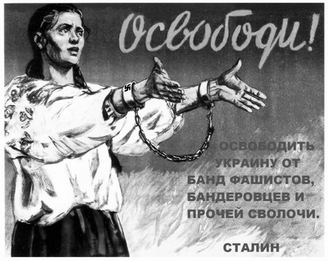
It is curious that the new Ukrainian usage of the “junta” and “punishers” mirror the propaganda dictionary of the Russian media. The power of Vladimir Putin was regularly called the “Chekist junta” or “click”, although typologically the genesis of the Russian authorities is also far from Latin American passions. There were “Russian punishers” - thus marked in the Ukrainian public discourse (and in the opposition Russian - also) conducting an anti -terrorist operation in the North Caucasus. It is characteristic that the Ukrainian authorities chose to make up fighting in the east of Ukraine, directed against separatists, under a legally less defined “anti -terrorist operation”, as their Russian colleagues regarding Chechnya and Dagestan did.
This verbal mask also had quite Soviet roots - the recognition of the existence of a certain social movement directed against the authorities also meant recognition of the existence of a social base for it, which, from an ideological point of view for the Communists, who spoke, as it were, on behalf of the whole people, was completely unacceptable. Therefore, rebel movements, as a rule, were marked as “banditry”, that is, a marginal phenomenon, divorced from the broad masses and representing conscious renegads.
Thus, both the Russian and Ukrainian side for ideological purposes uses a completely Bolshevik technique of discrediting the enemy as a deliberate marginal and criminal. Political scientist Gleb Pavlovsky wrote: “The political language of enmity itself abolishes the space of public policy - this is a place for democracy - and marks it so that it becomes a reconnaissance scheme of the front -line zones. Here, in order to defend yourself, we supposedly need to resort to the preventive denunciation of the villains or go under the protection of someone who practices this violence ... The language of enmity, which penetrated the public sphere, does not seek a real enemy. He actively invents it, creates from the urgent environment the name itself ” [1] .
In this curved propaganda mirror, Kyiv politicians, legitimized by presidential and parliamentary elections, turn out to be impostors who seized power during the military coup, and the movement of the Donbass separatists, which has a fairly massive social base, is declared a terrorist organization. Using a totalitarian language, it is easy to move on to the next stage - the enemy dehumanization.
Non -navigable irony
A huge reservoir for the birth of the enlightenment language of the 2014 model was network discussions around the 2004 Orange Revolution. His birth was facilitated by significant propaganda efforts of supporters and opponents of the revolution both within Ukraine and abroad. A wide range of emotional reactions of ordinary users of the network: rejection by a significant number of Russians by Ukraine gaining different subjectivity, rather than the “fraternal people” and “younger brother”, indignation of no less significant number of Ukrainians attempts to interfere with the Russian authorities in the internal affairs of Ukraine.
Some markers of the language of enmity in their initial head were an ironic character. For example, in the Russian -speaking segment of the “Living Journal” there was a phofudia community ( http://fofudja.livejournal.com ), whose participants commented on current political events from the position of imaginary oppressed Russian -language citizens of Ukraine. The texts were written in Russian with the help of Ukrainian keyboard layout (“Nationalists forbid to use Russian layout”) and were crowded with an ironic rethinking of current Russian propaganda. Here, for example, is a sample of the text from the community commenting on the proposal of the State Duma deputy Zatulin to declare the Georgian leader Saakashvili Persona Non-Grad in 2006: “And the Know Li Vi, Brothers, that Zatulin is a foofuda of the Ispo-Russian abdomen of the sorry for the bushrtye fight on two fronts. simultaneously? He is only nah, the Zhidobandera, but I with the Krimіnal gang of Jews! Here in the s, he is nє drumlt I project of need to the state -owned license plate. KOIM Produzmatrava 1. Saakashvіlі with prikhvostnami to the Plessonami non-grata in the ranga (I.Z.T.). This is terrible to the Jewish to the Bandera, as terrible, like all the people of Mislyashm is very » http://fofudja.livejournal.com/278938.html
It was there that the term “Zhidobanderovets” was born and in 2014 - as a symbol of the “anti -Russian union” of Jewish and Ukrainian nationalists (who had a completely real propaganda stamp of Soviet times about the cooperation of the Zionists and Bandera). But if in 2004 it was a grotesque, then in 2014, memes born in the Internet community were filled with menacingly serious content. The saving irony in the conditions of war ceased to work. The Russian journalist and philologist Ksenia Turkova writes: “The Russians sympathetic to Ukraine are joking about themselves:“ Yes, I’m a friend of the junta, a zhidobanderian! ” Laughter is a good idea to neutralize anger. But with the language of the enmity of the 2014 model, this does not work very much. They cease to understand irony, they cease to feel irony, it does not save ” [2] .
 The same thing happened with the “network words” “Vatnik” and “Dill”, marking the warring parties in the military conflict in the east of Ukraine, and wider - all involved in an ideological confrontation. “Watnik” - as a symbol of the condo of Russian patriotism, implicated on the cult of Stalin - appeared from the caricature on the VKontakte social network back in 2011, and “dill” grew out of the mocking name of Ukrainians, which was leaving the roots in the same 2004 (it seems that this appeared on the occasion of the Ukrov who won three. It would be necessary to check). In conditions of confrontation, the initially mocking, ironic forms that make fun of ugly forms of ultrapatriotism acquire a derogatory coloring that marks everyone in a row on another line of the imaginary front.
“Ivan became a quilted jacket”, “Vasily has crossed to dill” - these considerations on the network and household conversations do not mean the transition of a particular individual to the side of the Ukrainian army or the Donbass militia. This is a typical demarcation of “your own - alien” in the conditions of increasing dehumanization. Any statement, a gesture, even a joke are measured on these invisible scales of “quilted jacket” and “dill”. Based on this measurement, a public, but in the conditions of the network is a practically anonymous sentence: “our” person or “not ours”.
Researchers of the dehumanization Albert Bandur, Bill Anderwood and Michael Frombon [3] distinguished several stages of dehumanization. And the first of them provides for deplulation: the individual’s loss of all other group identities or the potential for their acquisition, except for one single (in this case, the effect of empathy, that is, there is no ability to put himself “in place” of the enemy). It is depluralization that is a source from which the further stages of dehumanization are growing, up to the demonization of the enemy/depressed, who become a source of all troubles - from personal to public. The enemy loses all human features, he is a source of absolute evil, therefore, all methods of struggle are good against him. The first step towards this is to raise a degree of hatred.
Overwhelmed resentment
The dangerous source of the language of hatred and mutual insults are indifferent historical mental injuries. Russian and Ukrainian society is a nutrient medium for the growth of hatred on the basis of old complexes associated primarily with the uninhabited and uniform problem of Soviet heritage, living and experiencing the experience of totalitarianism. If for some (most Ukrainians) the collapse of the USSR is the moment of gaining independence and subjectivity, then for others (most of the Russians and residents of the Crimea and East of Ukraine), expressed by the words of the Russian leader Putin, the “greatest geopolitical disaster”.
The history of the Ukrainian rebel army remains a painful point: for one part of the Ukrainian society, this is one of the bright pages in the struggle of Ukraine for freedom, for the other-the Bandera rebels are one of the worst collaborators of the Second World War, Hitler’s accomplices (although the real history of the UPA has nothing to do with collaboration). No less painful is the theme of the Holodomor of 1932-1933: on the one hand, in Ukrainian society, the crimes of the communist totalitarian regime are often replaced by ethnically colored crimes of “Muscovites and Jews” against Ukrainians, on the other hand, another extreme comes in Russian society - the denial of the Holodomor as a “Russophobic” project of malicious Ukrainians.
One of the training grounds for growing hatred in Ukraine, for example, became the Lugansk and Donetsk regions. The former Komsomol leaders and ideologists who were in power in the Donbass region under the “Party of Regions” brand have long introduced aggressive stereotypes into the mass consciousness in relation to the rest of Ukraine (and provoking oncoming aggression from other regions of the country).
Deputies of local councils practiced in eloquence, unacceptable in normal public space. Touching on the complex topics of public contradictions related to historical memory, the local elite chopped the head. For example, in Lugansk a “Monument to the VAP victims” was erected, given that Bandera (excluding the episodic warriors of the emissaries of this organization) did not operate in the Donbass, it was a purely propaganda gesture aimed at pulling the inhabitants of the West and East of the country, which perceive various phenomena of history in different ways. A large resonance in the Ukrainian blogosphere caused an entry on the blog of the Lugansk deputy from the Communist Party of Natalia Maksimets that on the day of memory of the victims of hunger 1932-1933, while everyone is mourning, she plans to “have fun”.
In an equally difficult and delicate language issue in Ukraine, the Donbass authorities also behaved like an elephant in a chimney shop. For example, a deputy of the Lugansk Regional Council from the Party of Regions Rodion Miroshnik in a public speech said: “It turns out that in this language (Ukrainian. - K. P. ) If we teach children, we are depriving them of everything, we are growing simply underword” [4] . His Donetsk colleague Nikolai Levchenko claimed: “The Ukrainian language is the language of folklore. With the provision of the status of the state Russian language, the need to speak Ukrainian will simply disappear. This is not a language of science. And the Russian language is the language of science, the language of civilization ... Let's be realistic. The second state language is nothing more than a formality. In Ukraine, the state language should be one - Russian. And so sooner or later it will be ” [5] . (During the rally passions, the rhetoric generally lost humanity - so, in 2004, at a rally in Lugansk, they said that after the victory of Yushchenko they would cut off his fingers for every word in Russian.) At the same time, it was worth noting that during the three years of stay of these deputies, nothing was done in order to civilize the issue of bilingualism in Ukraine. Since in the case of his decision, the ruling party lost an important tool from the arsenal “Divide and rule”, the contrasts of the Russian -speaking East and the Ukrainian -speaking West. In the muddy water, political speculations grew both Ukrainian ultranationalism and Russian imperial chauvinism. It is no wonder that after many years of ideological “pumping” it was the Donbass who turned out to be the center of the bloody civil confrontation in 2014.
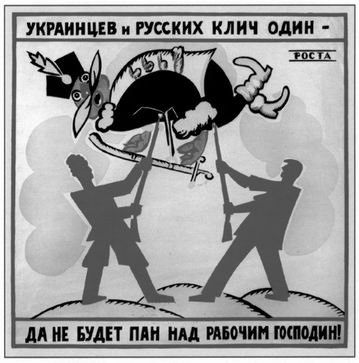
Excessive politicization of the historical past in Ukraine, the lack of a wide public, “non -partisan” discussion around painful topics makes it a “language of hatred”. The already mentioned Bandera from a local phenomenon, limited by the limits of Western Ukraine, grows in a distorted mirror of propaganda to cyclopean dimensions. From the Russian (and pro -Russian - especially in Ukraine) propaganda we can conclude that in the Second World War, the UPA was almost the main opponent of the Soviet Army, and any current Ukrainian who supports the independence of his country is the successor of the Bandera case - a radical nationalist. Ukrainian propaganda, in turn, turns the UPA into one of the peaks of the national upsurge for the militaristic mobilization of Ukrainian society. It is curious that in a fit of pro -Ukrainian sympathy, this utilitarian propaganda technique is also supported by some Russian opposition circles, which looks more than strange. As an explanation for the mind, only Bonmo Joseph Brodsky comes: "If Yevtushenko is against collective farms, then I'm for it."
Barbarization of public space
The transformation of the language of hatred into a core element of public discourse leads to a play to a decrease that cannot but affect the moral health of the peoples involved in this wild game. The postmodern collages of propagandists, when at the same time the Kiev anti-corruption and democratic revolution is declared “the advent of neo-Nazis”, and the anti-war movement within Russia is marked with “National Predicism”-the term from Goebbels’s dictionary-have a completely destructive effect on public morality. Moreover, the political landscape itself begins to change. Political analyst Alexander Morozov writes: “The evolution of Putin’s support from the“ electoral majority ”in the 2012 elections to the“ postcrymist majority ”2014 is the process of extrusion from the political center of moderate liberals and moderate conservatives in favor of politicians and speakers, which were previously marginals. There was a homogenization of the political center. Now any variety of positions has finally disappeared from it. Теперь спикерами российского политического центра в России являются Мизулина, Мединский, Рогозин, Проханов, Дугин и др. Входным билетом в политический центр является поддержка «Крымнаш» и допустимость военной поддержки русских за рубежом» [6] .
Варваризация публичного пространства сказывается и на политикуме Украины, пока не столь радикально, как в России. Например, предрекаемый успех праворадикалов на последних парламентских выборах в Украине обернулся их сокрушительным поражением — ни умеренные правые из «Свободы», ни пресловутый «Правый сектор» не прошли в Верховную Раду. Однако стал реальностью электоральный успех трескуче-популистской Радикальной партии Ляшко и индивидуальные успешные кампании в мажоритарных округах у лидера «Правого сектора» Яроша и открытого неонациста Андрея Билецкого. Тревожным симптомом милитаристического популизма стало и включение в избирательные списки всевозможных «полевых командиров» и «героев Майдана». Какую пользу эти, безусловно, смелые и лично достойные люди принесут в парламенте в условиях, когда страна нуждается в системных реформах, не очень понятно в рамках рациональной логики. Но зато этот политический процесс хорошо отражает массовый запрос на «фронтовую риторику» и «борьбу с внутренним врагом». Запрос на «хунту», в конце концов, уже не телевизионную из программы российского пропагандиста Дмитрия Киселева, а вполне реальную.
Все более втягиваясь в пространство войны, в том числе и посредством языка ненависти, и российское, и украинское общества все далее уходят от чаемого европейского цивилизационного идеала, погружаясь в архаичный мир. Погружение в который уже почти невозможно отыграть назад. Как рассказывал в одном из интервью уже упоминавшийся Глеб Павловский: «Я пытаюсь представить себе этих людей, что стоят во главе телеканалов. Возможно, они считают, что ничего, после зритель отмокнет. Изменится программа, больше семейных сериалов с котиками на экран, и все станут миролюбивыми и дружественными. Но мир не даст аудитории, а значит, и рейтинга политикам. Поэтому котиков, извините, уже не будет» [7] .
Все более востребованной оказывается идея изоляции — в России, оказавшейся под санкциями, это уже практически сформулированная государственная политика, но и в Украине, где общество вышло на Майдан, протестуя против сворачивания евроинтеграции Януковичем, в условиях милитаристского психоза также начинает играть большую роль мифология «предательства Запада», «ножа в спину украинской свободе», что также подразумевает в перспективе изоляционистские настроения.
Преодоление распада
При повышенном градусе агрессии в обществе повышается роль ответственности гуманитариев за каждое сказанное слово. Именно безответственность постсоветского образованного класса во многом сделала возможной нынешнюю ситуацию. Моральный релятивизм, склонность к заигрыванию с «пикантными темами» типа ксенофобии посеяли зубы дракона. Если условный гуманитарий «Иванов» в Москве ориентируется на читателя, который исходит пеной от всего «свидомого», если условный пан Іванів у себя в Тернополе ориентируется на публику, ненавидящую «москалей», то в итоге гуманитарная интеллигенция занимается пестованием «потребителей ненависти». Потребитель ждет интеллектуальный продукт, из которого он почерпнет очередную порцию злобы на своих, как ему кажется, врагов, как наркоман жаждет очередной дозы. И публицист, историк, писатель выступает в этом процессе в роли наркодилера, протягивающего «доброй рукой» порцию героина.
Преодоление всевластия «языка вражды» возможно только в условиях диалога и поиска общих ценностей — того, что объединяет, а не разделяет людей. Важно, чтобы гуманитарная интеллигенция в условиях войны не чувствовала себя «мобилизованной» на очередную «священную войну», а продолжала апеллировать к общечеловеческим ценностям, только в таком случае ее голос будет иметь общественное значение и не потонет в общем вое пропаганды.
[1] Павловский Г. Новая политкорректность против языка вражды // Русский журнал: http://www.russ.ru/Mirovaya-povestka/Novaya-politkorrektnost-protiv-yazy...
[2] Туркова К. Россияне и украинцы освоили язык ненависти // Новое время. http://nvua.net/opinion/turkova/udar-rechi-rossiyane-i-ukraincy-osvoili-...
[3] Bandura Albert, Underwood Bill, Fromson Michael E. Disinhibition of aggression through diffusion of responsibility and dehumanization of victims. Stanford University, 1975.
[4] http://gazeta.ua/ru/articles/politics/_esli-uchim-detej-na-ukrainskom-to...
[5] http://www.regnum.ru/news/785896.html
[6] Морозов А. Что происходит с Кремлем? Разгром «лояльного институционализма» // Гефтер. Доступно по адресу: http://gefter.ru/archive/12799
[7] Павловский Г. Если все должны победить, то кто за все это заплатит? // Новая газета. 2014. 10 сентября. http://www.novayagazeta.ru/politics/65189.html?p=5