
Translated material
Philosophy as an insult
The history of philosophy is legitimized as part of the history of culture. Culture, in turn, is traditionally thought of as a flowering garden of respectableness, or rather even - as a museum full of things that have been used by the dead classics. In this museum, the figure of a philosopher is chained in a chain of social morality. The powers of this world never directly deny the significance of philosophy. According to their ideas, philosophers living in culture play a role, the middle between the deputy for educational work and the keeper of moral values, on the one hand, and the court troubadour, the glority of the greatness of the reigning dynasty, on the other. Socrates goes to partners to Christ, and both of them are enlisted in preachers of morality and teachers of well -known wisdom. The clergyman becomes the messenger of Christ - with a salary beard, round from an overwhelming post, as a rule, occupies a warm or at least promising place in the church hierarchy and is already having very vague ideas about other everyday affairs of the human race. Socrates - an associate professor, who has not changed his jacket for a long time, thinking between lectures, whether he would try to take another half -time, so as not to start his eyes more often to the authorities, whose speech is addressed to five random listeners. The priest is not according to our profile, this is a competing office, and God with it. But there is a serious conversation to the Document brother.
The hypothesis or, better to say, the axiom of this article is that philosophy is possible exclusively as an insult. Philosophy is the Social Institute of the West, aimed at the destruction of ordinary truths or doxes. Therefore, every philosophy is offensive to public opinion. The only occupation of philosophers is to insult with your thoughts of the layman, average person or leaders. The end of philosophy would have come directly at the moment when all the thoughts of philosophers would become pleasant for the hearing of the crowd or even other philosophers. When all philosophers would be locked in specially rebuilt buildings, they would be buried in public councils and at the departments. Fortunately, this process has not yet been completed.
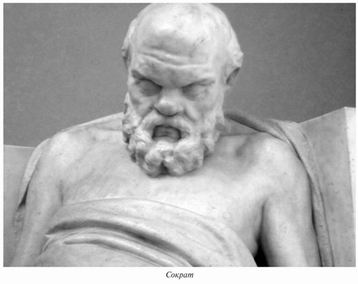
Socrates was executed for insulting public morality. And besides, apparently, for hints that he, knowing only that he knows nothing, remains the wisest among people. In other words, Socrates, in the form of leading questions, informed fellow citizens that they were idiots. Kinikov directly chose an insult to society, now we would even say “crimes against public morality” as a strategy for argumentation. Descartes insulted a millennial tradition of Christian thought, saying that it is not necessary to study either the works of the philosopher or the sacred tradition, but it is enough to make our ideas clear and distinct. Spinoza scandalized the Christian world and Jewish communities with his studies of the Bible as a historical text written by people. Locke insulted European monarchs with evidence of the cognitive impossibility of beinglesty. Voltaire horrified Catherine the Great Projects of the Liberation of the Peasants, which, according to the Empress, was equivalent to the proposal to make them orphans. Kant sadistic mocked the public, first demanding from it to use his mind, and then publishing “criticism” overwhelming for the mass reader. There is nothing to say about Nietzsche, Marx and Freud. Wittgenstein caused a scandal, boldly saying that he did not read Aristotle, and his beloved philosopher is Schopenhauer (like all amateurs). Russian philosophers insulted the Soviet government with their existence (on the famous steamboats, philosophers constituted an insignificant minority, but it was they, and not lawyers, doctors or sociologists, gave the name to Soviet ostracism). And is there at least one philosopher who did not insult anyone? How does he manifest his existence?
It is amazing that, given the such close genetic connection of two phenomena, the philosophical history of the insults is still not written. We will take up the marking of the most common lines here.
The ancient school of philosophers-kits directly turned an insult into a performative argument. Their philosophy, like the philosophy of other schools of the 4th century before the Nativity of Christ, was practical. Kinikov did not sit at the departments, but sought to happiness. The answer to the question of how a happy life is possible, they given to them were uncompromising. The path to happiness lay through Autarchy, that is, self -sufficiency. A happy person does not depend on anything. Neither from the state (the dream of a liberal!), Nor from the family (Liberten's dream!), Nor from property (you understand), neither from public opinion, nor from his inherent prejudices. The dependence of the latter type is especially significant, because it determines our ideas about itself and the reflection strategies. In order to achieve Autarchy in relation to public prejudices, one should refute their action, demonstrate their absurdity and convention. The aesthetics of the cinema is friendly with futurism, calling for "throwing suitcases of wisdom."
The young Emil Choran, who himself insulted many by the fact that he was a radical right, but even moreover, with his ability to inflate human longing without any measure, struck the story of Kinnik Diogenes. The owner of the rich house invited Diogenes to his home and asked him not to spit in the house, after which the philosopher spat the owner of the house in the face. And he commented that he did not find a place worse. Diogenes not only walked around the city with a lantern during the day, stating that he was looking for a person (in this cute classic bike, many lose sight of the moment that thereby Diogenes inflicted a mortal insult to citizens of the policy, depriving them of human dignity and lowering the level of half -around). Philosophy, freed from self -censorship in front of children and freshmen, gives us the image of a colorful ancient life. The movement towards Autarchy in Diogenes included, among other things, the desire to make as little effort as possible. In order not to depend on cooking, he tried to eat raw meat. Diogenes also belongs to a saying that sets the project of the libertarian experience of Gender: “Now, if hunger could be satisfied, stroking itself in the stomach.”
 Relations between kinniks and the Fatherland are relevant. They say that Alexander the Great invited philosophers to rebuild their destroyed city again, but they refused. After all, the only fate of the city would be a new destruction by the next, another Alexander. A sophisticated insult of power in this case consists, of course, in the demonstration that it does not apply to the philosopher. There is neither what can be taken from the sage, nor what could be presented to him. The well -known quarrel of Aristippus and Diogenes reports the same, in which, by the way, everyone saw himself as a winner. Diogenes cleaned the vegetables on the street, that is, he was engaged in a business that was completely unworthy and offensive to a free adult man - apparently, kinniks insulted not only others, but also themselves. Aristippus was walking towards luxurious robes, announcing that Diogenes should learn the ability to communicate with people, and then he would not have to clean his vegetables. Diogenes retorted in the spirit that if Aristippus knew how to be content with small, then he would not have to look for the mercy of tyrants. This scene can be considered generally characteristic of ancient philosophy. The Greeks turned philosophy into agonal art, claiming something more than simple wit, but requiring skills from the participants similar to that distinguish successful market merchants. (Agora, we recall, this is a market square, and the place of the national assembly, and the court, and the place of Socratic dialectics, from where the next satire is: “In Athens, everything is sold in one place: figs, judicial agenda, grapes, turnips, pears, apples, roses, musmul, scar, honeycombs, peas, milk, myrte, adaptations for choosing judges by The lot, irises, rams, water hours, laws, sentences ” [1] .) Since philosophy is built as an insult and for wisdom is enough and it is necessary only one of the philosophers, then, meeting with each other, philosophers should definitely not bow and cope with each other about the health and quality of current student youth. “My homeland is dishonor and poverty, not subject to any luck,” - ending the topic of offensive cosmopolitans, we will quote the famous cinema Kratet, “and the countryman inaccessible to envy diogenes.”
The famous kinic pair, briefly and the gyppency, give a successful example of the dialectics of insult. On the one hand, the recognition of the Hippoparchy equal to the cratet and in everything like that was offensive. Here, the norm and obscenity over the past centuries, fortunately, have changed places, as evidenced by the constant complaints of philosophical faculties of the world about the lack of diversity and the dominance of dead white men in the program. On the other hand, the equal rights of the Hippoparchia meant that it, as it brisks, goes to the Rubshit, stones with him at feasts, and in addition, publicly has sex with her spouse on city streets. So the insult took off the differences between a man and a woman, and patriarchal prejudices were also abolished directly inside the insult itself. Kinniks teach us that if the obscenity is performed at a high professional level, then it draws all attention to itself and allows you to slip progressive ideas to the confused society. In the Russian tradition, the philosopher Lenin did something like that, although his fundamental difference from the cinema was that they, like contemporary artists, did not resort to violence.
The kinic side of philosophy, that is, the use of thinking to direct insulting the social structure, including in forms that could be called ancient performance by analogy with the ancient theater, gradually comes to naught. But this is only part of the story.
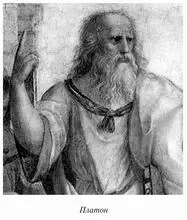
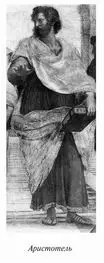 Another variety of philosophical insult and philosophy as insults we find in the famous passages of the first book “Metaphysics” of Aristotle. Here the errors of all previous philosophers are listed, and Aristotle does not find a single philosopher, both from among the ancient and from among direct teachers and predecessors who would not be mistaken. After all, if true philosophy was created before Aristotle, then his work as a philosopher would be excessive. And, accordingly, on the contrary, after Aristotle, any philosophy is redundant. We call this the function of establishing: every philosopher claiming thought should declare all previous and future attempts to think unsuccessful. So the history of world philosophy unfolds as a universal tradition of posthumous insults, where every next step is inconceivable without the complete destruction of the previous heritage. That is why the same Aristotle is a philosopher, but not a historian of philosophy, but Diogenes Laerte, for example, on the contrary. Aristotle does not list opinions and does not discuss them, his task is to clear the platform for his own thinking, to tear out weeds in which the student who was walking around the field of reflection could get confused. However, Hegel already understood that the students were really not needed. True philosophy contains the beginning and end of the world. Hegel advised the young men to go to engage in chemistry, where unlike his death, unresolved tasks will remain, unlike philosophy.
Deservedly or not, but a philosopher is often understood as an insensitive being to domestic attacks. The philosopher cannot be offended by calling him crooked, stunted, having too many rings, narcissistic or poor. The latter circumstance can generally easily be presented as a result of a careless existential choice or activity, but at ease, refuted. The first scenario is presented, for example, by the Kiev philosopher Alexander Ivashina, who confirms his own words with his life that the ranks, money, career and scientific degrees make sense only on condition that we forget about death as an inevitable equalizer (or if we are Christians) [2] . The second argument in favor of philosophical poverty is presented in the legend of the Fales, which bought cheaply in the indistinguishable year all urban oils oil and fabulously rich in the next - productive, without breaking away from the contemplation of the Fusis. In any case, money is an insignificant thing in order to spend time for them, released in search of wisdom. The story of Aristippus, who demanded from a tyrant a Dionysius of money, who received the question in response: “Isn’t you, Aristippus, told me that the sages do not need money?”, He answered: “Give me money, and I will immediately explain to you the nature of this sophism” and, having received money that did not need them, so he already has it. Even the accusation in stupidity cannot be offensive to the philosopher, because the distinction between the mind and stupidity is usually made in the framework of the doxs by random, inexperienced people. For others, Socrates was a fool, and, on the contrary, a tyrant of a third -rate policy - the smartest of mortals.
 Taking into account all these considerations, a philosopher who wants to offend another philosopher, applies cunning tactics. The philosopher should argue that another philosopher is not a real philosopher, because he thinks irrationally, and therefore his philosophical project is not intelligent. Briefly, in order to insult the philosopher, he needs to refuse thinking, satisfying the Parmenidic principle of identity of being. The one whose thought only slides out of applies is not a philosopher. Actually, this is exactly what Derrida made in relation to the whole of Western philosophy, calling his project to deconstruction and, we add, of course, thereby inflicting an incredible insult.
In the Middle Ages, the thinking of Christian philosophers was aimed at rapprochement with the mind of a single transcendental thinker. Perhaps the only original product of the era is the doctrine of the apophatic theology of the pseudo-dionius, who affirmed the fundamental inability of thinking to capture God, and thereby in our logic, it was simultaneously a massive philosophical insult and female.
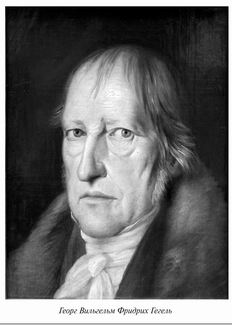
A traditional figure for insults in the new philosophy is Hegel, which is partly connected simply with its popularity, and in addition, with its political position, the style of writing and extremely developed self -conceit (recall, at first Hegel insulted everyone, traditionally claiming that philosophy ended on it). Schopenhauer, famous for his beautiful style, so characterizes the Hegel philosophy system:
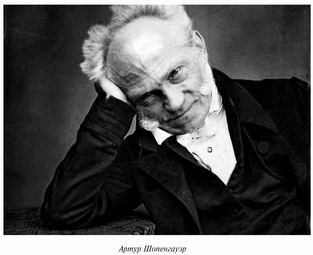
In general, Hegelian philosophy consists of three quarters of a pure nonsense, and one quarter of corrupt ideas. There is no better means for the hoax of people, how to lay out in front of them something that cannot be understood. Then they, especially the Germans, by their nature gullible, immediately begin to think that the whole thing is in their intellect, which they do not really trust at all; To save their reputation, they hide their misunderstanding, and the praise of incomprehensible wisdom is the best means for this, the authority of which is growing more and more. And great courage and trust in oneself are required, to his mind, to call all this a meaningless charlatanism. In Hegelian philosophy, the intention to achieve the mercy of the monarchs with servility and orthodoxy is clearly noticeable. The clarity of the goal piquly contrasts with the ambiguity of the presentation, and, like a clown from an egg, hatches at the end of a fat volume, full of pompous Galicia and nonsense, a grateful salon philosophy, which is already taught in elementary school, namely, God-father, God God and the Holy Spirit, the correctness of the evangelic religion, the catholic falsity [3] .
In the "Twilight of idols" Friedrich Nietzsche collapses on Schopenhauer:
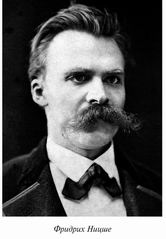 Schopenhauer ... is for a psychologist the case of the first rank: it is precisely as an malicious-genial attempt to bring into battle in favor of the general nihilistic impairment of life just opposite instances, great self-affirmations of the “will to life”, forms of excess life. He interpreted, one after another, art, heroism, genius, beauty, great sympathy, knowledge, will, the will, the tragedy as a consequence of the “denial of the will” or the need of will in denial is the greatest psychological factory of fake coins, which is in history, with the exception of Christianity.
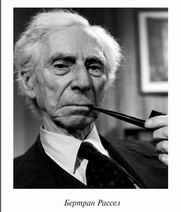
Bertrand Russell, who fought in his youth against the British Hegelians (that is, some artisans, servants for the last and already dead philosopher), carried warm feelings for Hegel through his whole life. In the article “Philosophy and Politics”, in particular, he writes:
Hegel's philosophy is so strange that no one could have assumed that reasonable people were able to accept it, but they were. Hegel wrote so confusing that readers involuntarily found it deep. If Hegel is clear, then the absurdity of his views becomes obvious [4] .
The Russell himself more than once got from Wittgenstein. The history of exams arranged by the Russell and George Mur for Wittgenstein is known to receive the title of Professor Cambridge. Wittgenstein animatedly told them about his ideas, and then stood up, patted both on the shoulder and with the words: “Yes, you will never understand this,” left. Витгенштейн также в свойственной ему манере предлагал разделить все книги Рассела на две части. Те, что посвящены математической логике, должны быть в красных обложках, и их должны читать все студенты-философы. Остальные, касающиеся этики и политики, следует снабдить синими обложками и запретить их читать кому бы то ни было.
 Витгенштейна, в свою очередь, осаживал Карл Поппер, о чем рассказано в известной книге «Кочерга Витгенштейна»: на требование Витгенштейна привести пример морального императива Поппер ответил фразой: «Не угрожать приглашенным докладчикам кочергой» [5] .
Кажется, взаимные оскорбления закольцовываются, так что при желании можно найти точку, где они идут на второй круг. Известный скандалист Ницше, не слишком замеченный профессиональными философами при своей жизни, но зато потом наделавший шума то ли как инициатор комиксов о Супермене, то ли как пророк нацизма (равно правдоподобные истории), не гнушался нападать даже на Сократа. Начиная с XIX века к лейтмотиву философского оскорбления примешивается мотив классовой ненависти и/или обвинения в неясности, завуалированной бессмыслицы. Отныне философы обвиняют друг друга в том, что они не мыслят, поскольку являются носителями идеологии как ложного сознания, некритически восприняли господствующий научный дискурс или же, напротив, являются метафизиками-антисциенистами.
Риторика обличения так называемых буржуазных философов, почерпнутая советскими философами у Маркса и Энгельса, была высушена в гербарии марксизма-ленинизма и довольно быстро превратилась в оскорбление самого оскорбления. Не случайно Маркс в конце жизни гневно протестовал против зарождающегося марксизма. Большая живость суждений в левом лагере характерна, например, для Ноама Хомского, который так аттестовал французских философов:
 Французская интеллектуальная жизнь, на мой взгляд, превратилась в нечто дешевое и продажное благодаря системе «звезд». Это похоже на Голливуд, и в результате они мечутся от сталинизма к экзистенциализму и от Лакана к Дерриде, причем некоторые из их идей чудовищны (сталинизм), а другие просто инфантильны и смешны (Лакан и Деррида) [6] .
Однако нет единства и среди политических союзников, так что Хомски зачисляет в пустословы и Славоя Жижека, а тот, отстаивая свое право на философию, отвечает Хомски той же любезностью [7] .
Выдающимся примером оскорбительной атаки на метафизика Хайдеггера является статья Рудольфа Карнапа «Преодоление метафизики логическим анализом языка», где утверждается, что тексты Хайдеггера (Карнап издевательски предлагает рассмотреть фразу «Ничто ничтожит») являются строго бессмысленными [8] .
Существует и еще одна связь между аналитической философией и оскорблениями. Для того чтобы проследить ее, нам придется сначала вернуться к Античности. Как и Диоген Киник, стоики искали ответ на вопрос, как жить счастливой жизнью. Вместо автаркии они предлагали своим последователям атараксию, состояние спокойного духа в мирской суете. В отличие от других эллинистических школ стоики не искали спасения от мира в уединении, но, напротив, связывали счастье не только с внутренним покоем, но и с выполнением долга. В «Нравственных письмах к Луцилию» Сенека прямо предостерегает своих последователей от кинического пути:

Избегай появляться неприбранным, с нестриженой головой и запущенной бородой, выставлять напоказ ненависть к серебру, стелить постель на голой земле, — словом, всего, что делается ради извращенного удовлетворения собственного тщеславия. Ведь само имя философии вызывает достаточно ненависти, даже если приверженцы ее ведут себя скромно; что же будет, если мы начнем жить наперекор людским обычаям? Пусть изнутри мы будем иными во всем — снаружи мы не должны отличаться от людей [9] .
То есть: философия и без того оскорбляет людей, философ и без того оскорбительно другой внутри, нет нужды в перформативных аргументах. Сенека предлагает философам маскироваться под людей, но все же лишь до некоторой степени. Ведь, например, в отличие от людей философам не полагается обращать внимание на обычные оскорбления. Эпиктет рассуждает о том, что если тот, кто старается нанести нам оскорбление, говорит правду, то мы должны поблагодарить его за критику и учесть ее, чтобы стать лучше. Если же оскорбляющий нас лжет, то нет причин обращать внимание на слова лжеца. Так бытовое оскорбление становится предметом философского рассуждения, направленного на разграничение мира обывателей и мудрецов. Мудреца невозможно оскорбить, а тот, кто чувствует себя оскорбленным, объявляется стоиками буквально сумасшедшим, то есть теряющим свою разумную природу.
Интерес к практическому стоицизму, очищенному от историко-философских излишеств вроде веры в огненную разумную Вселенную, растущий сейчас в мире, связан с именем американского философа Уильяма Ирвина. Он популяризировал «Новейшую Стою», приводящую в ужас специалистов по Античности [10] . Интересно, что его следующая книга, вышедшая в 2013 году, была непосредственно посвящена оскорблению как повседневной психологической и этической проблеме [11] . Ирвин идет дальше в своем расщеплении единства античной традиции и заявляет, что вы, в сущности, можете даже не быть стоиками, однако чтение их текстов может помочь вам меньше страдать по поводу троллей и грубиянов, окружающих нас на каждом шагу.
Ирвин получил степень магистра философии в Калифорнийском университете (UCLA) и, конечно, воспитан в аналитической традиции мысли. Последняя со времен Витгенштейна оставляет личные этические вопросы, и уж тем более такие почти неприличные темы, как смысл жизни и счастье, за бортом корабля научного знания. Для Ирвина это означало, что будучи well trained в философской традиции Запада, он, переживая кризис середины жизни, попробовал было примкнуть к славной традиции буддизма, однако нашел его недостаточно рациональным. На Западе обнаружились стоики, следы которых были хорошо спрятаны в двухтысячелетней христианской традиции. Стоики отвечали на вопрос о счастливой жизни до Христа, а затем их идеи были поглощены и размыты патристикой.
Обсуждая оскорбления, Ирвин возвращается к стандартным сюжетам аналитической философии, в частности к философии обыденного языка, главным представителем которой был Джон Остин. В своей книге «Как делать вещи при помощи слов» Остин обращает внимание на то, что слова часто служат не только для выражения мыслей или передачи информации. Помимо смысла предложения языка обладают иллокутивной силой, то есть некоторой окраской, предполагающей ту или иную реакцию реципиентов. При помощи слов можно отдавать приказы, именовать вещи, например, давать имена кораблям, умолять или просить, а также слова пригодны для оскорбления. При каких обстоятельствах предложение языка становится оскорбительным?
В аналитической традиции существует по меньшей мере одна монография, специально посвященная прагматике оскорбления. Джером Нои в своей работе Sticks and Stones. A Philosophy of Insult (название стоило бы переводить вроде «Говори что хочешь. Философия оскорбления») анализирует феномен пейоративного языка в культуре, развивая идеи Витгенштейна и Остина и делая особый акцент на теоретических проблемах философии права [12] . Здесь предельно безобидная философия, которая делается абсолютно приличными людьми, возвращается к своим диким корням, объявляя их лишь предметом для внешнего исследования.
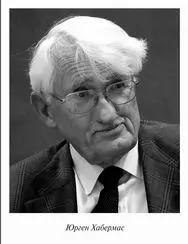 К сожалению, академическая российская философия бедна оскорблениями, выходящими за пределы бытовых склок. Нынешние академические философы не фраппируют публику. Функция «философского установления», полученная нами в наследство от Аристотеля, вывернута наизнанку, ибо во введениях к диссертационным исследованиям принято не опровергать поколения предшественников, но, напротив, воздавать хвалу глубокой разработке ими шахт мысли, куда шагнул робкий соискатель. Взаимные оскорбления, сформулированные отечественными философами, касаются не системного и классического обвинения в неинтеллигибельности, но в основном — неправильно выполненных переводов иноязычных текстов. Исключения находят свое место на маргиналиях академии. Так, философ Эдуард Надточий однажды назвал автора этих строк «философом-гандоном» с таким обоснованием: «Ясно без всяких дополнительных объяснений, что Леви и Глюксман — философы-гандоны. Что значит быть философом-гандоном? Это значит надевать себя на любую зарождающуюся попытку подумать о чем-либо “опасном” с целью “недопущения” в “благих целях”. Таким философом является с некоторых пор, к примеру, Хабермас» [13] . Надежда Толоконникова недавно опубликовала в лондонском издательстве Verso свою тюремную переписку со Славоем Жижеком [14] , встав тем самым в один ряд с самым популярным философом Европы и, вероятно, продолжив славную киническую традицию. Если вас будут спрашивать, кто делает философию в России, вы знаете ответ.
[1] Цит. по: Стил К. Голодный город. М.: Стрелка Пресс, 2014.
[2] Ивашина А. Культуролог — это «Антихристианин» Ницше, но в современном варианте // Искусство Украины. http://artukraine.com.ua/a/aleksandr-ivashina-kulturolog-eto-antihristia...
[3] Cit. по: Гулыга А. В. Гегель. М., 2008. С. 148.
[4] Russell B. Unpopular Essays. Routledge, 2009. P. 19.
[5] Эдмондс Д., Айдиноу Д. Кочерга Витгенштейна. История десятиминутного спора между двумя великими философами. М.: НЛО, 2004.
[6] Chomsky N. Language and Politics. Ed. by CP Otero, 2004. P. 310.
[7] Здесь также стоит упомянуть о знаменитом «разоблачении» французской философии, предпринятой в работе Жана Брикмона и Алена Сокала «Интеллектуальные уловки».
[8] Карнап Р. Преодоление метафизики логическим анализом языка // Вестник Московского университета. Серия 7. Философия. 1993. № 6.
[9] Сенека Луций Анней. Нравственные письма к Луцилию. М., 1977. Письмо V.
[10] Irvine William B . Guide to the Good Life. Oxford University Press, 2008.
[11] Irvine William B. A Slap in the Face. Oxford University Press, 2013.
[12] Neu J. Sticks and Stones. A Philosophy of Insult. Oxford University Press, 2009.
[13] http://farma-sohn.livejournal.com/564651.html
[14] Tolokonnikova N., Zizek S. Comradely Greetings: The Prison Letters of Nadya and Slavoj. Verso, 2014.