
Translated material
Russian resentment
Mania of Ukraine
One of the amazing metamorphoses of Russian mass consciousness in 2014 is its pathological fixation in Ukraine. Curious Russian knows everything about Poroshenko’s candy business, Yarosh’s business cards, Kolomoisky assets, Tymoshenko’s braids, he is well versed in the geography of a neighboring country, knows the results of parliamentary elections in Ukraine much better than the Duma elections in Russia or regional elections at home, and is ready for hours to talk about “jerks”, “Svidomites”, punishers and a bander. There are many evidence of how people of the middle and older generation, after watching Russian television news about Ukraine, were excited to such an extent that they began to run around the house, spewing curses to the "Ukrofashists", so it is time to talk about "mania of Ukraine", mass psychosis on the basis of television propaganda. Ukraine has turned into a mental landfill of the post -Soviet consciousness, on which the speech of enmity (Hate Spech), techniques for constructing another, methods of mass mobilization of the population are worked out.
Such an unhealthy fixation in a neighboring country indicates a deep post -Persian injury. The Ukrainians were too close, too similar for Russia to allow them so easy to leave. Throughout 23 years of independence, Ukrainian independence has been perceived as a misunderstanding, a joke - this word itself in Russia is usually pronounced with ironic subtext. The Russians perceived the Moldavian, Tajik, even the Belorussian independence, but they couldn’t, and the Ukrainian could not, and this is not about the Imperials and soils, but about the widest layers of the educated class, looking at Ukraine as a bananic republic and at the same time hid a deep offense at the unreasonable “younger brother”, which boldly teased blood kinship. This resentment in Brodsky’s famous poem “On the Independence of Ukraine” has turned into genuine hatred:
With God, eagles and Cossacks, Getmans, Vertukhai, only when you come and die, Bugayi, you will wheeze, scratching the edge of the mattress, a lines from Alexander, and not the Brech of Taras.
Like Pushkin, with his anti -Polish ode to the “slanderers of Russia”, the dissident and idol of the liberal intelligentsia Brodsky here is the fullness of the wounded great -power consciousness, which he removed from Russia along with the memory of the imperial greatness of St. Petersburg.
Rebellion of slaves
Nevertheless, in jealous Russian attention to Ukraine over the past year, there was something more than nostalgia for the empire. Britain and France were worried about post -Pepper phantom pains, but none of them compared themselves to former colonies. In the case of Russia, we can talk about a deeper psychological mechanism - about symbolic compensation, transfer, projection of their own complexes and frustration to the symbolic figure of another. Boris Dubin spoke about this in April 2014 in one of his last public speeches:
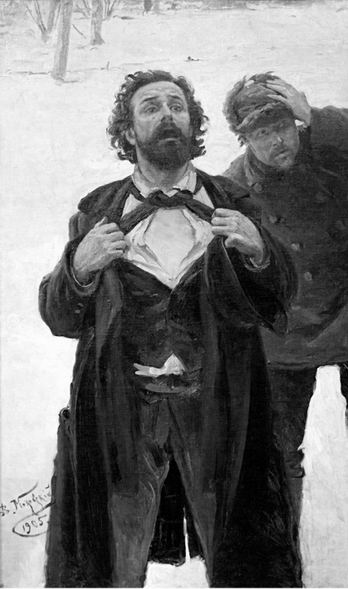
“This is a very strange mechanism, when their own problems and inability to cope with them are transferred to others through the barrier to reduce these others. After all, everything that was said in Russia about what is happening in Ukraine was not talking about Ukraine, but about Russia, that’s the whole thing! But thanks to this move, it becomes possible, firstly, to remove the cargo of all this, and secondly, in principle, to discuss, at least put these problems, bring them to the area of attention. At the same time, Russia itself remains for itself a “blind spot”, “refuses” its own action, “does not see” itself. ”
In fact, Dubin described the classic state of resentification without using the word itself. In ethics, a resentimal is considered to be a feeling of hostility to what the subject considers the cause of his failures (to the “enemy”), powerless envy, the consciousness of the futility of attempts to increase his status in society [1] . This is the continuation of the inferiority complex, which, as compensation, forms its own moral system, which denies the enemy’s values and has guilty for his own failures.
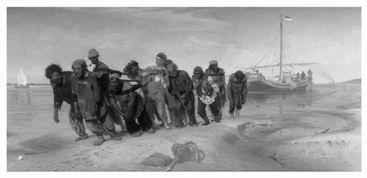
The concept of resentification was first introduced by Frederick Nietzsche in his work “To the genealogy of morality”. According to the German philosopher, resentification is the determining characteristic of the morality of slaves - the lower race, which is not capable of historical activity, to a change in the circumstances of their own life. The resentment, according to Nietzsche, manifests itself in the "rebellion of slaves":
“The uprising of slaves in morality begins with the fact that the resessentiment itself becomes creative and gives rise to values ... The moral of slaves always need its occurrence primarily in the opposing and external world, needs, in the physiological language, in external irritations, in order to act at all, its action is an initial reaction” [2] (“to genealogy of morality”, 1:10).
In other words, as Yakov Krotov put it, “resentification is a slave hatred to everything where freedom appears to him” [3] .
Nietzsche wrote about the resentment in 1887, but his words sounded in a new way after a quarter of a century, on the eve of the First World War, in 1912, when Max Schoer, a German Lutherin, who turned into Catholicism, wrote a monograph on a resentment. A man of a tragic attitude, who committed suicide in 1928, he foresaw the upcoming shocks and actually predicted the “Weimar resentment” in post -war Germany, from which such a figure as the failed architect and artist Adolf Hitler was born. Hitler (like the Seminarian-Lieutenant Stalin) is a figure from Dostoevsky, an evil and vengeful “underground man”, who was reached to the heights of the authorities, stinking at the governorship. It is no coincidence that in his work Scheler turns to the images of Russian literature:
“Not a single literature is so crowded with a resentment as young Russian literature. Books of Dostoevsky, Gogol, Tolstoy are simply teeming with heroes, charged with a resentment. This state of affairs is a consequence of the centuries-old oppression of the people by autocracy and the impossibility due to the lack of parliament and the freedom of print to give the senses that arise under pressure from authority ” [4] .
In fact, Russia is a country of classical resentification. On the one hand, in it, the centuries in the century reproduce various forms of estate slavery - from serfdom to Soviet registration and the current corporate state, and in state slavery there are not only the drain population, but also privileged classes, including the nobility, which owes the authorities to the titles, estates and its own, not to mention industrial and commercial signs, not to mention, not to mention the industrial and commercials. Whose property has always been arbitrary, dependent on the whims of power. Under these conditions, a feeling of resentment, unclaimed talent develops in society, such resentment figures appear as “extra person” and “underground man”, showing in his pocket a crystal palace of a rational world order - and from him to go to Petrusha Verkhovensky, to terrorists, bombers and non -mines.
On the other hand, for more than three hundred years, if you count from Peter I (or not even five hundred, if you count from the first clash of Russia with the technologies of the powder revolution under Ivan IV), Russia jealously copies the West, now and then peeling off from this imitation. The phenomenon of catch-up modernization and the remaining lag from the leaders of the global world (Britain in the XVIII-XIX centuries and the United States in the XX-XXI centuries) according to the main socio-economic indicators-fertile ground for foreign policy resentment. Russia then sees itself as a Cinderella, an unfairly forgotten stepmother and sisters, then represents itself as a sacrifice who saves the world from death by its body: from the Tatar-Mongol yoke or from the “fascist hordes”.
Rozanov has repeatedly emphasized this victimity of the Russians, comparing them with Jews, who also have a strong complex of people-victims. It is no accident that conspiracy the fantasy of the “world backstage” has been developed in Russia, which has been wearing conspiracies against our country for centuries - but all these are only variations on the topic of a resentment that has come from the inability to change the external circumstances of its existence, from the inability to catch up with the West, to overcome its own provinciality. Powerlessness pours into the demonization of the enemy, into the creation of a fictional reality, where Russia alone is opposed to the rest of the world.
Putin's resentment
Russia's zero is a vivid example of a resentment that has become state policy. One of the main propaganda myths of the Putin era, which began to actively unwind almost from the first months of Putin’s coming to power, was the “theory of defeat” of Russia, starting with the lamentations about the “largest geopolitical disaster of the 20th century”, which was the collapse of the USSR, and ending with the common meme about the “dashing nineties”. By common thought, the peaceful dissolution of the Soviet Union (in contrast, for example, from the explosive collapse of Yugoslavia) was not a defeat of Russia, but a chance for it, retaining the main territory, population, nuclear potential and succession from the USSR, getting rid of the cost of imperial ballast, to make a post -industrial transition, join the Golden billion of the global north. Actually, the active part of the Russian population, including the entire ruling elite and President Putin himself, successfully took this chance. Russia's zero, having recovered from the 1998 crisis, using the fair wind of a weak ruble and growing oil prices, steadily rose from the knees, doubled the GDP, entered the WTO, collaborated with the USA in a war with terror - but at the same time, a myth of geopolitical defeat, humiliation and plunder of Russian liberalism and its henchmen were replicated for home use. Yeltsin, Gaidar and Chubais.
The idea of defeat and a sense of resentment of reformers and the surrounding world has become a convenient justification for the social immobilism and parasitism of the Putin era, coincided with the deep Russian tendency to resentification. As Mikhail Yampolsky noted, “all Russian society, from Putin to the last switchman, is equally the carrier of the resentment. For Putin, his source is the non -recognition of his and Russia equal and respected players in the world stage, for the switch - helplessness in the face of the police, officials, courts and bandits. <...> The resentment fantasies of the authorities at some point entered a strange resonance with the resentment fantasies of the townsfolk ” [5] .
Modern Russian resentification is divided into two layers. On the one hand, there is a theme skillfully designed by political strategists and pro-government analysts by the West, the theme of “humiliation” by the West: Sergey Karaganov speaks of “the creeping military and economic and political expansion in the spheres of its vital interests, which has lasted almost a quarter century, in fact, the Versailles policy“ in velvet gloves ”, which gave rise to a significant part of the elite and the population of humiliation and the desire to humiliate and desire to humiliate humiliation and the desire of humiliation and the desire for humiliation and desire. Revenge " [6] . It seems that the completely opposite process took place: for 25 years, the West tried to integrate Russia to its institutions, offering it privileged conditions of partnership both with NATO and the EU, while the “humiliated” elite hastily acquired Western real estate, citizenship for her families and education for her children. But Russia as a whole did not use the open window of opportunities, continuing to repeat the mantra about resentment and humiliation and inflating the NATO war in Kosovo in 1999 to the size of the universal disaster. The “Union Force” operation was indeed a hasty, ill -conceived and unlawful act, but it was not directed directly against Russia, and even more so this Western mistake does not give Russia the right to build its foreign policy on it on the principle: “It is possible, but we can’t?”
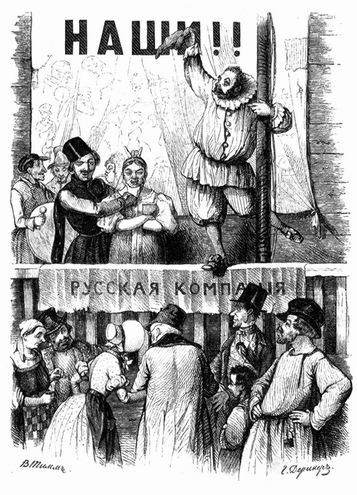
The foreign policy thinking of Vladimir Putin, as follows from his "Valdai speech", uttered at a meeting of the Valdai club in Sochi on October 24, 2014, fully fits into the paradigm of respect and humiliation:
“Remember the wonderful phrase: what is allowed to Jupiter is not allowed to the bull. We cannot agree with such formulations. Maybe the bull is not allowed, but I want to tell you that no one will ask anyone for a bear. In general, he is considered the owner of the taiga and is not going to, I know this for sure, somewhere to move to other climatic zones, he is uncomfortable there. But he will not give his Taiga to anyone. <...>
Yes, the Soviet Union was called Upper Volta with missiles. Maybe, but the missiles were - heated. And there were such bright political figures as Nikita Khrushchev, who knocked at the UN with a boot. And everyone in the world, primarily in the United States, in NATO, thought: well, he’s in FIG, this Nikita and others like him, they will take the fuck, they have a lot of missiles - it is better to treat them with respect [7] .
As follows from the entire figurative series of “Taiga”, “Bear”, “Boot” and “missiles”, “male” concepts of “respect” and “authority” are important for the Russian president. In this logic, the West did not show proper respect, did not answer Russia's openness to cooperation after September 11, 2001, when Vladimir Putin the first of the world leaders expressed support for George Bush and offered him a global partnership in the fight against terror. As the many years of Kremlin life, Igor Jurgens, “both Putin and the closest environment was evidenced by a sense of Humilation and Betrayal - humiliation and betrayal from the West (in any case, it seemed to them)” [8] .
The fracture point was obviously in the fall of 2004: at first the terrorist attack in Beslan, in which President Putin unexpectedly accused certain undeclared forces behind the terrorists who want to snatch “pieces of fatter” from Russia, obviously referring to the West [9] . And then there was an “orange revolution” in Ukraine, in which the Kremlin directly accused the United States, allegedly striving to weaken Russia, tearing a key partner from it. Putin’s stubborn unwillingness to see the real forces and processes that led to Beslan and Maidan (the collapse of the neoprmonual regimes supported by Moscow in the Caucasus and in Kyiv), the desire to blame everything for the machinations of the United States is a typical resentment, an attempt to transfer its own failures on the figure of an external enemy.
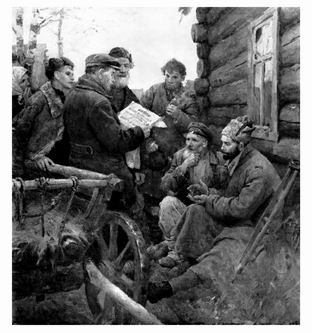
On the other hand, there is a massive resentment of the general population, which have not managed to adapt to new market reality, to global flows of finances, information, images, migrants, technologies and eliminating their resentment on Russian liberals and reformers. Many parties served as a expressor of the moods of these layers, from the Communist Party to the “homeland” and “fair Russia”, but the most over the past 20 years they have been represented by the LDPR Vladimir Zhirinovsky, which very accurately formulated the slogan of the domestic resentment: “For Russians, for the poor!”. In this cast of the slogan, the offense of the Russians is postulated as an axiom, no one explains why the Russians are poor and how they are poorer, say, Tajiks, Moldavians and other fellow travelers in post -Soviet transit. Before our eyes, the discourse of resentment becomes dominant in the public field, turns into a special genre of Russian politics.
Offended and offended
In Brezhnev times, there was a joke about the sixth sense of the Soviet man - “a sense of deep satisfaction”, which was to be experienced when familiarizing with the materials of the next plenum. Now, it seems, the main instinct of the post -Soviet person is a sense of opposite property: resentment of the world around him.
In public discourse, there are special groups, on behalf of which resentments are formulated, such as, for example, veterans. Back in 2009, veterans, led by V. I. Dolgikh, were offended by the signal cafe “Anti -Soviet barbecue” and the statements of Alexander Podrabink, who suggested that among the indignant there were Chekist executioners. Following the sub -Rabinec, the veterans were offended by Leonid Goman, who compared Smersh and SS. It seems that veterans (not only wars, there are only units, but most often labor, the Central Committee or the Cheka) is a special response group, on the behalf of which it is most convenient to brand and condemn; They are needed in the days of folk holidays and popular anger, on other days of the calendar the state safely forgets about them, leaving them alone with beggarly pensions and benefits.
Another group of offended is the “Orthodox community”, which every now and then sees blasphemy in the performances, from the “ideal husband” in the production of Konstantin Bogomolov to “Jesus Christ - the superstar” in Rostov. The security forces unexpectedly joined the choir: the guards of the Cathedral of Christ the Savior experienced “moral suffering” at the sight of the Proformans Pussy Riot, and the fragile riot police riot police were scared of the lemon that flew from the crowd and present the tooth enamel in the crowd as bodily harm. Nowadays, it is just time to put in the museum a non -crying Bolshevik, but a crying security forces [10] .
Soviet speech practices return to active circulation. The Simulakr “indignant public”, “letters of the working people” was resurrected by the authorities: “Togliatti opposed the monument to Solzhenitsyn”, “Novgorodians are perplexed about the rain on the television channel”. This is a typical phenomenon of collectiviting speech, creating a collective body with its sacramental Pasternaka (Pussy Riot did not read), but outraged. ” This is a communal body, speaking through the lips of veterans, guards, Uralvagonzavod, loyal cultural figures, party -aks of United Russia and trained journalists on direct lines. Появляется целый класс профессиональных обиженных, которые под видом «гласа народа» транслируют волю «хозяев дискурса» и по сути своей являются эффективным инструментом репрессий, всепроникающей цензуры коллективного бессознательного [11] .
Насаждая дискурс обиды, власть фактически производит зачистку местности руками общественности; подобно вирусу ресентимент самовоспроизводится в обществе и порождает новые запреты, табуированные темы и группы обиженных граждан. Формально режим ни при чем, он лишь законодательно оформляет «волю народа», выраженную в разного рода истериках, доносах и коллективных письмах — но по сути он эту волю конструирует и ею же манипулирует [12] .
Марш проигравших
Из подростковых комплексов власти, детского разочарования элиты в Западе и социального инфантилизма населения родился миф об украинском фашизме. Ресентимент требовал объекта для символической мести: за двадцать лет шельмования условный «гайдарочубайс» уже приелся, Болотная была разгромлена, Америка, казалось, далеко, и тут случился Майдан. Украина во второй раз за десять лет посмела ослушаться старшего брата и попыталась выбраться из патерналистской парадигмы на путь буржуазно-демократической революции и европейского развития. Ответом стал консолидированный российский ресентимент, в котором слились неудовлетворенные амбиции Кремля и ревность «старшего брата». Украина была объявлена предателем, и это предательство казалось тем более обидным, что украинцы считались своими по крови, ближайшими в славянской семье. В теме украинского предательства явственно слышны отголоски веймарского ресентимента и теории Dolchstoss , еврейского «удара в спину», которая была популярной в Германии 1920—1930-х годов.
Изобретение украинского фашизма — дьявольский триумф политтехнологов, которым удалось создать миф о «бандеровцах», «карателях» и «правосеках» и внушить его власти и пресловутым 96 % населения посредством телевидения. На весь 2014 год Россия, включая президента Путина, переехала жить в телевизор, в бесконечный сериал, в параллельную реальность, где по Киеву маршировали фашисты, каратели сбивали малайзийский «боинг» и распинали мальчика в Славянске, а Запад спонсировал Майдан, планировал принять Украину в НАТО и разместить корабли Шестого флота в Севастополе.
Характерно использование российской пропагандой образа фашизма как синонима абсолютного, финального, зла, окончательного расчеловечивания противника. Фашизм в российском дискурсе обладает универсальной ценностью Другого, вся новейшая российская идентичность построена на идеологеме победы над нацизмом. Происходит онтологизация конфликта с Украиной как борьбы абсолютного добра с абсолютным злом.
И здесь ресентимент, согласно Ницше, создает свою собственную систему ценностей, «мораль рабов», которая говорит «нет» внешнему, иному, не-себе. Михаил Ямпольский вспоминает французского политического философа Этьена Балибара, который называл ресентимент «антиполитикой»: «антиполитика — не просто результат кризиса государственности, но и продукт ницшевского ресентимента, укорененного в неспособности позитивно действовать. Мы всюду имеем, как считал Ницше, лишь чистую негативность , реакцию на сопротивление внешнего мира» [13] .
Война России в Украине — пример антиполитики, чистого негативизма, основанного на чувстве собственной ущербности, компенсация комплекса неполноценности элиты по отношению к Западу и населения — по отношению к обстоятельствам собственной жизни. Власть не может изменить роль России на международной арене при помощи «мягкой силы», качественного экономического роста, добиться уважения и признания партнеров. Подавляющее большинство населения, запертое в рамках восстановленной Путиным сословной системы, также не в силах выйти за пределы государственного патернализма (по сути, сословного рабства) и социального паразитизма, синдрома выученной беспомощности. Символической компенсацией стало создание вымышленного врага в лице Украины и вымышленных побед — аннексии Крыма и создания пиратских республик Донецка и Луганска. Но по сути «Крымнаш» и фактическое отторжение Юго-Востока Украины стали «маршем проигравших». Это последний парад сил, потерпевших историческое поражение в борьбе с глобализацией. Они проиграли в столкновении с открытым обществом и с мобилизацией горожан, с интернетом и Евросоюзом, с современным искусством и финансовыми рынками, с «мягкой силой» и сложными структурами. Крымский ресентимент — это контракт власти с критической массой дезадаптантов, это апология слабости, защитная реакция уходящей натуры, исторический тупик.
Ирония ситуации еще и в том, что выдуманные ресентиментные обиды становятся реальностью. Россия так усердно взывала духов конфронтации, что в итоге получила санкции, которые еще только начинают сказываться на экономике и уровне жизни. Отечественные геополитики так красочно пугали нас сказками о расширении НАТО на Украину, что своей параноидной политикой в итоге превратили Украину в недружественную страну и добились решений НАТО о расширении военного присутствия и постоянном базировании в странах Балтии. А Путин так долго и демонстративно обижался на Запад, что тот, наконец, ответил ему взаимностью, изолировав российского президента на саммите в Брисбене. Ресентимент — это замкнутый круг, порождающий враждебное окружение: на обиженных воду возят.
В перспективе неизбежно столкновение России с реальностью, исцеление от пустых амбиций, придуманных обид и комплекса неполноценности, примирение со статусом страны средних доходов и средних возможностей (a mediocre state, как обрисовал ее перспективы в недавней статье сэр Роберт Скидельский), понимание того, что нет никакой глобальной войны с Западом за ресурсы, а есть лишь желание Запада видеть Россию стабильной и неагрессивной, пусть даже и с авторитарным правительством. Остается только надеяться, что излечение России от постсоветского ресентимента не окажется столько же мучительным и кровавым, как исцеление от веймарского ресентимента для Германии.
[1] Гусейнов А. А. Ресентимент. В кн.: Этика. Энциклопедический словарь. М.: Гардарики, 2001. С. 410.
[2] Ницше Ф. К генеалогии морали. В кн.: Ницше Ф. Соч. в 2 т. Т. 2. М., 1990. С. 424.
[3] Кротов Я. Свойства без человека. http://krotov.info/yakov/essai/2_svoystva/resentiment.htm
[4] Шелер М. Ресентимент в структуре моралей. СПб., 1999. С. 49.
[5] Ямпольский М. В стране победившего ресентимента. COLTA.RU, 6 октября 2014 г. http://www.colta.ru/articles/specials/4887
[6] Караганов С. Избежать Афганистана-2. Ведомости, 28 июля 2014 г. http://www.vedomosti.ru/opinion/news/29501801/izbezhat-afganistana-2
[7] Заседание Международного дискуссионного клуба «Валдай», Президент России, 24 октября 2014 г. http://www.kremlin.ru/news/46860
[8] Юргенс И. Развернуть страну назад невозможно. Ход истории сомнет такой алгоритм. Новая газета, 17 ноября 2014 г. № 129. http://www.novayagazeta.ru/politics/66099.html
[9] Обращение Президента России Владимира Путина, 4 сентября 2004 г. http://archive.kremlin.ru/text/appears/2004/09/76320.shtml
[10] Медведев С. Обиженные и оскорбленные: как «письма трудящихся» помогают репрессиям. FORBES.RU, 4 февраля 2014 г. http://www.forbes.ru/mneniya-column/tsennosti/250429-obizhennye-i-oskorb...
[11] Ibid.
[12] Там же.
[13] Ямпольский М. В стране победившего ресентимента. COLTA.RU, 6 октября 2014 г. http://www.colta.ru/articles/specials/4887