
Translated material
Putin demanded to supplement the ideologically true single history textbook with chapters about Crimea
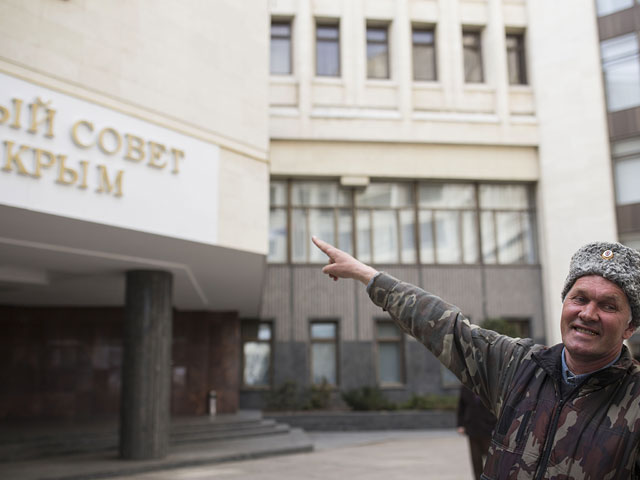
President Vladimir Putin instructed the Cabinet of Ministers together with the Russian Historical Society to supplement the concept of a new Russian history textbook on the role of Crimea and Sevastopol in the fate of the Russian state, RIA Novosti reports. The order was the result of the meeting of the President with representatives of the All -Russian Popular Front (ONF) and published on the Kremlin website .
The issue of ideologically true coverage of the history of Crimea in school textbooks was raised back in April at a meeting of the ONF asset with the president. The representative of the movement from Sevastopol Viktor Oganesyan turned to Putin with a request that, when compiling a single textbook of the history of Russia, specialists would not forget to describe the accession of Crimea and Sevastopol to the Russian Federation, their role in domestic history at all its stages, as well as the feat of the hero city in the Great Patriotic War.
“I’m sure that it will be so, and our historians will not forget about Crimea and Sevastopol in particular. This is what we can and should educate our young people. (...) I think that in the heart of very many Russians Sevastopol is one of the brightest images of victory in the broad and most literal sense of the word. I am sure that this will be used in our textbooks,” Putin replied.
The idea of creating a single history textbook sounded from Putin's mouths at the end of February 2013. At a meeting of the Council on Interethnic Relations, the head of state said that high school needs textbooks “designed for different ages, but built within the framework of a single concept, within the framework of the logic of continuous Russian history, the relationship of all its stages, respect for all pages of our past.” In addition, they should be "written in a good Russian language and not have internal contradictions and double interpretations."
A month later, speaking at the ONF first conference, Putin repeated his thesis: he stated that "there should be a canonical version of our history," otherwise, he warned, there was a danger of "destroying a single humanitarian space of our multinational nation."
Meanwhile, a single concept of history textbooks predictably caused a flurry of criticism from scientists. At the round table in the State Duma in July last year, when work on the concept of a new textbook was in full swing, historical experts said that the concept contains many "inconsistencies and pitfalls."
The developers blamed a one -sided approach, attempts to pole power, to present in a favorable light even the most black pages of history, to keep silent about important, but unpleasant moments for the current rulers. Political correct euphemisms also caused irritation, which now, apparently, will be used instead of some familiar definitions. For example, the "ethnic" term "Tatar-Mongolian yoke" in a new textbook will be replaced by a "yard of the Golden Horde".
The second Chechen war was unattended, and the period of Boris Yeltsin's reforms was reduced to “shock therapy”, while in those years other radical reforms were also carried out. Among modern politicians, only the leader of the Communist Party Gennady Zyuganov and the head of the LDPR Vladimir Zhirinovsky are mentioned. Enthusiastic politicians are not mentioned at all. The former head of the Yukos company Mikhail Khodorkovsky, whose name was not in the document, was included in the updated concept of the textbook. Among the cultural figures are Joseph Kobzon, but there is no Mstislav Rostropovich. Rallies on Bolotnaya and Sakharov are not mentioned.
The idea of uniform, ideologically correct textbooks seeps into other academic disciplines: in mid -April, the head of the State Duma Committee on Security, Irina Yarovaya, proposed to develop uniform literature and Russian language textbooks for Russian schools, which would not only give knowledge in these subjects, but also form the correct worldview.