
Translated material
Symptoms and centuries
The main trend of the anniversary "Kinotavra" can so far be called suppression. However, why only the Kinotavr is a short memory, the desire to forget the painful, uncomfortable, incomprehensible and present is characteristic of all Russian society today, and external events like the film festival are just circumstances in which the symptom is more clearly manifested. The chew-plaques gamut of the festival symbols in honor of the anniversary is replaced by blue-red-black (the traditional emblem in the form of the yolk of the Sun compressed to the point)-but who would pay attention to this last year. Also, the protest performance of Alexander Nikolayevich Sokurov at the opening ceremony was not much different from the interview, which the master almost monthly gives the St. Petersburg press-and who would pay attention to this, do not remove the broadcast of this ceremony from the air. Yes, the crowding out and the return of the replaced is the same process, and the unenviable aloud is always louder than what they scream in the squares. “We all know these surnames” - these are the most seditious part of Sokurov’s speech, and not at all the call to free the political prisoners.
Meanwhile, the political symbolism of words, gestures and flowers hid from attention really important changes in the “Kinotavr”. The festival finally made an attempt to get into the city - the retrospective part of the Kinotavraus takes place in the new cinemas “Sunrise”, “Satellite” and “Homeland”, which not even all Sochi are known about the existence of. Of course, the already non -crowded retrospectives are now actually lost - not only is it all unknown where, but also from the number. The absence of a film projection makes an idea with retrospectives meaningless; It is unlikely that they will survive until next year.
This neglect of the past is symptomatic - the present is too fleeting and valuable for us to spend time on the past. This is not bad and not good - just now in Sochi it is so. Yes, probably, not only in Sochi. Danila Kozlovsky, holding two millimeters of an oilcloth on his outstretched arm, just cut out of a tailor (a visual metaphor for the history of mankind), in fact demonstrated a real spiritual scrap. Human life, short, like these millimeters, insignificant against the backdrop of endless ruins of history and anticipation of fascinating future, at the same time complete suffering, boredom, disappointment and fears-it is she who creates this magnificent cultural and revealed landscape, which extends to infinity forward and infinity back. The only point from which the past and the future can be seen is here and now. But where can we see it here and now? How can we tell about ourselves?
No way - asserted by Alexander Sokurov, an honorary figure of the anniversary "Kinotavra", in his video message to the hall. The video of Sokurov, sitting in the garden of the Hermitage, was no less important and radical message than his living speech. The present is fluid and elusive, it makes no sense to try to fix it with a camera, you should go back, so that something larger, long, stable. Sokurov again acted as a real European: the understanding that being modern means being out of time is a common place of modern Western art. This timelessness leads to well -known costs: pulling ourselves out of the waters of the River of Time, we seem to create a dam of it, starting with the endless, mothballed “here and now”, turn the story into a stagnant pond, we take an eternal pause and thereby decisively abandon the image of the future (and related hopes and dangers that have discredited in the 20 political ideas).
Such a swampy time is clearly alien to today's Russian culture (there is a symptomatic eternal desire of Russian film festivals to show video art on the big screen, thereby tearing it out of the cessation of gallery display). This culture is heavily experienced by the post -Soviet lack of an image of the future and desperately seeks the image of itself real - even in the past. The paradoxical acquisition of oneself in yesterday was noticeable last year, when the main prizes of Kinotavra went to the quasi-elastic drama “Geographer Globus drank” (and two years earlier the winner of the festival was the picture of the distant 90th year, the “indifference” of the Flangoltz). This year, the past also strikes - after a few days they will show the retro “Kino about Alekseev” by Mikhail Segal. But the past is also melted with the present, transmutes, evolves and gains a new face.
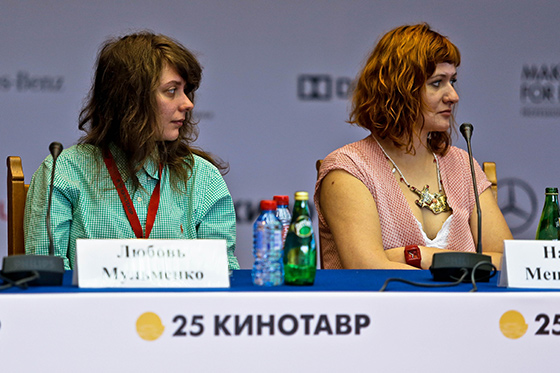 © Max Orekhovsky Lyubov Klumeno and Natalya Meshchaninova
This face is a double portrait of Natalia Meshshkaninova and Lyubov Klumen, who made almost a quarter of the current Kinotavra program. It was they who wrote the scenarios of three films in which the Russian “here and now” appears in its elusive, bustle turnover: “Another year” Oksana Bychkova, “Hope” plant, shot by Meshchaninova, and “what my name” is Nigina Saifullaeva - it will be shown only on Friday. The first and last films are very free remakes of Soviet classics, “Do not part with your loved ones” and “Elder Son”, respectively.
Both Meshchaninov and Bychkova are being removed today as they breathe - simply, without formal delights, concentrating on the hero, and not on the frame as such. Live swearing, lively sullen, slightly worn faces. People are like people, life as life - like everyone else, without making and aesthetics. Hipsters from another year, the history of the class war in a single Moscow family (the wife-designer cannot find a common language and rhythm with a “bombing” one), are not even caricatured-they are ordinary, average as the visitors of the conventional “arrows” and “Jean-Jacques” themselves are averaged. Beard-Okochi-Ceda. Looking at them, the viewer immediately takes the side of real values - the people, the Olivier salad, cranberry tincture and home conservation. The tragedy of the stuffy Russian being, where even the capital is an existential impasse, painted with bicycle roads and shops like those in “color”, dissolves in those very two millimeters of ordinary human life that needs to be lived now and, unfortunately, here.
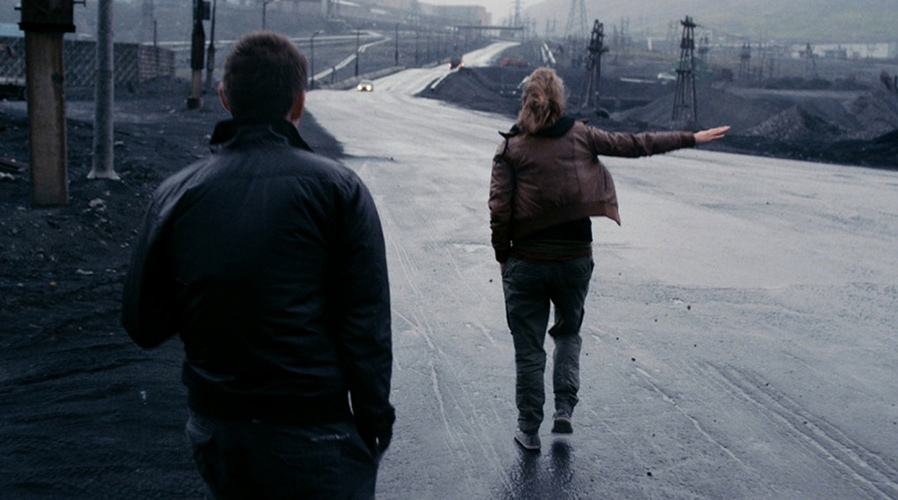
The “Nadezhda” plant, which has already been written about a lot in connection with the Rotterdam festival, gives the viewer some hope that the escape from the micro-Ruine prison is possible (in the original version of the script of the Norilsk cell, on the contrary, it slammed after the heroine, still flying away to Moscow). “Another year”, the action of which takes place already in Moscow, simply expands the walls of the camera to the borders of the ring. And the film closing the festival - “Leviathan” Zvyagintsev - will expand the prison to the very state border. The next step would be the expansion of this trap to the boundaries of the entire universe-which would mean placing it in the subjective consciousness of an individual individual: this, in fact, did the “plant” before he was instilled with a hippi end. This is also done by the “white white night” by Ramil Salakhutdinov-strange, as if pop-up from the late 80s, saturated with the specific spirit of the Antinuars of an autonomous St. Petersburg cinema. The action of a conditionally detective plot of the film unfolds during white nights, a restless private detective from Moscow wanders around the city of his youth, encountering ghostly figures from the past, as there will be no mantra as the mantra - as before, the past is no longer, not to escape from himself, and there is no longer a long time.
Films of Bychkova and Meshschaninova are a good example of how Russian cinema looks when it stops steaming and starts to just live the present. But in this rapture of “here and now” there is a different side: the repetition of these magical words develops at that very “western” bad infinity of indistinguishable moments, striving, as an illegible socialist realism of the 80s, to accommodate the frame “Life in all its diversity”-and therefore, in the principle of incapable of fixing, no specific image. The shown joints in the joint are two living, “spectator” dramas merge into one (which is very facilitated by the limited acting staff of our cinema) pulsating biological mass, into the crowd. And it is not a fact that in this crowd there is a place for the third, fourth, fifth film.