
Translated material
"Throw, blow, breakthrough"
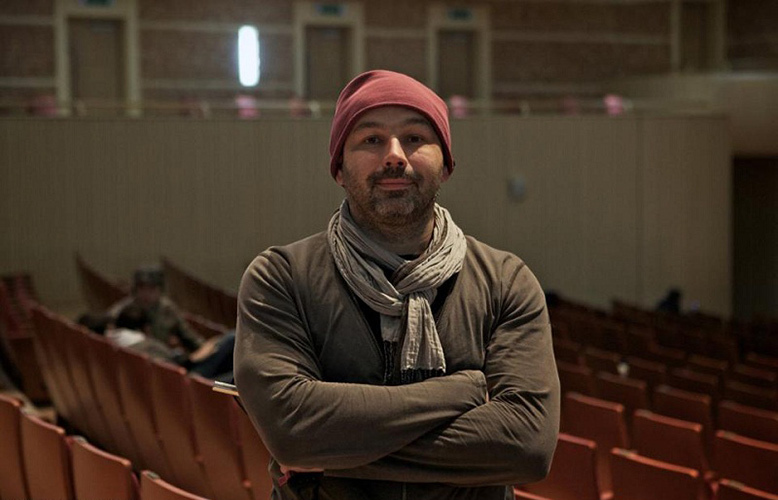
7 June at Moscow Beat Film Festival will take place the premiere of Dmitry Lavrinenko’s film “Still” . The film in detail covers the stage life and work of the Auktsyon group. Dmitry Lisin talked with Dmitry Lavrinenko about the difficulties of representing the cult group to its omnivorous fans.
- In which genre was the film made?
- Well, this is definitely not Bayopic, when Bezrukov, for example, is playing Bob Marley (laughs) . This is verbatim, in which all means of non -game cinema are used. The selection of the material was quite painful and strict - one episode from each concert, although at first we shot concerts entirely. And then it was collected like a mosaic. I managed to do something right away, and some episodes did not work out for a long time, and I was looking for a form for their implementation or waited for the situation when the situation was formed accordingly.
- Why did you decide to engage in the documentation of the life of a musical group, and not, say, social problems?
-Still, social and political documentary are alien to me. It seems to you that you are on the sidelines, and you have been standing for someone’s position for a long time. It doesn’t work out anything objective, you always sympathize with someone: left, right, red, green. You get involved in inevitable squabbles, forced to stand on someone's side.
- And how to cope with this subconscious bias?
- Need a hero. The hero follows his instincts or a life goal, and you, an observer, are quite free to see it.
- That is, seeing Leonid Fedorov in 2007, did you understand - here he is, your hero? And if you escaped from the problem of subjectivity of the look, then what problems have you acquired?
- The problem of the film about the famous group is that every viewer even before the start of the film knows what exactly he wants to see. It is almost impossible to show him something that he does not expect. You become a hostage to the expectations of the viewer.
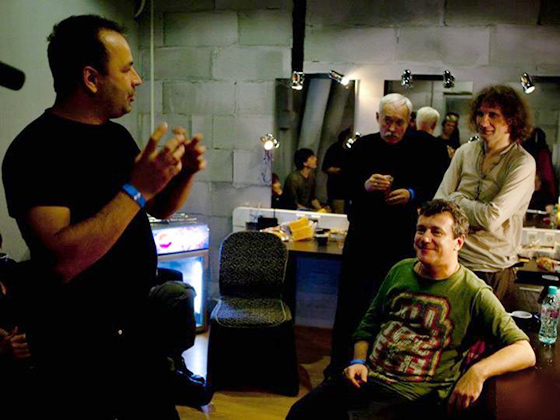 © Beat Film Festival on the set
- And what expectations of the public do you refuse to justify?
-Everyone is waiting for some extensive memories, chronicle of events, a systematic story. ZhZL is waiting. But this will not happen. There will be the reality that I observed and recorded seven years. Some part of the audience believes that Zenit “Auktsyon” has long been passed, but the paradox of this group is just that they themselves do not think so and, most importantly, it doesn’t matter to them what they think about them.
- And by what criteria did you select songs in the film?
- I took only those songs, the performance of which I saw myself. This is enough, because they are very complex and there are a lot of them. This is piled on, this is a giant material. How to organize all this? What is the main thing, what is not the main thing? The Song is the main thing? It turned out no. Story? It turned out no.
- AND?
- The main thing was to convey the feeling from these unusual people who make strange music here and now. The image of a person is not a reality, it is already a memory created by the brain, it differs here-and now. Therefore, a movie working with reality should not transmit reality as if memory are sculpted. The main value of the film about Auktsyon is that we managed to separate real things from the things created, from artifacts.
- And what is the real “Auktsyon”?
- Everything that Auktsyon touches is immediately dissolved, especially any pathos. And the so -called feeling of beautiful too. This acid dissolves all the attempts to see pleasant, tederation and sweet in the world. You become pure, ready for the search and knowledge of the world. Therefore, neither pathos, nor television radio, nor classical cinema to “s” are not applicable, they instantly dissolve it. Once I asked Oleg Garkushi how to make a film. “We must be friends with us, travel, live, shoot 25 years,” he answered.
- And what image of the group did you have after all these years of life with them?
- It happens that they are sluggishly starting a concert or sound is not built, then Fedorov behaves like a lion. He growls, walks along the stage in a characteristic pose, as if trying to expand the space, drives a guitar right and right. And suddenly a throw, a blow, a breakthrough, an explosion, the ringing of a guitar, Volkov tears a string of smuggles, a cry of Garkushi ...