
Translated material
Ilya Karpyuk: intrigue elections
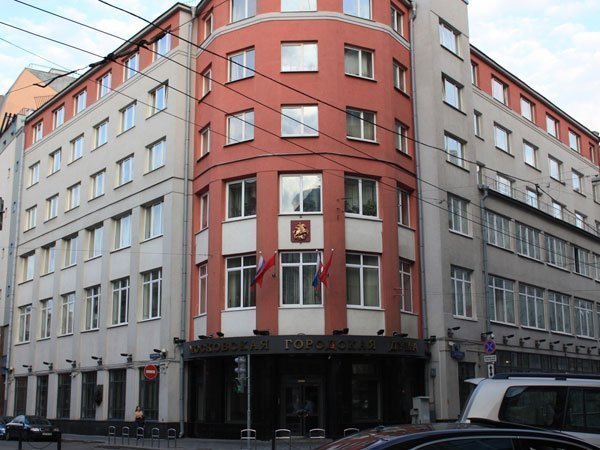
Ilya Karpyuk 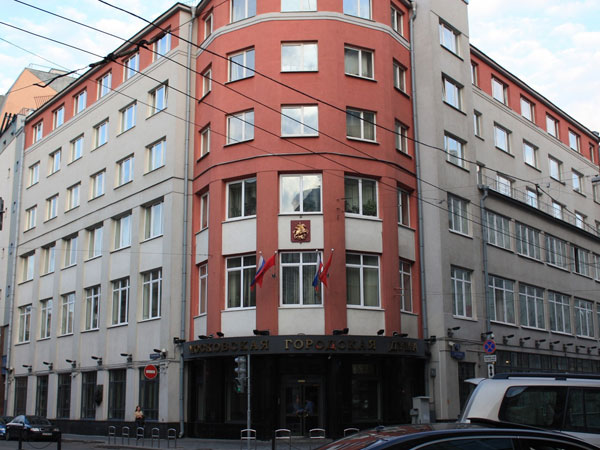 Moscow City Duma photo: sourd.ru
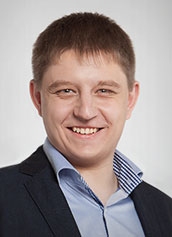 Alexander Shumskaya
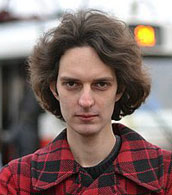 Maxim Katz
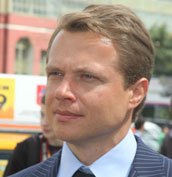 Maxim Liksutov
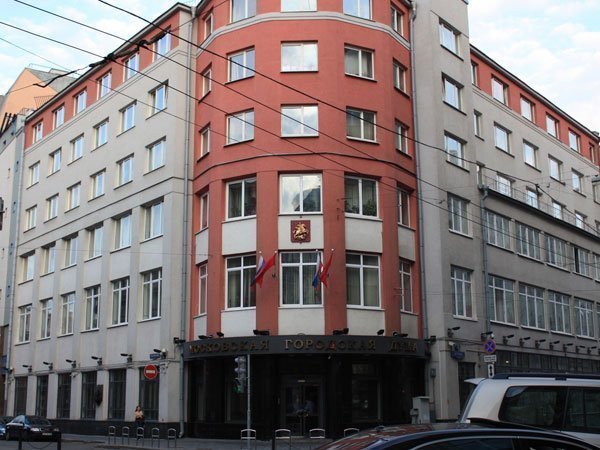 Moscow City Duma photo: sourd.ru
On the nearest single voting day, which will be held on September 14, 2014, residents of at least 29 Russian regions will choose governors, in three other subjects of the Federation, governors will be appointed local parliaments.
However, almost more attention than to a significant part of the governor’s campaigns, they are involved in the choice of one regional parliament - the Moscow City Duma. This is explained not only by the importance of the capital in the political life of the country, but also by the fact that no one can predict the results of elections with sufficient accuracy.
Elections to the Moscow City Duma, this time, pass according to the majority scheme - that is, there are no party lists, the elections consist of 45 separate election campaigns. As the practice of states shows in which parliaments are formed in this way, the majority system leads to bicamera: indeed, it is much more difficult to win in a separate district than to gain 5% among all voters. Often the majority system was introduced by the government in order to prevent the opposition’s victory - General de Gaulle did this, believing that socialists will never be able to take first place in most districts of the republic, but this became a reality 12 years after its resignation.
However, party systems have been formed for decades, while voters usually do not think such terms. The intrigues that unfold around the current campaign seem to be much more interesting. Now of the 35 Moscow deputies 32 represent United Russia, which seems monstrously unfair given that the party leader Vladimir Putin scored in 2012 less than half of the votes of the residents of the capital, and Sergei Sobyanin, formally self -nominated, but in reality, one of the EP leaders, with great difficulty in 2013 won the mayor's elections in one round.
It was such an attitude of Muscovites to the party in power that made the city hall change the way of forming the city parliament: voting on party lists on which EP would hardly show a good result was canceled, now all the deputies, the number of which, in accordance with the requirements of the federal law, was increased to 45 people, must win in single -mandate districts.
On the one hand, such a decision with almost one hundred percent probability will allow the city hall to maintain control over parliament, that is, to have at least 23 deputies there, who will approve the administration’s proposals. On the other hand, the majority elections like no others stimulate competition, so that opposition candidates who are actually going to get to the Moscow City Duma should expect tough, beautiful, interesting and memorable campaigns - this is the only way to attract the votes of the townspeople, who, for sure, will not visit polling stations too actively, the specifics of the regional parliamentary elections. So, majority elections create some intrigue.
Intrigue first: candidates from EP
The electoral geography of Moscow is surprisingly stable: the same areas voted for the demonstration of Russia in 1993 and for Navalny in 2013. It can be confidently said that candidates from the party of power will not have big problems in the north, east, southeast and south of the city-people there are conservatively and, for the most part, do not vote for opposition or reformers, but for the current government and stability.
On the contrary, the opposition’s best chances are in the belt of the districts that goes from the north-west of the city through the center to the southwest. Do not think that only Arbat is ready to vote for dissatisfied with the authorities, in all honest elections and liberals an increased percentage is observed along Leningradka and Leninsky Prospekt.
Accordingly, with the special caution of the party in power, it is necessary to nominate candidates in the problem districts.
In some districts, however, an interesting alignment is visible. For example, there is a high probability that in the 44th district (Taganka, Zamoskvorechye, Yakimanka, Tverskaya) will win the primaries and will go from EP Alexander Shumskaya. His posters are now hung out the entire city center - this suggests that his headquarters has huge financial or administrative resources.
Alexander ShumskayaAlexander Shumskaya is a formally independent candidate, about the center “traffic jams.net”, so that his program is mainly spinning around the transport problem: he promises to create new parking spaces, limit the work of tow trucks, reconfigure traffic lights, etc. A significant part of the inhabitants of the Tver district, of course, will rather vote for Shumsky than, for example, for those who represent them, Inna Svyatenko, which proposes to punish bloggers according extremist article for questions regarding financing Crimea.
Even if the winners of the “primaries” do not go as candidates from United Russia, but will begin to collect signatures, do not think that they will be completely independent. According to the law, for the nomination, it is necessary to collect approximately 5 thousand signatures in the district with a population of 200 thousand people - that is, you need to receive signatures of each forty resident in a short time, this is almost impossible, and if it is realized, then with a huge budget and, preferably, with a benevolent ex -birus.
Intrigue second: opposition candidates
The very small probability of a successful collection of voter signatures not only forces to suspect future self -witnesses of ties with the mayor, but also makes this path practically closed for independent candidates. The only way to get to the election to the opposition is to get a referral from one of the political parties, which has the right to nominate its candidates without collecting signatures. In addition to four parliamentary parties, ER, the Communist Party, SR and LDPR, this right has an apple, which in the last elections received more than 3% of the vote.
“Yabloko”, of course, is interested in the nomination of its own shutters, especially in the most profitable districts for opposition: in the center, in the south-west and in the north-west. However, this is also obvious, the party has no resources for conducting a full -fledged campaign in all districts and Yabloko already announced that it forms a coalition - invites the Allies to participate in the elections.
Maxim KatzFor example, the municipal deputy Schukino, as well as the head of the City Projects Foundation, Maxim Katz, is going to go to the Moscow City Duma, for example, Maxim Katz. He requested for himself 45 districts, which include Meshchansky, Krasnoselsky, Basmann areas and Sokolniki. This is a good enough from the point of view of the electoral prospects the area, according to which the current deputy Kirill Shitov will most likely go from the EP, is not the easiest opponent.
Ultimately, who will go to the Party Quota elections, and who will have to collect signatures by the Yabloko conference, which will pass in a week - so it is not long to wait.
Intrigue Third: Agend of the Elections
Usually, each election campaign has its own agenda. It is either a leader set, or the circumstances dictate. In the upcoming elections to the Moscow City Duma, no single agenda has yet been expected.
Independent candidates pay a lot of attention to the development of local self -government and separation of powers - at least this is said in the memorandum of the Yabloko party, with whom all candidates from it will be obliged to agree.
Maxim LiksutovThere is no way to get away from the transport problem - recently the head of the Department of Transport of the Capital Maxim Liksutov is constantly in the spotlight, which, when arranging paid parking in the city center, then draw the allocated stripes, then trying to evict trolleybuses from the city center. Of course, candidates also do not get away from the transport issue: the quality of public transport is left to be desired, traffic jams from the city have not disappeared yet, the cost of owning a car is increasing all the time, roads are built extremely slowly.
Elections are a unique opportunity to discuss with citizens all the problems facing the city. Is it necessary to develop a tram network, whether it is worth building a metro in remote areas, who needs more and wider roads, whether the city needs the next tunnels, how much the parking is in the center, whether it is necessary to hardly punish the violators - all these questions, on the one hand, have long been worked out by specialists and the answer to them is known, on the other hand, knowledge of the answer is useless if there is no consensus in society.