
Translated material
Barry Harris - in the shade of Monca
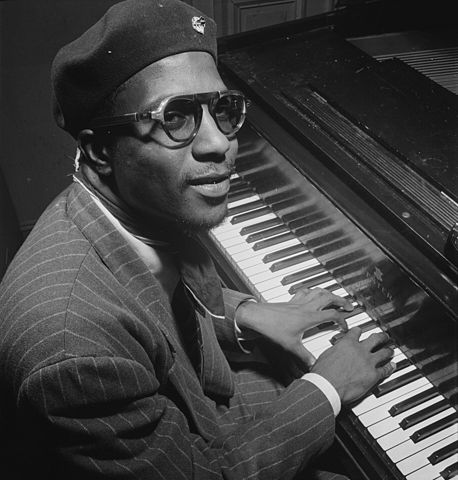
The historian Jazz Scott Janou called the pianist Barry Harris one of the giants of Bibop. But most of the fans Harris are practically not known. “Jazz Time” this week is dedicated to Harris, but even at our frequencies, Telonius Monk dominates
Telonius Monca was 57 years old, when, in 1974, he agreed to participate in a concert in Carnegie Hall. The concert in this temple of American music was scheduled for the sixth of April. The Saxophonist Paul Jeffrey Saxophonist with a string group was supposed to accompany the monk. Monk fans, who did not just know to what extent he could reach and that it is impossible to trust the Teleonius who agreed to roll into the concert hall, or - more, as Jacques Ponzio writes, “it was impossible to put the center in the dispute that he would be fulfilled at least something promised” ..., fans still bought all the tickets to the carnie Hall.Good afternoon, evening or night. Welcome to the Jazz Time Club. You can listen to us on the short waves of “Freedom”, from space through satellites Hotbird and Asiasat-7, as well as from our easily accessible website www.svoboda.org. The microphone in Paris Dmitry Savitsky.
Thelonious Monk - Trinkle Tinkle - 7:23 (Theelonious Monk - The London Collection - Black Lion)
“Trinkle Tinkle” is one of the enchanted names of the compositions of Telonius Monka. Most like the language of children. Trinkle is rather phonetic, and Tinkle translates like the sound of a children's, namely children's stream that hit the pot. Solo Monk in the London Sound Recording Studio "Chappell", November 15, 1971. The closest date for an impending concert in Carnegie Hall. The concert, at which, if Monk had not arrived, would be played by his friend and co-standing the concrete-glass fortress of Baroness Rothschild in Wihoken, New Jersey, a village on the banks of the Hudson River, Barry Harris.
A panorama of New York was visible from the windows of the fortress, and flocks of cats roamed on all floors.
Thelonious Monk - Blue Sphere - 2:23 (Theelonious Monk - The London Collection - Black Lion)
“Blue Sphere” is one of the three improvisational blues of Teleonius Sfie Monka. The other two are: “Functional” and “Someting in Blue”. The same London recording studio, November 15, 1971.
At the beginning of the seventies, Monk, who made so much effort to achieve recognition in the fifties, practically left the scene and recording studio. He became something like a hermit: he could not go around the room for days, but could just stand and be silent for a day or a half, and then fall into bed for 48 hours, he could just look at one point and not react to anything. For many years, he was not able to move about something in life without the help of his wife, Nelly. In Wihoken Baroness, Nick took a whole apartment to Monkam. Monk, and it was clear, rejoiced that the river lies between him and New York. After the famous and sad concert in Boston, where Monk went without Nelly, psychiatrists took care of Teleonius. How did it all start?
First inevitable reminder:
In the open sea on a dry truck crossing the Atlantic (you wrote to me about this!), At the night airport in anticipation of the flight, at home, near the trouble -free sleep of a sleeping spouse, in the Volga, which rushes along the wet mosquito, in the company of suburban mosquitoes, these flying skaps of the local race, you listen to the weekly and leading “jazz time” On short waves of “Freedom”, through satellites Hotbird and Asiasat-7 or from our website www.svoboda.org . The microphone in Lutetia has your ds.
Theelonious Monk & John Coltrane - Ruby, My Dar - 6:17 (Theelonious Monk with John Coltrane - Jazzzland)
"Ruby, my dear", "Ruby, my dear." Ruby was a girlfriend of Sister Monka, Marion and, apparently, was the first large passion of Telonius to Nelly. John Coltrain played a tenor-saxophone; Monk - piano; Wilbur Wer - doublebas and Shadow Wilson - drums. The Monk and Koltrain disc was recorded by the producer who promoted Monka - Orin Kipnyuz in the Riverside Records branch - Jazzzland in April 1957. Former vinyl, the current SD is necessary for every serious collector.
So, Monk drew to Boston to play the evening or two in the George Wayne club "Storyville". Wayne was called "the most famous jazz impresario" and "the most famous non-musical in the history of jazz." He conceived this and founded a NewPort Jazz Festival.
But to the matter.
I repeat: the fact that Monk always and everywhere was late, especially if he was without Nelly, everyone knew. He reached the hotel and began to dance in the lobby out of habit. That is, to rotate like a top is much less than a bit than dervishes-Sufists. Then he stopped and stared at the fireplace clock. The porter, excreted from himself, asked something, but Monk observed a thunderous silence that was characteristic of him. As a result, the porter announced to Teleonius that his number was not registered for him anymore. Monk, not taking his eyes off the firewood, listened to the receptionist and went straight to Storyville.
Thelonious Monk - Reflections - 5:01 (Theelonious Monk - Piano Solo - Vogue)
“Reflections”, “Reflections” - the composition of Monka playing Solo in Paris, on June 1954 on June 1954.
The club was still empty and the administrator, feeling that Monk was very out of place, put him in an artistic restroom. Monk settled in an armchair and rested his gaze against an empty wall. When he finally went on stage and sat behind the piano, he without shine, very mechanically played two plays, got up and left. An hour later he appeared again, again played two compositions and dropped his hands. He sat on stage in complete prostration under the gaze of a stunned audience. The watch, as expected, was tickal. Then Monk stood up sharply and left, this time for good.
He went to the airport, where he began to wander without a goal, without at least some computable meaning. The director of the Boston terminal called the police. The guys in the form knew what to do. They took Telonius to the local psychiatric hospital.
Today's “Jazz Time” was honestly conceived in a completely different way. The conversation was supposed to go about Barry Harris, who, according to DownloadBeat, “appeared at the May International Festival in Kalamaz, in the southwest of Michigan. The festival was founded by the Irving Gilmore Foundation in 1989. Purpose: to arrange in honor of the businessman and philanthropist Irving Gilmore every two years international meetings of pianists. The eighty -four -year -old Barry Harris, a veteran of the jazz scene, was an honorary guest and played in a trio with smuggler Ray Dramond and Drummer Liso Williams, with whom he began to play 45 years ago. Of course, Harris fulfilled classical standards, but he played the famous plays of a friend and teacher - a magnificent telonius - “Round Midnight” and “Ruby, My Dear”.
If Harris had not been so close to Monka, his fame would surely be more grandiose. But the gigantic figure of Monka (ninety meters, if you mean only growth), despite the success and popularity of Barry Harris, forever blocking him.
Barry Harris & Al Cohn - Georgia on My Mind 6:16 (Barry Harris & Al Cohn - Barry Harris Trio with Al Cohn - Gambit)
“Georgia on my mind”, “Georgia is on my mind” - the music of Hoagi Karmayla. El Kon-Tenor Sax; Barry Harris - Royal; Larry Ridley - doublebas and Alene Podon - drums. New York, June 19, 1975.
No matter how the Monk of a magnificent, Detroit school, pianist was blocked, I will still say a few words with a tongue twister about Harris himself.
Barry born in 1929. His mother was taught by his mother: both classics and jazz. In 1945, he discovered Bibop. He started in Detroit clubs. He accompanied the visits of the stars: Lecter Yang, Charlie Parker, Miles Davis. For a while he played in the combo of Max Roach in New York. He lived in two cities: New York-Detroit. As part of his own trio, he played with Lee Kotnz and Roem Eldridge. He moved to New York after he received an invitation from Cennonball Educerley to enter his quintet. In New York, Harris accompanied Jozef Latifa and Coleman Hawkins. Like at home in Detroit, in New York Barry Harris taught; In the latter case - in the jazz cultural center of a large apple. Scott to Yanou wrote that Harris belongs to the cohort of leading pianists of Bop the twentieth century. He often sounded like Bad Powel, but at least like a monk. The French musical critic of Exavier Plays adds to Powel and Monca - Art Tatum and Teddy Wilson.
Barry Harris - 'Round Midnight - 5:57 (The Barry Harris Trio - Complete Live in Tokyo - XANADU)
Round Midnight Monk, version of Barry Harris. Concert in the Tokyo Concert Hall Sun Plaza, April 14, 1976. With Harris, the piano, played: Sam Jones - double bass and Lira Williams - drums.
Monka was lucky. Nelly pulled him out of the Boston psychiatric hospital - the doctors decided that he was "socially not dangerous." Then the psychiatric dossier of the monk, praise of heaven, fell into the hands of a psychiatrist Eddie Henderson, a jazz trumpeter. It was Henderson who described the approach to “mutism”, autism of Monka. He responded to all tests in silence and complete passivity. Reducing, I will say that he was, subjected to electric shock. But Monk did not react to this One Flew Over The Cuckoo's Nest method - the flight over the cuckoo's nest if you read the book or saw the film. The role of Eddie Henderson started at that moment. He prescribed Monka a powerful tranquilizer - a thoraine. Fifty milligrams were a standard dose, but she did not act on the body of the body. He returned and returned to the doctor and asked to increase the dose. As a result, Monk took three grams of five hundred Torazin and complained that it did not work on him. Three five hundred exceeded the normal dose by seventy times!
In recent years, when he appeared in clubs, with three and a half grams of thorazine in the blood, he sniffed a gram of cocaine, offered by a fan, drank a triple dose of cognac behind the counter, sat down behind the piano, sweat flowed down his face and pressed the key that did not make any sound. Then he went down to the hall, walked to the bar’s rack and asked:
- Well, how? I seem to play amazing?
Eddie Henderson hospitalized Monk countless times. As a jazzman, he understood that the monk, Monk, was unique. But he could not do anything. The gray substance of the genius, although he did not prick, like everyone else, was practically destroyed by the years of consumption of dope and alcohol. Moreover, if Charlie Parker had phenomenal health, which allowed him to reach 34 years old, Monk was a real skyscraper of strength and health compared to the bird. Nevertheless, Monk fell into full autism and, silently, died in February 1982 at the age of sixty -four.
Suppose that this explanation is scientific, medical. But the biographers Monk, historians of Jazz, wrote that Monk fulfilled his mission. He was, first of all, the composer, he heard music inside himself, he lived with it and, when she broke, he fell silent and died. He was music and she was gone.
When he was asked: - What is the meaning of life? - He answered - to die ...
Thelonious Monk - Hackensack - 11:00 (Theelonious Monk - Monk in Tokyo - Columbia)
"Hackensack". The composition of the monk and the address of the well -known Rudy Van Helder, his recording studio. Concert of the Quartet Monk in Tokyo, May 21, 1963. Composition: Monk-Royal, his beloved saxophonist, alas, who also hit the shadow, Charlie Rose-tenor-Sax; Butch Warren - double bass and Franca Dunlop - drums.
You ask, what about the concert in Carnegie the hall? The concert was declared as Barry Harris's performance. But Barry said to Monca: “Why don't you come and play?” Monk answered the usual: - Yeah, I will come ...
Harris was waiting until the last second. When the hall began to walk in waves, Barry went out and pushed the stool to the piano. At this moment, the backstage scattered to the sides and, stomping and howling, Monk appeared over Barry. The concert in Carnegie the hall of 1974 was the last unique performance of Teleonius. He played like God, and the people sobbed. Harris received money for the concert.
The last thing I can say to all the fans of jazz (however, they themselves know this ...) that there is jazz and is Monk. Monk can and should always be listened to. This of his simplified and stunning language of the keys remains with you forever.