
Translated material
In the footsteps of the ordinary Ryan
70 years ago, the Operation Opelelord operation began on the Normandy coast
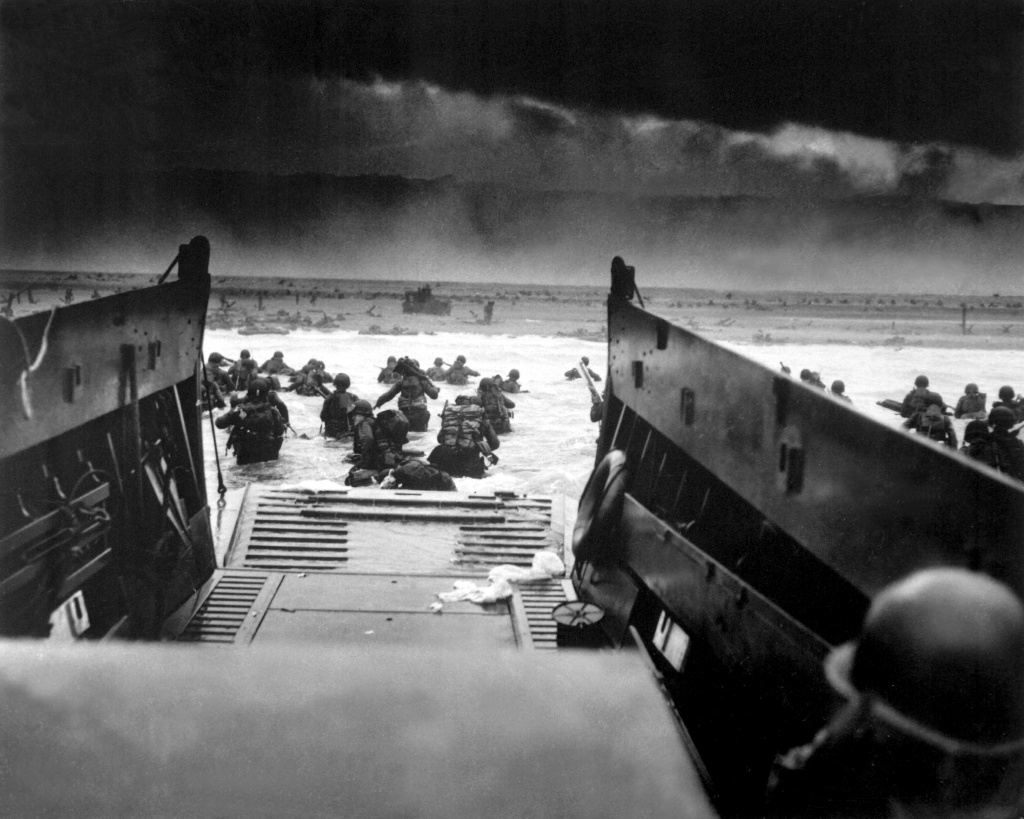
Normandy. Early morning on June 6, 1944. The largest landing operation in history began /Photo: Reuters
The coast of Normandy acts pacifying. Here, even the largest wave does not hit, but licks. By the will of the occasion, the author fell on these historical beaches, or rather, the most famous - “Omhaha”, which is near the town of Longville - May 8, the day, which is considered in the West to Victory Day. The weather was sunny, and loners and couples with an inexplicable, as it seemed to me, had a feeling in my eyes, wandered thoughtfully. Someone stood for a very long time and simply looked at the sea, towards England, where 70 years ago, on June 6, 1944, at 5.30 in the morning the fleet of allies appeared. I looked too. Because in these places a look, like a compass, stubbornly turns to the north. On that Tuesday, the largest overlord operation “Overlord” (it was divided into several smaller names under other conditional names) was launched by American, English and Canadian troops. In encryptions, the entire action was called "Day D". Ultimately in France, on the coast of Normandy, and almost 3 million soldiers landed in the rear of the Germans from aircraft. Only June 6 - almost 160 thousand. On this day, about 7 thousand vessels of different types and up to 12 thousand aircraft were involved.
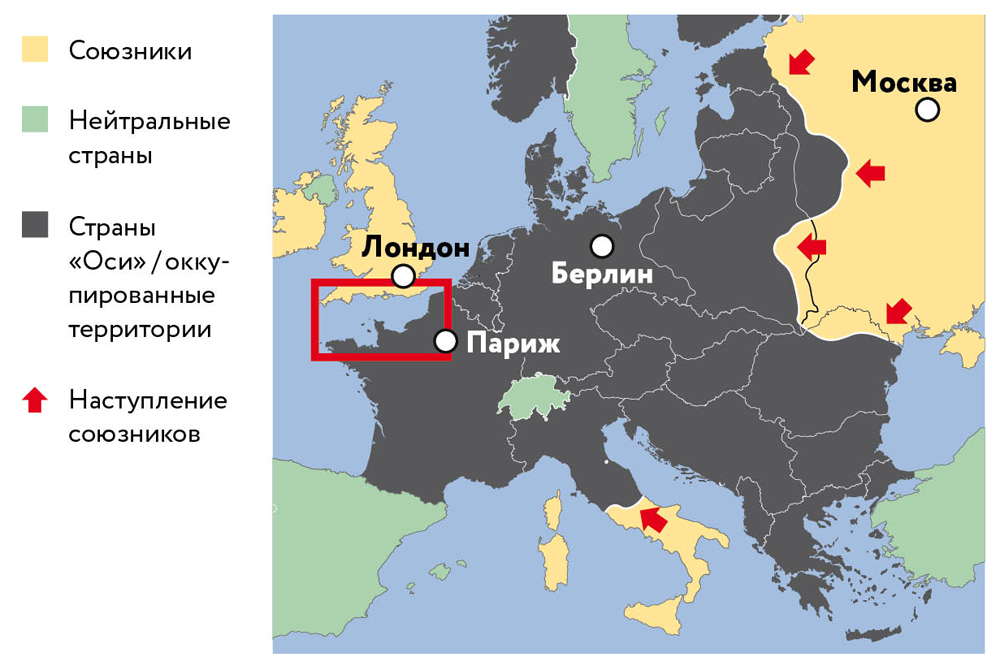
The Western Front, called the second front, was finally open.

Borders
The Germans knew about a possible invasion and prepared for him. The northern coast of France defended the so -called Atlantic Val - a strip of powerful coastal fortifications. Since most of the Wehrmacht fought on the Eastern Front, there were relatively few German troops in France. Nevertheless, it was the battle on the coast of France that decided the fate of the entire future Western Front. The Atlantic Val still had to be overcome.
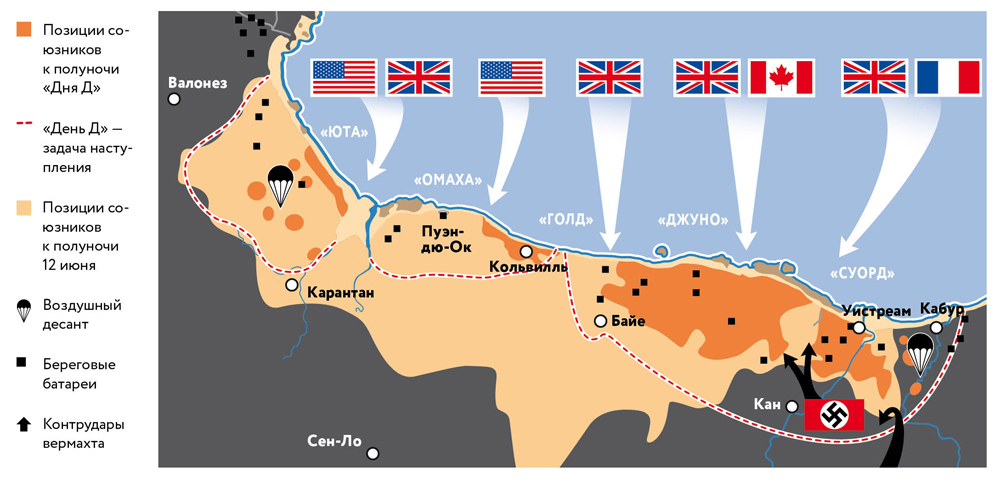
The allies, however, landed not in Sherbur and not in the Kala region, as the Germans suggested, but on the beaches of Normandy, most of which were relatively poorly strengthened. The operation was terribly classified, and the effect of surprise was a success. The code names of these beaches should know every schoolboy (American, of course) - Utah, Gold, Juno and Suord, Omha.
The Americans have been chosen by Omaha as a key point of landing. For many kilometers, the coast is sheer cliffs 30-50 meters high, and only this eight -kilometer open strip was suitable for landing people and equipment.
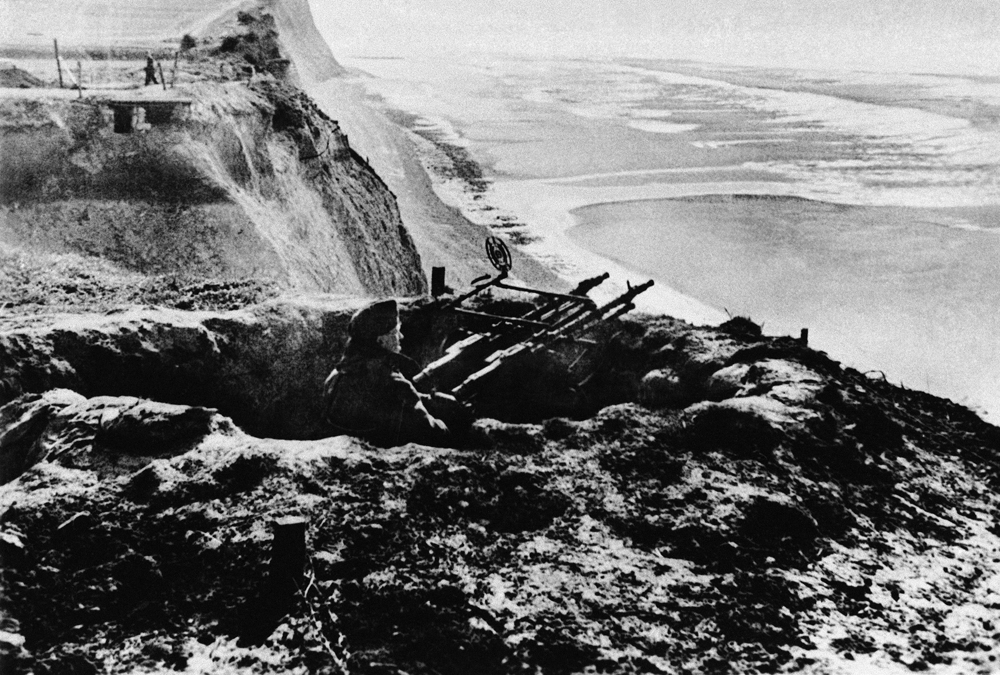
The Germans, of course, also guessed about this possibility. The whole shore was a continuous mess of hedgehogs, mines, barbed wire; Piles were driven into the water to prevent the approach of landing vessels and tanks pass. On the territory of the beach there was no place protected from fire, the position of the guns made it possible to cover any place on the beach with flank fire. And it was here, on the Omakh, the Germans showed fierce resistance.

Plans
The forces of the parties. The Americans have: 43,250 infantrymen, 2 battleships, 3 cruisers, 12 destroyers, 105 other ships.
From the Germans: about 7800 infantrymen, 8 artillery bunkers, 35 long -term firing structures (bunkers), 4 artillery batteries, 6 mortar positions, 18 anti -tank guns, 45 missile systems, 85 machine -gun points, 6 tank towers.
In general, the 352nd German Infantry Division held the 53-kilometer line of defense, most of which were the young soldiers who did not smell gunpowder, even teenagers. Although veterans who fought on the Eastern Front were added to their ranks.
The division has never passed battalion or regimental exercises. Of the 12,020 soldiers of the division, only 6800 had at least some combat experience. True, several more battalions of the 716th and 915th Grenadier regiments were given.
The Nazis were mainly concentrated in 15 strongholds located along the coast and called Widerstandsnester ("resistance nest"). These points were protected by minefields, moats, barbed wire and interconnected by trenches and tunnels. Since the German strategy was based on the idea of defeating the enemy near the sea line, there was no echeloned defense as such. True, there were no people for deep defense - everything took the Eastern Front.
"
The allied landing operation was terribly classified, and the effect of surprise was a success
"
The Americans at all costs had to capture the bridgehead of the Omakh. For, according to the order, he was supposed to connect the British units on the eastern beach "Gold" with American paratroopers landing in the West, in the Utah-Beach section. Thus, it was the capture of the Omakh beach that provided a long bridgehead on the Norman coast of the Seine Bay between Port An-Bessen and the Vir River. And - the success of the entire operation.
The landing plan looked like an episode of a military game.
5.50–6.27 - shelling of German positions of ship artillery.
6.00–6.25-a connection of 440 b-24 bombers is bombarded from the air.
6.30-landing on the shore of 64 amphibians, 35 ordinary tanks and 16 bulldozers for clearing barriers. Also at this time, 8 infantry companies were supposed to land. Each company was responsible for its sector.
6.32 - the beginning of the landing of sappers to organize passages in minefields.
7.00 - landing of the next infantry echelon.
8.00 - artillery landing.
Immediately after a breakthrough to the shore of the first forces of the invasion, special -purpose engineering units should have started to pave the passages between the lines of obstacles on the water and on the shore - this would allow the ships of more displacement to come closer to the shore during a high tide and facilitate the landing. Transportation to the shore of the bulk of the cars was supposed to begin 180 minutes after the start of the operation. The Germans coastal defense objects were to be “cleaned” two hours after the start of landing. Three hours after the capture of the beach, bridges should be opened through which the transport traffic would be carried out. By the end of the day, the forces landing on Omakh were supposed to create a bridgehead of up to 8 kilometers deep.
It was smooth on paper ...
The landing of the first echelon of the Americans turned into a terrible massacre. “Bloody“ Omaha ” - such she entered the textbooks and became for the Americans one of the symbols of the entire Second World War.
The unwatted 29th Infantry Division was thrown into battle to capture the western section of the beach, strengthening it, however, nine companies of rangers. If the landing of the British and Canadians on the beaches "Gold", "Juno", "Suord", and on Utah, was relatively smooth, then the Americans did not work out from the very beginning on Omakh.
The furious bombardment of hills from aircraft did not cause much harm to the Germans - Dota were reliable. The shelling of German fortifications from the battleships Texas and Arkansas also did not give a tangible result - the fire from heights did not weaken.
A few kilometers from the shore, the paratroopers began to transplant from ships to light landing boats. However, the boats walked almost blindly: strong fog, storm, disgusting visibility. And the troops lost their orientation. They were twisted on the waves, in the labyrinths of hedgehogs and piles. Ten landing vessels were lost even before they approached the shore. Several ships remained afloat only thanks to the paratroopers who hastily scooped up water with their helmets.
Under dense fire, sappers, trying to remove coastal fences, lost 40% of personnel
"
In a panic, the unloading of amphibious tank on deep water began. Of the 32 tanks, 29 drowned along with the crews. Only one captain of the boat disobeyed the order and did not immediately release his three tanks-they were the first time the only support for the infantry, which nevertheless could get to a small depth and began to land. However, the “small depth” is two or three meters, and therefore many soldiers with 30-kilogram ammunition immediately went to the bottom. And the rest was waiting for coastal water boiling from German bullets and shells. Many of them had to crawl two hundred and three hundred meters along the beach, ahead of the advancing tide. Under dense fire, the sappers, trying to remove the coastal fences, lost 40% of the personnel. The assault units that managed to reach the shore could not overcome well -protected exits from the beach. And they remained, in fact, under fire.
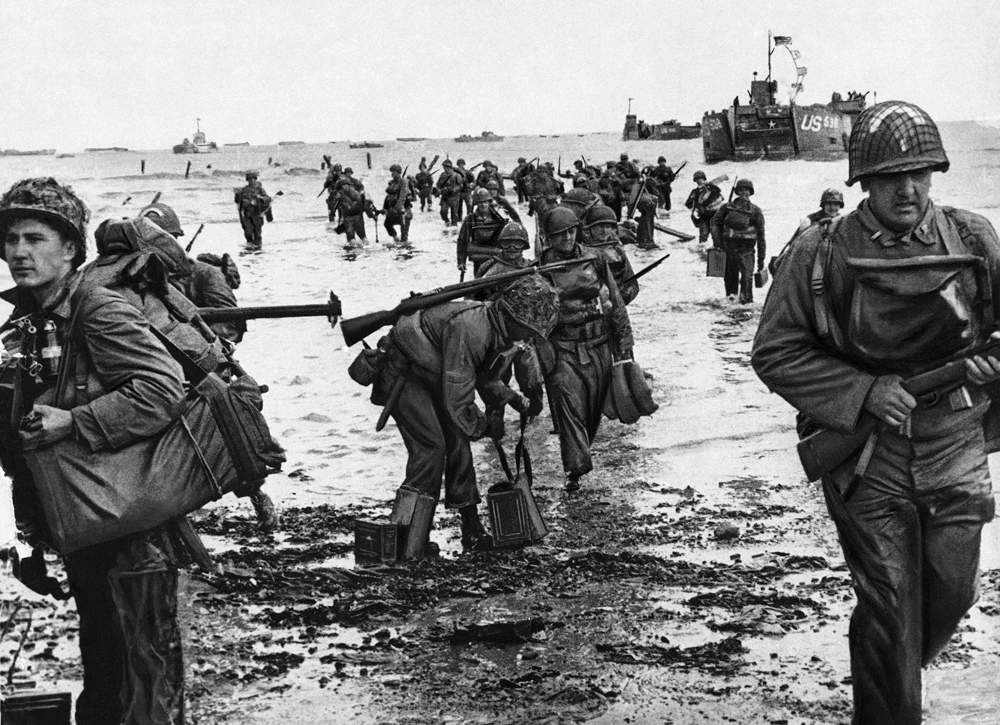
Shore
The Omakh section was divided into ten sectors. One of them, with the code name “Dog Green”, perpetuated Stephen Spielberg in his famous film “Save Private Ryan”. He immortalized, in fact, the Omaha itself.
For each sector, one reinforced company was responsible. Ten sections - ten mouths of the first wave. About one and a half thousand people. Of these, only a few survived. Together with the infantry of the second wave, the support guns with the teams that saw the same chaos as the rifle companies began to arrive. Sapers who received the task to clear outputs landed without their equipment. Many semi -buzzing vehicles, jeeps and tractors were under water at a depth, those that were able to get ashore stalled on the beach and became an easy goal for the Germans. Most of the radio transmitters were lost, which further complicated the task of organizing scattered and demoralized troops. Almost all of them landed, at least a few hundred meters from the target, and this became enough to completely fail the entire plan of the complex operation, where each unit on each boat was given a special task. The surviving commanders could only dispose of the soldiers who are in close proximity. Apart from several surviving tanks and a platoon of heavy weapons, the storming had only their own weapons, which, having visited the water and sand, needed cleaning. The soldiers that were hiding behind the pebble, many of whom for the first time in their life joined the battle, were not protected from mortar and artillery fire. A tightly mined strip opened for fire from the cliffs extended in front of them. The wounded, lying on the beach, drowned in the rising tide, landing vessels in the sea received hits and light up. The soldiers fell in spirit.
At 13.35, the command of the 352nd German division reported upstairs that the storming were dropped into the sea. From the German observation post in Puen Du Perse, from where the entire beach was observed from the western end, the Germans saw that the assault was stopped.
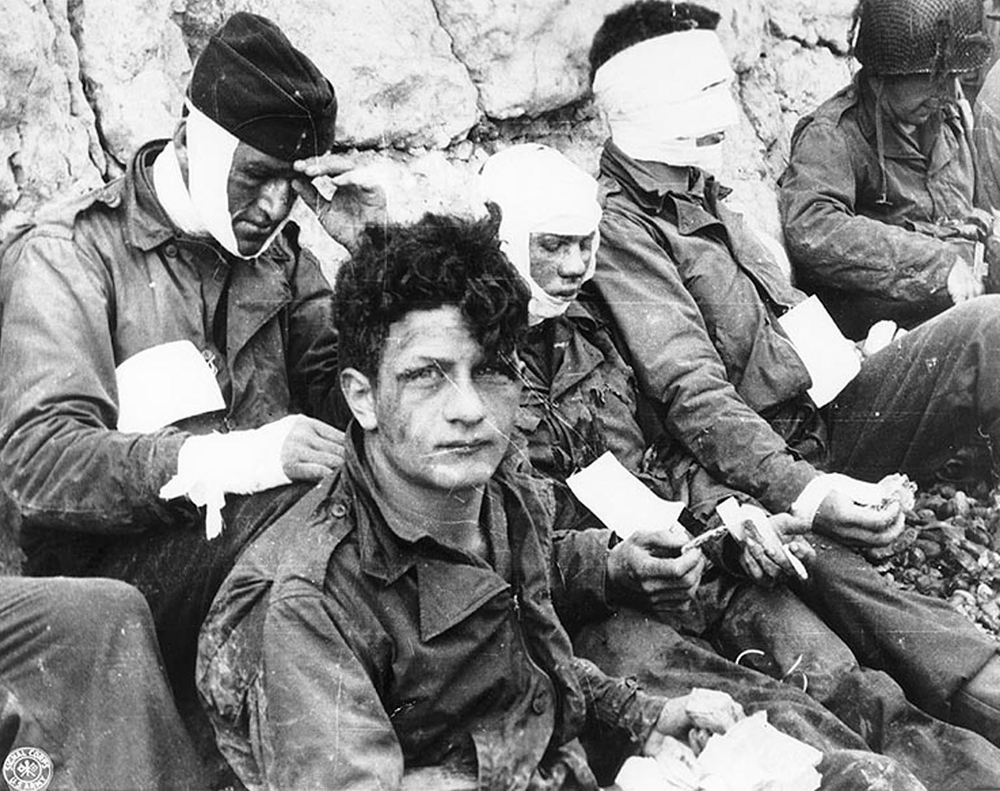
Victory
Each army has its own heroes. The company L of the 16th Infantry Regiment of the US Army suffered heavy losses when it crossed 180 meters of the beach. However, using natural shelters on the Far Eastern Territory of Omakhi, 125 surviving infantrymen were able to start storming rocks. They turned out to be the only company from the first assault wave, which continued to act in harmoniously, like a single combat unit.
They were joined by the surviving soldiers of the rangers battalion from the first wave - those who landed in the Dog Green sector. They climbed into the cliffs of a cliff from Vierville. In the end, several more groups of paratroopers were able to seep into the depths of the coast, climbing the cliffs between protected defense units. By the end of the day, two small isolated strongholds were captured, due to which the allies were subsequently able to develop the offensive.
The picture of the massacre shown by Spielberg is close to the truth. But it did not last long, because the next waves of the soldiers, walking along the corpses of the comrades, began to knock out the Germans, whom, I repeat, there were not too many.
The final losses of the Americans on Omakh amounted to three thousand people. Despite the fact that the losses of all allied forces during the landing in all five areas barely exceeded five thousand.
For comparison: only 200 people were killed at Utah. The Germans lost about 1,200 people. As soon as the Omaha beach became a near rear, an artificial harbor was built on it. To do this, they even flooded several ships to form a wave. In the Harbor, the LST 342 tank -marked ship loaded and unloaded 78 vehicles in 38 minutes. In those few days, while the artificial harbor was operating, 11 thousand people, 2 thousand units of vehicles and 9 thousand tons of equipment and goods were unloaded as the shore.
100 days after the “Day D”, 1 million tons of cargo, 100 thousand units of vehicles, 600 thousand people have already passed through “Omakhu-Beach”; 93 thousand wounded are evacuated. A round -the -clock conveyor of the ship - the beach.
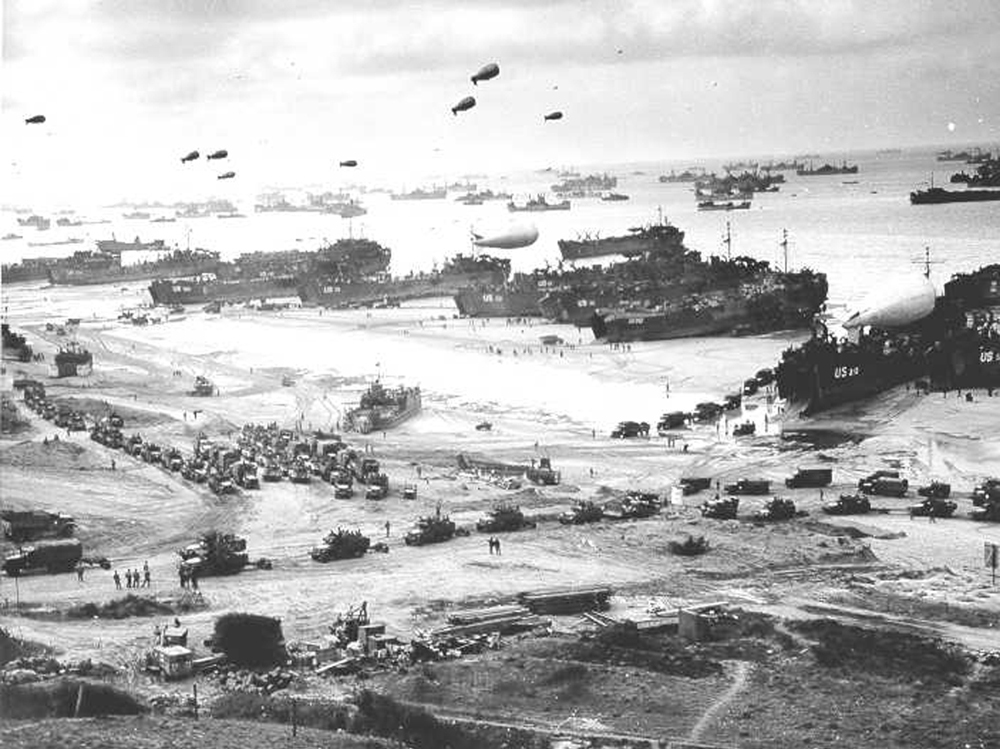
70 years later
For the Americans, Omaha is an important point on the world map, a symbol of courage and terrifying losses for them (naturally incomparable with the scale of operations and losses on the Eastern Front). Until now, the uneven remains of the same impromptu harbor are visible here with low tide. But there is no more pebble, it was bought by army engineers after “Day D” to ensure an enhanced unloading of equipment.
During the 70 post -war years, the beach paths have expanded, the nearby villages have grown and merged, but the relief of the Omaha beach itself has been preserved, like the remains of German coastal fortifications, which, incidentally, can be freely visited. And you can go up to a cliff, from the top of which a breathtaking review of the Omakhi and the memorial cemetery at Kolville, where the dead during the Operation Overlord, are opened. Eternal memory to them.
Photo: AP Photo, AFP Photo, Reuters/Ho/US Coast Guard