
Translated material
1960s: About forever senile in Russian culture
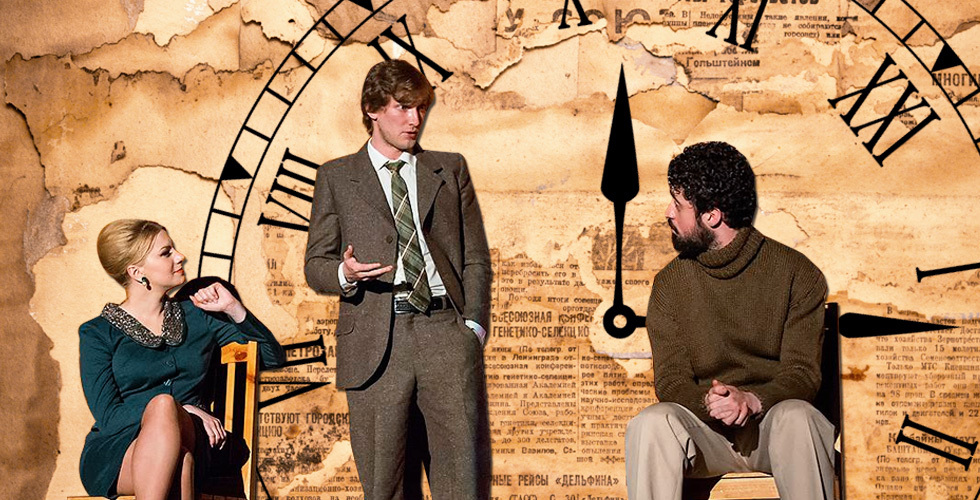
Nostalgia is the main sense of Russians. It is more important than patriotism and sweeter than concern for the future. To embellish the past is a common property of human memory. But the Russian embellish him with special zeal. Uninterrupted and diverse. Who pre -revolutionary Russia, some commissars in dusty helmets, conservatives - a harsh Stalin era, intelligentsia - tender thawing times.
Remember the past and nostalgic for it are actually different things. But in Russia these are almost synonyms: if you are not nostalgic, then you don’t remember, then you are a mankurt and there is nothing saint for you.
The highest form of domestic nostalgia is nostalgia in the 60s. Other eras love different groups of the population. The sixties love everyone. Some for the others for this, but they love. Regarding the sixties, a consensus has been reached in society, uniting gloomy patriots and enthusiastic liberals - there was a good time!
But the truth is good! The 60s became the last generational statement. The last European utopia. The last surge in hopes that a single impulse of the “right” people who think and hands can improve the world. It is characteristic that this surge happened on both sides of the iron curtain.
In the “sounds of silence” of Alvis Hermanis, our former compatriot, now living in independent Latvia, to the sounds of the sweetest Simon and Garfankela, the heroes performed the ritual actions of that time - they shortened to the complete indecency of the dress, stroked his hair, built their hairstyles at banks, could not tear themselves away from tape and radio. And we could not tear ourselves from the silent (there were just many sounds in the “sounds of silence”, but there were no words at all) Hermanis's memories. He became the main singer of the leading decade and his main archivist in the European Theater.
In his new performance staged in the Taganka Theater, Dmitry Volkostrelov showed us completely different 60s. He remembers the past, but he does not at all nostalgic for him. And it is precisely this, and not whimsical “post -dramatic” techniques and is the main feature of his performance with the speaking title “1968. New World ". For me, this is also the main dignity.
The reviewers vied with the vocational, how the director had a coffee with ours: here again we get out of short freedom to stagnation, here again they want to freeze Russia. In my opinion, Volkostrolov did something more - he showed that time at home walks in a circle, like the shooters of the dial. And he tried to understand why he was walking.
Most of his play “1968. New World ”is reading articles from the magazine of the same name. These are very different articles - fiction, essays, columnistics, analytics. Five artists read them, trying to “appropriate” the text as much as possible. But the text is assigned with difficulty and in itself becomes the hero of the performance. And its main thing-I just want to say “visible”, but here it is still more correct “audible”-the pathos logo becomes the way, in which, as in the decisions of some plenums and congresses of the CPSU Central Committee, both spectators and stage speakers are equally stuck.
I had a chance to sort out the magazines “Theater” of about the same years, and the feeling of this trip to the past was about the same as Volkostroelov: many, many long, not causing any emotions and completely unconscious texts. The words in them are crowded, and it seems that there are no thoughts at all. You say: but there was Solzhenitsyn in the New World, and in the Theater, suppose, Maya Turovskaya. Of course there were. But any bright and intelligible word literally sinks here under the sullen inarticulate.
“New World” is still not the newspaper Pravda with Izvestia. You take him in your hands with trepidation, and put it aside with bewilderment. You hope to inhale many times the pungent air of freedom, and you breathe in the musty air of an incredible intellectual squalor. You hope to discover the bold errors of youth, and you find a poorly articulated verbal porridge, cooked from general humanistic cliches.
Volkostrolov did something more - showed that time in his homeland walks in a circle, like the shooters of the dial. And he tried to understand why.
The heroes of Mikhail Kalik’s film “Love”, fragments of which are also included in the performance and are a kind of rhyme for articles of the cult edition of the Soviet intelligentsia, are also explaining similar cliches.
The “new sincerity”, which was repressed, forbidden, laid on the shelf, now seems as false and wretched as officialdom, to which it was opposed.
Clarity, intelligence, energy and action did not determine the domestic 60s. They opposed the time. They are his antipodes. His equivalent is a loss in words that are not worth anything, and the inability to any actions.
" You are already old, and still stupid, like a boy . "
“ Are snowdrops really grow under the snow? "
“ Here is our land. - Round. “And I have only in Moscow all my life . ”
Russia. Summer. Logorea.
A counterpoint to this logoras go in the play Beatles , Doors , Rolling Stones . That is, what does it mean - go? “The song sounds now - We read the titer on the wall. “But she sounds so quiet that we don’t hear her.” Volkostroelov is really not heard by the music. Because it is the music of another world.
The opposition here is not pedalized, but it is certainly stated. And it is much more important than the comparison of the then Soviet Union with today's Russia.
The 60s on the other side of our border is protests against the war in Vietnam. This is the abolition of racial discrimination. This is the beginning of the sexual revolution. This is the heyday of feminism. This is a counter -cultural boom. This is a hippie. This is Woodstock. This is Paris covered by fires. This is anything, but not the mimic world of “new sincerity” and voluntary rhetoric.
The march against the war in Vietnam brought 400 thousand people to the streets of America. Eight eight came to protest against the entry of troops into Czechoslovakia to Red Square. The slogans of revolutionary Paris may not inspire. But you certainly will not blame them in the slurry.
The eyes of the Western sixties were directed into the future. Our eyes were turned into a past, in the inhabited and cozy world of European humanism. The idea of returning to the origins that were puzzled by bad people was captivated. The origins could have been understood as Lenin's teaching, spoiled by Stalinism, and the teachings of Stanislavsky, whom officials from art were appointed chief director of the USSR, could be understood. The main thing is not to go forward, but to return back. The idol of the left -radical youth of the West Antonen Arto could hardly captivate our sixties. We flew over the counter -cultural boom like plywood over Paris.
Someone will say: it is good that they flew, and I will say-bad!
No matter how you relate to the leading London, the American “children of flowers” and the Parisian radical students, it should be recognized that the tolerant and, in general, the humane world of modern Europe was formed precisely in the ranges of their riots and in the crucible of their dangerous idealism. This new world forced us to face new problems and new time challenges. But it was still moving forward, not movement in a circle. "Cours, Camarade , Le Vieux Monde Est Derriè Re Toi !" - exclaimed French Protestants.
“A person must live as if nothing is changing with him. The whole difference is only in speeds. We used to go to the crossing, now aircraft fly, ”says the hero of the film“ Love ”performed by Valentin Nikulin. Here it is, the philosophy of our sixties. There was no energy of error, vital thirst for change. It was the struggle of good conservatism with a bad one. Sincere conservatism with a conservative official. Until now, the concept of “culture” itself is identified in the minds of a huge number of fellow citizens with this “good conservatism”, and not with a breakthrough into the unknown.
The left idea actually survived in the 60s in the West a new birth, it began to equal the proletarian revolution, but of the revolution of intellectuals, and it was it that in one way or another the entire European culture. In the USSR, a new left idea turned out to be a stranger. And for the power of a stranger and for the intelligentsia. Both in politics of a stranger, and in culture. The law enforcement officers were contemptuously magnified by leftists (they would be for the construction of the White Sea, they would quickly recognize the pound of “socialism” so seductive with “communism”). Any rebel from art is immediately called a barbar or amateur.
Both in the 60s, and now in our country freedom is not conquered, but issued as food rations. By order. (Even our “perestroika” was not initiated from below in any way. It was carried out from above by Mikhail Gorbachev, and its true architect is, of course, Ronald Reagan, who skillfully collapsed oil prices.) And in the 60s, and now the most passive and mature students live in our country. Even in communist China, it was the students who went to Tiananmen Square. Have you heard anything about student protests in Russia?
The left idea is always in one way or another associated with the energy of youth. The right idea is always the idea of "Starper". In the play of Volkostroelov, it is well shown what “elderly” was mostly our whole sixties. Since then, Russia has not been very younger.
Is it any wonder that the country of the victorious socialism was almost the main stronghold of the right idea and perhaps the main citadel of conservatism in modern Europe. The logical result of endless running in a circle. The endless fear of any social actions. Endless boltology and impenetrable longing for "wounded" times.
The "New World" of our sixties remained just a magazine. The new world is neither then, nor now, in essence, almost no one needs.