
Translated material
School Rodchenko went out outside
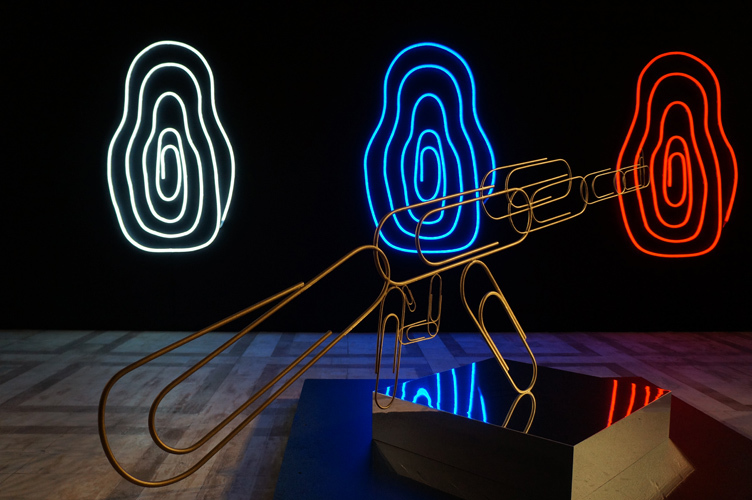
In the last Wednesday, the defense of diplomas of students of the Moscow school of photography and multimedia named after A. Rodchenko. The results of the joint work of novice artists and their masters can be seen until June 15 in the “Drummer” , the former cinema and the future museum belonging to b reus Foundation - a fund, which was previously called "Arthronika".
It is interesting that the fifth show of graduations of the School of Rodchenko was decided to spend in the “Drummer”, and not in the head for the organization of the organization - multimedia art museum, as it was before. Vice President B Rus Foundation Tatyana Sahokia explains this cooperation : “School graduates have repeatedly become participants and laureates of the Kandinsky Award (which also belongs to the fund . - Ed .). Our cooperation has become a logical continuation of our common tasks. ” However, it is much more important that the school process is brought out of the “own”, closed environment - to the site, albeit engaged by certain interests, still in this case to look at the thesis outside the school context.
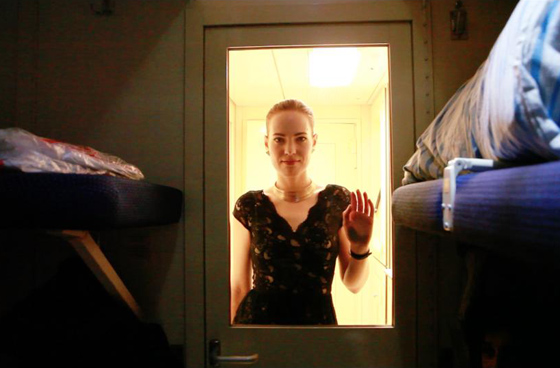 Anastasia Kuzmina. In the New Year. 2014. Hard from video
A long-standing question is when the “school of photography” will turn into a full-fledged “school of contemporary art, where students work with the whole variety of artistic means and where there is no priority for the photograph” , which excited many teachers of this educational institution, finally solved de facto. This was said by many of those with whom I managed to talk during the opening of the exhibition.
This time there are relatively few diploma projects - only 15 (for comparison: in the past and the year before last, there were 22 and 23, respectively). And here, apparently, filters worked, which are necessary for the school of contemporary art, because in the arsenal of such educational institutions there should be not only tools to include students in the artistic context. Naturally, this can be perceived as a result of “repressive mechanisms” (pseudo -okritic rhetoric is quite early studying - and, unfortunately, often only to her), although usually the reason is the insufficient efforts of the beginning artists themselves. So, commenting on the final exhibition, Igor Mukhin, who leads the school “direct photography” at the school, clearly speaks of “avoiding the eyes of those who have come down from the distance” .
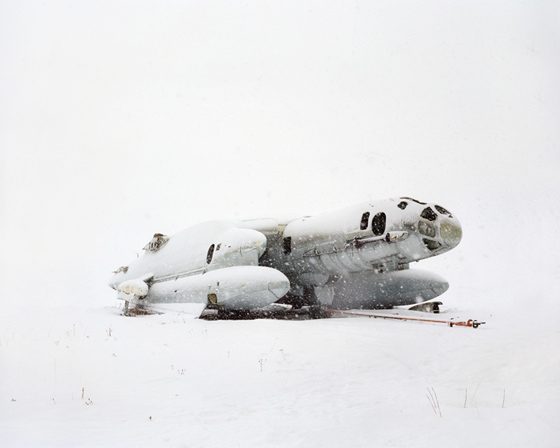 © Danila Tkachenko Danila Tkachenko. Closed territories. 2014
Others, on the contrary, managed to achieve a lot during their studies, and not only in the school itself. Among the current diplomans there are already laureates of prizes. Danila Tkachenko received the first prize of the World Press Photo 2014 contest in the Staged Portraits nomination with the history of hermits, and Sasha Pirogova was awarded the Innovation Prize in the New Generation nomination . Albert Soldatov at the same time as the exhibition in the Drummer hosts a personal exhibition in the “Manege” .
Albert Soldatov. Baltus. 2014
The diplomas are completely different. Among the works presented at the exhibition there are both the “spiritual scrapers” (Grigory rural), and the story about Olympic fans (Julia Abzaltdinova), and abstract painting on paper left from the oracal (Oleg Ustinov), and the history of the servants (Lilia Lilia Lilia Lilia), and the visualization of the queue) work of Vladimir Sorokin (Sasha Pirogova).
 Anastasia mamm. Archtp. 2014. Video installation
One of the most interesting projects is Anastasia Kuzmina from the workshop of Sergei Bratkova, for whom this is the first issue. The artist equipped a small hall, where the video was shown on three screens. The plot is quite simple: on New Year's Eve, Kuzmina, together with her friends, went by train from Moscow to St. Petersburg. In the reserved seat car, they hung garlands (they were duplicated by a special backlight in the room where the video was shown), distributed Bengal lights to the passengers and generally arranged a holiday. At some point, the action is increasingly accelerating, people who accidentally find themselves in this situation begin to play along with the artist. All this resembles Soviet cinema 1970-1980s, like the films of Ryazanov and Mikhalkov. And if it is true that, as they say, the country in a social and cultural plan goes somewhere in a similar direction, then this kind of work can be aesthetically telling something in the future about our present life.
In general, the School of Rodchenko showed the class and most likely in the future will still show, unless, of course, they close it-the times are not the most friendly for modern art.