
Translated material
FCS upset lovers to save
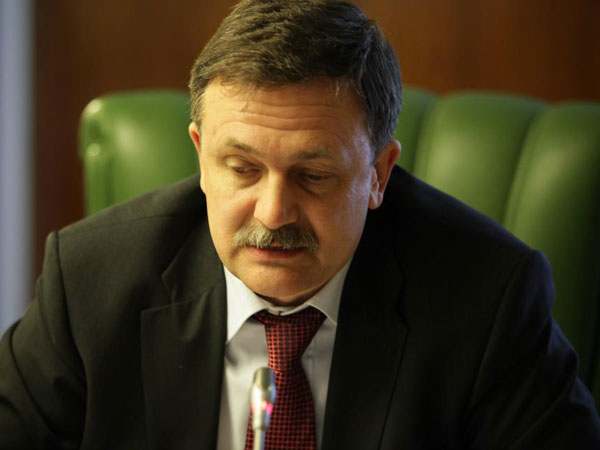
The Federal Customs Service supported the proposal to introduce a fee for goods worth over 150 euros purchased via the Internet, Interfax reports with reference to the deputy head of the FCS Ruslan Davydov.
Davydov explained the sharp drop in the threshold of duty -free trade purchased through the Internet by the fact that 150 euros are “fairly objective size”. It is in this price range that 80% of the departure is carried out. So far, the price threshold of duty -free international shipments for one recipient is at the level of 1 thousand euros. The decrease in this value depends on the Ministry of Finance, it is his position that will become decisive in this matter. So far, he is under the stage of the government level.
This measure has been discussed since the end of last year. The authors of the initiative expect that this will help in the fight against gray importers, that is, those who, when importing goods, lower the cost and quantity of goods, using inaccurate or fake documentation. Russian human rights activists suggest that the measures taken are aimed at popular foreign online stores that Bujh lose, Russian competitors.
In October 2013, the Federal Customs Service proposed setting a fee with a size of 10% of the cost for each international parcel sent by online stores. According to the department, the current fee did not cover the costs associated with the processing of parcels. A little later, the threshold of duty-free import of Internet purchases of $ 150 per parcel was voiced.
 Alexander Malis
The president of Euroset, Alexander Malis, supported this measure as a saving for the Russian market. “The current situation puts Russian and foreign online stores in unequal conditions, since the threshold of duty-free import of goods of 1 thousand dollars allows foreigners to offer goods for Russian users is obviously cheaper than Russian market participants,” commented Alexander Malis Digit.ru . It is obviously cheaper because Russian sellers are forced to pay VAT, which immediately makes their goods more expensive by 20% while foreign companies do not pay this tax and are able to offer Russians lower prices. Thus, a decrease in the threshold of duty-free Internet trade in foreign stores will lead them to the need to register in Russia and also pay taxes to continue to serve the Russian market.
Vitaliy Zhigulin, Executive Director of the Association of Companies of the Internet trade, drew attention to the fact that imported goods are not certified, customs clearance and currency control are not undergoing, and customers do not guarantee compliance with consumer rights. “The consumer will ultimately win: there will be more players, competition will increase, as a result, the service will improve, the assortment will expand, prices will expand, prices for goods will decrease, ”Zhigulin argues optimistically.
 Mikhail Anshakov
The prospect of the complete refusal of Russians from orders in foreign online stores is seen by the chairman of the Society for the Protection of Consumer Rights Mikhail Anshakov. In an interview with the journal "Economics and Life", he explained why: “A duty of 30%, taking into account the fact that it will still have to undergo a complicated customs clearance procedure. During the import of goods to the country, domestic retailers pay customs duties several times less, in separate positions are zero, and have the opportunity to pass the customs clearance for goods. Consumers will be forced to abandon shopping in foreign online stores, use intermediaries or to go and overpayed to domestic retailers, enriching the owners of these companies. ”
In addition to Anshakov, lovers remained dissatisfied with this change on saving on equipment, imported clothes and accessories, which used to be much cheaper than when making a similar purchase in Russia. “10% is the fee from each parcel received from foreign online stores will give about the same as a couple of average officials steal,” the @zinchenkomila user writes on Twitter. @Ifradkin is in solidarity with her: “Duties on the Internet trading is a super idea. Do you still want to introduce a fee into the air? Just the mail should work fine, ”he said.
In January, after the application for a decrease in the threshold of duty-free Internet trade from abroad from 1 thousand to 150 dollars, the Logistic operators of DHL and FedEx stopped delivering purchases from foreign online stores to Russia. This was explained by the tightening of the requirements of the FCS to the packages from foreign online stores, although the FCS itself stated that the requirements did not change. From January 25, for the same reason, a number of large online stores refused to deliver purchases, including Shopbop.com and Easdane, owned by one of the largest Amazon online services, as well as the incoming Net-a- Porter.com and Theutnet.com resources. True, very soon, a few days later, a misunderstanding between logistics companies, foreign online stores and FCS was eliminated and the delivery of parcels to Russians was restored.
Boot with Russian customs is a hopeless and tiring business. In January of this year, the only official importer of Apple computers to Russia, the company "Apple Rus" sued Sheremetyevo customs. In the claim, representatives of the company insisted on duty -free import into Russia a number of models of computers - IMAC monoblocks. The subject of the dispute was the decision of the customs to re -qualify these goods from the category “other digital computers supplied in the form of systems”, into the category “digital computing machines containing at least the central data unit and the input device and output, united or not”. The result of this change was the imposed duty of 6%, which was not there before and with which representatives of the company did not agree. It is noted that the rest of Apple’s importers try not to conflict with Russian customs and pay all the required contributions to the budget.