
Translated material
The road to Baghdad
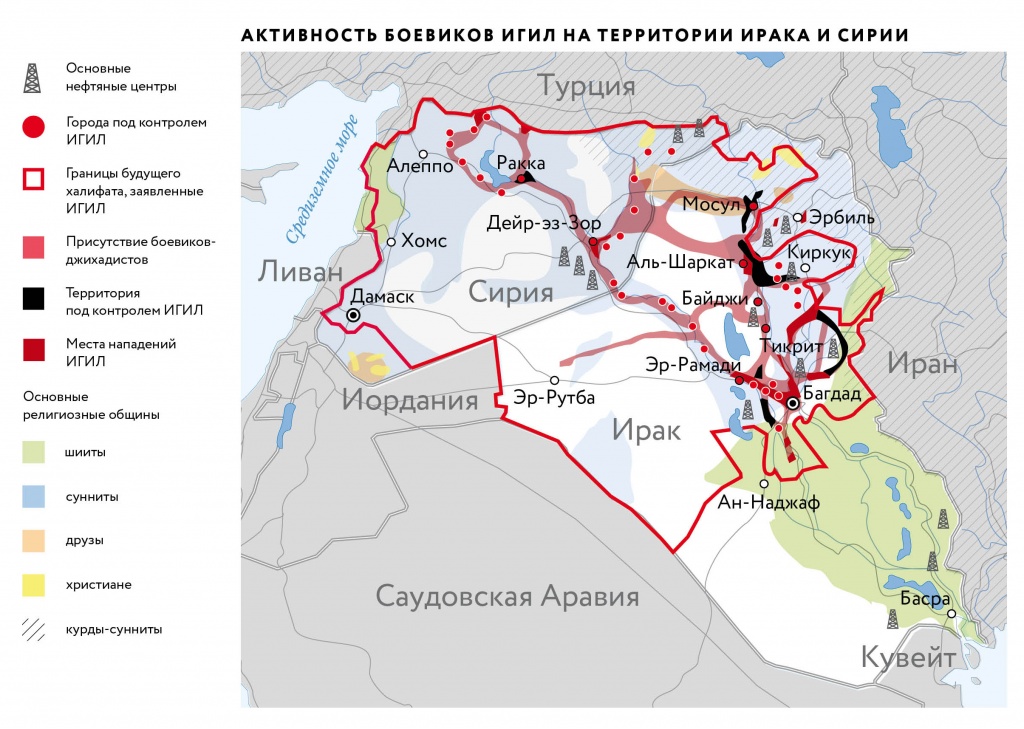
Iraq plunged into chaos again: the militants of the Islamic State of Iraq and Levant (ISIS) captured Mosul, the second largest city in the country, after which they announced a campaign to the capital
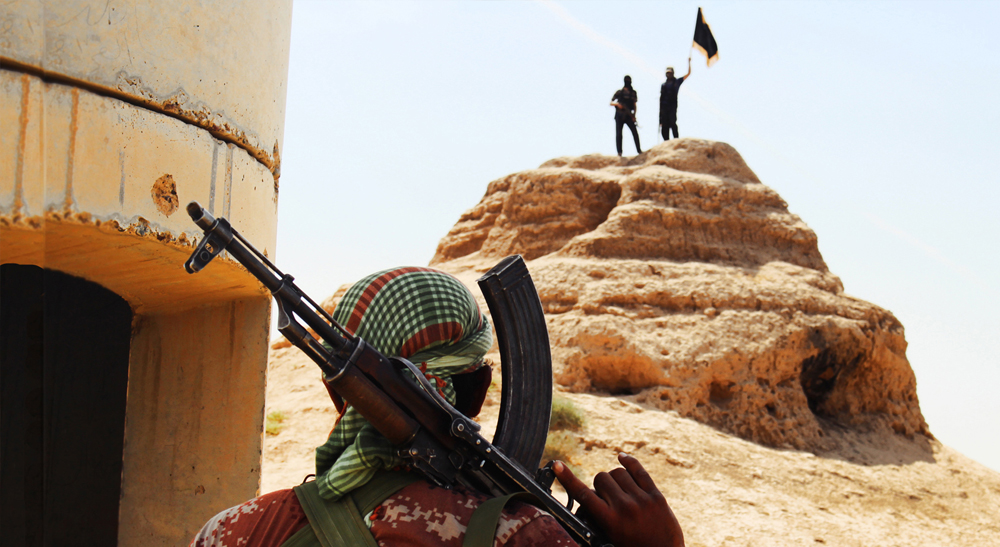
Jihadists Igil hoisted the flag on the captured base of Iraqi Sun. Salachuddin, North Iraq, June 6, 2014/Photo: Wlyayat Salahuddin/Ho/AFP Photo
The real panic covered Iraq, after June 13, ISIS militants took control of the city of Jalaul and Es-Saudii, was 50 km from Baghdad. It seemed to many: nothing would stop the Islamists.
The fears are not -based. Indeed, according to the statement of the Iraq Ministry of Defense, two divisions of the Iraqi army with a total number of 30 thousand soldiers retreated under the onslaught of only 800 jihadists who instantly occupied the Mosula Airport, the building of the city administration, television, as well as a local prison, from where the prisoners were released. In the hands of ISIS militants were the fourth largest military base of Al-Koyar and Al-Shar military airport with two military helicopters. In the banks of Mosul, militants seized up to $ 480 million, in an unknown direction the head of the Turkish consulate in Mosul with 24 other Turkish diplomats was taken out.
Immediately after the capture of the Mosul, the militants called on the inhabitants to stay at home, but half a million Muscovites fled from the city, mainly to Iraqi Kurdistan, flooding the dusty roads of Nainav's provinces.
Islamic dream
The capture of Mosul marks the new era in the history of the Sunni jihad: the dream of creating a caliphate is embodied. If earlier, al-Qaeda militants controlled individual territories in Afghanistan and Pakistan, and ISIS fighters in December 2013 were ruled in Iraqi Falludge and Eastern Syria, now the jihadists have united their Syrian and Iraqi “possessions”, having received the opportunity to collect taxes, earn on smuggling of oil, abductions of people, and drug trafficking and weapons. The latter, however, fell in price: there were a lot of trousers from army warehouses plundered by jihadists on the market.
It is difficult to believe that the group that appeared only 3-4 years ago became so strong as to recapture a 1.5 millionth city from a regular army-an unprecedented case. However, if you reflect on who is beneficial to destabilization in Iraq, we can assume who helped ISIS fighters.
The main enemy of jihadists in the region is not far from the Americans at all, but the Muslims-Shiites, who came to power in Baghdad and marginalized the Sunni minority. One of the directions of Shiism also includes the Alavites, to which the Bashar al -Assad family belongs - ISIS is struggling with him in Syrian territory.
But the Shiites are not only loved by jihadists, they are one of the main enemies of Sunni Wahhabian states such as Saudi Arabia and Qatar. In the 80s of the last century, the Saudis supported the Taliban in Afghanistan, Qatar sponsor Syrian rebels, including ISIS. The destabilization of Iraq can be beneficial to Saudi Arabia not only because Iraq is the second supplier of oil in the region, which means a competitor to Er-Riyad, he is one of the allies of Shiite Iran, the main opponent of Saudi Arabia. So why not create a Sunni jihadist state on the site of Iraq, whose leadership can be controlled by financial flows? Tehran, however, did not stand aside, directing the fighters of the revolutionary guard to the aid of Iraq. The question of Baghdad’s military assistance is considered in Washington.
Shiites hate the associates of Saddam Hussein who dreamed of revenge, who are still a lot in the Iraqi army. It is no accident that the Prime Minister of Iraq Nuri Al-Malika accused the generals who surrendered Mosul of treason. However, if treason took place, there is also the extreme unpreparedness of the Iraqi army, the basis of which is poorly trained and unheard of recruits, deserting at the very first danger.

War on a new round
The road to Baghdad is open, the Iraqi army is demoralized, the population is panic, and the leadership understands the whole danger of the situation: indicating treason, al-Maliki agreed that now it is not the time to look for the perpetrators. Whether it will be possible to take Baghdad from the militants and hold the mosul - not so important. The main thing is that in today's Iraq there are all elements for a new round of protracted war. Shiite groups have already announced the creation of volunteer brigades, Iraqi Kurds can also stand up for Baghdad. They are Sunnis and are also in opposition to the government of al-Malika. But they understand: Baghdad can follow the wealthy oil -based Iraqi Kurdistan.
And on the other side - ready to fight to the end of the "Jihad warriors", with whom it is generally impossible to negotiate.
It seems that a new front has opened in the Middle East.