
Translated material
The diaries of the front -line city
In Slavyansk, the reserves of water, food, vigor of the spirit end, but not a blind faith in this war
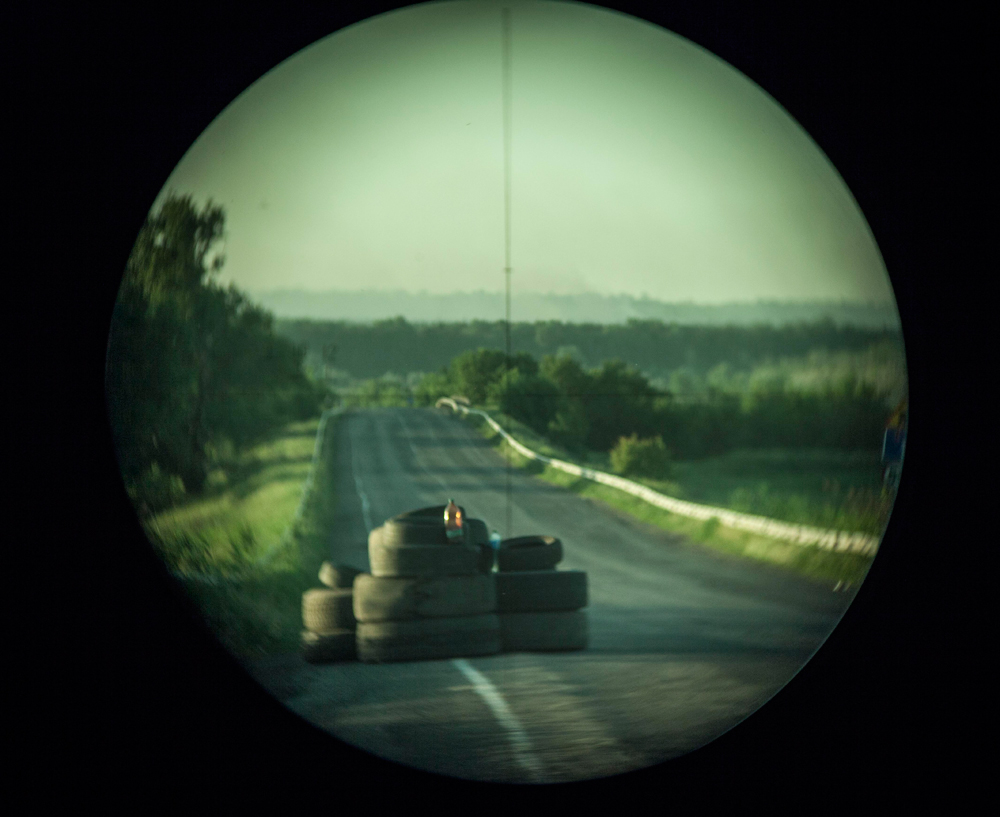
Approaches to Slavyansk under the "constant sight" /photo: Michela Yakkarino
“Welcome to hell. For additional information, contact by phone 666 ”-this inscription at the block depot in Semenovka, the suburbs of Slavyansk, see everything at the entrance to the city-state of the“ people's mayor ”Vladimir Pavlenko and the“ Minister of Defense ”of the unrecognized“ Donetsk People’s Republic ”Igor Girkin-Strelkov: the former ensign of the Russian GRU, having passed Yugoslavia and Chechnya, now he is now He heads the detachments of the militias of Donbass.
The militias themselves, calling themselves as archers, lose every day a fighter, from the holes of the house and buildings in the city are already similar to the Swiss cheese, but these people continue to dig trenches and dig in.
At the "Crossroads of Death"
Slavyansk is empty. Only those who did not find relatives in other cities remained or there were not enough money to escape. Someone took refuge in the monastery in Svyatogorsk, 20 kilometers from here (mainly women, children and cats). And someone-in the old railway cars in the Andreevka area, near the Karachun Mountain, according to which they continue to shoot from the hill.
"
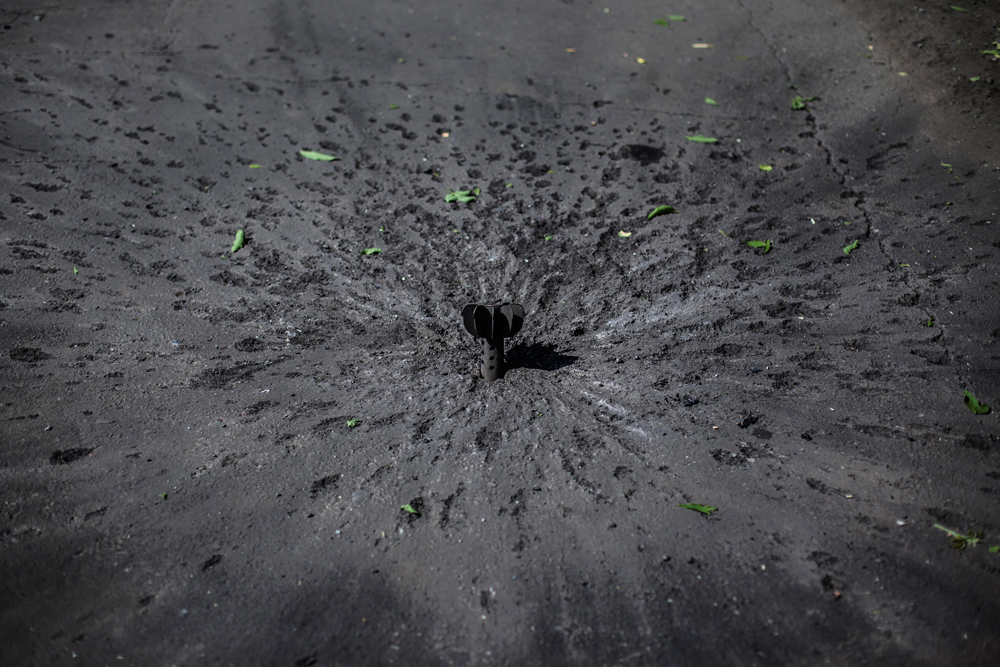
The shell can be a “cow” or “crocodile” depending on the caliber - even children now know this slang. A street war taught them to calculate the seconds between the whistle from the launch of the shell and the roar of the explosion
"
The place where the roads are found to Kharkov and Donetsk is now called the "cross -country" - the Ukrainian army mercilessly shoots at it day and night. The militias are already immune to the breaks of bombs and shells - they call them “concerts”. They are sure: the city will last a long time. They are children of Great Russian nostalgia, who came here thanks to the leaky borders from the "root" of Russia, from Chechnya and Ossetia, from the regions of Ukraine to fight for Novorossia.
The shell can be a “cow” or “crocodile” depending on the caliber - even children now know this slang. A street war taught them to calculate the seconds between the whistle from the launch of the projectile and the roar of the explosion, sleep in the cellar, play peaceful life underground, where the walls are from cucumbers and neon lamps.
"Good night"
“We are accustomed to the idea that we can die in the night, but now it has become even worse, the battles are going even during the day. I started smoking again. Every evening we have been saying to each other “good night”, although for many weeks none of us really slept, ”Vladimir waits for the end of the war. His son is fighting for Kyiv, their military unit was dug in the top of the hill, which had long taken into circulation of the snipers of the militias. “I don’t care where he (son) was alive,” says Vladimir, “one of the few supporters of the Maidan who arrived here to defend“ our United Ukraine ”. On his sleeve, a runic symbol of the Azov detachment is sewn, which is designed to "cleanse the east of the country - along the perimeter of Mariupol."
The like-minded people of Vladimir, those who are here in the east know that these days they decide whether Ukraine will become “outskirts” (from this word its name) or will become “Krai”, which means “earth” in Ukrainian. Nomen Est Omen - said in ancient Rome (“Name is already meaning”). Perhaps this land in its name carries a particle of war.
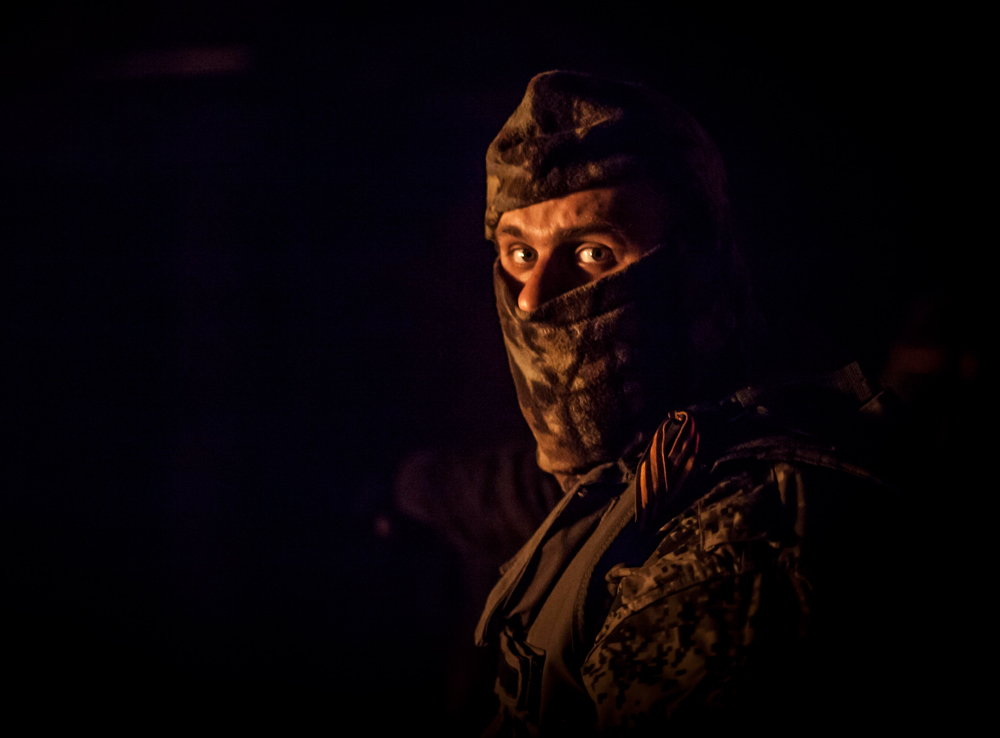
Poltava accent
All trips from Slavyansk are under the control of the Ukrainian military, who, in turn, are “controlled” from a deadly labyrinth of firing points pro -Russian militias. At the helm of the militants there is a man who promised to make New Stalingrad from Slavyansk. “They attack us, we answer, we will not surrender this land, we will stand to the last,” says Girkin shooting girds. The presence of Ukrainian forces intensifies, inspections on checkpoints are increasingly thorough, some strip naked. “Last night, Poltava came here, we recognized them by accent,” the pro -Russian militias say about the new Ukrainian battalion, just two hundred meters from the Ukrainian checkpoint. The distance between the warring parties is constantly compressed ... Every evening new checkpoints and barricades appear, it is increasingly difficult for cars without special traffic to leave from here to the night. Shots in the night, then silence - and everyone goes to sleep away from the windows.
Slavic coffee
Each street looks like a border checkpoint, a patrol on a patrol: “Open the trunk”, “Your passports”, “Your pass” ... Who is not afraid to go outside, goes to church and, when he hears the roar of a jet aircraft or the roar of guns, falls to his knees and begins to pray. “My neighbors used to be atheists, and now they also read the Bible” - this is already routine observation.
On Lenin Square, the youth remaining in the city drinks coffee and smiles nervously: they, like an orchestra, who plays at all costs on a ship breaking on a rock of a fratricidal war.
Women and war
Women do not hide when shelling begins. “In war, like in war,” their voices respond in unison. And one more thing: "Russia is our soul, our house."
When the borders became the fronts, the citizens of the former USSR, and then the Ukrainian Donbass blessed themselves, without waiting for the mercy of history. They, in their own words, are a woman of New Russia. “For a long time there is no longer a single Ukraine, maybe it has never been it,” “Now you need to fight, real Slavs never give up.” “Never” - without this destructive word, a meaningful phrase of the one to whom you ask a question in the course of the interview.
"
“I don’t even know why this war began, but it must be brought to the end. They, like us, are ready for everything - there will be a massacre "
"
L. is not yet 30, about what she did before she signed up in the ranks of the militias, she does not say: “Yes, nothing special, what I’m doing now is much more important.” L. prepares food to the militias in the barricade. Half, the sun is mercilessly. A shadow hung on a pole of the doll, depicting a Ukrainian soldier, throws a shadow on us. “There is little bread,” L. complains “soon there will be more fields of battlefield than fields with wheat.”
In a conversation with a foreign journalist L., pathetics do not disdain: “I'm afraid these days will remain with me for life ... The torment of conscience is from what you did not have done to your country that you could - this is forever.” After these words, L. leaves to hug his knight in a balaclava and with icy eyes. Love in the war is very restrained.
The word from the biography
The militias, as a rule, go into the night, on a mission, in groups of 10 people. “I don’t even know why this war began, but it must be brought to the end. They, like us, are ready for everything - there will be a massacre, ” - this, smiling with blue eyes, says Arab, a pro -Russian“ sniper from Odessa ”. The biography of these people often consists of one or two words that one say that you are a hero, and the other is a target. Real names are prohibited.
The boatswain does not leave his grenade launcher for a second, and no one, probably, will never know how many deaths he saw in Grozny then, in the 1990s. The boatswain only swears that his commander named the old is the most daring soldier in this hell.
At the wheel of an ambulance, militias, which fly from one end of the city to another, is a doctor named Andrei and nicknamed Vandal: he is only 16, in his right pocket he has an antitumor, in the left - an anesthetic. He was in the Crimea, now he is here. Many months ago, a boy left Kyiv, who became a man in a war, in which "every day stands a whole year of the future."
Eternal night
The 14-storey building, which once housed the local SBU department and which now for a second leaves the girkin shooters, is riddled by bullets. In the neighborhood there is a Slavyansk hotel. Every morning we had breakfast here with my colleague Andrea Rockelli and his translator Andrei Mironov. While they drank coffee, Andrei taught us to distinguish the roar of the howitzer from the roar of the mortar ... The door of the number 213, in which he lived, has remained closed since then - no one will be drawn here.
Foreign journalists almost all parted, Andrei left on the eternal night, and for me the same long day comes again.
Ready to die
In Slavyansk, a variable climate is the sun and a thunderstorm: first the heat, and then an ongoing rain. The city is surrounded, every resident is under the sight. The water, food and vigor of the spirit end, which a few days ago fed the hope of survival in local residents. The world did not hear about this town of peace until the new geopolitics of the former USSR began to form here along with the new borders of Europe. Or-the old borders of New Russia (many here recall the Donetsk-Krivorozhsky Republic of 1918)-who believes in what. But everyone knows: who will win in Slavyansk will win this war.
“We must remind the world: the Russians do not surrender, we will defeat the Nazis,” say local volunteers, many of whom were here, we managed to get gray. But they are really ready to die in the city, about which the world will again forget again.