
Translated material
Globalization of the ball
The 2014 World Cup has become less unique and exotic and more-quality football
On the opening day of the championship in Brazil, protests were still ongoing: clashes with the police in San Paulo, an airport employees' strike in Rio de Janeiro ... Socio-economic problems in the country were aggravated-the Brazilians do not want to forgive their government $ 14 billion spent on preparing for the mundial.
The rule that the championship cannot be held on one continent twice in a row, President Fifa Joseph Blatter introduced, including with the aim of stimulating the development of football and building stadiums in different parts of the world. In practice, it turned out differently: gigantic expenses for the World Cup do not pay for themselves. Even in theory.
Money for money
Of all the world championships that held in the 21st century, only one was economically successful - in 2006 in Germany. Now it sounds ridiculous and wild, but then the Germans argued fiercely: whether to spend on the reconstruction of all the arenas accepting the championship, € 1.5 million - the amount, only one and a half times higher than the cost of the stadium for St. Petersburg Zenith. But this price seemed exorbitant to the pragmatic Germans. Savings won, sports investments did not just work - they gave a fantastic result.
In recent years, in the ten most visited football clubs in Europe - half of the German. Tough rules for corporatization and financial discipline, new or reconstructed arenas, the highest attendance multiplied by the purchasing power of the audience - all this makes the Bundeslig the most financially stable and promising in Europe.
Another example is England. Recall: the British fought frantically and even now, having lost FIFA in the competition, continue to fight Russia for the 2018 World Cup. This is not without reason. English football has long rested against the ceiling of development, outlined by morally outdated arenas. He needs new air. In addition to Manchester United with his gigantic “Old Trafford” (regular full house at a capacity of 75,366 people), only “Arsenal” can compete with the German arenas, which recently finished building the new “Emiryts Stadium” (59,966 people) to replace the legendary “Haiberry” (38,419 people). In order to increase the capacity of another cult stadium - “Enfield” - about one and a half times (from 45,382 to 61,905 people) this year, the Liverpool club, this year, begins.
But if for the British obsolete football areas became only a brake in development, then, for example, in Italy football as an industry began to degrade. In the 1990s, Italians dominated the club level, now they are thrown far beyond the leading three-because of financial problems and the inability to actively earn an audience.
In other countries, the infrastructure does not only work - it cannot work by definition. The minimum capacity of the stadium at which it is permissible to play matches of the world championships - 30 thousand people. At the same time, all three non-European countries that took the championships in this century (Japan and Korea in 2002 and South Africa in 2010) managed to scrape only one club, which stably collects more than 30 thousand fans in its arena, is the Japanese Urava Red Diamonds. In Korea and South Africa (as in Russia, which will face this problem in four years), a rare club steps over the mark of 20 thousand regular spectators. As a result, the host country is first spent once on a large-scale construction, and then regularly! - For shock absorption without the slightest hope to recoup the invested funds.
Well, what about Brazil? Instead of the minimum possible eight cities, Brazilians immediately said 12 to hold the championship. It seems that there are no problems using stadiums. However, infrastructure expenses have increased sharply - it is still impossible to calculate them so far.
Entering the struggle for a major tournament, a potential organizer, as a rule, takes on increased obligations to build infrastructure facilities that he would never build on such a scale and in such a short time. To mask this on the principle of “holiday/victory will write off everything” (if it is, of course, not about the Olympic Sochi) is becoming increasingly difficult. As a result, more and more countries and cities are abandoning the very idea of fighting for the right to hold the Olympic Games (Munich, Salzburg, Bern). Yes, and the European Football Championship in 2020 will be spread throughout the continent in an even layer-it will be held at once in many countries and cities. Formally, this is explained by the 60th anniversary of the first Cup of Europe, in fact, this is surrender and sincere recognition: to conduct a profitable, from an economic point, a large tournament in one country is almost impossible.
And to make it really, it is necessary either a complex and specific interweaving of interests, as in Germany in 2006, or giant political will, as in the case of future owners of the World Cup-Russia-2018 or Qatar-2022. 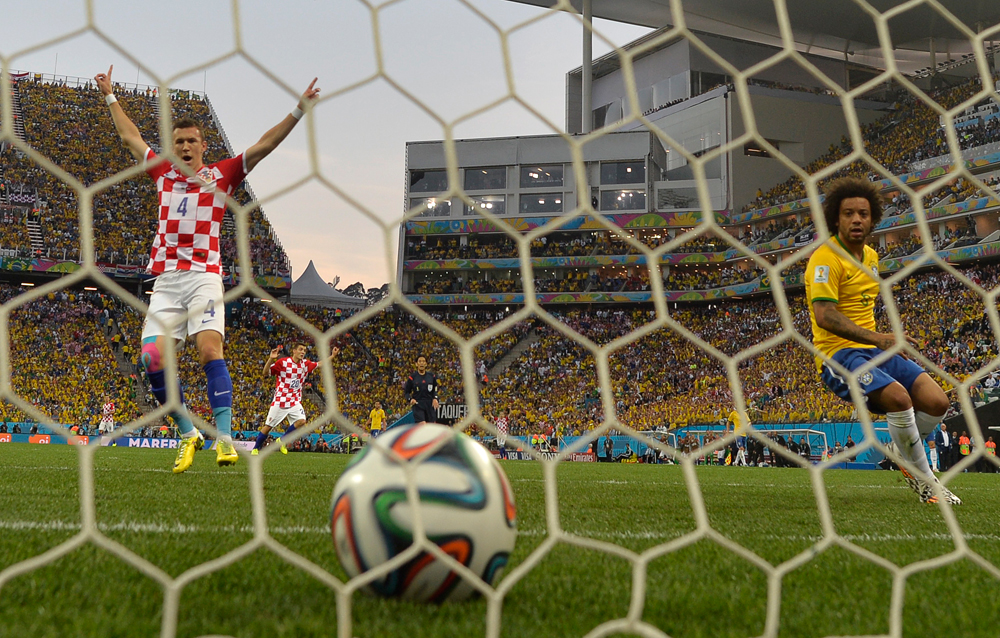
Without borders
In the 20th century, the world championships were almost primarily perceived as an opportunity to compare and compare the unique game styles of teams: the technical Brazilians against the “total football” of the Dutch, sophisticated French against brutal Germans, etc. But then, at least in Europe, football borders were also opened. The destruction of national identity at first felt the clubs, then - national teams. In South Africa at the 2010 World Cup, the Holland national team of Holland, which was extremely hard as possible, reached the final: an extremely stringent grazing with mud splashes, deeply planted attacking midfielders and marginal concentration in the defense game. The Dutch were able to repeat their best result of the time of the legendary team with Kruyff, only abandoning their game virtues adored throughout the world.
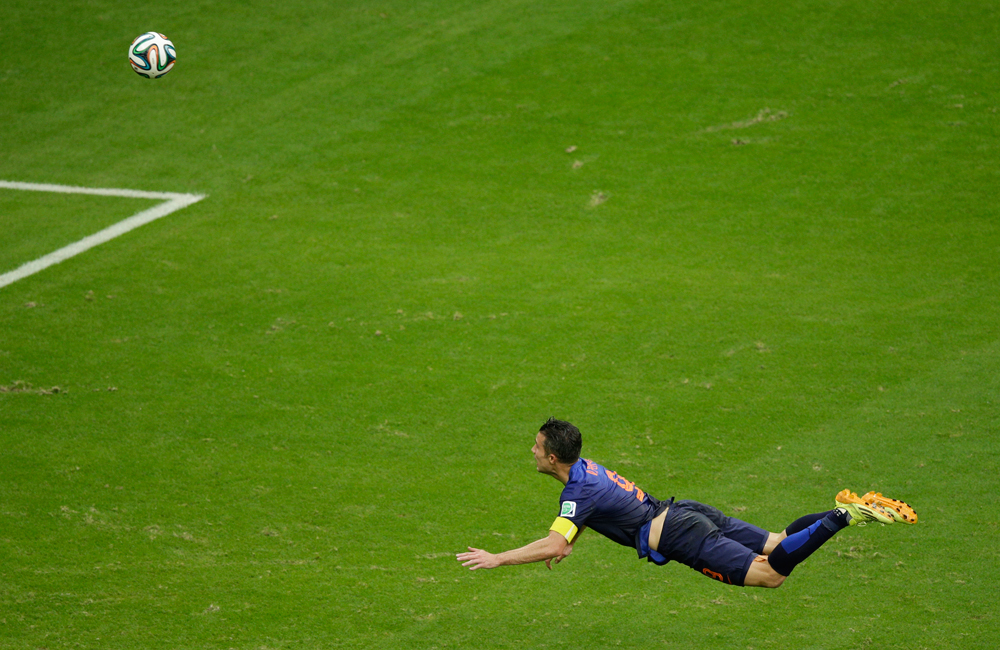
The Dutch came to Brazil with an unusual scheme - five defenders! - And became the main sensation of the first days, destroying Spain with a score of 5: 1. Before the tournament, Holland lost Kevin Strogman, who was a key figure in the center, and coach Louis Van Gaal had to rebuild the game due to the injury. An incredibly high pressure was used against Spain of Orange: five or six people entered the selection in the foreign half of the field. The Dutch traditionally does not have stars in the defense or support zone, but there are full of hard -working and diligent guys who literally trampled the Spaniards. Robin Van Persia and Aryen Robben scored goals, which are guaranteed to celebrate the best balls of this summer in the hit parade.
Spain began sluggishly and inconspicuously and the last championship in South Africa, but did not receive such a ranger for a very, very long time. Whether Spain is ready to live in a new world where everyone has learned to counteract her tiki-tack, it will become clear on Wednesday, after a match with Chile.
And the story of three leading Latin American teams (Brazil, Argentina, Colombia) for the first time in history can be safely started with complimentary paragraphs about their game in defense. The Brazilians have a density, mobility and compact rate - this is a forced sublimation of the lack of superstars: in the opening match against the Croats, Brazil pressed a lot, hung in the penalty and rigidly pressure in the center of the field. Previously, it was these techniques that their rivals built to the absolute - to resist the kilotons of naked Brazilian talent. And now the hunter and the victim have changed places.
Argentina and Colombia are different. Yes, and there the incredibly talented (the Argentines have the best in the tournament) a group of attack, but the Brazilian principle “we will find, how much we want”, has nothing to do with it. At the last championship of Argentina (then it was trained by Diego Maradona) played according to a crazy scheme 4–2–4: the coach literally stuffed all the attacking options to the detriment of at least a minimum balance on the field. This ended for the national team humiliating, as a public flogging with moistened rods, defeat from Germany, and for her leader Messi - the stigma of the eternal loser in large tournaments. Now the Argentines (and at the same time Colombians) are fastened with all buttons and play from defense. "
In practice, it turned out differently: gigantic expenses for the World Cup do not pay for themselves. Even in theory
"For the entire Latin American festival in Brazil, only the Chilea team is responsible. Its surreal game scheme can be described as 3-4–1–2–0. In translation into human language, this means: the team plays three central defenders and without pure attackers. It was extremely complicated even for the sophisticated tactical guru scheme for the Chilean. Marcelo Biels is considered one of the best football theorists, but most of his ideas are complex and cannot give a guaranteed and quick result.
In Europe, the faces are also erased. And if England refused traditional British football with many awnings, crush and struggle for a long time, then the German bastion held to the end.
In 2002, Germany reached its last large final. That team held on a charismatic goalkeeper Oliver Kane and the classically powerful and militant midfielder Michael Ballaca - an archetypal German team that compensated for more than the average level of skill and talent - discipline, willingness to go into struggle and stubbornness.
However, then a large -scale reboot and generational change began in the Bundestim. If you get into the time machine and let the matches of the current Germans look their classic fan from the 1960-1970s, he will call this team France, Spain or Holland, in general, anyone, but not by Germany.
Globalization gets to football countries that have recently only added oriental exotic championships. For example, Japan, where the traditions of subordination, veneration of elders and collectivism applied to football, used to bring strict and working teams to the World Cup, which categorically lacked individuals that could take the game on themselves. Now, almost all the leaders of the Japanese do not just play in Europe - they are loved just for creativity and the ability to improvise.
The Japanese, by the way, play in a group with a cat-d'Ivoir-the strongest African team of recent years. In Africa, there was always an excess of muscles, speed and endurance, but an acute lack of thought and organization of the game was diagnosed. Now, the Ivoarians are conducted by the best attacking midfielder of the English league Yai Ture.
Let the championship become less unique and exotic - the general quality and content of football from this, of course, has grown. 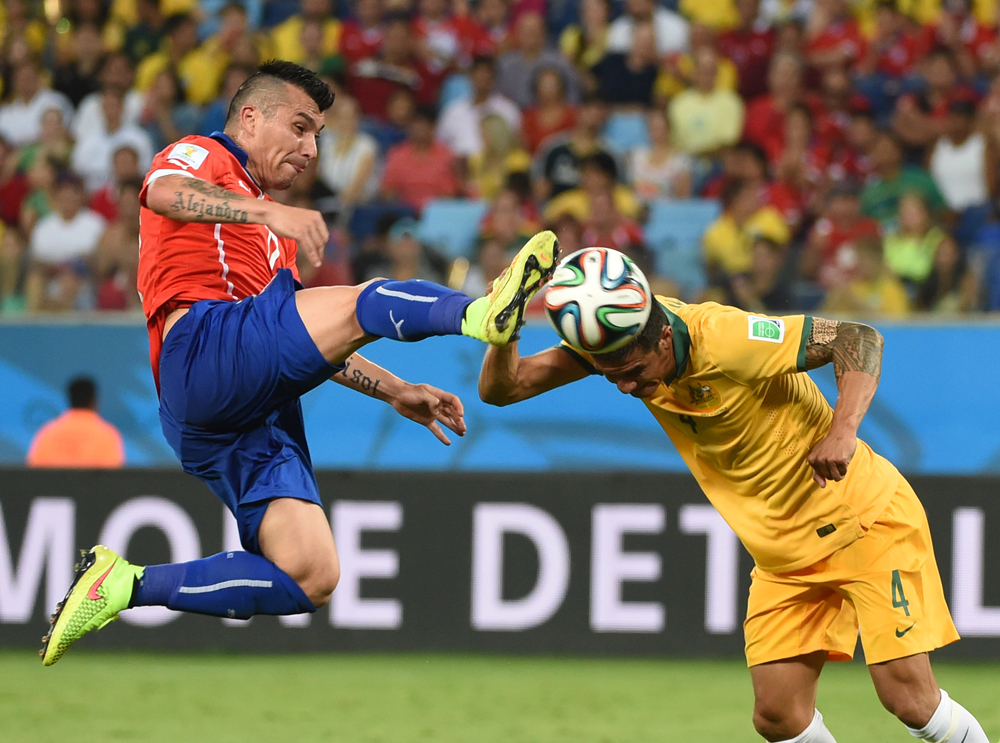
Risk factor
Twenty years ago, a player could become a star only at the World Cup or Europe. And now it is obvious: the status earned in much more meticulously prepared club battles is much more objective. In the national team, the player is often forced to find himself in a situation where he is physically not able to turn off the array of negative circumstances. Including injuries. And to judge a person for the fact that he is unable to perform a feat of schedule, is it possible?
This means that the World Cup does not just remain - it becomes even more difficult to predict the tournament. And then it is just right to recall the bookmakers.
Long before the start of games in Brazil, they called the hosts the favorite - the coefficient for their victory was assigned in the range from 3.5 to 5. But all these layouts would be destroyed by hypothetical, but quite possible Neymar’s injury, which in the first match led the entire Brazilian game and scored two of their three goals, including the victorious.
The period of romantic bets, when the players mostly tried, like a boxer in front of the only knowing blow, have already passed the victory of the concrete team. Now comprehensive rates with a smaller coefficient are much more popular, but with great chances of success. In this tournament, given the power of Argentina and Brazil and the tradition, according to which European teams do not win in America, a bet on the continent of basing the future champion - South America is very popular. "
Russia in the 1/8 finals will meet Portugal defeated in the qualifying group and lose to it
“For the Bookmakers of the World Cup, it is a great opportunity to earn not only because of a total interest in football for a month. Just during large tournaments, those who usually do not do this in everyday life are generously and abundantly and, therefore, does not have the necessary set of skills and competencies.
In addition to the cash desks, there is a stream of so -called patriotic bets: when the fan wants to supplement the joy of the victory of his favorite team with a cash gain. The percentage of lesions with this model of behavior is very large.
Now the bookmakers are convinced: the Russian team will leave the group (a weighted average coefficient of about 1.5), but do not leave our team a chance of the title (about 101). According to almost all forecasts, Russia in the 1/8 finals will meet Portugal defeated in the qualifying group and lose. This option seems realistic both most experts who have already given their forecasts (for example, Jose Mourinho) and the developers of computer games from EA Sports, who in front of the tournament conducted traditional modeling of the results using the FIFA14 game. Bottom line: Russia lost to the Portuguese 0: 2