
Translated material
"Leaving in the" Poster "everything as it is, it would be stupid"
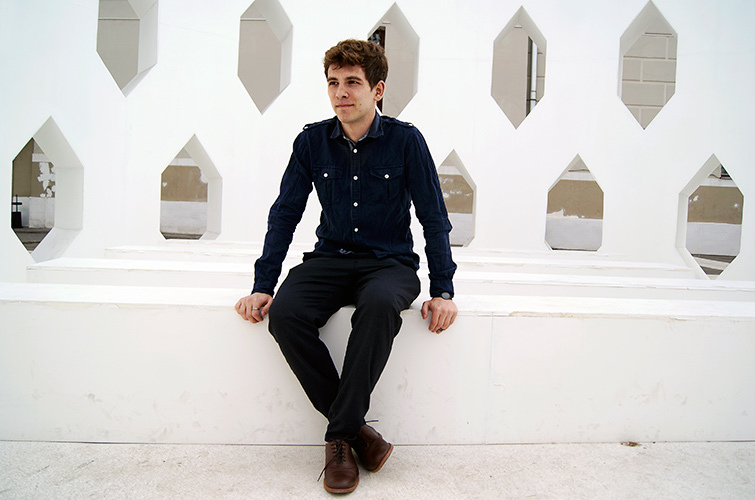
- How did your appointment take place on the post of chief editor of the Afisha?
- In March, Sasha Gorbachev wrote to me, suggested meeting. He said that he was leaving for studying in America, and suggested leading the "poster". Naturally, I thought for a long time, the choice was difficult. To leave digital media in paper, about which it is said that it is bending is a risky thing. In addition, over the past year, I have developed an excellent team in look at me . At first, in fact, I practically refused. But after a while he called back. We met the four of us - I, Sasha, Yura Saprykin and Ilya Krasovchik, once again discussed everything, and the issue was resolved.
- According to Alexander Gorbachev, the last word in the Afisha for the shareholder and Alexander Mamut approved your candidacy. Have you met him?
- At the entrance to the editorial office, I ran into Alexander Mamut, and, probably, at that moment I was finally approved.
-Did you have some kind of conversation?
- We greeted politely. But I know that his consent was definitely not a momentary decision.
- In the Afisha, it seems that innovations and a breakthrough are expected from you. Are you scared?
-Some excitement, of course, is present, but, I think, everything will be in order. Leaving everything as it is in the “poster”, it would be stupid, to cut the splash, in general, too. The poster has an unusual structure, in Russia there are no other such magazines, so if you change it, then also towards some special product. In the era of digital media, the printed journal is no longer done as before - when there is a beginning with small materials, large Fechers in the middle, the last page, which usually no one knows what to score. Here you need to think. As soon as I was exempted from my duties in look at me , I immediately bought all the printed publications that I like.
- The fact that you did not make a printed magazine before is considered your advantage in the Afisha, hoping that you, a network person, can expand the audience of the publication. Can you imagine how to attract those who do not read magazines to the magazine?
- Actually, I am the reader of the Afisha, who spends most of the time on the Internet. I’m not going to make a hermetic paper magazine, I will make a paper journal in the Internet and new media space, in a space where a person has an iPhone in which he constantly looks. Today, motivations have changed - you buy a magazine not because you want to get information, but because you want to get an artifact, a beautiful, meaningful thing. There is an excellent publication Prime Russian Magazine , the last number of which is devoted to blood in every sense: blood as belonging to the genus, blood from a medical point of view, blood - war. This is an artifact about blood. There is, for example, Colors magazine. It was founded by the photographer Olivierro Tuskani, known for Benetton's advertising campaigns. A great example of how to make a magazine that you want to read from crust to crust. Not so long ago, they released a number about contemporary art , where the cover consisted of stickers with famous works of art. You take a sticker with a duchan's pussuar and glue under an apple on your laptop. It is because of such things that magazines are buying today. But this is if we talk about the form. About the content: a paper journal for me is a new type of steritelling. That's when you turned the cover and it began - as in the old Disney cartoons.
To leave digital media in paper, about which it is said that it is bending is a risky thing.
- So you intend to make a magazine for yourself?
- One way or another, you always do the media that you like. But you can make a fenzin with poems of friends-poets, or you can an publication that millions of people will read conditionally The Village . When we launched him, he was for us, but we also understood that he had another audience, and what she needed, and why did she need it.
- And for which audience will the “poster” be?
- In a nutshell “poster” is a magazine for conscious citizens who see themselves part of society and ready to change the world. I read about the publication called HRD CVR ( Hard Cover . - Ed. ). It is released by a family couple of journalists who have worked almost everywhere, including the New York Times and a bunch of independent magazines. And so they described the audience of their magazine as The New Eveonyone . In their context (and the magazine is made for the American audience), “new all” are, conditionally, new Americans: Asians, African Americanists, people under 22 years old, people of non -traditional orientation. A certain majority consisting of minorities. In our case, everything, of course, is a little different, and we will need to understand who the “new ones” are here.
- When did you hold the Afisha number in your hands for the last time?
- Yesterday. But if you mean the period before my appointment-for example, I bought a number about the state of pop music, and even earlier the number about the hundred best novels of the century. I always followed the "posters". We were competitors after all.
- What new authors would you like to see in the Afisha?
“Of those who are now coming to mind,” Mikhail Degtyarev, for example, he is a screenwriter, wrote for the show Ivan Urgant, is now working in “theories and practitioners”. Or Yegor Mostovshchikova, with whom the poster has already collaborated, he can write about everything. Well, here are two surnames to just show two directions.
- Do you plan personnel changes in the Afisha?
- The update always happens in one way or another, it is natural. But you need to consciously approach this. Now it’s too early to talk about it, we must make friends with the team, chat. Probably, someone may not like working with me or vice versa, but I dream that everything will be fine.
 © Natalya Barkhatova
- “Afisha” sometimes make claims in snobbery. Will you fight this?
- They are accused of snobbery when the editors are somehow fenced off from reality. In Look At Me, we promoted the absolute absence of snobbery, the maximum breadth of views-today, in fact, is impossible differently. Due to snobbery, you just miss interesting topics. In the first year of work in LAM, we wrote a manifesto, where we stated that we refused snobbery, of which the site was also accused. And it became much easier to work.
-“Poster-Wave” recently made material about the VIA Gra group, in which they were evaluated on a certain scale of the body of the group of the group. If you, as a chief editor, brought such material, would you publish it?
- It sounds incorrectly, I agree. Not by accident, Bulat Latypov wrote? It seems to me that his charisma allows even such, at first glance, a stupid idea to do well. But we do not evaluate the Saturday Night Live show in terms of how offensive jokes are there.
- That is, sexism or any other type of discrimination can be acceptable if it is a joke?
- Recently, actor John Hill used a homophobic curse to the paparazzi. There is a clear line between when you called the Faggot correspondent on the street, and when you are joking about gays in Saturday Night Live or Daily Show . In the latter case, this is permissible. If we talk about the material about “VIA Gre”, it turns out such a fractal of objectification: to objectify the project, the essence of which is in the lens, while doing this in the media. In general, how else to evaluate the group, which from the beginning to the end exploited sexuality? The journalistic community is largely in the transitional state, we must independently determine what is sexism, what a joke, what is possible and what is impossible. This topic is wider than talking about specific material, this is not about journalism even, but about the state of affairs in society. If we want to make people more conscious, we need to think about sexism and what discrimination is, and about how it looks in Russia. But do not fall into extremes.
- Look At Me from the site for fashionable party -handers turned into a site for geeks. Now there is no such reader activity as before, when fierce discussions were conducted under each post. Why? Is this some kind of logical decline-or does the new audience behave differently?
- This, of course, is different behavior of the audience. When I came, the LOOK at Me website “fell”, but over the past year it has grown in all auditorial indicators. There are fewer comments, but they read it more. In the last version of Look At Me there were many fashion, and this provokes discussions. Today, the site has many industrial things, they are read and discussed differently. There are more sherov, references in social networks, this is largely more valuable.
The poster has an unusual structure, in Russia there are no other such magazines, so if you change it, then also towards some special product.
- How do you, a philologist by education, end up in journalism?
- Since childhood, I wanted to become a journalist. He went to the Department of Theater and Film Faculty of History and Philology of the Russian State Humanitarian University, because he always loved theater and cinema and thought at that time, looking at Volobuev and Zelvensky that I would become a film critic. But a lot of critics divorced, and Volobuev remained an unattainable height. I realized that I needed to look wider - I worked in gloss, and in the city publication, and in look at me .
- Remember your first journalistic experience?
- I was offered to make a small investigation for the publication "Education and career." I went to the open door of private universities like the Zhirinovsky Institute and tried to understand: they are going to teach or just pulling money. I copied that material one hundred times, probably. I also remember a two -week practice in the newspaper "Trud" - I was told that there was a new young editor. He showed me everything, drove the departments with the aging editors, introduced it, and then we sat on the steps at the entrance to the editor on Pravda Street, and he began to teach me. He told brilliant things: that people need stories about, as he said, “Shifting Up” (“From Dirt to the Principles”) or “Shifting Down” (on the contrary) - and nothing else. Excellent experience is like going to practice in the Daily Mail or TMZ .
-Since then, your ideas about what stories need to be written has somehow changed?
- You need not only to write an article, you must make the reader open it and read it to the end. All these techniques of yellow publications - already new yellow publications, such as Buzzfeed and Upworth - use respected newspapers and sites. Many allow themselves a little more sensational headlines than before-in order to break into the reader in the world of endless information noise and tell him something important.
- Can you say how your journalistic generation differs from senior colleagues?
-I'm afraid today journalists are more often engaged in rewriting press releases, you can’t call it journalism. The younger generation of journalists is less professionally. This is largely due to education and, probably, with a public agenda. But no matter how anyone convinces you to a well-known video on YouTube that the journalist works for an uncle, we must all understand that we are still working for society, and not just earn money, that we, no matter how loudly it sounds, is the conscience of society. Even young journalists are divorced from historical memory - and in this they are not very different from all Russian society, which has memory like a goldfish. In March, we released a digital number about censorship on LAM , and its central material is a series of interviews with three respected journalists of the Soviet and perestroika periods. We wanted the interview to read and understand how to actually work. But there is a plus of modern journalists: we are fast, we have more tools, we are not afraid of new formats. When I came to look at me in 2009, I not only wrote materials, but I myself turned it out, photographed, invented infographics. Today, the journalist must be able to do everything, he is a multi -station.
 © Natalya Barkhatova
-And what, in your opinion, is more valuable-the syllable, the ability to obtain information, the ability to analyze?
- I love cool and written stories in which many journalistic work has been invested. Such a story does not let go, you cannot but read it. It should also be understood that articles are components of a large story, the magazine should be whole, one material should cling to another. In the same Colors there was a number about migration called Moving House . It begins with the fact that humanity has appeared in Africa. A little Africa in DNA has a little. You turn over the page, and the material opens that most illegal migrants are immigrants from Africa. Here the head explodes from this, I want to read on. It is important what data you collected, as you presented. Relatively speaking, you can find photographs - what the boundaries of states look like, here are all these walls of wire and concrete, to make a turn in the magazine out of them, and it can be a cool article - stronger than a talented text.
- And what Russian materials have recently impressed you?
- Article of Roman Super on The Village about cancer. This is not just a good text on a sensitive topic, it is cool - with spent, data, instructions. A very touching story, taking the soul, with a mass of useful information.
-Tell me-how is the person who made the publication about technology, the Internet and the future-what will be the media in five to ten years?
- One of the options for news media is the website vox.com . I think that in the near future there will be more tools and technologies for transmitting information. Today, the Leo Burnett agency report on the trends of the Cannes Lions advertising festival - advertising also becomes different, and say, in the form of urban bicycles with unusual functionality. The same thing with media and information journalism - here VICE was at first a magazine, and then became interested in the video. You need to use all the tools to convey information to a person.
I always followed the "posters". We were competitors after all.
- About vox.com , besides the look at me , it seems that no one had written here, although its launch in the West was accompanied by a great stir. How much, in your opinion, Russian journalism corresponds to world trends?
- LOOK at Media Publishing House, in which I worked, exactly corresponds to them. Modern journalism should be technological. For LAM, developers and people who collect statistics are no less important than journalists. It is very important to know how the audience behaves - not only to make money, but to understand how best to convey the information to it. Your website Colta.ru with crowdfunding is also quite unusual, not many publications in the world survive in crowdfunding.
-This year, Huffington Post was going to come to Russia, but because of the Crimean events they changed their minds . What Russian versions of world publications would you like to see here?
- We have a lack of news editions. The Russian version of Quartz is not enough.
- The lack of news publications, if we recall the history of RIA Novosti or “Lenta.ru”, we have quite artificial origin.
- This is generally a large -scale problem. The Internet loses freedom everywhere, censorship applies to everyone. We now have a hysteria from all sides - both from public, journalistic and state. So far, the parties cannot adequately perceive the situation, but in the coming years we will have to do something with this.
- What do you think about the events of the last time - the accession of Crimea, the confrontation of Russia with the West?
- I do not approve of such a policy of the authorities, but I am not one of those people who shame links from LJ that everything is bad. I try to read books to understand what is happening to us. There is a very good book “Internal Colonization” by Alexander Etkind. Yesterday I bought in the book “ Game Over : how Nintendo won the world” and realized that I could not help but take the “history of traditionalism” by Mark Sadjvik. It looks like this is a brilliant book. I would like to figure it out until it's too late. It seems to me that our problem - well, or maybe only my problem - when I went to the rally, I did not fully understand what I really wanted and why we all left. I want to understand what people in the government think, they have some kind of logic, and it is not described by three Facebook offers. But, of course, I, relatively speaking, is an oppositionist. Without even understanding why to go to the rally, I go, because my main value is freedom.
“You admit that at some point you, like your predecessor, want to leave?”
- I do not want to turn into paranoid, who does not leave the house, fearing that a brick will fall on his head. Today, of course, the likelihood that the brick will fall above the usual, but so far I have the strength and faith that I can do something.