
Translated material
In prison
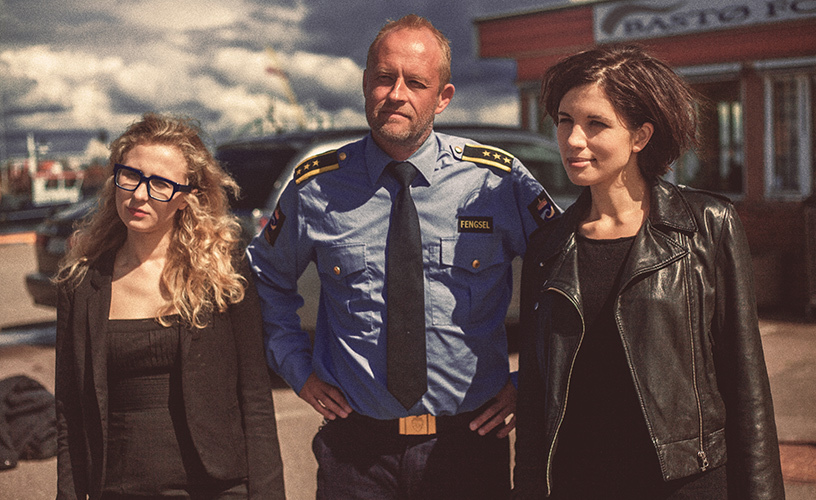
- The prison is money. Big money. Construction, equipment. Money for the maintenance of the prison, ”writes Niels Christie is the most famous sociologist of Norway.
I close his book and go for dinner. We build with 40 women. In a correctional colony No. 2.
Niels is an abolitionist. This is such a direction in criminology, whose followers consider the existing system of punishment outdated. They - a terrible dream of an official FSIN - advocate the abolition of prisons.
Niels is the ideologist of the island of Basta - the most free prison of Norway, to which we went six months after the release.
What do you imagine when you hear the word "prison"? Barak? Handcuffs? Camera? There is no such thing in the basste. They live here in cottages, grow cows and play rock. Excursions are taken here.
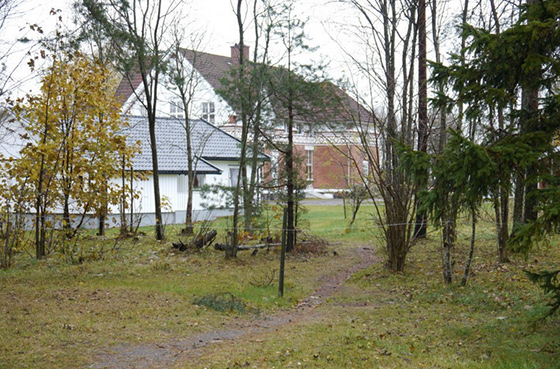
115 prisoners live on the island. We are sailing there on the ship.
- Do you know your neighbors? - the director of Bowov asks me.
“These people,” he says, clinging his hand to the ship's team completely consisting of prisoners, “are our future neighbors.” Around the house and the quarter. We want good neighbors, so we do not punish anyone, but we build work on trust and responsibility.
The island is approaching. It is small, slightly less than 3 square kilometers. Under the low sky, wooden houses are scattered. Here is a farm where prisoners-neighbor grow curly cows, mowed grass and lying foxes nearby.
“We have five foxes,” the director immediately reports, seeing our interest. He sees the island in his palm, in all details, and he does not need informers, agents, inside and searches for this. Operational information that lies in the pounds of no one needs the papers is not needed. He is from Anttician, open to people in the world. He believes in his work. And prisoners believe him in response.
We go to one of the houses. 6 or 8 people live in such. The prisoners called us to play a rock concert.
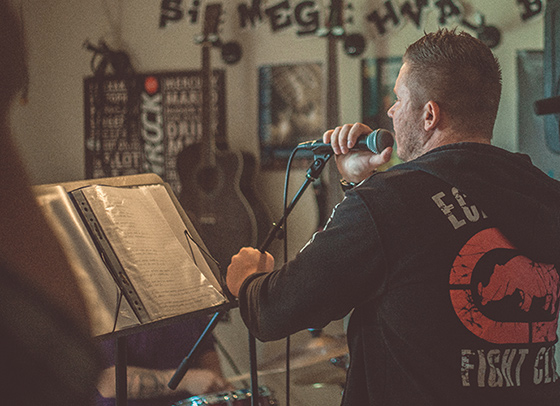 Concert in Bastoy
“This year it will be possible to go to the festival,” says the guitarist of the group.
We do not ask questions about how they will perform and live at the festival, being in the status of prisoners. Previously, there was no such practice in Norway, but they love experiments here.
The humanity of the Norwegian penitentiary system is a rather eloquent example of how cultural reflection works in Europe. The postmodern direction in criminology, where crime is considered as a social construct - a reaction to gulag and Auschwitz - confirms the rule: it is necessary to comprehend history. The absence of such reflection is indicative. In modern Russia, you can often hear:
- Yes, these criminals must be put on the wall at all.
And I'm sure: they will put it with pleasure.
The “Crisis of Punishment” is a term developed by European sociologists back in the 70s is practically unknown with us. Almost no work in this area has been transferred in Russia.
Repressive fundamentalism, which marks any attempt to criticize in your address, gives rise to stagnation. And does not reduce the number of criminals.
Stavanger is the oil capital of Norway. This is a small city with a population of, say, Nefteyugansk.
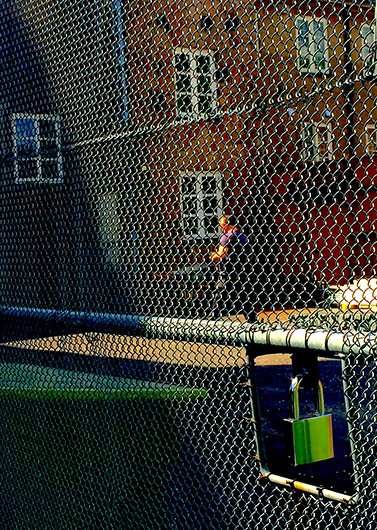
The prison located here is considered strict. But when our car drives up to the gate, I do not see a single ring of barbed wire above the fence. Such aesthetics here is unpopular. Around the prison is silence.
“All prisoners work for us,” I hear familiar words from an employee of the prison.
- Women with men. At the same work.
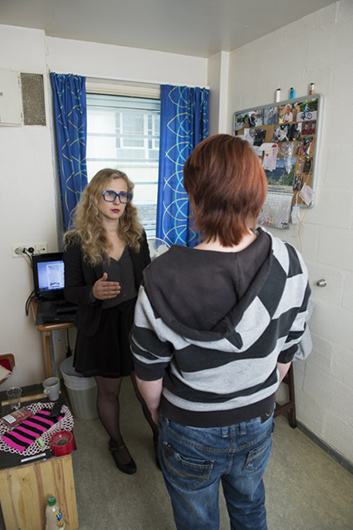
This is something new for me. In Russian prisons, everything was done to prevent the slightest contact of men and women. And this applies not only to convicts. The jailers are blackmailed by women who have no official marriage certificate, dates with civilian husbands. Such are practically not provided. To get a date, women begin to “work for the administration”, which means recruitment and subsequent decomposition of the personality, its leveling to the function.
“And if they don’t want to,” I ask, “to work?”
In the Russian colonies, it is clear what happens, “if they don’t want”, first for a month in a cold camera of the penalty insulator, and then for a year in strict conditions: no dates, no calls. Say thanks for not beating.
“We will lower the allowance,” the employee replies and looks at me in surprise; A couple more prisons, and it will become clear to me that Norwegian prisoners have a great desire to work. “Two times,” she adds a little more confidently. A very strict prison.
After that, I do not speak for long with the prisoner, I go along the corridors, considering the drawings of famous Norwegian artists who made paintings specifically for this prison. I go to the prison courtyard, where a large white wall is covered with the words “house”, “responsibility”, “family”, against the background of this small pond and a volleyball mesh. It rains.
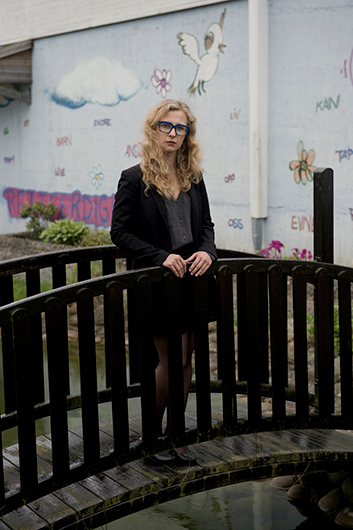
When on the way back the Norwegian journalist asks me: "What do you think of our prisons?" - I have no concise answer, only an understanding of the abyss between our views on the system, which we can overcome in Russia only after many years.
Capital prison.
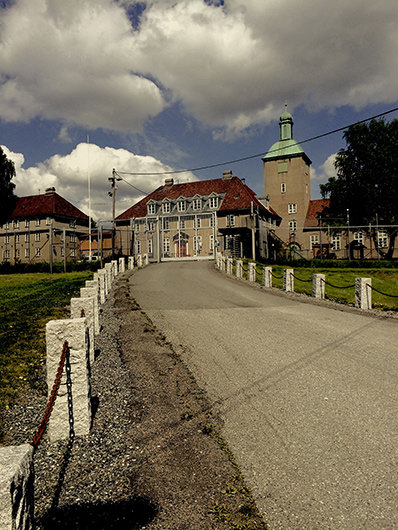
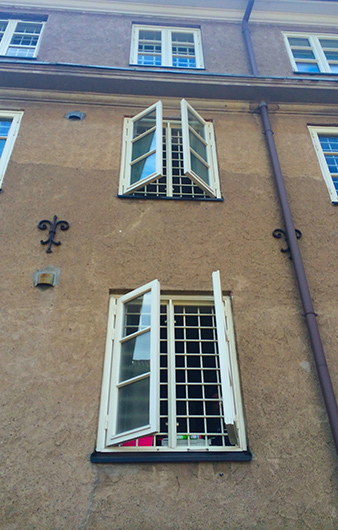
Brawit is the largest women's prison of Norway. The population is 70 people. In Russia, such a population can be placed in two chambers of the pre -trial detention center. On two -story, as they say, schools.
The director of the Hilda prison by profession is a criminal psychologist, and a human rights activist in character. With a sharp look, with glasses with a thin frame, she rejoices at every uncomfortable question.
“Why are prisoners obliged to work? What are you doing if they violate the rules? Show the insulator ” - answering each of the questions in detail, Hilda says:
- Every time I visit prisons in other countries, I ask the same thing.
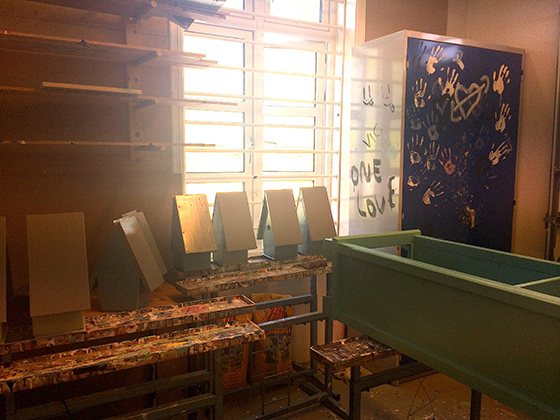
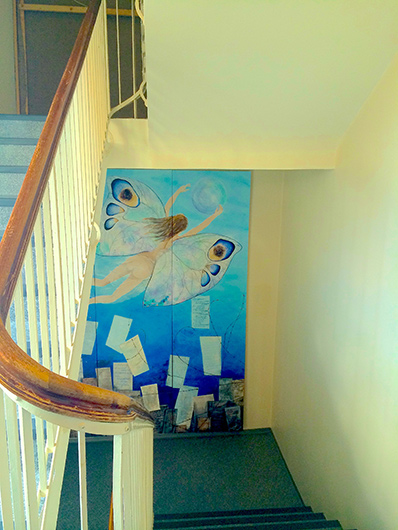
The prison is Brawita collaborates with many countries, providing assistance in reforming prisons. One of these countries is Russia. A month before us, Minister of Justice Konovalov went here.
A release was released on the website of the Russian ministry, there are five questions, "which was given special attention." One of the questions is especially attractive - “providing free legal assistance” for prisoners. It turns out that in Russia this work is not engaged in enemies of the people from the fifth column, but by the Ministry of Justice.
In general, the FSIN, subordinate to the Ministry and the head of all prisons of Russia, does not like legal assistance. Human rights activists in the colony are not allowed. To get a date with the prisoner, you need to sue the administration for months. This practice acts in all regions without exception. Not allowing human rights activists from the will, the Federal Penitentiary Service does not provide alternative types of legal assistance. And especially zealous administrations are not allowed to prisoners and lawyers.
A month before us, Minister of Justice Konovalov went here.
The Russian prisoner, hiding the codes and federal laws in the Baulah, after a long working day, studies the right and tries to protect itself. What happens to him next? And then complaints written by hand in small handwriting are thrown out by the censor directly into the garbage chute. What really “special attention” is paid in prisons is to search for such “complainants” and their corresponding punishment.
Women Brawita do not know anything about it. I tell them by excerpts about a 12-hour sewing of a police uniform, about barracks, about how bit by bit from the entire colony, some Russian prisoners collect materials for staging performances or how cheap cigarettes to the packaging of new tights.
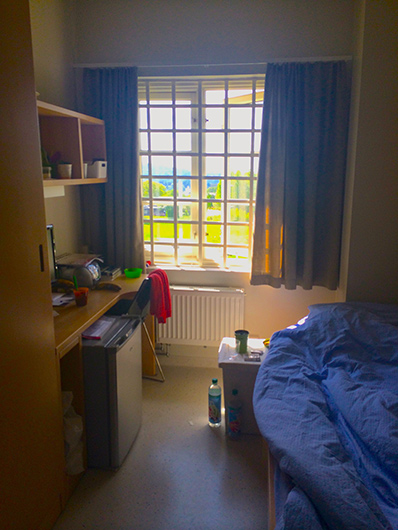
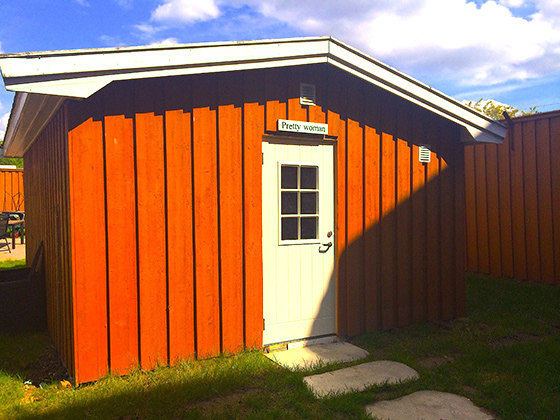
And then they lead me into a small wooden building, where volunteers of the Protestant Army of Salvation gathered a whole collection of clothes. For those who arrive in prison without things and to whom such things will not be sent from home. Should we talk about the Russian church in the colony? About the Russian Church in general?
Probably, you need to talk more about this, but about the system in which the church is built -in.

In Bergen, we watched the largest out of four prisons. Before going there, the head of the regional prison department told us about the Norwegian penitentiary system. Being a lawyer by training, he works on methods in pairs with his colleague and deputy - a psychologist.
Their presentation consisted of bright raspberry slides with the slogan "Prison: spending or investment in the future?" And the subsequent detailed justification of the reasons why society should invest in prison.
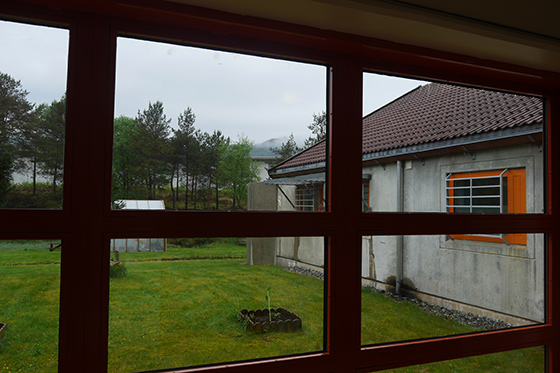
Norwegian society is built on trust, in accordance with this main principle, every institution function here. Protection of the weak, study of details, attentiveness and calm. It may seem strange, but sometimes inside this country you feel like a patient. They are constantly working with you. The prison is only a model, but such a model, of course, could not exist in another state.
When leaving, we asked the prisoners the last question: "Is there anything that you do not like here?"
They simply did not understand the question.
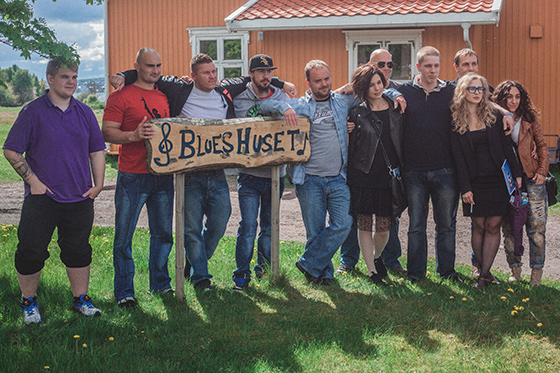 With prisoners