
Translated material
The meaning of the calligraphy
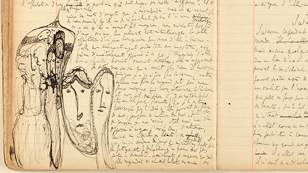
It’s easy for me to agree with this, and twice. I hated a callistle with its torture instruments: with a shoaling paper with a feather-piece, a portable inkwell with a false nickname “impotion” and a mirror sheet of a blot, reflecting my immature blunders. Proudly counting the content is more important than the form, I wrote as I wanted to, leaving calligraphy with dummies and epileptics, like Bashmachkin and Myshkin. I paid the teacher for this, analyzing hundreds of dictations of my no less negligent students. The computer forever saved us from these torment, simultaneously canceling the ancient art of calligraphy.
As often happens, progress took away no less than he gave. The latest research of psychologists (the most authoritative belongs to the professor of the University of Indian Carrin James) prove that children who know how to write and not just print better learn. The relationship of the hand with a pen and paper establishes stable connections in the brain that help to think creatively. For example, they develop the ability to recognize letters, no matter how bad they are written. A student, a leading lecture notes, remembers the material better. And even adults think more clearly when they write by hand.
Scientific articles that appeared in several countries at once raised the alarm in the general public. The computer takes away from us what we recklessly agreed to do - handwriting. And this makes you think about what is dear to it.
Handwriting reveals its hidden meaning, making the union of the soul and body visibleThe main thing in handwriting, of course, is the uniqueness, as unisputed as the fingerprint. But if in the latter case nature took care of the uniqueness of the drawing, then in the first - culture. Learning to write, we become different. Does this mean that illiterate are more like each other? And what, having lost the handwriting, will we become the same again?
I suspect that this is possible, because a letter, like a gait, is an individual skill that can give a bodily form of ethereal thought. If its invioration reminds of music, then the handwriting is a solo dance of the pen on paper. Under the same thing that is amazing, the melody.
As the author, the magical power of this dances captivates me and, sitting at the computer, I do not do without paper. Having reached a vague place, leaving without a verb, stuck on a long thought, lost in the maze of the paragraph, I grab the pencil to put my hand with my head. The rhythm of this always hasty (in order to think) the procedures removes from difficulty and introduces into a trance that relieves pure mind control.
The handwriting reveals its hidden meaning, making the union of the soul and body visible. He knows how not only to speak, but also to speak, knowing about us, maybe less than the charlatans-graphologists promise, but still more than we dared to hope. After all, the handwriting teaches the impossible: to express the external inner.
In one unfortunate fragment, the poet Wisten Oden, speaking of handwriting, recalls excrement. If, having discarded disgust, to develop this parallel, we really will find common properties: naturalness, carelessness and persuasiveness. As a litter, handwriting leaves unconditional traces that affirm our presence in the world. The product of the physiology of thought, it, as dreams, depends, and does not depend on us.
Losing a handwriting is like being left without a subconscious. Therefore, autographs of the Greats tell us more than their portraits. In a letter, the static of the image is replaced by the dynamics of thought, plus, of course, the temperament: Beethoven tore the paper with a pen, Bach circled in red where about God.