
Translated material
"We must become a reform champion to get the average result"
Ukraine is on the verge of deep economic reforms. The government made by the government is either stepping towards the IMF (refusal of a fixed hryvnia rate, raising utility tariffs, freezing the salaries of state employees), or the implementation of predecessors (the new law on public procurement and a course for decentralization).
There is no predetermination of what the new economic course will be. Around the government and ministries, brain centers are created, in which a policy is being developed, which will be, perhaps, completely different people, if the elections to the parliament are really held in the fall. On June 17, George Soros at a meeting with President Peter Poroshenko announced the creation of a strategic advisory group (Strategic Advisory Group), the task of which is to prepare a comprehensive reform plan, something like the Gref programs known to the Russians.
The famous Georgian reformer Kakha Bendukidze does not believe in comprehensive plans, in his conviction, reform should be done, and not described in the future. Since May, he has been part of the advisory group under the Ministry of Economics (rumors about his appointment by Advisor Poroshenko - misunderstanding). Together with several other co-authors of the Georgian Miracle, the 2000s Bendukidze regularly happens in Kyiv. The ex-President of Georgia Mikhail Saakashvili simply explained their involvement in Ukrainian affairs: if Putin crushes Ukraine, he will get for Georgia.
In early March, Bendukidze called Ukraine the most unrefined country of all he saw. Last week, he again came to Kyiv, where he met with several ministers. This interview is an abbreviated and edited version of two conversations, held before and at the end of the Bendukidze visit to Kyiv, June 9-10.
- After Yanukovych’s escape, this is your third visit to Kyiv. How would you appreciate the activities of the Ukrainian government?
- It seems to me that it correctly identified many problems. I did not see large movements, but I’m not sure that the government had political capital to do something sharp. I’m already tired of everyone, but if there are no sudden movements now, there will be problems with the existence of Ukraine itself.
- According to the results of these two days, optimism increased or decreased?
- The feeling was intensified that time is running away very quickly. By the fall or even until the end of the year it is necessary to have time to carry out such reforms so that the budget of the next year is realistic, does not squeeze the business and allow the state to function normally.
Ukraine is not facing the question of accelerated or “leading” development, this is a matter of survival.
There are standard components of reforms: macroeconomic stability, reasonable regulation, smooth privatization, transparency ... The World Bank will easily write such a program to you, a lot of people will tell you how to intensify the development of human capital, increase the efficiency of state management and so on ...
- Just such a program was Yanukovych.
- There are experience in different countries. Reforms in Eastern Europe and the Baltic states and reforms in Georgia are two different types of reforms. In Georgia, everything that we see in Ukraine was present in Georgia. Part of the territory is occupied, two foreign (Russian) military bases, the border is not fully controlled by plus - unlike Ukraine - the market is small, uninteresting in itself, and even in a hot, explosive region.
I arrived in Georgia and agreed to become the Minister exactly ten years ago, in late May - early June 2004. And I thought that if you do everything that led to success in a normal Eastern European country, for example, to seven percent growth in Slovakia, then in Georgia the same reforms will lead to two percent growth, which means a lag from the global economy, that is, your position does not improve, but worsens. It was clear that if you want to balance the available disadvantages, the reforms should be done much more radical. We must become a champion of reforms to get an average result.
- Much more radical - for what? To private capital ...
- I do not like the expression "private capital." For people to act more efficiently. Everything is for citizens. To make it easier for me to invest - it’s easier to build my own house ...
- Why don't you like “private capital”?
-Because it narrows a group of addressees of reforms to some entrepreneurs, while reforms are for everyone.
- Radical reforms are needed so that the investment is as much as possible ...
- For people to live easier. A lot of investments - this in itself is neither good nor bad. For example, if now the Ukrainian state takes a huge amount of money and builds the pipeline along the Dnieper, according to which nothing will be pumped, it will not give anything to the economy, except for a short -term surge, and then a deep decline. Reforms are needed to live easier.
When you breathe well, free, then the economy is developing. Such a simple equation, which is then converted into an equation about income, investment, export, import and so on. But the primary basis - this.
In Ukraine, the situation is worse than in Georgia 10 years ago. Our economy grew. We had no fire. We had everything ineffective, but our leaky, the rotten building did not burn. There will be no radical reforms - the world can be missed by Ukraine. And there is little time.
- What are the sharp movements of priority?
- First of all, it is necessary to reduce government departments, and quite strongly. This was done by [British Prime Minister Margaret] Thatcher (from 46% of GDP in 1982 to 37.8% in 1989.- Slon ), [Spanish Prime Minister Jose Maria] Asnar (from 43.3% of GDP in 1996 to 38.9% in 2004), [Latvia Valdis] Dombrovskis (from 44.1% GDP in 2009 to 37.3% in 2013). A very painful thing, but in Latvia after reducing government departments, the government won the election ...
In order to move to the normal level of stable growth, Ukraine must reduce government contracts by 10-15% of GDP (in 2013, the state budget deficit amounted to in Ukraine, according to the World Economic Outlook, April 2014, 4.5% of GDP at 43.7% of GDP. - Slon ).
- Ireland took 10 years: from 1986 to 1996, they reduced state expenses from 52.3% to 37.7% of GDP.
- For a year this cannot be done, I understand. But for Ireland, 37% of GDP is good, but there is too much for Ukraine.
A radical reduction in expenses can be achieved only with the help of two things: a very significant reduction in the state apparatus, meaningless programs and very significant deregulation, when you actually abandon a number of government functions. The current regulatory institutions are still ineffective: instead of honestly regulating, that is, to create some kind of public good, officials create public evil, taking bribes. Deregulating, you remove what sucks out of the business either one piece of paper or others, banknotes. This is time. You remove the source of corruption, the decomposition of the state apparatus - these are two. And you reduce costs - these are three. Here are three benefits that stem from a very deep deregulation.
Reforms in the energy sector
- The second thing that must be done is to deal with energy supervision. This is a direct poison that accepts Ukrainian society, falling into political and economic dependence on Russia. This reform will solve two problems: to reduce this terrible dependence and improve the state budget, reduce government departments. Today, 5% of GDP is spent on subsidies, and even if it is reduced in stages, removing 1% of subsidies per year at 1% and replacing them twice as much as the direct monetization of these benefits - even in this case, in five years we will get 2.5% of GDP savings and, believe me, a significant reduction in the volume of gas consumed and getting rid of this dependence.
In parallel or immediately after that. As the fire will be extinguished, other reforms need to be carried out in the energy sector. A huge resource is the full use of the nuclear energy of Ukraine. In this case, other sources will be used less, in particular, less effective thermal generation. Thermal power plants will work in any way, and nuclear power plants in full capacity. Ukrainian energy will become stable, economically more integral and healthy. Consumers will not feel anything bad from this.
-With atomic energy, everything is more or less clear. The owner of the largest energy company of Ukraine DTEK Rinat Akhmetov has lost his negotiation, so now it will be easier to do. And what else needs to be done in Ukrainian energy?
- Ukraine mines 20 billion cubic meters of gas. Could get more. But since prices are regulated, it is not very profitable to extract gas in Ukraine. As soon as you free up prices and stop subsidizing imported gas, gas production immediately becomes interesting.
The second point. Ukraine has significant reserves of shale gas. Recently, I read a study of European business associations, how much it is more difficult to extract shale gas in Ukraine than in the United States-much more regulation, much more money is needed. If you make a transparent mechanism for access to the rights to mineral resources, the production of shale gas and not only it will become a fairly simple matter, and if the country has needs for this energy or the possibility of export, then gas will be mined and consumed in the country or exported.
- Is radical economic reform possible in the absence of a strong police?
- This also needs to be done. Ukraine does not want to remain a country in which there will be a bad police?
- The question is not that. Creating an effective police is a fire measure or can this reform be carried out in the second place?
- Fire, fire.
- How to combine an increase in expenses for security forces with a reduction in the state budget?
- What is the increase? The country has defense costs and the police (according to the CASE Ukraine analytical center, in 2013 the expenses for the Ministry of Internal Affairs and the Ministry of Defense accounted amounted to 2.1% of GDP), but there are no defense and police. Ukraine burns several percent of GDP without a result at all. In fact, she lives like Costa Rica, without an army and, as I do not even know who, without the police.
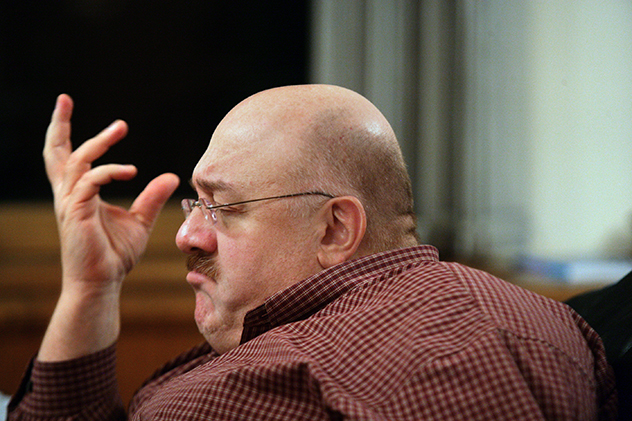 Kakha Bendukidze. Photo: Evgeny Dudin / Kommersant
AGROSECTOR and currency policy
- Suppose a fire was extinguished. What next?
- In Ukraine, there is still no normal private ownership of agricultural land. The agrarian sector could be a much more significant exporter than now (in 2013, Ukrainian agro -industrial companies exported goods to $ 17.2 billion, which amounts to 27.1% of Ukrainian exports. 27.8% of Ukrainian exports. - Slon ), but this should appear private ownership of land, and not the palliative that exists today.
The next big question is a foreign exchange policy. Ukraine, like many other countries, has chosen the path that leads to nowhere - the way to create its own quality currency. The own quality currencies were able to create a dozen countries from the strength. These are currencies that behave well for many decades. If a reasonable person in the age of 50 decides to put money on a 20-year deposit so that there is a grave money, then in what currency will he open it? If you look at how reasonable people behave in reality, it turns out that they keep this money in dollars, euros, Swiss francs, British pounds.
There are much more non -quality independent currencies than high -quality currencies. Take, for example, the Filipino or Argentine Peso, Venezuela Bolivar ... There are a certain number of quality, but to some extent dependent currencies-for example, Chinese yuan, Singapore dollar and the like. And there is a significant number of high -quality and fully dependent currencies - these are many Middle Eastern currencies, 20 African currencies. The choice is this: either you have an independent low -quality currency, or a dependent quality.
- And what can Ukraine do about it? Bind the hryvnia to the euro or dollar?
- Or even abandon the foreign exchange policy and allow the free circulation of the dollar and the euro. I support both options.
Why is it important? You create a nominal anchor - you can look at the experience of the Baltic countries, which mostly went along this path and have achieved significant success - and everything becomes clear and transparent with you. At the same time, you deal a very strong blow to attempts to destabilize the budget.
- There is one objection. Now Ukraine has a chance by inflation to reduce the real burden of government offices ...
- Therefore, the question is and it is worth when to do this, during a fire or after. I admit that for Ukraine the most correct would now be a deep financial crisis that would break all these balls of woven interests. There would be neither privileged pensions, nor any overgrown obligations transferred to the regions, nor the third, nor the tenth. And then it would be possible to re -build a financial system.
Just the path through the financial crisis is impenetrable. I do not know countries that would gently plunge themselves into a financial crisis. I’ll say directly: if you fail to put out the fire, this issue will be resolved on its own. But this is a painful path, and here it is impossible to plan what to do after a fire. How acceptable this is in the case of Ukraine, which is attacked from the east, I do not know.
Marshall plan for Ukraine
- This year, the failure in the economy will be very large: the impression is that the fall of GDP by 10% is a conservative forecast. In addition to the fact that the eastern regions that have not been working for two months are a third of Ukrainian exports, it is also a large consuming region. All income in the Donbass has been lost for Ukrainian companies. How can the government have time to carry out reforms, launch the economy before it is swept away?
- To be swept away is sometimes inevitable. After all, Bolcerovich was also forced to leave. Here the question is: why should the government sit for a long time so as not to carry out reforms?
- It seems to me that the government must try to sit until the moment when economic growth begins.
- -not say that all reforms are massively painful. Some are painful for only three to five people. Deregulation is useful for 45 million and is not useful for tens of thousands. The reduction of bureaucracy is useful for tens of millions and is not useful for hundreds of thousands.
In addition, Ukraine has a very large supply of international support. After the 2008 war, in Brussels, at a donor conference, we were able to attract in various forms: these are loans, direct investments, and budgetary assistance, and technical assistance - $ 4.5 billion, about 30% of the then GDP of Georgia.
Based on the fact that Ukraine is ten times more than Georgia, then it could probably attract billions of 50. This does not mean that the budget should not be reduced, should, and it is for this case to the transitional stage that you need to lay straws from the international community. It is quite possible to attract two to three tens of billions of dollars, which will soften the transition period, to soften the consequences of Russia's aggression and the response operation is quite possible.
Of course, help will not be done right away. Not all the money that was promised by Georgia has been spent, but part of the money that was used immediately gave an effect.
- I just had a question about the new “Marshall Plan” for Ukraine. See: immediately after the war, in 2009, in Georgia there was a decline, -3.8% of GDP. And in 2010, growth resumed-6.3%, in 2011 it was 7.2%, in 2012-6.2%... In any case, the decline in Ukraine will be deeper than in Georgia.
- You can make it not so big.
- This is physically difficult, taking into account the fact that the private sector is now actually frozen: no one is investing plus a huge piece of Ukrainian economy paralyzed by war. Neither South Ossetia, nor Abkhazia were as important for Georgia as the Donbass for Ukraine.
- Yes, they were cut off before the war. Well, this year will be -7% or -10%. And next? Life is not limited to the same year.
- The question comes down to how to restart the economy. Attracting massive Western assistance ...
- This is not a way to restart the economy, this is a way to soften the situation a little in the interval. The economy is launched due to private investment. Ukraine needs to increase the influx of private foreign investment several times. At least five, and maybe ten times (according to the Ukrainian State Statistics Committee, in 2013, foreign investors invested $ 5.7 billion in the country. Of the $ 58.2 billion accumulated foreign investment on December 31, 2013, 32.7% were in Cyprus - Slon ). Here is the task.
- But we understand that, besides donors, no one in the coming year will invest serious money in Ukraine.
- Yes, but now it is necessary to create conditions so that the attraction of foreign investment becomes a reality. There are many aspects, they are associated with the banking sector. I will give a simple example. Ukraine is 10 times more Georgia. How many banks did IPO have in Ukraine?
- Not a single one.
- Zero. And in Georgia - two. One did before the war, the second was successfully accommodated the other day. This is the involvement of investments. Ukraine needs to pay attention to state banks. Why are the state banks? They are not needed. You can consolidate them and attract foreign investors or investor.
- Instead of banking IPO, after the “Orange Revolution” there was an influx of direct European investments in the banking sector, and it all ended badly: Europeans sell their Ukrainian “daughters” with great losses.
- It's OK. So, there will be institutional investors.
– В отличие от валютной политики, которую можно взять и денационализировать, банковское регулирование денационализировать так легко не получится.
– Я не согласен с вами. Начнем с того, что если вы экспортируете банковские услуги, как это случилось в Латвии или Эстонии, то ваши банки становятся объектом надзора иностранных регулирующих органов. Если вы поступаете еще радикальнее и делаете возможным открытие банковских филиалов, тогда они могут быть вообще вне вашего регулирования.
Это детали. Главное, чтобы появились крупные частные инвестиции, как произошло в Словакии, которая стала одним из двух крупнейших производителей автомобилей в Европе, – вместе с Германией. Нужно, чтобы украинские компании начали выходить на финансовые рынки. Тогда у вас не будет вопроса: «А как же, господи, мы сейчас увеличим тарифы на газ сталелитейному заводу такому-то – выживет ли этот бедный завод?» Завод – часть какого-то конгломерата, который должен менять стопроцентную долю в неэффективном производстве на пятидесятипроцентную в эффективном. Пусть он привлечет портфельные иностранные инвестиции и потратит их на расшивку узких мест, на ликвидацию своей неэффективности. Большинство выживет.
Сколько стоит, по-вашему, вся тяжелая промышленность Украины без поправки на боевые действия?
– Если просуммировать прошлогодний список Forbes, то миллиардов $25–30.
– $15 млрд, направленные на модернизацию украинской промышленности, способны решить вопрос эффективности, в том числе энергетической, этих производств?
- Yes.
– Вот видите. Нужно просто не сидеть собакой на сене, а открывать капитал компаний. Более того, благодаря поддержке всего мира сейчас у Украины есть возможность привлекать специальные, не совсем рыночные деньги. Это деньги Международной финансовой корпорации, ЕБРР, Азиатского банка развития, Черноморского банка развития, OPIC, американского «Эксимбанка».
– Мы возвращаемся к «плану Маршалла».
– Можно назвать это «планом Маршалла», а можно просто сделать. Я думаю, что и ЕБРР, и МФК, и OPIC поддержат...
– Я говорил с людьми и в ЕБРР, и в МФК. Несмотря на то что они заявляют о большой поддержке Украины, у них очень сдержанное, я бы сказал, скептическое отношение к экономическим перспективам страны.
- Certainly.
– Они не видят, по большому счету, на что можно сейчас на Украине опереться.
– Безусловно, потому что надо реформировать другие вещи. Мы говорим о постпожарных вещах. Если Украина не реформирует свой налоговый кодекс...
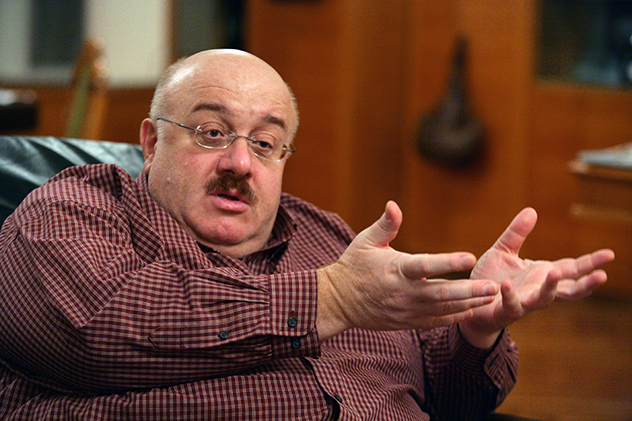 Kakha Bendukidze. Фото: Евгений Дудин /.Коммерсантъ
Налоговая реформа
– Это пожарная или постпожарная мера?
– Там две части: пожарная и постпожарная.
– Давайте поговорим про обе.
– Я не верю в суперрадикальную налоговую реформу. Типа, уничтожим НДС, все заменим одним-двумя налогами – это нереально.
Украине нужен бюджет, основанный на хорошей собираемости низких налогов. Я вообще не представляю, как можно прозрачно собирать более 35% ВВП.
Сегодня налоги собираются плохо, потому что много в тени. Вот куда надо подносить огнетушители. От радикализма людей, которые этим занимаются, зависит будущее Украины. Время в стране военное, поэтому нужно применять неординарные, радикальные подходы.
Всем известно, что на Украине существуют «площадки» – места, где минимизируются налоги. Они отлично видны налоговикам, но находятся вне общественного контроля. Why? Потому что это налоговая тайна. Я думаю, Украине нужно отказаться от налоговой тайны и все данные об уплате налогов юрлицами публиковать в интернете. Пусть общественность знает, кто конкретно занимается воровством денег у бюджета. Пусть борьба с ними будет предметом гражданской активности. Неординарно? Неординарно. Нарушает общепринятые представления о налоговой тайне? Частично, потому что это не касается физлиц.
– Чтобы добиться отмены налоговой тайны, правительству потребуется проявить столько же политической воли, сколько и для того, чтобы позакрывать «площадки».
– Закрывать «площадки» сложнее. Это штучная работа конкретных бюрократов. А здесь нужно одноразовое решение. Это хороший экзамен на зрелость элиты. Борьба с этой идеей равносильна защите воровства.
При этом, безусловно, улучшение администрирования без снижения ставок – гибельный путь. Призыв «давайте вы будете платить все налоги» сегодня бессмыслен. Если бизнес заплатит все налоги, то спад будет не 10%, а 20%.
В первую очередь нужно снижать, конечно, социальный налог. Можно снижать и налог на прибыль, и подоходный налог, который ошибочно, по рекомендации МВФ, был сделан прогрессивным. Возврат к плоской шкале, даже с некоторым понижением, мне кажется, неизбежен.
Сейчас необходимо заявление правительства о снижении налогового бремени. Это будет важный сигнал: правительство готово всерьез уменьшать налоги, только вы начинайте правильно платить. А если не будете честно платить, то, во-первых, народ будет об этом знать, а во-вторых, мы тоже будем знать и будем наказывать.
И, конечно, нужна налоговая амнистия.
– На Украине это называется «налоговым компромиссом»...
– Я слышал, на Украине хотят, чтобы бизнесмены, которые обналичивали через «площадки», заплатили 15% от тех сумм, что они пропускали через «площадки». Знакомый бизнесмен называл мне какую-то запредельную сумму.
– Естественно, это же за несколько лет.
– Тогда это не сработает. Ведь эти деньги не остались у кого-то в виде прибыли. Когда вы начинаете оптимизировать налоги, вы начинаете заниматься деятельностью с низкой или даже отрицательной в обычной налоговой среде маржой. Денег, на которые рассчитывает правительство, просто нет. Нельзя в результате налоговой амнистии изъять сумму, которая больше количества денег на счетах компании в банках. Не заплатят вам. They are not. Экономика не готова отдать все депозиты для налоговой амнистии.
– То есть налоговая амнистия эффективна только при нулевом варианте?
– Может, и не при нулевом, но очень близком к нему. Представим себе такую ситуацию: у вас был какой-то бизнес. Если бы вы платили все налоги, он был бы неэффективен. Поэтому вы платили только часть налогов. Допустим, у вас была выручка $100 млн, расходы, с учетом уплаченных налогов, $90 млн, и у вас оставалось $10 млн. За три года вы заработали $30 млн и построили на них здание, которое сдаете в аренду за $3 млн. Очень простая бизнес-модель. Вы обналичили через площадки $270 млн. Вы должны заплатить сегодня $40,5 млн. У вас их нет. Их и не было. У вас есть от силы $3 млн. Вот сколько бы вы заплатили на месте такого бизнесмена?
– Миллиона полтора, наверное, со слезами.
– Вот вам, как говорится, и ответ. Это в 25 раз меньше, чем предлагается. Условно говоря, может получиться амнистия за 1–2%. Или по одному проценту в течение трех лет. Но серьезных денег вы не получите.
– Пенсионную реформу вы не включили в список пожарных мер. Между тем государство тратит на пенсии почти 17% ВВП.
– Под пенсионной реформой все понимают какую-то накопительную систему – two pillars, three pillars, это все ерунда. Это все не нужно, это неустойчиво, это только для богатых стран, а может, и для них не годится. Лучшая пенсионная реформа следующая: бюджет консолидирует пенсионные выплаты внутри себя, никакого дефицита Пенсионного фонда и опасности, что пенсии не будут выплачены, больше не существует. Исчезает бюрократический аппарат, с этим связанный, происходит унификация пенсий, насколько позволяет политическая жизнь, максимально радикально решается вопрос привилегированных пенсий.
Судебная реформа
– Я хотел сказать еще про одну важную вещь. Она точно послепожарная, но начинать можно уже сейчас. Это судебная реформа. Я бы сказал даже шире – реформа судебной системы и системы правоприменения в целом.
Суды – продукт еще более сложный, чем валюты. Валюту как минимум можно привязать к чему-то, а судебную систему так легко-изящно не привяжешь.
Можно ли импортировать хорошую судебную систему? Просто пригласить судьями немцев или японцев – не выход, судьям необходимо знание языка судопроизводства. Когда в Боснию пригласили немецких судей, они судили хорошо, но переводчики брали взятки. В принципе можно принять смелое решение, что языком судопроизводства могут быть и другие языки, кроме государственного, но у Украины есть огромное преимущество, потому что есть малая Украина в Канаде – миллион триста тысяч украинцев, многие из которых говорят на украинском языке. Можно пригласить как минимум несколько украинцев из Канады в состав Верховного суда Украины, будучи уверенным, что они неподвластны влиянию местных интересов, у них нет плохой истории, они честно и порядочно прожили тридцать лет в юридической профессии, заработали себе репутацию.
Общеизвестно, что для качества судебной системы очень важно, каким является Верховный суд. Сингапур, любимый многими реформаторами, после обретения независимости почти 20 лет не имел собственного Верховного суда, а пользовался услугами королевского суда в Лондоне. Они что, не понимали, что могут создать собственный суд? Для них было важно привлечь инвесторов, и они понимали, что инвесторы в сингапурский суд, у которого нет истории, не пойдут, это будет их отпугивать. А лондонский суд уже много веков никого не отпугивает.
В Канаде 1200 федеральных судей, и среди них, я посмотрел списки, есть люди с украинскими фамилиями. Но Украине нужны не обязательно судьи, нужны опытные юристы – откуда, собственно, судьи и берутся. Всего в Канаде 80 тысяч юристов. Соответственно, там должно быть несколько тысяч юристов украинского происхождения, часть которых, я уверен, говорят по-украински. Нужен хотя бы один человек, который сможет изменить ситуацию в Верховном суде. Я думаю, такая мера сработает, и это позволит на самом верхнем уровне судебной системы создать ощущение справедливости.
А вторая возможность связана с тем, что если не удается реформировать систему по всей Украине, то попробовать более ускоренно, более радикально реформировать в какой-то части Украины. Это идея Free City, которую пропагандируют Пол Ромер и Марк Клугман...
– Charter Cities...
– Это Ромер. Клугман говорит о LEAP Zones – зонах экономического скачка. В Гондурасе я участвую в создании зоны занятости и экономического развития – ZEDE (Zonas de empleo y desarrollo económico. – Slon ).
Исторически на Украине такая стратегия уже была опробована. Я говорю о магдебургском праве. В 1802 году киевляне даже поставили памятнику магдебургскому праву. Люди, которые собрали на него деньги, не думали в терминах инвестиций и частного капитала. Они 150 лет жили в Российской империи и хорошо понимали разницу между тем, как живут в других частях империи и здесь, где магдебургское право.
Оно использовалось в нескольких формах – в усеченной, когда магдебургским правом в каком-то городе пользовались только иностранцы, или более полной, когда жители могли выбирать, каким правом пользоваться. Такая практика и сейчас применяется в мире, но только для очень крупных инвестиционных контрактов. Это называется host country agreement. Вы говорите: я хочу построить производство стиральных машин или зубных щеток и вкладываю $100 млн. И правительство согласно с тем, что после того, как предприятие будет построено, оно будет неподсудно судам Украины. То есть инвестор сразу будет идти в международный суд, заранее определенный или по выбору сторон.
– Второй способ реформирования судебной системы, о котором вы говорите, – это создание на Украине отдельных, конкурирующих друг с другом юрисдикций?
– Cоздание регионов, которые могут реформировать судебную систему, более радикально. Это в какой-то степени перекликается с идеей децентрализации.