
Translated material
Why are they so afraid of children's literature?
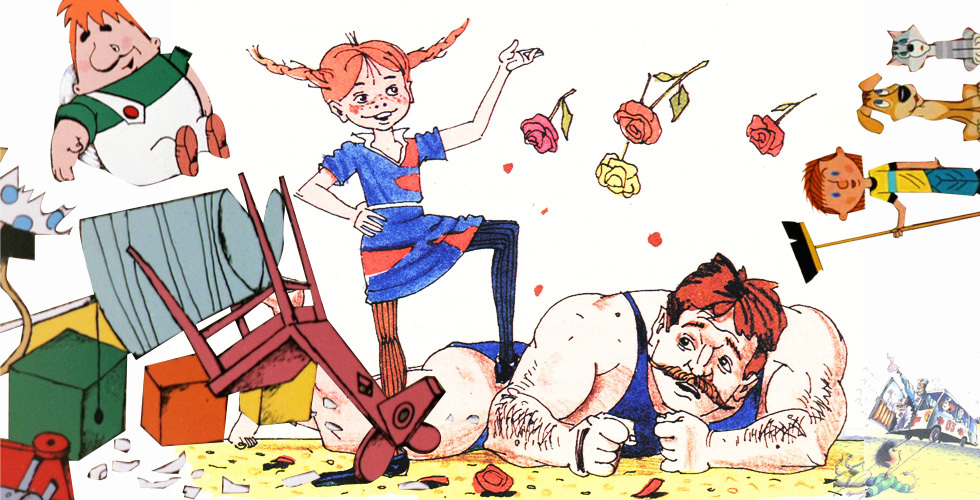
Surprisingly, officials are sometimes right. So in the case of children's literature, they felt the danger emanating from it with some sixth bureaucratic feeling. What else can explain the appearance of decisions and laws recently about what this literature should be? And children's literature itself suddenly became a field of hot public discussion. The last time in Russia this happened in the 1920s, when they tried to prohibit fairy tales and allow only serious, teaching useful, and not just an “entertaining” children's book. Chukovsky, Marshak and many others (familiar and loved by all of us from childhood) were involved in this dispute, and now we do not really want to remember which of the writers wrote to whom the denunciations and life of how many children's writers ended in the Gulag (the authorities then understood well how dangerous children's literature).
But back today. Now a new trend has appeared - to prohibit what the child can upset, show him gloomy, unsightly aspects of life, and even better postpone “for later” what can turn out to be a little complicated for him, “remove from the program” (in the literal and figurative sense) everything that tells about otherness, does not fit into simple and all (officials) understandable frames.
I have to admit: children's literature is a dangerous thing. It has a huge explosive potential, the very carnival spirit that Mikhail Bakhtin wrote about. And the carnival spirit often runs against the regulations of power. In the children's book, as in a carnival, the opposite is true. In the fairy tale, Ivanushka-Durachka becomes a wise king, and the king ends his life in a boiler with steep boiling water. Unpleasant. In the story of the fun adventures of friends from Prostokvashino, the child lives alone, without any supervision (except for the cat and dog). Disorder. And if you look at Peppy long -huts ... it is perfectly controlled alone, without any adults, armed only with extraordinary power and a bag of gold coins.
I'm not talking about the notorious Carlson, whose name was generally a household name. Lives on the roof, steals buns, and in general a clearly negative character. Why does the baby love him so much? And why can this well -fed hitch teach children? Seriously - only to everything good: love, friendship, caring for something else, tolerance, understanding that all people (and even all children) are different and at the same time so similar. Where else, if not in a children's book, the child will read that if you are different from others - for example, you are an orphan who does not have natural defenders - parents - you are not at all the worst and, perhaps, on the contrary, one of the best.
Harry Potter - the famous orphan in the forehead - teaches a little reader that with evil you need to fight to the last and that it’s not scary to even die “for your own.” And if you do not look like peers - for example, there is no pure blood of hereditary magicians in you, as in Harry Hermione’s girlfriend - you can be no worse than others, but even better: right, no one learns more pronounced by the first student at the school of magicians, Hermione.
In children's books, as in life, not everything always ends well. You cannot forever hide death and suffering of the world around the child. The literature of the 19th century knew this very well: read someone you want, at least Dickens, even Korolenko. Many children's books take right behind the soul. In another story, where, like in the carnival, the world is turned over and turned inside out, the child becomes a king and tries to improve the world, giving children the opportunity to control it. Alas, everything is not so simple. King Matius the first cannot cope with the evil of this world, but perhaps today's, modern child who is now crying over the sad fate of the little king, can.
Another public trend in literally the last months is to exclude “not our” literature from reading our children. The only question is how to determine what is ours and what is not ours. It is written in Russian-well, it is written in English (French, Spanish, Chinese, in Urdu) is bad? And really, why should I know about other countries, why read Cinderella, when there is a “frost”, or “Snow White” when you can “a fairy tale about the dead princess”? Let's get used to the four walls of a huge country and we will not know anything about the world that behind these walls. Then there is definitely no need to work - to translate books and even more to read translation literature. Translated literature is especially dangerous for children: they learn that the world is huge and that the same children live in it as they themselves, who simply speak another language and are a little different in appearance - skin color or curly hair. To abolish translators! (I admit right away, I myself am just a translator of children's literature.)
In children's books, as in life, not everything always ends well. You cannot forever hide death and suffering of the world around the child.
Children's books-fairy tales, fantasy, school novels, detectives for children, coloring books for the smallest-tell the history of our world. How else to find out the child about what is happening in the world, who lives in this world, what do they think about? Children's literature, which has grown from myth and fairy tales, is even more than any other literature, international, because fabulous stories are united among all peoples, and the ancient Greek myth of Amur and Psyche and the Russian fairy tale “The Scarlet Flower”, according to specialists, are the same plot.
Literature for the smallest is always a fantasy, for a child this new world in which he found himself after birth is absolutely fantastic. Talking creatures inhabiting fairy tales, a bun who sings his song, Moidodyr, walking along the streets, or gnomes that help a snow -white, are no less real for a child than a toothbrush or cocoa cupo cup.
Later, at school age, the path of children's literature is as if bifurcated: on the one hand, it is realistic literature, for example, a school story or a description of the summer holidays, and on the other hand, fantasy and science fiction. There is also a mixed genre that was especially to the liking of writers who began their careers after perestroika: in this genre, fantasy and realism are mixed, this is a kind of magical realism for children. The novels of Ekaterina Murashova and Dina Sabitova are excellent examples of how such a magical and real connection allows the writer to tell about those serious problems facing children, which are very difficult to tell in a purely realistic genre.
There is also a genre of anti -utopia for children that has now become very popular in the whole world. This is often a rather gloomy literature, but what recently said about this in an interview with Lois Lauri, the author is probably the first anti -utopian book for children “Giving”, which was published not so long ago at the Pink Giraffe Publishing House: “I myself have children and grandchildren, and I terribly want to protect them from everything in the world. But, honestly, I believe that it is literature that helps children understand this world, with which they still have to deal when they grow up. And literature helps them understand the world without danger. ”
Yes, children's literature teaches not to be afraid, and in this, oddly enough, all sorts of terrible books and even horror films in the manners of the endless series “Thirty -Three Misfortunes” help most of all. You read them in your nursery, lying in a cozy crib, and tremble with fear. Yes, only mom is nearby, and everything will be fine.
In a children's book, the child faces the other face to face, looks into his eyes, looks into these eyes, as in the mirror, and recognizes himself in them. He, like Alice, penetrates into the surroundings of someone else's world, is sometimes studying his strange laws. And he no longer needs to be afraid of this other, "who came up", "foreigner", "enemy" and even the "wrong pillow" . Here it is - the subversive power of children's literature.