
Translated material
Theater escaped from the theater
The incident took place in Kazan during the recent theater laboratory “City-Art-Poddovka”: in the city one could see the Finnish play above the car wash, German in the warehouse hangar, Russian at the construction change house. The theater entered the city. And now it rushes even further - and completely beyond the city line.
Wanting whether or not, Kazan was at the center of the current theater trend. The theater has always been characterized by the desire beyond the limits - its own genre, established relations between the performance and the public, beyond the limits of theatrical buildings. In Europe, the theater Site Specific has generated the most sophisticated forms over fifty years of its existence. In Russia, hundreds of people are made by an art, inspired by space, and literally today interest in it on both sides, public and artists is growing an avalanche.
The Russian theater today has a lot of reasons for such migration - he is looking for a new viewer among those who prefer to bypass monumental city institutions; The theater is tired of itself and arranges a thrashing; In the theater there is no place for young and impudent, and they work where they will have to; The theater is competing with other arts; The theater wants to be an adventure.
The laboratory in Kazan is the work of the theater curator Oleg Loevsky, who develops young directing in the regions, and the Living City support fund, opened by two young producers - Inna Yarkova and Diana Safarova, along with the director of the Sviyazhsk museum Artem Silkin. At the end of the theater season, they brought together three institutions with three young directors: the Kamal National Theater worked with the German Andreas Merz-Rykov on the “Volokolamsk highway” Hayner Muller, Anton Malikov and the artists of the local Tsoli, the play by Finnish Sirkka Peltola, Georgy Tsnobiladze, the director from St. Petersburg, was set with students of St. Petersburg. Schools The performance on the parables of Danila Privalov "Beautiful Far."
The theater is tired of itself and arranges a thrashing.
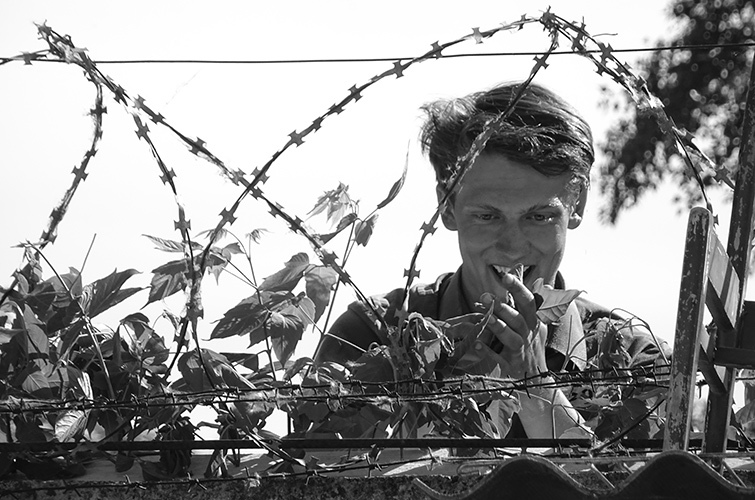
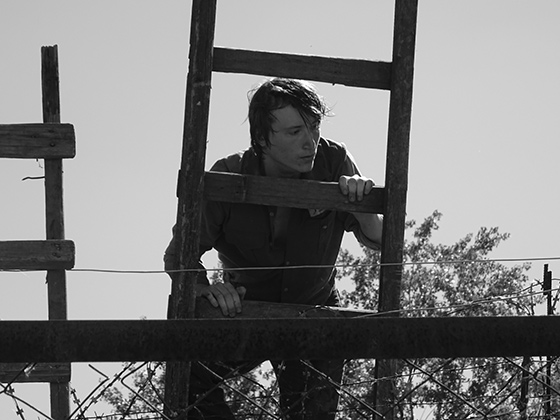
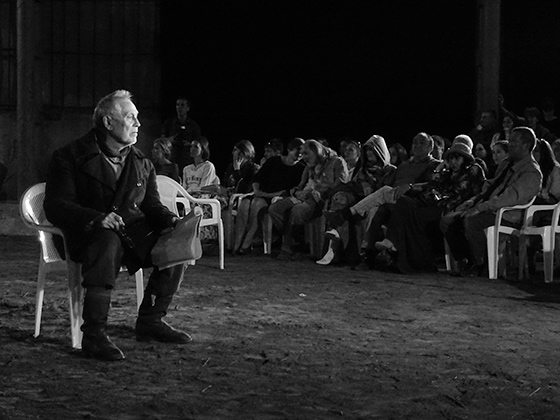
Müller’s “Volokolamsk highway” was transferred from German to Tatar on this occasion: a living birch, trembling foliage in the darkness of a huge hangar, the sounds of German speech in the face of the audience, the sound of Bayan in the distance, the white verse of Müller, shifting Alexander Bek: “... I was their commander, / I was afraid. / Feared fear ... ”The young director in this short and strong work was what the salt of the Müller theater was: the condition, the dreary state of fear. The Finnish play about the value of human life - “nothing” - played in the Gallery “Smena”, located above the car wash: the best environment for its marginal heroes than the empty floor of the industrial building cannot be found. George Tsonobiladze beat the construction booth, surrounded by barbed wire from all sides: the Piglet of the Earth beyond the fence symbolizes paradise, the staircase to heaven naturally leads to the limits - along it from the “beautiful far away” two of the lovers of angels are escaping.
The theater, which came in a similar way beyond its own borders, took the theater community into witnesses of this incident. But the real goal of the laboratory is spectators who do not know, did not see, did not fall in love. Very soon, on August 1, the same company holds a laboratory in Sviyazhsk. In 1551, the fortress was founded by Ivan the Terrible. Today it is an island-museum, for four hundred and fifty years, having accumulated the darkness of myths and legends-they will form the basis of the future three performances. The first to include playwrights: Polina Borodina will talk with the locals about what it is - what is to live in the museum, Marina Vaskovskaya finds out about local monuments, Yaroslav Pulinovich will examine the correspondence of a hundred years of limitation, preserved from one local family. Performances for these plays will be played in the open air in the spaces that the directors Pavel Zobnin, George Tnnobidze and Radion Bukaev will find for them. For the Living City fund, this project is the first part of a long strategy: they plan an experimental site in Kazan and a whole system of summer theaters in Sviyazhsk for theatrical Openayers and residences.