
Translated material
Films between
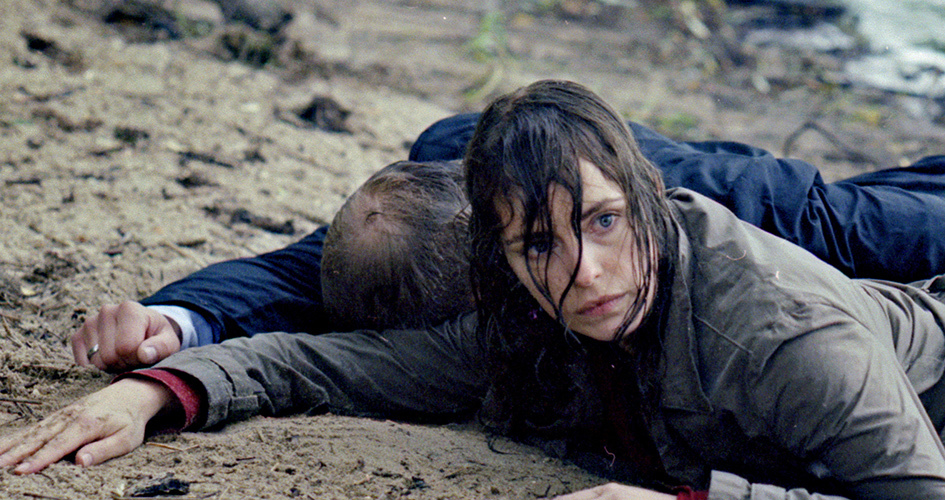
On June 20, the show of Christian Petzold “Yella” in the Moscow Cinema “Illusion” opens the program “Heaven over Berlin”-a retrospective of films of the so-called Berlin school, prepared by Tatyana Kiryanova (Goethe-Institute) and Mikhail Ratgauz (Coleta.ru). We publish an article by Vasily Koretsky, written for the collection “On the Berlin School”, published by the “New Publishing House” specifically to the MMKF retrospective program (the book also includes the texts of Mikhail Ratgauz, Maria Kushvinova, Mikhail M Mayatsky and interviews with directors).
The Berlin school was invented by critics, not directors. At first, a convenient way to connect only three authors (Thomas Arslan, Christian Petzold and Angel Chanelk) with a common background (study in Hartmuth Bitomoski and Harun Faroki Berlin Academy of Cinema and Television) soon turned into Stigma. The Berlin School label gravitates over German directors who, of course, have something in common-and at the same time often deny group identity, categorically do not want to expose their reduction films, inevitable when you are squeezed into the trend. But even more problems, this label gives everyone who has to write about the German parallel cinema for the last two decades.
An attempt to catch and formulate the common in films, the chronology of which has been smeared from the mid-1990s to the present day, the genre varies from a conditional criminal thriller to a family or love drama, and geography extends from Berlin to Africa with a race to France and Portugal, is like an attempt to grab the tail of modernity or the spirit of time in general; Luck in this case always comes with a post -fact, the present rarely agrees to recognize himself in the screen image. But it is an attempt to catch the present - and the sad awareness of his elusiveness - and is that constant that is present in the main body of films attributed to the Berlin school. Their authors again and again recognize their sad confusion before the German - and even wider - European modernity, smooth and streamlined, like a car body. This light frustration is felt even in the sentimental realism of Valeski Gryzabakh, Maren Ada and Maria Shpet, directors who are on the edge of the “Berlin spectrum” and shooting films to a greater extent female than German.
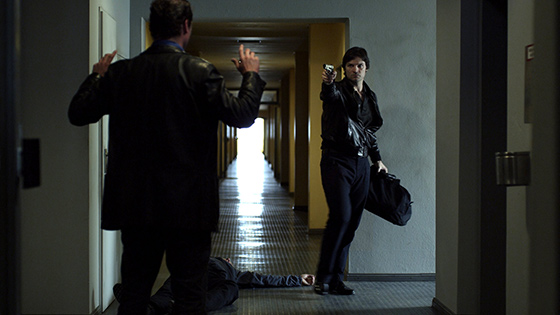 © Reinhold Vorschneider / Schramm Film Frame from the movie "In the Shade", dir. Thomas Arslan
Melancholy of “Berlin” films is strongly expressed, but poorly articulated. This longing is for something unnecessary, but hopelessly lost. The world shown in these paintings is struck by a lack, shortage. He is like a high -quality copy, a workshop for a fake, carrying all the formal signs of the original - except, of course, aura. This world is common: autobahns, airports, streets or parks (favorite locations of the Berliners films). It is intended and equally convenient for everyone, and therefore deprived of subjectivity and fear. But not anxiety. “There is something terrible in the world, but they don’t tell me that,” the heroine of Monica Witti cried out in the Red Desert. The vague suspicion is that something terrible - or equally unbearably beautiful - lurks under the surface of the frozen world, is also in the films of “Berliners”. The simulation of this “real thing” is an important element of the tradition of realism, to which the “Berliners” can also be attributed. But in contrast, for example, their Chinese colleagues, convinced that reality is not revealed to the naked eye, but is quite capable of showing themselves after the intervention of art, the “Berliners” are skeptical of the possibility of revelation in the cinema. Sometimes this skepticism is perceived by them as weakness ( “Our films are not so strong as to say about them that they embody the time or are able to talk on behalf of the world” - Christophe Hokhhasler in an interview). But more often-how to make a conscious choice to make films that do not bear the seals of personal experiences (this is how Christian Petzold works: according to him, the heroine-woman in his films is a guarantee that the character will not become a projection of the author). This “insincerity” is related by a Berlin school with contemporary art - and indeed, the poetics of artists such as Edward Hopper and Gerhard Richter have a strong influence on the first generation of “Berliners”. The camera here often has the subjectivity of an observer, a voyeurist, but she is not destined to see - only to peep, sliding along the faces and objects, guessing in gestures and poses of experience and intentions.
Mastering the skill of gaze is, it seems, the main task of the directors of the Berlin school. Technically, it is precisely the subjective-objective ambiguity, spied on Hitchcock and Carpenter, creates intense anxiety, the background anxiety of these films. The subjective gaze of manual, barely noticeable, but still swinging camera - a source of warm intimacy (as a chansel is removed). But she should freeze - and a person turns into a bio -automatic, alienated from himself an impenetrable mechanism, the character of the Freudovsky essay “Terrible” (such are men and women in Petzold's films). In the early films of the Berlin school, stressful peeping sometimes breaks into a scream - into the central monologue, on which the entire emotional structure of the film is held (for example, in the "Ghosts" of Petzold, in the "beautiful day" of Arslan). But more often, words here are no more than a noise - the truth carries the truth (the most obvious example - Heisenberg’s “robber”, the story of a real marathon robber, retelling, it seems, only so that we can hear the confused breath of the hero hidden from the chase in some hole-or dying of blood loss in the seat of a stolen car, which is alone on the sidelines of the autobahn).
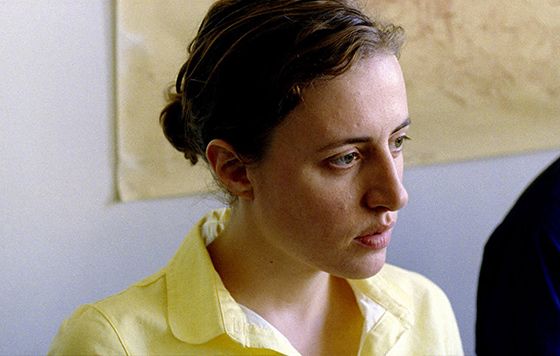 © Schramm Film Frame from the movie "Marseille", dir. Angel Chanelk
Distrust to the word, leads to declarativeness to the rejection of formal participation in the political agenda, to the skeptical rejection of the gracious pathos of “progress” and order . At the same time, the political (and psychological-as its direct consequence) actually constitutes the basis of these films-politics is present in them as a biopolitics. Control and ideology do not exist in the space of manifestos, stands and editorials. They are in private space, and the political crisis is experienced by heroes as personal: the crisis of the family, the crisis of self -identification.
The directors of the Berlin school do not make obviously doomed attempts to comprehend another (which will always be only a mirror projection of himself, the author). They begin with the foundations, trying to understand and show what it is at all - to be a person today. Mechanics of bodies, fine motor skills - these are the signs that the Berlin school reads. Actors, as laboratory rats, are placed in experimental spaces - on the streets of cities planned by other people, into the interiors of hotels, airports and real apartments (often there is repairs, which turns the house into the same transit, uncontrolled zone). A person moves along a complex city landscape, drinks water, eats, travels in a car (a protracted driving scene can generally be considered a branded sign of the Berlin school and films of Christian Petzold in particular; it is easy to imagine the delight of Ulrich Köhler, who first leaves for the international film festival and watches “sincerely your” Apichatpong Virasetakula - half of which Dedicated to a watch non -stop driving on a motorway).
The idea of the modern city as a dead, alienated, deprived of history is characteristic of the post -war cinema of Europe (here you can again refer to Antonioni, who influenced the first generation of the “Berliners”), but the disgust of these directors was directed especially to German cities. Life can occur only in Paris, Marseille, in Poland. Germany is a continuous transplant point, a conveniently designed eternal waiting room.
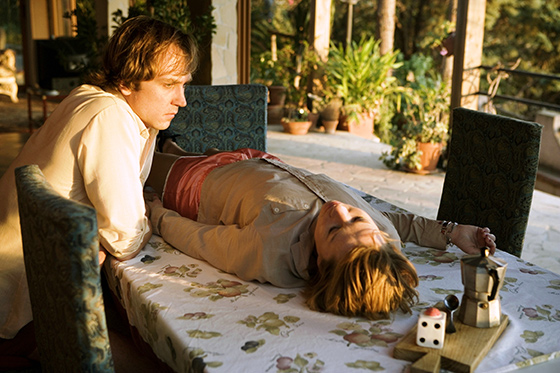 © Komplizen Film frame from the movie "All the rest", dir. Maren Ada
This is a feeling of a protracted expectation (the expectation of which is a catastrophe, death or, which is worse, the voids, a story that will never be written, the future that will never happen?) Provides another metaphor for describing the films of the Berlin school-stop-frame. The building has already been blown up, but for a second it hung in its integrity before crumbling into fragments. The fact of the disaster is always inscribed in the films of “Berliners”-the pool of rational bourgeois life is always attacked by the invasion of something inexplicable, irrational, terrible with his slight deviation from the plan. Teenager Konstantin (Treplev) ends with him in the afternoon, the eagle airport is mined, a relaxed tourist is attacked in Marseille with a running robber who forces her to change clothes with him (!), The heroine of the Ghosts discovers her portrait in the stolen wallet, the hero of Wolfsburg takes death from his beloved Volkswagen, about heroin. "Yella" is generally unclear whether she is alive or dead. An inexplicable epilogue, open or fatal ending - everything indicates the inevitability of the end. But the second that separates the construction from the ruins stretches in these films forever.
The feeling of a stopped - or looped - time, a special temporality of the eternal transition, a frozen catastrophe, afternoon sleep, in which the minutes are equal to the clock. It was as if Chekhov’s play or an American film was frozen in Bullet-Time , in the moment between temporality. Such timelessness is another feature that the Berlin school shares with contemporary art. The present here is not a moment between the past and the future, but the endless, inexhaustible “now” of the stopped story. An important for the first generation of “Berliners” the text of Benjamin “Theses of the philosophy of history” mentions the monoprint Klee “Angelus novus” . The angel of history depicted there is turned to face the past. He is horrified (according to Benjamin) looks to where one continuous disaster unfolds, where the ruins are layered on the ruins (so dramatically interprets this picture Benjamin). In the future - promises. In the past - the remains of these unfulfilled promises. But for the heroes of the films of the Berlin school there are no longer any promises of the future, and therefore their present is endless. Their slow time has a completely different nature than the slow time of the heroes, say, Jia Zhanke, or Haw Syaosyan, immersed in slow, but non -staffed waters of history. No - the heroes of the new German cinema, like the heroes of Chekhov, are thrown out of the story that seemed to have already swept past, leaving behind the ruins of the genres (quasitrillers of Petzold, Arslan and Hochhasler), the buildings (the East German fabric of the depressive suburbs of Wittenberg, flickering in Yella), hopes (surviving their time) Terrorists from the "internal security" or the husband of the heroine Nina Hoss in Yella). The constant of capitalism and the economic crisis accompanying it is taken out in this movie in this frame (just as the story of Klee itself is made by the plane of the picture) - but it is it that determines the screen dispositives.
The heroes of the films of the Berlin school are extra people; To the extent that a person is generally superfluous for neoliberal capitalism (Petzold's films, for example, demonstrate a very clearly reflected rejection of neoliberalism), which consistently erodes all the traditionally human - house, family, and political state. Capital is real. Relations and relationships, summer day, cake with strawberries - no. That is why the characters of “Berlin” films are often ghostly (the main character “Yella” is literally somewhere between sleep and wakefulness, life and death), and their experiences are like an echo of lost “real life” (in this context the climax of “ghosts” is indicative: a woman feeds a girl who is presumably similar to her daughter, understanding perfectly well, perfect “Found” is not at all; However, the tragic truth of these films lies in the fact that there has never been any that good, whole, complete meaning and colors - a mirage, a staging, and there is the only reality available to us. It is the seemingly disabilities, incompetence, and at the same time artificiality, “doing”, perhaps, the anachronism of the films of the Berlin school, is the key to their highest realism. A sense of incompleteness, loss, surrogate unreality of life is familiar to all of us, regardless of the place of residence. The Berlinites cinema is not trying to fill this emptiness, but creates a laconic, formally honed (sometimes poserity) frame around it. It does not try to make up for the loss, but scrupulously finds out what exactly was lost. The skill of his directors is not that they can show who people and countries are actually, but in the ability to raise the right question: “Who do they consider themselves? And what does it mean for them to be this someone? " The marginal honesty of the Berlin school is that she asks these questions to herself-and is still looking for an answer to them.