
Translated material
What is culture?

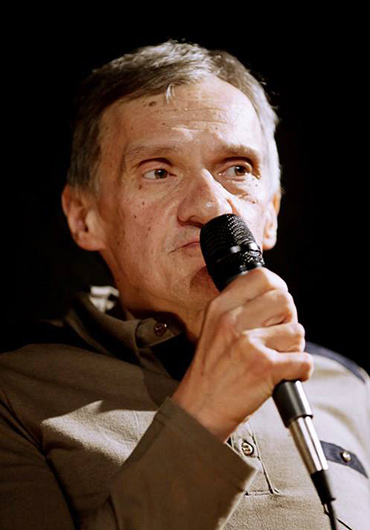
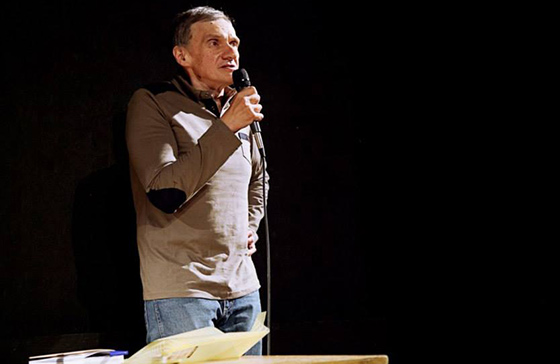
COLTA . RU continues to cooperate with the project of Katerina Gordeeva and Alexander Urzhanov “Open Lecture”, within the framework of which public performances of famous representatives of social, scientific and creative thought are held at the Gogol Center. The poet, writer and screenwriter Yuri Arabov spoke at the “open lecture” on May 19.
It so happened by a coincidence of the circumstances that are unfavorable for me, apparently that for several decades I have been somehow sideways, hand, little finger, foot, I do not know what, I belong to culture. Everyone talks about culture, they use all this term. In fact, what culture is is incomprehensible. And in the year of the culture that we have declared, I would like to talk about my understanding of this phenomenon. In another language, this will be called “culture-multuries”, “oven”, “hiding”, “truth”, “truth”-I do not know what else.
Some time ago, one applicant came up to me. I teach at the Institute of Cinematography, conduct a workshop there, I do some other things as the head of the department. Applicants - crazy people - want to go to an area that is unprofitable, and represents such a mass grave of talents, mediocrity - everything is. And some separate flowers of mowed are growing on the grave, such as me and several more people.
But these crazy people go, go, go, go to this grave. I, as the head of the department, warn you: “Guys, well, don’t go. All this is not necessary. Spare your young lives. ” But they go.
After an introductory conversation, one, maybe the future student and, looking at my eyes, said: "Yuri Nikolaevich, but Moses and Christ were mistaken about God."
I gasped, because in our conversation I did not mention either Moses, nor Christ, or the Buddha, none of the great teachers of mankind, even Mahatma Gandhi did not touch. “You know,” she said, “because God is not good, and God is not evil.” At first, my Pull-Greek-Poluruskaya leaped the blood, I decided to test this student and said: “And let me humiliate you now humanly, and then you will immediately understand what evil is. And God will be the opposite. " She looked at me and said: "Unscrease."
I say "well. Let's say that it is a good or evil to mole a child? " “This is not evil,” she said. “Because the child after this molestation will receive additional impulses to his development.”
I said: “Listen, but psychology and physiology tell us the opposite that it will be such an injury, after which the child will not recover.” “You know,” she said, “this is generally a long conversation, and ...” In general, there is nothing to say about it with such a dude as you.
I understood from this short skirmish that the girl, of course, is higher than to read the Pentateuch and know the approximate content of the Nagorus sermon. She is a high man and did not bother with this.
Culture is not quite a Jaconde, not quite a tears of a child.
However, I remembered this conversation, because, as I think, despite the amateurism and provocation on her part, and then on my part, he was directly related to culture. Usually, culture is understood, let’s say, the spiritual experience of mankind, which pours into artistic artifacts, in philosophy, into creativity - and in sociopolitical life, since socio -political life, of course, civilization is part of the culture.
But here I would like to ask people who say this: "And what, in fact, crystallizes in this experience?" And there will be silence. Maybe someone will say about the Jaconde, which was ten to fifteen years ago on cellophane bags. Maybe someone will say about the tears of the child in Dostoevsky. And then I will ask: “Can a person who has not heard about the tears of the child and for whom there is a delophan package with her image?”
I will answer that yes, maybe. And that, in fact, culture is not quite a Jaconde, not quite a tears of a child. Of course, these are the ten commandments of Moses, this is the Nagor preaching of Jesus Christ, this is “Tao de Jing” and maybe a dozen spiritual books, including “Rose of the World” Daniil Andreev. These are all facts of high culture.
I recall one conversation with Dmitry Alexandrovich Prigov. I asked Dmitry Alexandrovich about his attitude to the "rose of the world" Daniil Andreev. He said: "You know, Yuri Nikolaevich, I am not engaged in extra -cooker phenomena."
I then thought-Dmitry Alexandrovich lifts up and so on. Now, it seems, I understand what he was talking about.
In the old book, which fell into the foundation of the European culture of today's time, maybe even yesterday (today the time is already a turning point, in my opinion, even this is already moving away), it is said that not a single hair from our head will fall without the will of the King of Heaven. Strange phrase.
Usually it is understood that the Lord God is the Almighty (Pantocur) in charge of our hairs. And those people who were bald, somehow fell out of the attention of this cosmic manager. And those who still have something remained like mine-everything is in order there.
I had about twenty years, probably, a period of interval was already ahead when I tried to repeat the feat of Leo Nikolaevich Tolstoy, to go to the people.
Of course, this is not about this at all, but about a certain paradoxical extra-human connection of events and phenomena, where the fallen hair is equalized and to some extent leads to God, to the supreme being, about which we know little and about which we can talk about, expressed by the words of the Apostle Paul, "like through foggy glass." This is at best. And at the worst - to say that, you know, Moses and Christ were mistaken.
I had about twenty years, probably, a period of interval was already ahead when I tried to repeat the feat of Leo Nikolaevich Tolstoy, to go to the people. But Lev Nikolayevich, of course, had a material foundation for this departure. I had no foundation, it was the end of the Soviet era. Nevertheless, I lived in the village for several years and watched different village types. It was in the village near Rybinsk, five kilometers from the road, and there, except, probably on the Bukhanka, and you won’t go up.
I watched these people. I observe to this day, but less, or something, carefully, since I understood a lot. These people did not know about the tears of Dostoevsky’s child. These people heard the surname, but that Gogol, that Mogol is not like that, but they certainly would not have figured out. About Jaconde, quite possibly they did not hear. Nevertheless, these people knew, for example, when to sow. Then there was no astrology, all this was under the back, and thank God, perhaps. Nevertheless, they felt a lot of the phase of the moon, and they sowed the phases.
Is this some culture - a person who sowing the phases of the moon and knows, in which phase of the moon what will grow? These people did not read anything about it, just sowed like fathers and grandfathers. As you know, in Russia there was hunger from time to time. That is, hunger is our stable Russian pre -revolutionary paradigm and the Soviet paradigm. It is worth recalling our hunger and the post -war, and after collectivization spent through the knee, as we do a lot, and so on and so on. I think this is a fact of culture.
There was such a man in the village, Oleg Solenko is wonderful, who finished that he sprayed his own hut with gas and tried to burn with his wife. But when the hut did not light up, he went to the city and hanged himself in the kitchen of his own apartment - he had a house in the village and apartment.
Oleg from time to time met me and said: "Yurka, you need to correct the weather." And the weather - do you know how in Russia? It will go and go. Now we enjoy such a little Italy in Moscow, plus clean air - and Italy would be completely. And if the rains - “need to be corrected,” said Oleg. I say: "How?" “You yourself know how.”
 © Ira Polar / Gogol Center
And I understood that Oleg needed to buy vodka. And I bought this vodka, and Oleg corrected the weather. He drank a bottle, and mysteriously the rain ended. It is difficult to prove now - you can just take my word for me - such a strange person who corrects the weather.
Lucy Ulitskaya told a rather curious story. There was such a wonderful Chechen dancer Mahmud Esambaev. My childhood was to some extent under the sign of this person. Since he was very often shown on TV, this is an amazing stunted thin Chechen, an incredibly plastic one who could imitate any culture in the dance. He could dance that European, that Gorsky, that Hindu is some kind of dance, that shamanic.
Mahmudu seems to be shown in Tuva the dance of the shaman. Unfortunately, I can’t portray this shaman dance now. But Mahmud, as a genius of dance, perceived all this and from time to time performed this dance. It was a rain dance. We just talked about Oleg, which rain extinguished with a bottle of vodka. And here, on the contrary, drought, and it would be necessary that something spils onto the ground.
And Ulitskaya claimed in a private conversation that every time Mahmud performed a rain dance, it was raining. It is impossible to check! She even said that he already knew this and rarely resorted to this, because it was already some kind of absolutely complete mystic.
These two jokes plus not at all anecdote about the balance and the will of God tell us that culture, apparently, describes connections in this world. And a causal relationship in this world. No more and no less.
Jaconde, Babylon artifacts, and so on to some modern metropolis-this is not the main thing at all. And most importantly - this connection, which now exists between me and you, between us and the moon, between us today, by us in history and, perhaps, by us in the future, because, according to the wave theory of the universe, this chair is now at the same time at all points of space, it is even on Mars. There is simply no perception that would see this chair on Mars.
The pantocer, about which we do not know anything, arranged the world so that we are all connected with each other.
Culture is described and articulated by these connections. Remember the emerald tablet of Hermes Trismegist.
This is for me the past stage when I was interested in all kinds of mystical teachings. It consists, in my opinion, of two phrases: “Little is like a big” and “that which is below, then at the top.”
I think Einstein would challenge it. I think that Lobachevsky would also question this. They would say that the logic here is curved, not straightforward. Nevertheless, there is some logic. Apparently, this is a culture. And, apparently, a pantocer, about which we do not know anything, arranged the world so that we are all connected with each other, and culture is the storage and description of these connections.
You know by mythology that a certain number of years, millennia, millions of years ago, a strange story happened. I can’t even say that in the sublunar world it happened, because almost nothing is impossible to say about the world here.
A supreme angel named Dennitsa, aka a morning star, a favorite of an Almighty, fell away from him and was dropped to the ground. With this, the rhyme of Titanov is probably rhyme, which is vaguely mentioned in the Old Testament.
Of course, this is all as if folklore. Some kind of riot of titans. What kind of titans? We know nothing. Some kind of money, a strange name. And this is the right hand of God.
Folklore - of course, not only Judaist - keeps small mention of disaster, which has happened many millennia, and maybe millions of years ago and thanks to which we live in the world in which we live.
I just said about the connections. Communication is the so -called determinism. That is, we are connected to each other physically and spiritually and have all certain obligations to each other. The riot of the Dennitsa is a rebellion against determinism. In any case, in the language in which we will speak with you today and on which I speak. This is a rebellion in the name of complete freedom of personality and irresponsibility of the individual for connections in the universe.
We will have to take this for a clean coin, because, besides mythology, we seem to have nothing. We have a person, there is mythology and there is art, modern and the past, which is very inferior to these strange mythological stories. It seems that they capture the most secret that is in us, but, of course, through some fantastic forms, that is, they articulate it all fantastically. The story with Adam and Eve is clearly folklore, but in this folklore, of course, the fact of betrayal is conveyed. We will commit betrayal and, unfortunately, we will commit, so Adam and Eve can be taken into account as a kind of story with someone at the dawn of something.
Russia is developing with the help of disasters.
And the Dennitsa with my rebellion against determinism says: "I do not depend on any of you, I myself." And as Dostoevsky said, paraphrasing a little, in the “Notes from the underground”, “Is it to fail the world or do not drink tea today?” This is a wonderful wording of the former supreme angel. And the hero of Dostoevsky says: "I can drink tea today, but the world can fail." This is the truth of the Dennitsa.
It should be asked: was a disaster this fall of the Supreme Angel? In any case, mythology describes this so. Since our life continues, I can say that it was a disaster, in any case, universal scale. Moreover, apparently, we all from those time immemorial are developing between these two points, between the truth of the Almighty (pantocrator) and the truth of the Dennitsa.
The Almighty tells you: “Not a single hair will fall without my will” - bearing in mind that your hair and his will are connected. And the Dennitsa says: “To hell, to the line of communication. I am the main thing, I am implementation, full implementation, even if it leads to the end of the world. ”
By the end of the world, this has not yet been brought. And since the end of the world is postponed all the time, it can probably be concluded that in some way the Dennitsa, his call for complete freedom, to God-fighting, and to break the connections, is somehow a confirmation of the powerfulness of the pantocer-man.
Evidence of this is in culture, and these evidence have come from the first centuries of our era, when Origen put forward the thesis that the angels of darkness can be saved by God's love. The Church did not accept this thesis, and Origen is the teacher of the church, but this part of the teaching by the Church is rejected. I think she is rejected because she is very seductive.
In the book of Job, which later formed the basis of the prologue to Faust, there is an agreement between God and the Anti -Bog that an anti -Bog can torture as many unfortunate Job, who absolutely did not deserve these suffering, but still Job will not betray God. This is paraphrased by Goethe in the second, it seems, entering the Faust. When Mephistopheles makes his way to the Almighty at the reception and says: “A person is so bad that even I spare him for. He dreams of a mountain of Vosi, and lives worse than all kinds of cattle, so even I can’t destroy and despise him, because he is already despicable. ”
Then God asks for Faust. And Mephistopheles says: "Well, yes, there is such a doctor." “He is my slave,” says God. “Yes,” says Mephistopheles, “maybe this is your slave, but a person dreams of a mountain of heights and requires all pleasure from the ground.” Then God says: “Listen, torture him, as much as possible. Take torture, Verti, tempt. But I tell you that still he will not disappear from me. " And then God tells Goethe an interesting phrase: from the spirits of denial of all you are closer to me, a rogue and a merrychak. I quote, skipping individual words, according to Pasternak's translation.
After that, Mephistopheles emerges, a moved from the reception of God comes out. I don’t know which ministry it was - maybe in the Ministry of Culture, and maybe higher. And he says to himself: “What a nice old man. And how we get along, the relationship with him is not spoiling. The old man’s beautiful feature, so humanly to think about the line. ”
 © Ira Polar / Gogol Center
All this can be attributed to romanticism. Romanticism flirted with evil spirits, with the spirit of denial. This source of the new culture, in which we still exist, has come out of romanticism.
Nevertheless, Goethe was not the last mediocrity on this earth, he did something. Moreover, this will exist, how much humanity exists. Something is guessed here very seriously. And, of course, the very serious guessed in Master and Margarita Mikhail Bulgakov about this truth of the Dennitsa.
Today's Church is becoming more and more ideologically directed and more and more propaganda-prime, when, in fact, the whole complexity and paradox of Christian teachings and the paradox of Christ, the great paradoxalist, is hidden under the sessile, and quite simple, lapidar truths are carried out to the surface, which, of course, will manage someone on the path, and maybe they will not instruct someone on the path and not quite.
The Church does not like “Masters and Margarita” because Woland, according to Bulgakov, does good. Bulgakov punishes all the scoundrels in the novel. God cannot do this, because God is light and there is no darkness in Him. Apostle Paul: “The punishment is always associated with the violence and suffering of the one you punish. Always associated with the dark side ”... Woland not only punishes the scoundrels and performs the court, but he, at the request of Yeshua, in the novel arranges the fate of the master.
What is it? Now any orthodox will say: "This is an absolutely complete blasphemy." I think that this relationship has no relationship to blasphemy, especially since Bulgakov, as you know, is from the family of a very large theologian. There, these problems spoke, I think, more than once or two. И глубина этого романа вовсе не в любви Мастера к Маргарите и не в замечательно написанных транскрипциях истории с Христом. А глубина этого романа, как мне представляется, в том, что злая сила исполняет волю Божию в конце концов.
Как вы понимаете, то, что я сейчас говорю, не есть оправдание зла. Зло есть зло, добро есть добро. Нам даны на этот счет вполне определенные высказывания, подтвержденные тысячелетней историей. Я говорю сейчас несколько о другом. О том, что вся наша жизнь распята между этими двумя парадигмами — осознанной необходимости подчиняться связям и бунта против этих связей. Причем бунт — во всяком случае, в искусстве, социума я коснусь чуть позднее — приводит к положительным результатам.
Довольно интересная была история в прошлом веке, в двадцатом. В 1950-х годах Карл Густав Юнг придумал термин «трикстер» и «трикстерство». К жизни это отношения не имеет, а к искусству — прямое. Подвиг его на это антрополог Пол Радин, который всю жизнь исследовал быт североамериканских индейцев и нашел у них очень странные изваяния бога, божка, точнее, — по отношению к язычеству мы так свысока называем все эти олицетворенные силы природы «божками». Некое существо, которое не принадлежит ни добру, ни злу.
Более того, в ряде других культур — в северном эпосе, например, — Радин обнаружил то же самое — бога Одина, которого нельзя приплюсовать ни к доброй, ни к злой силе. Это очень странные боги. Они как бы делают все шиворот-навыворот, наперекор связям, наперекор устоявшимся традициям, получают от этого удовольствие и часто бывают за это биты.
То есть это не зло, если подходить ко злу как к корысти. Это некое испытание природой, испытание бога, испытание миропорядка и открытие в мире каких-то новых связей.
Как вы понимаете, для искусства это просто «хлеб наш насущный даждь нам днесь». Другое дело, что провокационность в искусстве уже на протяжении ста с лишним лет становится общим местом и тоже переходит в некую заскорузлую традицию, что не есть хорошо. ОПОЯЗ и Виктор Шкловский, один из прекрасных наших добартовских структуралистов, утверждали, что искусство развивается с помощью переворачивания авангарда в арьергард и наоборот.
Не умер я и не умер мой сосед Максим. Why?
Авангард, собственно говоря, в XX веке, уже сто с лишним лет назад, встал на ведущие позиции в искусстве, оттесняя традиционное искусство связей и описания связей. Но я думаю, что этот авангард открыл новые связи в мире — в этом и смысл, собственно говоря, на уровне искусства бунта против традиции. Мы открываем новые смыслы, новые связи — они для нас очень ценны. Но в наше время заскорузлая традиция может стать авангардом, поскольку авангард сейчас практически все, что мы имеем в современном искусстве. По теории Шкловского, оно должно опять перевернуться. Я не знаю, случится ли это, когда авангардом станет традиция и описание причинно-следственных связей, традиционное искусство.
Я понимаю культуру таким образом. И здесь следует задать вопрос: а что представляет собой наша благословенная родина в смысле культуры, в смысле связей и в смысле нашей истории?
Здесь, конечно, разговор без поправления погоды по методу Олега Соленко не обойдется. Разговор этот долгий, и на трезвую голову вести его трудно. Тем не менее я попытаюсь сейчас кратко назвать нечто самое важное в этой жаре, от которой мы плавимся, что, по моему мнению, характеризует Россию, русскую историю, русскую культуру.
Первое, печальное: Россия развивается с помощью катастроф. Катастрофы — это наше ноу-хау развития. Почему — сказать не берусь. Здесь нужен Олег Соленко со своей бутылкой с поправлением погоды.
Катастрофа монголо-татарского нашествия. Гумилев говорит, что не катастрофа. Вслед за Гумилевым вся интеллигенция начала это повторять, забывая о том, что это абсолютно противоречит летописям, в которых это описано как катастрофа.
Нам говорят, что летописи — подделка. Но тогда встает вопрос: а, собственно, у исторической науки какие источники, если летопись — подделка, а артефакты все сделали в XX веке, по мнению Фоменко?
Как вы знаете, монголо-татарское нашествие приводит к скачку в русской истории и скачку в русской государственности, когда земли объединяются под властью единого князя, который потом становится царем. Очень важный момент, катастрофа, приведшая к принципиальному изменению нашей жизни.
А Смутное время — катастрофа чудовищная. И, например, Даниил Андреев считает, что вообще источник Смутного времени — безумие Ивана Грозного. Не будем в это углубляться, это на совести авторов. Быть может, так, быть может, нет. Don't know.
Это приводит к выбору новой династии, Романовых, с которой будут связаны как великие победы, так и чудовищные поражения.
Реформы Петра Первого — вполне кровавые, абсолютно нетрадиционные. Вот трикстер-то явился. Да не трикстер — это похлеще трикстера будет. Его же Антихристом в народе прозвали. Я думаю, это было принципиально. Очень много крови, очень много насилия, но русский после этого начинает соотносить себя самого не только с гигантской территорией, которая ему досталась в наследство от отцов и дедов, но и со всем миром. Это выход России на международный уровень, на планетарный уровень. Абсолютно потрясающий результат действий, которые похожи на катастрофу.
Идеология, безусловно, — это часть культуры, но наименее почтенная из всех.
Что происходит в XX веке, лучше не вспоминать. Но приходится все-таки упомянуть, что две русские революции 1917 года абсолютно перевернули весь русский мир. И революция 1991 года, бескровная, тем не менее опять перевернула русский мир вверх тормашками. Следствие этих вверх-тормашек — новые социальные системы, где есть всё, где много зла, но есть и добро, и какое-то продвижение по извилистому пути.
Целей мировой истории мы не знаем. И есть ли эта цель? Если Вседержитель существует, то, по-видимому, какая-то цель есть. Это по поводу нашего ноу-хау, как мы развиваемся.
Теперь по поводу связей того, что, на мой взгляд, описывает культура и что есть сердцевина культуры. После всех революционных катастрофических скачков характер связей абсолютно меняется. Однако если мы посмотрим книгу замечательного русского философа, который уже не моден, Николая Бердяева под названием «Русская идея», в этой книге, по-моему, 1946 года Бердяев аргументированно доказывает, что русский большевизм впитал мессианские надежды русского человека на свободу, равенство и братство.
Не стоит на этом подробно останавливаться, поскольку это общее место и никакая диктатура большевиков не позволила бы в несколько лет сброду беглецов с фронта порубить белых профессионалов. Троцкий за месяц собрал армию, и каким-то образом эта армия оказалась значительно сильнее людей, за которыми шли с хоругвями, и тех старых связей, что они имели. В капусту изрубили весь этот лебединый стан — он полетел перьями и отразился в плаче Цветаевой. Конечно, на уровне человеческом это абсолютная трагедия. А на уровне историческом — довольно интересная вещь.
Безусловная общинность, которая есть в русских, достаточно своеобразна. Эта общинность не во всем доверяет государству, она требует от государства защиты, а потом начинается самое интересное. Я думаю, что в 1991 году все мы и я — это уже история, и я рад, что ее застал, — пережили очень интересное время. Сейчас во мне говорит не конформист, не то, что я хочу отвести вопросы от ныне действующей власти. Это во мне говорит скорее человек, имеющий склонность к истории и видящий причинно-следственные связи в истории.
Я думаю, что Ельцин — к нему, по-моему, должны быть обращены все вопросы, что мы имеем по сегодняшнему дню, — столкнулся со странной вещью. Деньги, на которые поставили младореформаторы и в мир которых вступал этот гигантский корабль под названием Россия, не являются связью в нашей жизни, а точнее, являются неполной связью в нашем существовании и неполной связью меня с вами и нас друг с другом. А уж тем более с мирозданием.
Бродский перед смертью дал довольно интересное интервью не помню уже какому журналу. Он там как человек умный и более чем умный, выдающийся поэт, сказал интересную фразу: что идея Бога не состоялась в том смысле, что она не могла связать людей друг с другом. «Попробуем, как это сделают деньги», — сказал он. Может быть, цитата не совсем точная, но за смысл я ручаюсь.
 © Ира Полярная / ГОГОЛЬ-ЦЕНТР
В 1991 году в России была предпринята попытка деньгами связать всех нас. И молодые реформаторы, и первый президент России столкнулись с реальностью, которая говорила о том, что деньги пока, во всяком случае, в России не работают. Что они приносят больше раздора, чем связей.
И у Ельцина был выбор. Я думаю, что на самом деле он никакого выбора не сделал. Надеюсь, что он мучился от невозможности его сделать.
А выбор людей, работавших в экономике, был следующий: уничтожение русской ментальности, которая мешает новым связям, необходимым России. Тяжелая вещь.
На лестничной площадке в доме, где я и тогда жил, и сейчас живу, было восемь человек в нашем крыле. Шестеро из них умерли в эти годы. Причем я видел, насколько люди разорваны внутри оттого, что им навязывают нечто, чего они не понимают. Разорваны внутри безработицей. А безработица — это, конечно, прерывание связей. С этим можно сравнить развод между мужем и женой.
Не умер я и не умер мой сосед Максим. Why? Потому что мне было 38 лет, а Максиму — 36. А в 38 лет плевать на все. Сгорели деньги, ну... Я до этих реформ заработал в кино какие-то деньги, подсчитал, что 12 лет мне не надо работать и что 12 лет я буду писать стихи. А что можно в России еще делать? Водку пить и стихи писать. Хорошее занятие, нормальное занятие.
Подсчитал — 12 лет. Эти деньги кончились за несколько месяцев. Но мне было 38, я сказал: «Да плевал я на все. Господи, мир прекрасен, удивителен. Вон деревня — я там вообще корову буду доить. И вообще, пропади все пропадом». И это меня спасло и Максима, спасли наша молодость и безответственность.
А нагрянь подобное сегодня, не знаю, как я бы поступил. Я надеюсь, что тоже сказал бы: «Пропади все пропадом» — и продолжил бы писать стихи, например. Но мне было бы значительно тяжелее.
И я не знаю, оправданны ли хотя бы эти шесть человек, которые умерли во имя строительства новых связей в России путем похерения и разрыва старых связей. Оправданны ли те трое ребят (один из них был поэтом и занимался в одной студии со мной при «Юности»), которые во время путча под бэтээры ложились? Вопрос очень большой.
И подходя к сегодняшнему дню: мы по-прежнему такие. Наша ментальность мешает нам видеть в деньгах главное средство коммуникации. Этой ментальности тысяча лет при всех катастрофах, о которых я говорил. А здесь никак мы не можем. И что тогда требуется? А тогда требуется вещь под названием «идеология».
Идеология, безусловно, — это часть культуры, но наименее почтенная из всех. Наименее почтенна она потому, что меньшинство навязывает свою волю большинству. Поэтому идеология — это не моя сегодняшняя лекция. Когда кто-нибудь сейчас встанет и скажет: «Хватит пургу нести» — я скажу: «Ну хватит, ладно. Я расскажу какой-нибудь анекдот».
Считается, что советская власть была очень идеологична. Я, как человек, проживший 38 лет при советской власти, могу вам засвидетельствовать, что в вегетарианский период было абсолютно деидеологизированное общество. Странно, да? Мы же знаем, там Брежнев на Мавзолее, какие-то флаги развеваются, «Слава КПСС» и прочее.
По телевизору развевались флаги, а мы внутри абсолютно игнорировали эти развевающиеся флаги. Я говорю не только про интеллигенцию, к которой принадлежала моя разбитая Сталиным семья. Я говорю и о рабочем классе, и о крестьянстве. Я много довольно общался и не отделяю себя от них.
Действовали как могли эти горизонтальные связи. И когда вам сегодня говорят, что нужна новая идеология, под этим вы должны понимать следующее: в обществе не хватает связей горизонтальных и эти горизонтальные связи нужно искусственно насадить.
С одной стороны, идея почтенная. С другой стороны, она довольно противоречива. Значит, идеология не существует без целеполагания. Идеология должна точно формулировать цель, к которой стремится общество, исповедующее ту или другую идеологию.
При Екатерине Великой, скажем (отнесемся к замечательной нашей императрице, на которой, правда, много грехов: то, что она сделала с Новиковым, — это, конечно, ужасно), Москва — Третий Рим. Значит, под Третьим Римом понимается центр теократии, духовный центр мира, под который подходят все христианские народы. Тютчев: «Пади пред ним, о царь России, и встань как всеславянский царь». Перед кем, я забыл: то ли перед Христом, то ли перед самой Россией, родиной, не помню.
Советское время. Свобода, равенство, братство — даже на Луне. До Луны люди не добрались наши вроде бы. Добрался луноход. Если б добрались, наверняка бы там «Свобода, равенство, братство» было вывешено и «Пролетарии всех стран, соединяйтесь».
Сегодняшняя ситуация очень интересная. Мы внутри общества идеологизированы. Нашу сегодняшнюю идеологизацию нельзя даже ни с чем сравнить. Во всяком случае, я на своем веку при советской власти такого не помню.
У нас есть либеральная идеология, у нас есть почвенническая идеология, есть евразийская идеология, которая смыкается сейчас с государственным взглядом на проблему. Но ни в одной из этих идеологий вы не встретите целеполагания, без которого, по-видимому, идеология как средство сплочения людей и связей не работает. А я пытался вам сказать и доказать, что культура изучает эти связи и приучает видеть эти связи. И чем больше горизонтальных связей в обществе, тем оно более культурно.
Без целеполагания в России, во всяком случае, ничего не может произойти, как мне представляется.