
Translated material
Artists will work all night
On June 28, the first exhibition called Casus Pacis as part of the parallel program “Manifesto” opens the street art museum in St. Petersburg. Now the exposition in the active phase of formation. Artists from Russia and Ukraine, invited to create it, are united by the general theme of war and the world. The gray walls of the former workshop, the beds from Ikei, the partitions made of polyethylene, the large cuisine-the whole street art community is collected here under one roof.
The museum was the first to initiate a large-scale collection of names of Russian street art, thereby setting a course on its active inclusion in the industrial industry. A peculiar “iconostasis” was almost formed: Pasha’s work 183, for the sake, Cyril of some others. The museum set a goal to collect in its walls all the best examples of this actively developing practice.
History is interesting in that the Museum of Street Art is located on the territory of the current plant of layered plastics, and the direct investor is the chairman of the board of directors of this enterprise, according to the information from the museum’s website, “received the plant by the end of vague years”. However, the owner decided not to turn the plant into an elite housing and not to build a shopping and entertainment complex, but to give part of the premises to a modern museum. He, however, was never fond of street art.
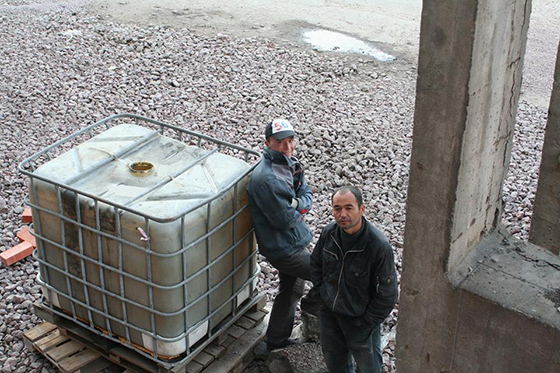
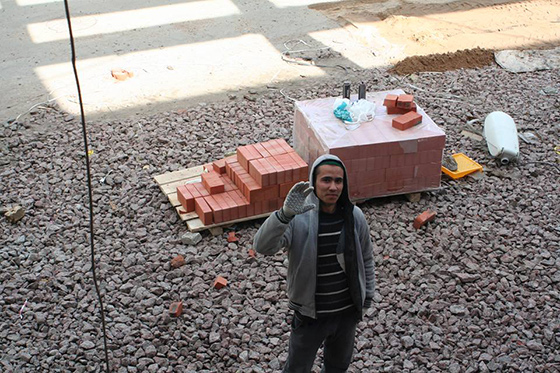
The formation of the exposition currently slows down the absence of primed walls necessary for artists. The plant is filled with workers - migrants and not very. It is they who primer the walls, and the techniques for lifting to a height is not enough, which lengthens the time of waiting for the artist. In addition, the plant is filled with volunteers who work for the most part for free and nameless - for only one idea. The entrance to the exhibition, by the way, will be paid. Also at the factory, golden youth in expensive business suits was seen.
 © provided by the author
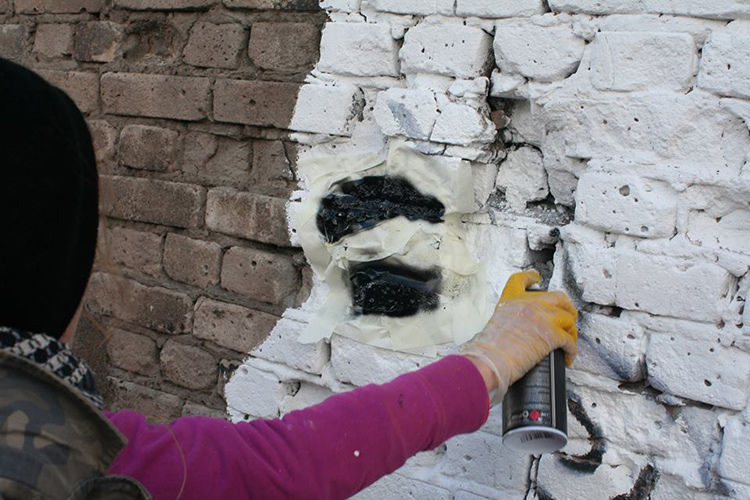
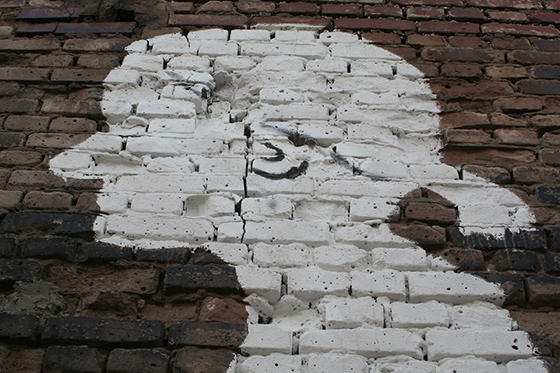
On June 16, GandHi came to the territory of the plant in the evening. They had only two free days to make their own fresco as part of the Casus project Pacis . Initially, the sketch of their work - namely a six -meter, pregnant soldier, a woman with a Molotov cocktail in her hands - caused some disagreements in the museum leadership: is it worth it to include this in the exhibition, and then in the main collection? The work also did not receive a response among other artists.
At the entrance, the group was met by a guard who was too talkative. For a long time he found out what educational institutions these people graduated, who, in his opinion, were so different from the Street Artists and, in general, artists. He was also interested in whether the female part of the team was married, because, according to him, if the girl was lucky with her career, then she will definitely not have her personal life. From the stories of the group, it became clear that the female part constantly hears completely amazing statements addressed to him: for example, “Woman-artist is a grief in the family” or “Women cannot draw aggressive drawings, and if this happens, it means that men should think, then something is wrong in this world.”
Because of the white nights, the group had to wait until late so that it was finally possible to start work and project a sketch on the wall. They were helped by the museum representative and one volunteer who, according to him, went only for a couple of hours to see what was happening here, and was immediately involved in the primer of the walls, and also was very upset due to the fact that the second hour of the night, but they did not let him go home.
Several workers approached the volunteer between the case and asked about the female part of the group: “Are these your women? Can you talk to them? " He allowed, but only culturally. They did not take advantage of their opportunity.
Gandhi worked until dawn, exploiting itself for the sake of symbolic capital. In the early morning, having finished work, they got to the hostel, and, trying not to wake other sleeping artists, instantly fell asleep. They even ignored the fact that it was raining right there - right at their still not dry work.
 © provided by the author
They had to wake up early enough, because other artists stood at dawn to go to Kronstadt, to another museum platform, where it was planned to organize an additional block of the exhibition dedicated to the First World War and the Revolution.
However, the early climb did not justify itself - despite all the promises, the materials had to wait a long time for a long time, since they were not purchased in time, and the only working volunteer also wanted to sleep in the morning. When everything appeared finally, a delay arose again - this time with a lift, which the workers used to primer the walls. When their shift was completed, they refused to wait for artists who were ready to work until the half -fainting state, and began to demand a receipt that shifts all responsibility for equipment to one of the museum representatives. He was indignant: "It is impossible to work with them - they constantly require receipts and go on time on time."
Some of the workers crowded near the lift where the group worked. The assistant volunteer asked them: "Well, how do you like contemporary art?" - To which the respondents thought and said that, as in other cases, nothing is clear to them. After that, the volunteer sympathetically looked at the finally fingered, but stubbornly drawing artists and asked: “Do you have to be paid at least for this?” The artists shrugged bewildered.
The group’s attempt to leave for a short break, leaving the technique to eat and warm up, was in surprise: after all, others also waited for the lift, so leaving for dinner was a strange act. By the way, the artists were fed, however, one sandwich with a salad for lunch people who, along with workers, perform physical and other heroic efforts in such a cold, was not enough, let's say it is not enough. By the way, other artists were seen running in the supermarket for pasta; After that, they eagerly ate them in order to make up for the lack of calories in the working day before going to bed.
Having finished work in record terms, the artists could not leave the territory of the plant for a long time, as they were waiting for the museum representative so that he would put them on the checkpoints. They did not find it right away. He smiled sympathetically, signed, said “thank you” and there was such. So art workers went home. It got dark.
 © provided by the author
In this story, multiple intersections of the lines of relationships are paradoxical. Here, an artist who is imagining himself to be a creator and a genius, in fact turns out to be a service personnel of a large institution. He actually becomes the very worker at whom sometimes he looks down. He also works for food and collective housing, for something ephemeral like a name and mythical glory, however, unlike a worker, he does not know his rights at all. It is difficult to find a qualified worker now, but there are much more artists than the institutions that are ready to accept them. The irregular work schedule and the absence of established payment standards and working conditions are only more fixed by artists who are unknown for the most part and really want to fix it, clutching, as a rescue circle, for everything that comes in the way, agreeing to any conditions for the possibility of being exhibited.
On the other hand, the institution itself, the Museum of Street Art, is rapidly trying to become the giant that is able to absorb the living subculture of street art, museum to museum and take it for eternal storage under its reliable wing. All in one large grave. So why not the street art not to open its boundaries, realizing what was happening, and not remember that their art was originally belonging to the street and was not afraid of anything-and even more so the currents of time?