
Translated material
Dmitry Zimin: "Guys, learn to live"
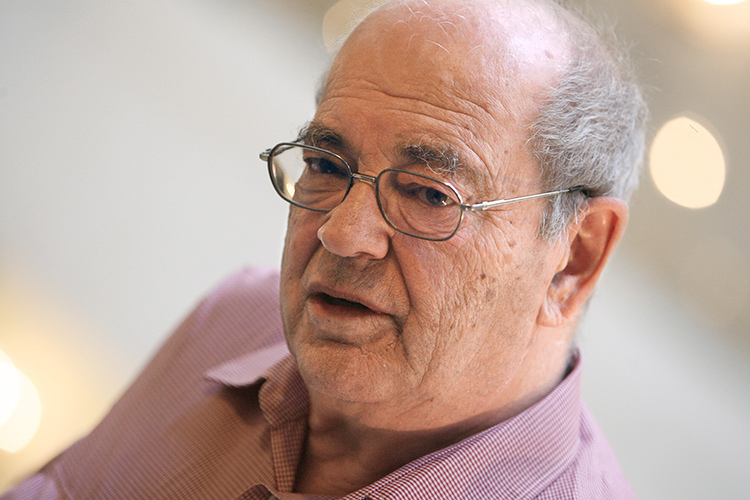
Dmitry Zimin is an entrepreneur, founder and honorary president of Vimpel-Communion (Beeline trademark, which was a member of the hundred most expensive brands in the world). In the 91st year, at the time of the collapse of the Union, he was 58 years old. He is one of the first people in Russia to be rightfully called a businessman.
-Dmitry Borisovich, you talked about your 90s, the creation of Vimpelcom, gave interviews, and most importantly, wrote the book “From 2 to 72”, where several chapters were dedicated to this time. Is there any episode that you have not mentioned before?
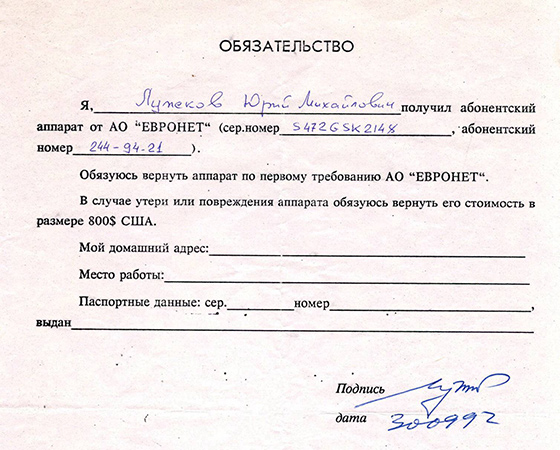
-During the October Curtain of the 93rd year, as you recall, there was a moment when the Patriarch tried to act as an intermediary between Yeltsin and Khasbulatov. By the will of fate, we were slightly involved in this story. Just a day or two before the attack on the White House, someone calls me from the Kremlin. And by this time, our base station on the Ministry of Foreign Affairs was standing, and there was the first service zone, which on the Leningrad highway reached Dynamo somewhere. The MSU company (Moscow Cellular Communication. - Ed. ) Already worked, but they had huge suitcases with phones. And we had phones that were placed in his pocket - and a man with such a phone on the street collected a crowd. Although we actually did not have work permits - it was experimental operation. But the mess was at that moment that no one paid attention to permission.
So - electricity, water, sewage, it is disabled in the White House. And someone calls me from the Kremlin and asks to give two phones: one for the patriarch, and the second for Khasbulatov. Because they are trying to negotiate. I can’t remember who called. So I want to find - who. We gave phones, the next day there were negotiations, they did not lead to anything, and a day later there were already tanks.
- Did you return the phones later?
- No.
-Let's get back to the beginning of the 90s. By that time, you have been working at the Radio Engineering Institute for about thirty years. In the early 90s, there was practically nothing to eat. At what point did you feel the transition - that the Soviet person, successful, working, then began to undergo difficulties, can become a businessman? At what point did you correlate yourself with this word?
- Probably, it all started with a well -known resolution of the Central Committee and the Council of Ministers on cooperatives (the law on cooperation in the USSR was adopted in 1988. - Ed. ). The RTI was a secret office, and when the salaries stopped paying there, these cooperatives and small enterprises began to breed around. Most of them were generally cheeky in nature, because together with the political, the financial revolution was accomplished. In the Soviet Union there were several money systems that did not intersect with each other at all. There were cash - this is our salary, there were non -cash - they concluded all the contracts: with factories, for example. And the cooperatives mixed these systems, and the crazy pumping of non -cash into cash went. Of course, all this blew up the financial system of the Soviet Union.
In the White House, electricity, water, sewage, it is disconnected. And someone calls me from the Kremlin and asks to give two phones: one for the patriarch, and the second for Khasbulatov.
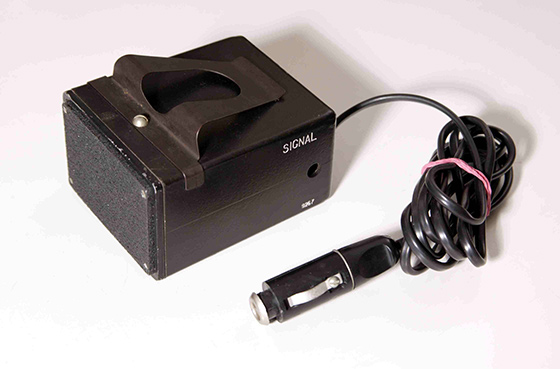
But if we talk about us and our sensations - we had a purely human task. We - not only me, but also my friends, colleagues - asked ourselves the question: we are engineers, what are we ourselves to earn? Tired of working for the military - before that they worked for so many years. And then the creations went outside the system of all state orders. One of the first is the radar detector (a device installed in a car and finding the operation of a police speedgan.- Ed. ). He is lying around somewhere, by the way.
- Did you receive an order for him?
- There was no order, it was an amateur development, purely initiative work. Then the first speedgans appeared, including ours: they were made by the plant in Rybinsk. Making a receiver under him was funny, there was professional interest. We ultimately sold this documentation for the plant, for the KMZ - this is the Kuntsevsky mechanical plant, quite large. He released them and sold them.
In general, the RTI is interesting statistics. There were about 3,000 people there, and everyone flourishes. Satis company - satellite stations now - also from there. One breeder in Moscow, very large, began by making power sources for basic stations, and now - power supply units for electric locomotives. It flourishes too. And it all started there, in the RTI. That is, in fact, we escaped to freedom: neither the military nor the regime, which took on completely. We can feed ourselves and do something ourselves.
- And at what point did you understand that your business is a cellular connection? You had different samples in different directions.
- We had a serious test - satellite and cable television. Then it was a novelty, we tried to make our equipment. We sold the idea to two plants: one was near Moscow, and the second in Vilnius.
So, with cable television, of course, the developments were an order of magnitude more complicated than with a radar detector. It was impossible to get rich on this. In addition, we have preserved the inertia of the old type of activity. We did not have a plant, but a ministerial institution, KB, we were developers, engineers - we had an order or we ourselves ordered ourselves to make equipment. Make one copy, two, documentation-and then what? It was necessary to sell someone. Sell documentation - this money would be enough to go to a restaurant once. Sell for a serial plant? But we did not know such words - "royalties from sales."
At about the same times, the idea flickered - cell telephony. Very interesting: the phone is in a suitcase or even in a pocket - and this is in the West, but we do not.
And here it is necessary to name the name: OGA Fabel, then a young guy, unmarried. And his father, who was also called OGA Fabel, he and his son are full namesake. They had a small company PLEXSYS . The curtain collapsed, they came here, and then - a completely incomprehensible world. And in Vimpel at that moment the orders ended, and the search for contacts with the West began. And one of many contacts was a tiny company PlexSys . Further, a set of accidents and human sympathy: with this family, after many years of cooperation, we began to be closely friends.
 Radar detector
We considered cooperation with the company in this way: give us an order for equipment. It did not immediately come to us that this company came here in the hope of selling its equipment. They needed dealers, and the equipment can be sold to operators. But there are no operators, and no one knows the words. And we ask for orders from them! They made some stupid protocol that they will help us develop the equipment that we will sell around the world, and in order to somehow justify the costs incurred, we, the Russian side, take the obligation to break through permission to create a network that can serve-the figure remembered-up to 600 subscribers. That was the beginning. Then, like snow on the head, this company invited the leaders of Vimpel to America-this is the 92nd year. In general, trips to America are in the next world. They called the leadership and insisted that a certain bald gentleman, who waved his hands during the meeting, should also be part of the delegation and go to America. For a long time they found out who they mean. It was me.
Well, it rushed. I have never been to America before, it was impossible to even think about it: we had a SS OV - a completely secret special importance.
- You now remember this restriction - "up to 600 subscribers." At that moment you imagined - this is for whom, who are these 600 subscribers who suddenly have a cell phone (at the cost, as I understand it, about five thousand dollars)?
- We imagined it badly. The figure of 600 subscribers was taken from the ceiling. Members of the Politburo had radio teleshops in a car. It was radio communications-not cellular, there was one station on the Ostankino Tower, and it had a maximum number of subscribers, in my opinion, 500. Well, we said-600. It is difficult to say who we were guided by, poverty was around-then we mainly imagined that it would be embassy workers, representatives of foreign firms, rich people. And who then were rich people? Some foreigners, diplomats, but not ordinary Soviet people.
- Do you have the first mobile phone?
- “Motorola”, Fabela brought ten pieces. Somewhere I have a dummy stored. This is when we began to put the first base station on the Ministry of Foreign Affairs, then there were the first phones.
At this moment, the first licenses were already issued to professional people. One of them was Vyacheslav Fedorovich Gurkin - deputy minister of communications under which the company MSS was created, Moscow Cellular Communications. They worked at the Nordic standard. And they seemed to have the first cell phones in their suitcases. They were part of the MGTS, and this is a giant, which could not be approached; To put the apartment phone, they stood in line for almost years. And who are we at all, we are not signalmen, from the RTI - what do we have to do with cell telephony?
- So I wonder how you came to this. There, one of your colleagues said: "Zimin, there is nothing to eat in the country, and you are cellular."
- Well, yes, it was. He still works for me. But, damn it, cell telephony - it was interesting. Gradually, the understanding began to reach us that no one would buy equipment from an engineer - there should be an operator. They rushed to the operators - then there was Gurkin at the MSU, and there was Veronika Blomstead, a representative of Millicom (I later called the company Macro at the peak). They didn’t allow me to her, then she remembered this episode for a long time and repented - “If I knew who came to me,” she spoke all sorts of flattering words for me.
But then we were told in her reception room something like this: where you go, here serious people are engaged in serious business. And we had this completely revolutionary idea: if so, we need an operator to make equipment. The Americans have a standard AMS , but we do not have it. Maybe we will now break through the Ministry of Communications, so that we are given permission for this standard, and we will become, on the one hand, by operators, and on the other hand, we will make equipment and sell it to ourselves. The AMS standard in Russia did not climb. But we nevertheless struck him. Everyone twisted, and suddenly - O Miracle - this “Vimpelk”, which has no solid founders, became a leader in the market. Against the background, when there is nothing to eat, it helps a lot, it activates very much.
- At what point did you have a feeling: now everything happened for sure, now I'm sure?
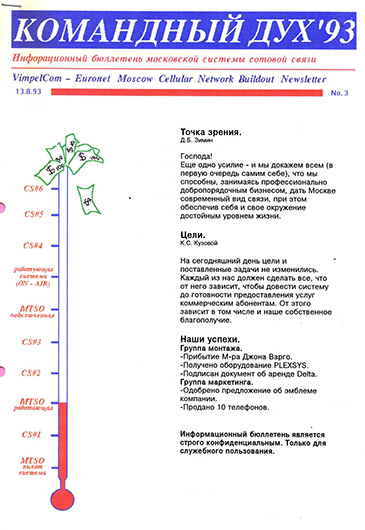
- You see, there were no such categories, although there were absolutely binding moments. In the 93rd year, Fabela decided to conclude an agreement with the PLEMPLECOM with PLEXSYS , and we began to build a more or less serious network with Vimpelkom. Once a week we met at business breakfasts - and for each breakfast we released a “command spirit” combat sheet: on the one hand there was a thermometer, which showed our state of affairs, and on the other - dollars that will begin to pour on us after the installation of the last base station. This was terribly awake and kept in good shape, despite all the difficulties. And in the summer of the 93rd year, one of these breakfasts approved the emblem of Beeline-with a bee.
We tried to do everything ourselves: the antenna, the power supply, and it was impossible to do the base station itself, they were set by PLEXSYS . For Fabela, this was also incredibly difficult and risky: to put an equipment for almost a million dollars here - almost guaranteed ruin. He put them in the hope that the operation would begin and he would return his money. But it must be understood that Vimpelcom designed to a certain extent a network, power cabinets, but on the roof to put a base station, an antenna-then it was a damn thing. It was very difficult. We piled her at the Foreign Ministry - there was also a terrible adventure. Some agreements at the highest level, they reached the minister, everything had to be coordinated, but there was an incredible excitement: now we’ll put it-here we have phones in our pocket (though there were only a few of them), and they will earn money now.
- Please tell us how you received the standard and how you achieved the license "for the implementation of communication activities."
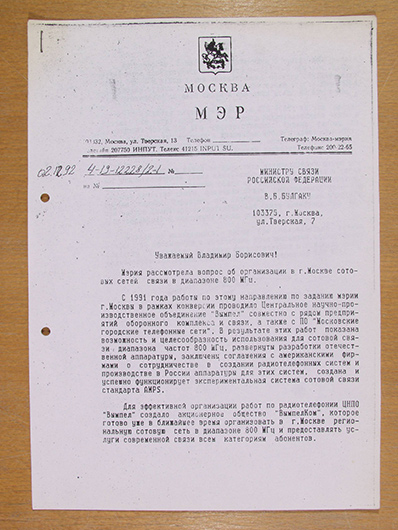
- It was a completely dramatic episode. The fact is that all the ranges were busy, and we began to break through this American standard. Actually, he did not go into any gate-at the Minister of Communications Vladimir Borisovich Bulgak crushed from all sides. And he came up with a regional standard: that it seems like a radio outlier, not a real cell phone. What it is, no one really understood. Then we, with the help of Vladimir Yevtushenkov (the creator of the system and financial corporation "System.- Ed. ) We received a letter from Luzhkov demanding to give out a" Vimpelkom "license. Then the guys from Svyatoslav Fedorov, who were the driving force just at the MSS, this Veronica Blomsted, scorched. And Svyatoslav Fedorov was not only a doctor, but also a cool businessman: in particular, he also had a cellular connection. Upon learning that we are breaking through a license, his people were fussing - and Luzhkov wrote a license for Moscow, and they pierced their license for the Moscow region. There were no concepts of what AMS was, but pierced. And for this matter, the RSC company was organized in a hurry-“regional cellular communications”, somewhere in Khimki was located. Veronika Blomsted on behalf of the Millicome oversaw her.
The Ministry of Communications quite rightly stated: you somehow negotiate among yourself how you will work and how to distinguish between Moscow and the region. And now another six months, if not more, those negotiations were underway. We were engaged in intrigues, agreed with the region, so that Vimpelkom and the RSC unit, achieve a unified license for Moscow and the region.
It helped that the “Millic” RSS was great offended: he did not give money, tried to build at the counter “Smirno” (we were on our own). The whole thing ended with the fact that the audience passed to us from there. It was a pure and very cunning intrigue, quite yard relationship. When Fedorov demonstrated the first inclusion, they asked us to give them a signal. We are kind people, gave, although, in fact, these were our competitors. I can boldly talk about this, because there was an intrigue further and we lured competitors, but ultimately became big friends.
And then there was also a symbolic episode when we stole the base station in the 94th year. We had a clear distinction: we make a single network, there is no frequency separation, but the RSC acts in the region, and we are in Moscow, and one does not climb to the other. The equipment for the Moscow region was supposed to provide a Millik, a foreign companion. And he did not provide something there, and we had a connection in Moscow, but there was no one in the region. We agreed with the head of the RSC: they say, let's put the base station in the region-and some money will go to us. They put the base station in Mytishchi, everything was issued. And she was stolen with us at night. It was actually a conflict with the Millicome. I wrote a press release that the Millicom resorts to criminal actions. Veronika Blomsted wrote in response that the incident was not authorized by Millic and that my press release is an insult. Then it turned out that the Millik really had nothing to do with it: the guy who was for the director was a crook in the RSC. Of course, stealing the base station was completely bad. Boy in its purest form, otherwise you can’t call. In the end, we remained friends: some of the people passed to us, there were no enemies left.
-I also wanted to ask about another dramatic episode-in the 97th year, when you agreed with Nemtsov and actually bought a license for GSM 900 for 30 million. I have the feeling that there was no peace throughout all 90s.
- What peace! It was a very gambling life, really. It was already an access to the exchange-we are triumphs, but at the same time, the only DCS standard has just had such a standard in Europe. Nobody claimed to him either, we faded, took it to ourselves - this is that then GSM 1800 became. We have GSM 1800, and MTS has GSM 900. This is not the simplest situation, but we were ready for such competition. We are already on the exchange, we are rich - we will break through.
They just began to develop GSM 1800 and invest tremendous money, as MTS becomes part of the AFK System, and our friend Volodya Evtushenkov, having received decent money on the exchange for his shares, suddenly turned out to be a very tough competitor: he also began to claim GSM 900. And this is already uncompetitive for us, if we also do not get access to the Bulgaku - then, then, and we say, we say, and we say, and then we’ll come to us GSM 900. "No, I can’t - Moscow does not tell." Moscow is Luzhkov. The fight began for the GSM 900. It was clear: if we do not receive it, then we are death. How much is a year to last? Sell, become rich people and calm down?
It must be understood that Yevtushenkov is Luzhkov’s best friend, and then Luzhkov was then read to the presidency. But the government of young reformers came. Bulgak, who was firmly connected with Luzhkov, left the Ministry of Communications and became the Minister of Science. The chairman of the State Committee of the Russian Federation for Communications and Informatization became Alexander Krupnov, and the Vice-Prime Minister Boris Nemtsov was oversaw the entire branch of communication. We began to break through to Nemtsov. We met, we talked with him sweetly, I told him the whole story: the company on the exchange, there is competition, Luzhkov ... He said: “How, and then Luzhkov? Write me a memorandum. " I say: I don’t have to write anything, I won’t get home. Немцов говорит: ну хорошо, у правительства нет денег, а тут спутник падает, найди 30 миллионов на станцию «Мир», попробуем что-то придумать.
— Нашли?
— Далеко не сразу, но нашли. А когда был кризис и правительство младореформаторов поперли, пришло правительство Примакова, и вот в кабинете Немцова сидит уже другой вице-премьер — Масляков, коммунист. И я отлично понимал, что как только там до Москвы, до Евтушенкова дойдет, что у нас есть GSM 900, на который мы последние деньги потратили, он отменит это решение к чертовой матери. Поэтому надо было добиться и второй подписи, уже нового правительства. И вот этим эпизодом я горжусь: я Маслякову, коммунисту (хороший человек оказался), у него в кабинете на приеме говорю, что у меня одна просьба: чтобы поднять капитализацию компании, надо ему явиться в гости, нанести небольшой визит компании. А «Вымпелком» — это звучит все-таки, это не пешка. И было чудо: 8 марта является с охраной, сонм корреспондентов. И я ему подсовываю решение очень простого содержания — мы договорились о займе с космическим агентством: график выплат растягивается на полгода, все понимали, что так надо. Он, конечно, подписал без звука. Это нас спасло потом. Ребята, учитесь жить.