
Translated material
Andrey Platonov: Life in death
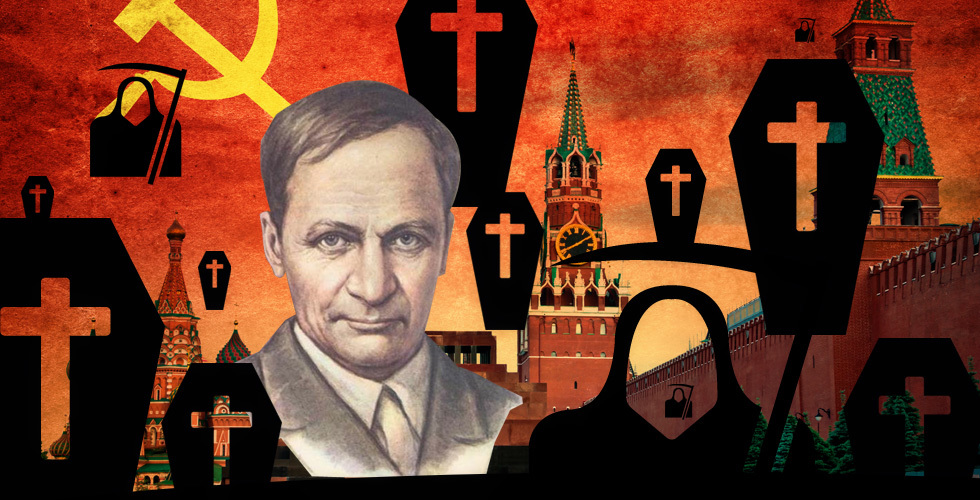
In the recently published by N. Kornienko and E. Shubina volume, Andrei Platonov, there are terrifying lines of the twenty -seventh year: “The longing is completely unbearable, really dying. Everything somehow went out and overshadowed. <...> everywhere molestation and debauchery. Paul, literature (spiritual decomposition), society, the whole story, the darkness of the future, internal anxiety - everything, everything, everywhere, the whole earth languishes, trembles and suffers. ” Refers not only to the difficult relationships of the writer with Maria, at that time a civil wife. Working as a landlord in the Voronezh and Tambov provinces, in the apparatus of the People's Commissariat of People's Commissariats in Moscow and in the field, the author well imagined a communist worldview, he knew the Bolshevik reality. Consideration of the time of the Bolsheviks is in his great prose.
***
For all thirty years of coexistence of Andrei Platonov and Soviet power, there was no deeper critic in the country. In artistic images filled with philosophical meaning, the writer managed to formulate the historical sentence of the communist idea. Bolshevism, which began with the destruction of the previous history and part of the people who came out of it, could not dwell on this. Destruction turned out to be a form of its existence. The kingdom of death was created.
Unlike his great predecessors of the nineteenth century, Platonov had no hope for the best. Inheriting the idea of freedom with Pushkin, he saw a prison created by the Bolsheviks. Dreaming, like Gogol, about a living person, he was not able to break out of the new kingdom of dead souls. Together with Goncharov, he felt the life -giving rotation of the wheel of nature, but did not find for a man the opportunity to go beyond the limits of natural being. Like Tolstoy, Platonov was looking for a formula for the conjugation of life and death and also did not find it. Platonic heroes, like the heroes of Chekhov, are permeated by ineffective longing, the beginning of the death agony. Death is a common denominator of a huge and diverse Platonic world. For this reason, it is impossible to say exactly which of the heroes of Platonov is alive (so far), and who is already dead is impossible.
Starting from the second half of the 1920s, Platonov openly recognized the vitality of the Bolsheviks, doing it philosophically, conceptually, ontologically, at the level of categories of “life-death”. His word for the authorities was all the more murderous because initially he himself was poisoned by the fantasies of Bolshevism: confidence in the possibility of creating a new world through the destruction of the old; The hope that the old world will not provide strong resistance, since it is filled with antediluvian hand -made tools and people who are inappropriate to life; The idea that only smart cars and only clean people will live in the new world.
Platonov - a philosopher who has been more than sixty years old, have passed since his death. The writer is inconsistent with any of the well -known philosophical constructions.
Death in the country of Soviets. "Pokilvan"
The idea of “death in the USSR” is realized in Platonic texts in different ways. Here is a brief semantic analysis of the “pit”.
Voshchev was fired due to "weakness" , And he finds himself on a "deserted" road . The lack of forces is evidence of the approach of death separating a person from other people. On the "clay of Bugra " there is a tree with "wrapped" leaves. On clay, the life of plants is weak, and the leaves are coagged before dying. In the beer, people indulge in "oblivion of their misfortune." Memory atrophy is evidence of the proximity of death. Voshchev was lying and did not know whether he was useful in the world or would be safely without him. ” A man who is superfluous in life is not a tenant. Voshchev meets the new day "with regret", because he "had to live." Life is a burden. They try to stop the burden. In the place of night There is “something in common” with Voschev's life . The recess in the ground is a hint of a grave? Parents seen by Voshchev live , “not feeling the meaning of life”, forgetting the “secret of life” all the time. The life of life is not far from death. Their child grows "for his torment." The torment, as a rule, precedes death and stops it. Voshchev goes to rest and notices that next to his head is a “dead, Pale leaf”, which will have to “humility in the ground”. Direct indications of death. The emerging system of pioneers seems to outline confidence in the strength of life, but it turns out that the power of life needs pioneers only for the "continuity of building and the strength of the campaign." That is, pioneers are not for life. The pioneers were born at a time when in the fields "lay the dead horses of the social war" , And not all children at birth had the skin due to the fact that mothers were not dubious . Death is part of children's history. Voshchev walks between people as "living in absentia." A direct indication of death. For an overnight stay, Voshchev finds a “warm hole” - “earth's hollow” , And this place "will soon hide forever under the device." The place in the ground, which go forever, is the grave. In the hut, all the sleeping "were thin as dead"; They have hearts beat in "devastated bodies"; They have "cooled legs" , And everyone exists "without any excess of life." Direct characteristics of death. Engineer Prushevsky the whole world represents a "dead body." Chiklin goes to the plant, a dialing and gradually absorbed by a nearby cemetery. A dilapidated staircase under his weight turns into an “exhausted dust” . In the room, he finds a dying woman. Again, direct indications of tenacle and death. Zachev “in the morning I decided that as soon as this girl and such children are in a little male, he will finish all the big inhabitants of his area; He alone knew that in the USSR a lot of solid enemies of socialism, egoists and the echidn of the future light were inhabited, and secretly comforted that he would someday soon all their mass, leaving only proletarian infancy and pure orphanage. ” A peasant comes to the diggers to pick up the coffins prepared by the village. The peasantry is a class outlined for destruction.
As the author of the “pit” himself once noted: the people wanted to live. But it was impossible to live.
The described by Platonov is not an artistic fiction. For a better substantiation of the idea of the “USSR - the kingdom of death”, one should turn to historical facts. So, the Bolsheviks built their policy in the calculation that after the destruction of the bourgeoisie the enemy of the worker will be a small village owner-peasant. L. Trotsky stated: the worker is doomed to fight the peasantry. The proletariat “... having picked up the authorities, will not be able to limit itself to the bourgeois framework of the revolution. On the contrary, it is precisely to ensure its freedom that the proletarian avant -garde will have to make the deepest invasions not only into feudal, but also in bourgeois property at first. At the same time, he will come to hostile clashes not only with all the groups of the bourgeoisie, but also with the broad masses of the peasantry, with the assistance of which he came to power. ” Lenin also thought.
To this topic - Platonic man. He says so that " whether he was tired or died in small parts on the course of his life." In the conversation, it is found that the class struggle foreseen by Trotsky has already gone so far that the coffins occupy a central place in the life of the peasants. “ Everyone with us lives because the coffin has his own: he is now a whole economy! We put along with those coffins, how to bury in the cave. ” Death not only displaces life, but became its condition. Chiklin left two small coffins intended for peasant children, Nastya: “In one grave he made her a bed for the future time when she would sleep without his stomach, and the other gave her for toys and any children's economy: let her also have her red corner.” Nastya’s future is in death.
A significant part of the final of the story is the preparation and alloy on the raft in the sea and the ocean of the “fist as a class”. The preparation includes the destruction of all living things, which accompanied the peasant in life before. So, the old plowman Khristinin “kissed young trees in his garden and crushed them away from the soil with the root”, and breakers are killed by horses of horses, “in order to socialize only with their body, and the animals do not lead to sorrows behind him.” The future is also sorrow and death.
When the fists are fused, the turn comes for other heroes. Following the killed Safronov and Kozlov , “the activist must be immediately removed from the leadership forever . Chiklin kills him. Following Nastya dies. The collective farmers came to the construction site and "worked with such a zeal of life, as if they wanted to escape forever in the abyss of the foundation pit." Zhachev, who lost her faith in the future after death, crawls in order to kill Comrade Pashkin in parting. He never returns to the pit. The last figure in the final of the story is the Misho-fellow Bear: Chiklin let him touch Nastya goodbye. Death seems to have taken everyone she could. And the departure of the rest is only a matter of short time.
In support of the dominant position of death, the author’s voice suddenly sounds: Voshchev stepped away from the diggers and girls and lay down to lie down, "pleased that he was no longer a participant in crazy circumstances."
Death is everywhere, in all and in everything. Joseph Brodsky is completely right in his impressions, when he says that Platonov’s surrealism is “a form of philosophical rabies, a product of psychology of a dead end”. As the author of the “pit” himself once noted: the people wanted to live. But it was impossible to live.
Death in "Chevengur"
Although Chevengur is a recognized socio-philosophical novel, which was also written before the novel “Pit”, I began with the “foundation pit” because it was in it that Platonov’s meaning of “life in death” became the central subject of consideration. And if in the “foundation pit” this phenomenon is revealed as a completely “which has become”, then in the “Chevengur” the author may still pretend that he does not know, and travels along with the heroes in search of samples of communism.
Here Sasha and Zakhar Pavlovich came to make an appointment with the party, and the father thinks that the Bolsheviks will probably be “the smartest authorities, which will either finally build the whole world in a year or raise such a bustle that even a child’s heart will get tired.” And then it formulates the recipe for their relationship: "Property must be humiliated ... And leave people without a prize!" This is the author’s position. But, as Zakhara Pavlovich Bolshevik answers, people without a prize are anarchism. Or, as Comrade Chepurny is expressed, the roar is needed in order to “live” the proletariat. And if you do not "live", then the roar is not needed. And this is impossible.
How do the Bolsheviks and their followers act? Here is a “god” met in the province, which eats clay, and has a dream hope. In order for the peasants to believe in him, he decides to declare the land of the land on one night, and the other - distributing it back. In this case, the “Bolshevik glory by the rank” will be him. Obviously, real manipulations with the ground resemble the plans of “God” with correction for a temporary segment in one night. This is clearly seen in the example of a change in the Bolshevik agrarian legislation - starting from the slogan of October “Earth - to the peasants!”. Having proclaimed the distribution of land in the first months after October, the Bolsheviks from 1918 to the beginning of 1921 consistently selected the land and freedom of management on it back, and with a “turn” to the NEP, they actually gave it back. Again only for a few years.
Little bosses from workers do not see life without power for themselves. The pre -Comericome, the driver from the depot, says to Dvinov: “The revolution is a risk: it will not work - we will turn the soil and leave the clay, let the children feed any bitch, since the worker is not lucky!” That is, let death come.
The Bolshevik fanaticism described by Platonov is not an artistic fiction. The “military-communist” worldview of that time was saturated with the reckless faith in the possibility of “communist” knowledge and immediate action, which meets the interests of the “inexplicable masses”. As the contemporaries of the discussions of that time, it cost any of the theorists to pronounce, for example, the word “electricity” or “electric plow”, and the interlocutors had confidence in the possibility of simple resolution of complex problems. And this concerned not only technology and technology, but also of any aspects of changes in consciousness and human nature itself. We listen to Lenin about the future: it is necessary, “so that everyone works according to one general plan on the common land, at common factories and plants and in general schedule. Is it easy to do? You see that a solution cannot be achieved here as easily as to drive away the king, landowners and capitalists. Here it is necessary that the proletariat re -educated, retrain part of the peasants, pull those who are the peasants of the workers to destroy the resistance of those peasants who are rich, profit from the needs of the rest. ”
Fantasy in combination with impatience of infancy and fanaticism - one of the deepest features of Bolshevism opened by Platonov.
In different versions, these thoughts are reproduced by the heroes of Platonov - the Communists. But here is the word of the author himself. The blacksmith found by Duhnov thinks that "in front of him is the same strange person as all the communists: as if nothing is a person, but acts against a common people." And then - the words of a blacksmith or copyright? “A tenth of the people are either fools or tramps, children, they did not work in a sprout-who they wanted to go for. There would be a king - and for him a cell would have been found with us. And the party has the same scoundrels ... You say - bread for the revolution! You are a fool, after all, the people are dying - who will remain your revolution? ”
Platonov accurately reproduces the Bolshevik dreams about the world revolution and even spreads it beyond the limits of the planet. Such a prospect is not a fruit of author’s imagination. It arose from party discussions. In the first years after the seizure of power and until the beginning of the Great Patriotic War, the ideas of the world revolution were shared by the leaders of the country. Its preparation was the task of the III International created, including with the help of considerable financing. Platonov hurts this topic: "At that time, Russia was spent on lighting the path to all nations, but for itself in the huts did not hold the light."
The Soviet state, writes one of the prominent theorists of the Bolsheviks E. Preobrazhensky, experienced "the limitations of their economic means for powerful movement forward." A new redistribution of European productive forces was required. “Psychologically, this was expressed in the famous“ onslaught to the West ”, in the more nervous expectation of the proletarian revolution in the West. The development of Russia pushed it to the west in order to speed up the turn of its productive forces in our direction. If the revolution in the West forced itself to wait long, such a situation could lead to the aggressive socialist war of Russia with the capitalist West with the support of the European proletariat. ”
Let us compare the words of Preobrazhensky with the fleeting thought of the commander of the field Bolsheviks: “Kopenkin rode drooping from a monotonous memoirs of Rosa Luxembourg. <...> He foresaw that he would soon reach another country and there he would kiss a soft dress of a rose stored in her relatives, and he would dig out of the grave and take him to himself. ”
Either fanatically configured or flawed people can play revolutionary games - such as Dvinov and Kopenkin. And they are no exceptions, but the norm. The worldview of the Bolsheviks is inherent in the neglect of human life, and sometimes their own. It is not surprising that almost all of their undertakings end in the destruction of the living, death.
Life through death. "Juvenile Sea"
In the final part of the story, one of the main characters, Nikolai Vermo, thinks: “Why do crematoriums build? - the engineer was surprised with sadness. “It is necessary to build chemical plants for extraction from the corpses of colormetzolot, various building materials and equipment.” Rave? No. Fantasy is another line of Bolshevik consciousness.
Having originated in “Epiphanes” as the idea of producing big water for a shipping channel from an underground lake, it never disappeared. However, unlike other works, in the "Sea of Youth" fantasy in everything. This is the idea of extracting the “ancient water” on the surface of the earth, lying in the bowels in the “crystalline coffin”; and the idea of breeding “socialist giants, such as bronzaurians, instead of the usual cattle, in order to receive milk from them in a tank in one prison”; and the proposal to heat the shepherds of the Kureni with “weighty power of the collapses or cook food with centuries -lowering sedimentary rocks”; And much more. And here it is found that fantasy is not just a flight of thought of individual eccentrics. Being originally mismanced with common sense and scientific knowledge, it is nevertheless constantly reproduced in the structures of public consciousness. She has her own necessary quality. In the case when common sense discards fantasy, with its help the eternal problem of the “neighborhood” of life and death is solved. Fantasy, without claiming the space of life, deprives the death of death.
Bolshevism, which creates a situation of life for a person in the kingdom of death, could not take this opportunity not to take advantage of. Alleges of the type of “today's generations live for the sake of the happiness of future”, “we will clean the earth, put the garden and have time to take a walk in that garden”, “the current generation of Soviet people will live under communism” of this. This is not a denial of life, but its transfer to the future.
By making the subject of consideration fantasy, Platons, along with the other way, also responds to the tradition of analyzing the death phenomenon in Russian classics. Но вместо найденного в ней способа «взаимодействия» жизни и смерти посредством установления границы и поиска возможностей удержания смерти на этом рубеже автор предлагает новый: смерть вытесняется за границы бытия, поскольку бытие делается столь фантастичным, что ни для жизни, ни для смерти места в нем нет. Охваченные фантазиями герои уничтожают в себе страх смерти. Правда, при этом жизнь превращается в абсурд. Но это не замечается. Тем более что неизменным спутником фантазийности оказывается фанатизм. Потому зараженные тем и другим герои советской литературы, включая платоновских, смерти не боятся.
Они, однако, тоскуют. Why? Ответ возникает из столкновения разных способов жизни. Тоска Вермо объясняется при встрече с Адрианом Умрищевым, читающим книгу по истории Ивана Грозного. Умрищев со своим предостережением «не суйся» «разумно не хотел соваться в железный самотек истории, где ему непременно будет отхвачена голова». Вермо же знает, что он сунулся и развязка неминуема. Он летит по волнам, конец этой эквилибристике уже виден: дальше Америки и дольше, чем на полтора года, ему и Босталоевой плыть некуда. А провожают их, что значимо для философского понимания повести, герои, олицетворяющие два противоположных принципа жизни — «Не суйся!» (Умрищев) и «Надо решить вопрос о добыче подземных морей» (Федератовна). Борьба этих начал, похоже, неизбывна, а финал смертелен.
Фантазийность в сочетании с нетерпеливостью малолетства и фанатизмом — открытая Платоновым одна из глубинных черт большевизма. О коммунистическом хозяйстве снова послушаем Преображенского: постепенно социализм создаст возможность для проявления некапиталистических стимулов деятельности человека — будет производиться больший и лучший продукт, возрастет досуг, все будут «втянуты в культуру», «миллионы глаз будут устремлены на то, нельзя ли где-нибудь что-нибудь улучшить...» Сравним с Умрищевым: «Пора, товарищи, социализм сделать не суетой, а заботой миллионов».
***
Полнота рассмотрения философской категории смерти как самой по себе, так и в ткани художественного произведения, казалось бы, требует соотнесения с ее естественными оппозициями — рождением и жизнью. Этого в произведениях нет. Однако это не недостаток. Андрей Платонов создает особый прецедент — рассматривает не просто мертвое или живое, а «мертвое живое». Предмет объединяет в себе оба начала, тем самым снимая вопрос об их естественной оппозиции. И с этим читателю приходится мириться, еще глубже задумываясь над тем, чем было время большевиков.