
Translated material
Flesh and blood
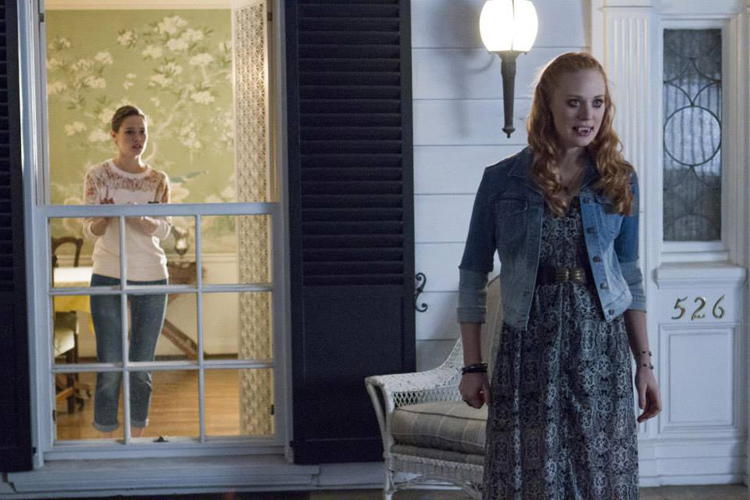
It all started almost six years ago in a provincial town with the French name Bon-Tam, among swamp cypresses, under the scorching sun of Louisiana. Already the first shots hinted that “real blood” is a real encyclopedia of American life, or rather, the life of the American South. Even the titers were invented on the basis of road signs from the southern states, not to mention the cutting of crocodiles, knocked down by opossomes, children at the gathering of the Kux-Clan and the Baptists who opened in ecstasy. In the south, the creator of the series Alan Ball, and Charlene Harris, the author of a series of novels, based on which “real blood” were taken, were born and raised. At first, the action almost did not go beyond the bon-tam, but eventually acquired a serious scope, turning the series into a large-scale canvas of dozens of characters. Distributions-ledges, typical southerners- D IXIE C Hick S , Wiccan, Religious fanatics, Sheriff-Rasists, two-faced politicians, drinking unemployed African American and White Trash , bikers, voodoo sorcerers, war veterans in Iraq - there is a place for everyone here. Here, the civil war is called the war for the independence of the south, families have been living in family houses for centuries, and everything new is perceived at best, in worst, in the worst - in bayonets.
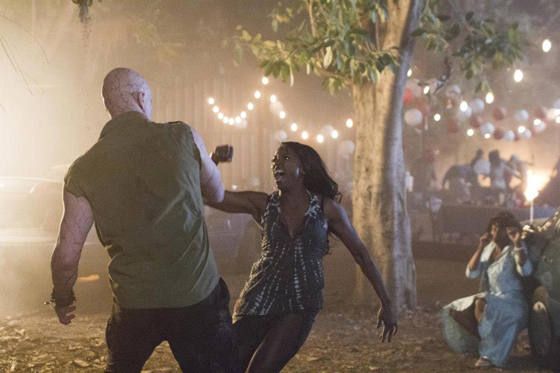
In this world, shown with fair sarcasm and black humor, but not without love, from the first series a different reality invades. After the invention of artificial blood, vampires decided to go out of the shadow, declaring their readiness to live peacefully side by side with people. True, in fact, not all “vampire -Americans” are ready to abandon old habits, and ordinary citizens are not too happy with new neighbors. It soon turns out that the case is not limited to vampires-among people there are werewolves and shutters-dopelgangers who are able to take the appearance of any living creature, and even elves (or fairies). For all the alienness and fantasticity, this reality in fact turns out to be flesh from the flesh, the blood of the blood of the same south, simply by another production of his usual life. For example, wolflaks are comfortable in the skin of bikers, and the fact that the family sinful by incest Hillbilli consists of a werewolf-ponter is no longer too surprised. The intolerance of strangers more than organically looks in the state, the history of which includes the “rule of blood drops” , segregation and apartheid. It doesn’t matter whether the skin is distinguished by another color, sexual orientation, body temperature, the length of the fangs or magical abilities - if it does not correspond to your views on life, it does not place here.
 © HBO
© HBOThe survival of mythological creatures in modern conditions is a rather popular plot in mass culture, it can be found both in the “American gods” of the Nile Gaiman and in the Fables comics series or the series “Once in a Fairy Tale” . In the south of the United States, guests from dark fairy tales settled for a long time. In the film “Interview with the Vampire” (1994) and Anne Rice of the same name, the action takes place, among other things, in New Orleans, there are also a werewolf-pinters from the film “People-Koshki” (1982); African deities feel at home in Florida, according to the "children of Anansy" Neil Gaiman. Vampire: The Masquarade - Bloodlines (2004) - almost the best computer game about vampires, in places very reminiscent of “Real Blood” - takes place in California, let it not be among the southern states, but also sunny. And in the role of the Universe of the "world of darkness", which served as the basis for this game, of course, there is a place for the new Orleans - "the city of the damned." In the state of Virginia, which once joined the Confederation, there is the city of Mistik Falls-the scene of the series "Vampire Diaries", to put it mildly, inferior to "Real Blood" both in the plot and in the level of playing actors, but also popular.
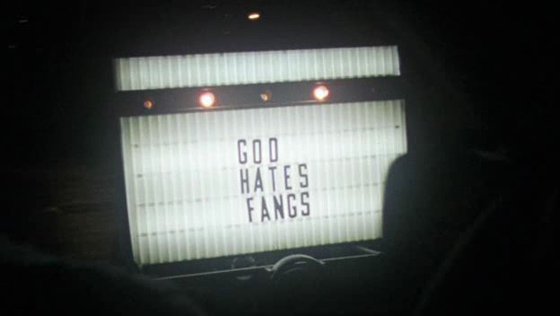
The struggle of vampires shown in the “real blood” for their right to otherness is often considered an allegory of the LGBT rights movement. You can’t argue with such an interpretation: the series, in essence, begins with a grandiose camming out, only in this case we are talking about camming out of coffins. Vampires are a minority, causing both fear and unhealthy curiosity, surrounded by myths, cursed by religious authorities. There are direct analogies: for example, the phrase “God hates fangs”, “God hats fangs” , beats the real slogan of the Baptists “The Lord hates the Pedicians”, “God Hates Fags” , differing only in one letter. Even the name of one of the types of fantastic creatures, elves or fairies - Fairy - can be used in conversational speech as a dismissive designation of homosexual. That's just to reduce the role of vampires in “real blood” to a carefully written allegory of the struggle for the rights of a minority means to impermissiblely simplify the plot of the series - the creator of the series, an open gay and the defender of the rights of homosexuals protested against such simplification. In the same way, the Lord of the Rings was considered an allegory of the Cold War, where the ring is a nuclear bomb, and Mordor is the Soviet Union.
 © HBO
© HBOIt is no coincidence that vampires have been holding their positions in mass (and not only mass) culture for more than a century. No matter how you spit from graphomania, Stephanie Mayer, the creator of the Twilight Romanes series, no matter how much information that publishers no longer go to the manuscripts with stories about vampires, there is nothing to get away from bloodsuckers. They will still return to the pages of novels and comics, to computer and board games. And, of course, on the screens - whether it be the surprisingly tasteless series “Dracula”, or “Scary fairy tales”, or “Byzantium” of Neil Jordan (2012), or “only lovers will survive” Jim Dzharmush (2013). They remain one of the most attractive mythological images, combining a whole bouquet of human phobias and desires.
The thirst for immortality, capable of becoming both a blessing and a curse, the frustration of the forcibly addressed vampires, the struggle with the beast inside, belonging to the world of the dead and the existence of living in the world, inhuman instincts and human emotions - in a word, a treasure for the screenwriter. The typology of bloodsuckers, which has grown over the past century, is also rich in variations: classic monsters-reforators, grotesque monsters from slasher, pathos heirs of Bela Lugoshi and Christopher Lee, cynical Goths in latex, suffering from romantic heroes and victims of circumstances. Another feature of the works about vampires is that each author can come up with his own mythology and his internal laws, the canons prevailing before that are easily violated and corresponded. “Real Blood” is also noted in this field - here vampires are reflected in the mirrors, are not afraid of crucifixions, holy water and garlic, but they are exposed to silver. The blood of vampires is a potent drug, which easily turns them from hunters into sacrifices. Alan Ball used the material he got to the fullest, but he was most attracted to the erotic background of the vampire’s image: according to him, “vampires are sex”.
 © HBO
© HBOIn “Real Blood”, even a person who has simply tried the blood of a vampire can dream of frank dreams, where he becomes an object of lust. Against this background, the theme connecting all the seasons of the series is the erotic awakening of the main character, the Soki Stekhouse. At first, this is a 25-year-old virgin, because of her telepathic abilities, who cannot enter into a serious relationship. The vampire she he met, Bill Compan is the first to be with whom the juices can relax, because he does not hear his thoughts. Having got rid of the inner barrier, she loses its virginity with him, and gradually throughout the series there is an awareness of the juices of her female power, attracting key characters to her. The metaphor of this attractiveness is an admixture of magic blood in her veins, which makes vampires crave juices with special greed. Another important character is Jessica, a lively embodiment of a teenage rebellion and disobedience, which turns into a vampire, being a virgin, and her virgin playing is restored after sex due to the vampires of regeneration ability.
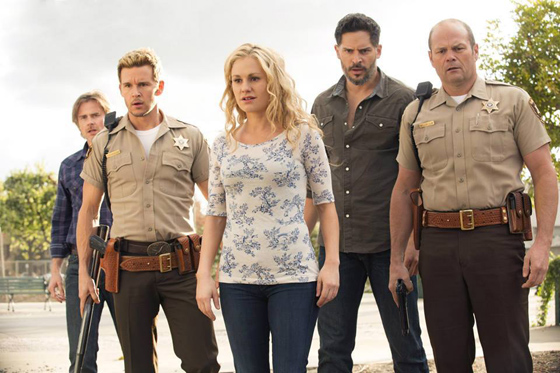
All this, of course, would not have delayed the audience and would have collapsed to pieces, if not for a strong script that does not divide the world into black and white. People and vampires do not just confront each other: in each of the camps a full of internal contradictions, many characters are able to prove themselves from an unexpected side or to completely change. A wonderful game of actors, which improvised: from a playful bike in a bar in the first series of the first season, to kiss the dead head on the lips in the sixth season, is of considerable importance. Alexander Skarsgord from the famous Swedish acting dynasty is so good in the role of vampire Eric Northman that the creators of the Hemlock Growle series invited the vampire of his younger brother Bill, the same Verzilu-Scandinav, who was inferior to his brother in charisma. The series went beyond the boundaries of the set - so, Anna Pakuin and Stephen Moyer, whose heroes are more than not indifferent to each other, began to meet in real life and got married. But even the good is boring, and by the sixth season the endless upholstery of the love adventures of the juices began to bore.
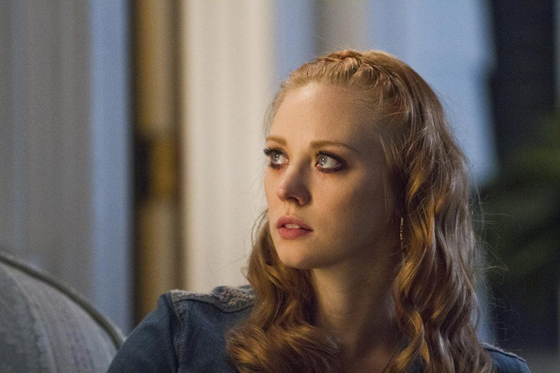 © HBO
© HBO“Real Blood” is known for the fact that each series ends not only in the midst, but also at the most intense moment - so that the viewer bites his elbows with impatience and counts the clock to the next episode, or even the season. Alas, the end of the first episode of the seventh season does not leave such a sensation, and this is the right sign that it was time for “real blood” to finally come to the real finale. So the name of the series promises that “Jesus will come soon,” which means that the last times are not far off. But you are unlikely to be bored. There are no answers to most of the old questions yet, the new ones only increased, and there are ten episodes full of flesh and blood to get to the final. At least in this “real blood” is true to its traditions, and in the first series in addition to massacre, horrors, zombies-vampires and moral torment there are a couple of scenes of sex-where without them. The idea of mutual tolerance and peaceful coexistence was constantly subjected to severe tests in the series, now it seems almost pure idealism. The world of “real blood” is more full of chaos, fear and hatred of another. But it is still impossible to survive in this madness alone, which means that, contrary to mutual hostility, you will have to find a common language.