
Translated material
For whom the river flows
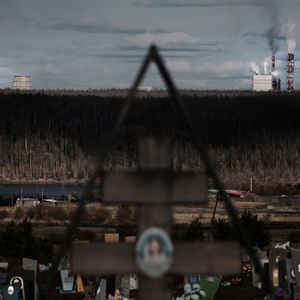
The photographer Plato Terentyev removed the project on the problem of creating the Boguchansky reservoir on the Angara River and the resettlement of residents from villages that fell into the flooding zone.
From the author
On October 15, 2012, despite the protests of the inhabitants of the Angara region, scientists, ecologists, journalists, the first units of the Boguchansky hydroelectric power station were commissioned.
The last Soviet long -building (the hydroelectric power station was built for 38 years) was launched without an assessment of the impact of the project on the environment, without creating a new federal protected area in the region, necessary to compensate for damage to nature, without proper cleaning of the bed of the future reservoir, with numerous scandals around the resettlement of residents of the flooded territory.
29 villages and villages of the Boguchansky reservoir fell into the flooding zone, flooding and coast of the Boguchansky reservoir (25 in the Krasnoyarsk Territory and 4 in the Irkutsk region). Their population was completely or partially resettled to neighboring cities. In 2008-2013 About 7,000 people were resettled.
The creation of the reservoir led to a complete restructuring of ecosystems in the flooding zone. We can say that as a result of the creation of the Boguchansky reservoir, the Northern Angara region has become an area of environmental disaster. Already today there are serious environmental changes, including changes in a geomagnetic environment.
If you collect the word "Angara" in the Internet, you will find out that four hydroelectric power stations have been launched on the river, two or three in the plans. One of the largest, most beautiful and clean rivers of our continent was turned into several reservoirs.
With what feeling do people exchange their home houses for apartments in urban new buildings? Do the lost territories become an important problem for immigrants? How does nature react to the appearance of a new dam? What remains of flooded villages? These are the main questions, the search for answers to which has become the goal of creating this photo station.
In addition to the problems associated with ecology and relocation, there are also moral and ethical. Many people are worried about the issue of self -determination after the loss of their small homeland, their special household culture.
For most people who have undergone resettlement, the construction of the hydroelectric power station turned out to be the collapse of their way of life. This affected both the economic and cultural sphere.
Locals call themselves Angars (those who were born and grew up on the banks of the Angara river) - such an archetype for people means, as a rule, special qualities of personality, a special attitude to nature, family and surrounding people.
The immigrants show the things that they transported from the villages to the cities, but they are very few: “What remains of my homeland is the transported dust of relatives is my main memory. And the conversation. We sometimes gather with fellow villages and speak our own language. But any meeting is only memories of the lost, about the departed people. ”
“For whom does the river flow? Oh, not for me ... ” - a line from a song that the village grandmothers sang, now resettled in cities. And indeed: the river is now flowing for them. Together with the shores, local traditions, songs and memory go under water, the historical heritage of Angarsk settlements is lost.
Filming took place in the cities of Ust-Ilimsk, Krasnoyarsk, Bratsk, Kodinsk, with E Lah Keul, Neton, New Nedokoku, Bolturino, Boguchana, the waters of the Boguchansky reservoir in 2012-2013 .
Additional materials, photographs, interviews of immigrants and data from a sociological survey are collected on the Sudbaboguchan.ru website, dedicated to the problem of creating a reservoir