
Translated material
Sanctions against "sanctions"
In the economy
 Sanctions against "sanctions"
June 25, 2014 Vladimir Volkov
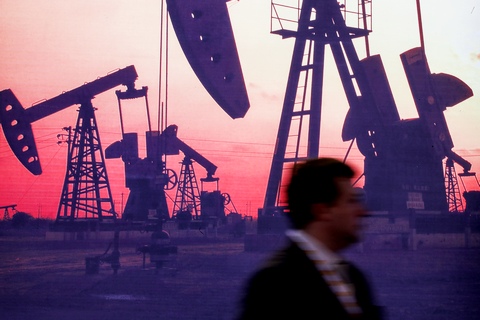
T tightness of Western sanctions can cut off Russia from modern hydrocarbons, having deprived the country of access to promising reserves worth ten trillion dollars. Russian oil and gas companies, despite the persuasion to engage in innovation seriously, do not seem to be going to solve this problem on their own. Apparently hoping that the greed of Western partners will again win the principles, and the “sanctions” will not become sanctions.
“Our task today is not only to drill holes in the ground, gas and oil to produce and sell them at an expensive price, our task is to diversify the economy and give it an innovative nature.” This quote from an interview with Vladimir Putin is Time magazine dated to December 2007, but now it sounds just fresh. Do not find? Unless for some time now in the speeches of the authorities the word “innovation”, read that you will not hear.
Meanwhile, without these, God forgive me, innovation nowhere. Especially the oil industry, which, taking into account the grandiose plans for the development of Eastern Siberia, the Arctic Shelf, and in the future, are also simply unable to do without the highest technologies. Those that endlessly remove the modern process of producing hydrocarbon raw materials from primitive “drilling holes”, no matter how surprised the president.
Last week, Bloomberg announced the cost of oil and gas reserves, which Russia will not be able to get to if modern technologies and equipment for drilling and production does not receive. Neither much we are talking about an amount of 8.2 trillion dollars.
Everything you need, noted in Bloomberg, has Western Mayaghors, such as Exxon Mobil, SHLUMBERGER, HALLIBURTON and BP. All necessary, if you continue this simple logical chain, the participants in the domestic oil and gas industry do not.
There is no need to be surprised here. The lack of zeal in Russian oil and gas companies seriously invested in innovative developments by the hunting of the new President Medvedev. The variety is memorable, which in this regard, he arranged for the heads of state -owned companies in January 2011. At a meeting of the Commission on Technological Development and Modernization. So six months did not have passed how the impressed Gazprom rolled out a program of innovative development until 2020, suggesting to pump in the innovation fabulous 2.7 trillion rubles. Everyone else seemed to be also not opposed.
And what?
The answer to this question was recently tried to find at the Gubkin Institute, analyzing the extent to what extent innovations are one of the strategic priorities of world oil and gas companies.
It turned out that with the relative indicators of expenses for this case, ours is even more or less of anything: in relation to Rosneph and Rosneft’s revenue costs to the revenue of the Exxon or Shell, although they spent about five times less on absolute values (the lag from Petro China is ten-fold).
The ratio of these expenses to the level of production is already much worse. But with what a real trouble is with, this is with the effectiveness of these costs. In the same 2011, the number of patents registered by the American American, significantly exceeded 7.5 thousand, Exxon - more than 6.5 thousand. In Gazprom - less than 250. The Rosneft and most domestic oil industry workers are generally visible on the schedule.
I don’t know how you are, but it’s hard for me to imagine that over the past three years there has been a fracture. First of all, in the minds of the leaders of the largest state -owned companies. If you want, judge by Igor Sechin’s performance at the World Oil Congress last week. Reasonably noting that the sanctions can be an instrument of competition, the head of Rosneft, among other things, expressed the opinion that the energy should be brought out of the brackets of any sanctions - due to the strategic importance of this industry for the entire world economy. According to the same logic, according to Sechin, any restrictions on access to critically important energy technologies “in order to avoid monopolization and unreasonable restriction of the possibilities” should be removed.
For my taste, it even sounds too shameless.
But be that as it may, the likelihood that the opinion of the head of Rosneft is prevailing is great. The calculation here, I think, is simple: Russian resources are too tidbit for Western companies. They will put on their own governments properly, and the “sanctions” will turn into sanctions. For example, the share in Rosneft provides a third of its total production British BP. Therefore, its leader Robert Dudley is actively against sanctions and really believes in the prospects of Russian shale.
So Rosneft, Gazprom and others without Western technologies, most likely will not remain and will be able to continue the division of the most fat pieces on the rights of strategic state -owned companies. And this, of course, is good - the technological Autarchy has not brought anyone to good. The bad news is that Russia, apparently, is again satisfied with the notorious drilling of holes, loses the chance to launch an innovative process in the most important of the industries that promises a multiplier effect that is not comparable to any Martian programs. Along the way - to restore part of their economic sovereignty, which has long been given to the regionality and arbitrariness of the most dubious Western partners.
Photo by ITAR-TASS/ Sergey Savostyanov