
Translated material
With Tsarev at the head
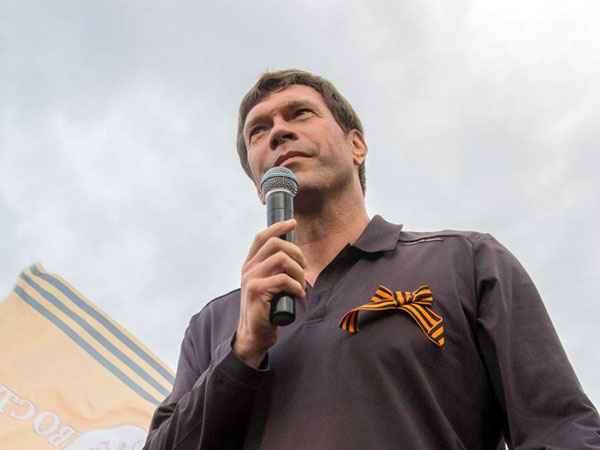
At the first joint meeting of the Parliament of the Union of People's Republics-the association of the Donetsk and Lugansk People's Republics-the leader of the legislative body, the leader of the Southeast Movement Oleg Tsarev was elected. His candidacy was the only one.
A little earlier, deputies approved the Constitution of the Union of People's Republics, thus securing the friendly relations of two separatist movements. The combined parliament includes thirty representatives from both people's republics, however, only 49 people were attended by the meeting - 28 deputies from the Lugansk region and 21 from Donetsk.
Thus, Oleg Tsarev, who until recently was the deputy head of the faction of the ruling party of regions in the Verkhovna Rada, became one of the formal leaders of the separatists.
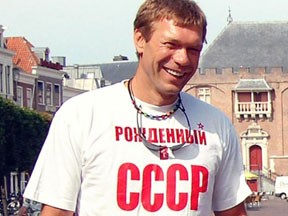
Oleg Tsarev was born from the Dnipropetrovsk region, in 1992 he graduated from the Moscow Engineering and Technical Institute and returned to his homeland, where he was engaged in various businesses.
In 2002, Tsarev first elected to the Verkhovna Rada and since then for more than ten years he was a member of the Ukrainian parliament, getting there at first through the elections in a single -mandate district, and then according to the lists of the Party of Regions.
In 2004, Oleg Tsarev markedly strengthened his influence after the loss of Viktor Yanukovych in the presidential election. The fact is that he turned out to be almost the only noticeable supporter of the ex-Prime Minister in the region. As a result, a person who in 2004 did not even become a confidant of presidential candidate, already in 2005 headed the Dnipropetrovsk regional organization of the Party of Regions.
From the victory of Yanukovych in the 2010 elections, Tsarev, on the contrary, lost. The freshly elected president appointed Alexander Vilkul, the governor of the Dnipropetrovsk region, who, according to many observers, was Rinat Akhmetov’s “man”. Vilkula was not going to reckon with the interests of Tsarev and himself became the head of the regional branch of the ruling party.
As a result, the Tsarev was “lowered” in the list of PR to 114 positions in the early parliamentary elections and he was forced to be elected to the parliament in a single -mandate district - and this was not so simple. From his district, according to which he went to parliament in 2002, cut several old areas and included several new ones - so the candidate had to conduct a campaign among people who were not familiar with him earlier. However, he still won the victory and went to the Rada.
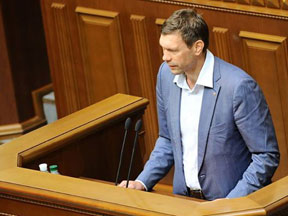
In 2011, Tsarev began to actively work with the "Russophile" theme. He denounced the “nationalists-Bandera” during the discussion of the language law, and was also elected co-chairman of the Anti-Fascist Forum of Ukraine. In the Verkhovna Rada, he found himself one of the most “militant” deputies - Tsarev constantly participated in fights with the opposition.
Tsarev, like almost all his one -partyists, reacted sharply to the beginning of the Euromaidan, he stated that the speeches were provoked by the special services of European states and the United States. On December 9, Tsarev sent an official request to the Security Service of Ukraine and the Ministry of Foreign Affairs with a request to prevent the entry into the country of “organizers and political technologists of the Euromaidan” - he ran into those, in addition to others, Stanislav Belkovsky, Gleb Pavlovsky and Mikhail Saakashvili.
In February, when the situation in Kyiv was heated to the limit, Oleg Tsarev insisted on using force against the protesters. After the start of the negotiations of President Viktor Yanukovych with the opposition, he stated that he would not talk “with terrorists, bandits and extremists”.
After the former opposition formed the ruling coalition in the Rada, Tsarev did not adjoin it - although the noticeable part of his one -partyists went along this path, he said that "to cooperate with the current illegitimate authority is criminal."
At the end of March, Oleg Tsarev filed documents to the Ukrainian CEC to participate in the presidential election. He decided not to nominate from the Party of Regions - at his official congress he supported Mikhail Dobkin’s candidacy, and Tsareva excluded from her ranks.
However, the stay in Kyiv already became difficult for Oleg Tsarev - his pro -Russian position looked strange in the new conditions. On April 15, at the exit from the ICTV studio, where the shooting of the “Freedom of Speech” took place, representatives of “Avtomaydan” attacked the Tsarev. According to Tsarev himself, then the members of the “Right Sector” saved him, for which he thanked them.
On April 28, Tsarev arrived at the head of the participants of his own “Southeast” movement to Slavyansk, who was then under the control of the separatists. The next day, April 29, Tsarev announced the withdrawal of his candidacy, refusing to participate in the elections "against the backdrop of a citizen of war." According to the politician, the new leadership of the country unleashed the war against their own people: “The punishers storm the Slavyansk armored personnel carriers and aviation from 4 in the morning. As if the Nazis of the 1941 model is copied. ”
In early May, Tsarev made supporting a referendum on the independence of the Donetsk and Lugansk regions, and also spoke out for the creation of a new state, Novorossia, which all regions of Ukraine from Odessa to Kharkov will be able to enter. By that time, Tsarev was long for a long time outside the reach of Ukrainian law enforcement agencies and could calmly make statements that contradicted the Criminal Code of Ukraine.
Meanwhile, Tsarev is known not only as a Russophilian policy. In Dnepropetrovsk, he has a certain number of enterprises, whose fate is now in question. According to the press, Tsarev controls several bakery factories, as well as a paper factory. At the end of May, Tsarev already said that his paper factory was “captured” unknown. What is the fate of the rest of the companies controlled, it is still unknown - it is quite difficult to imagine calmly existing companies that belong to one of the separatists in the neighboring region.