
Translated material
Non -cable insulation
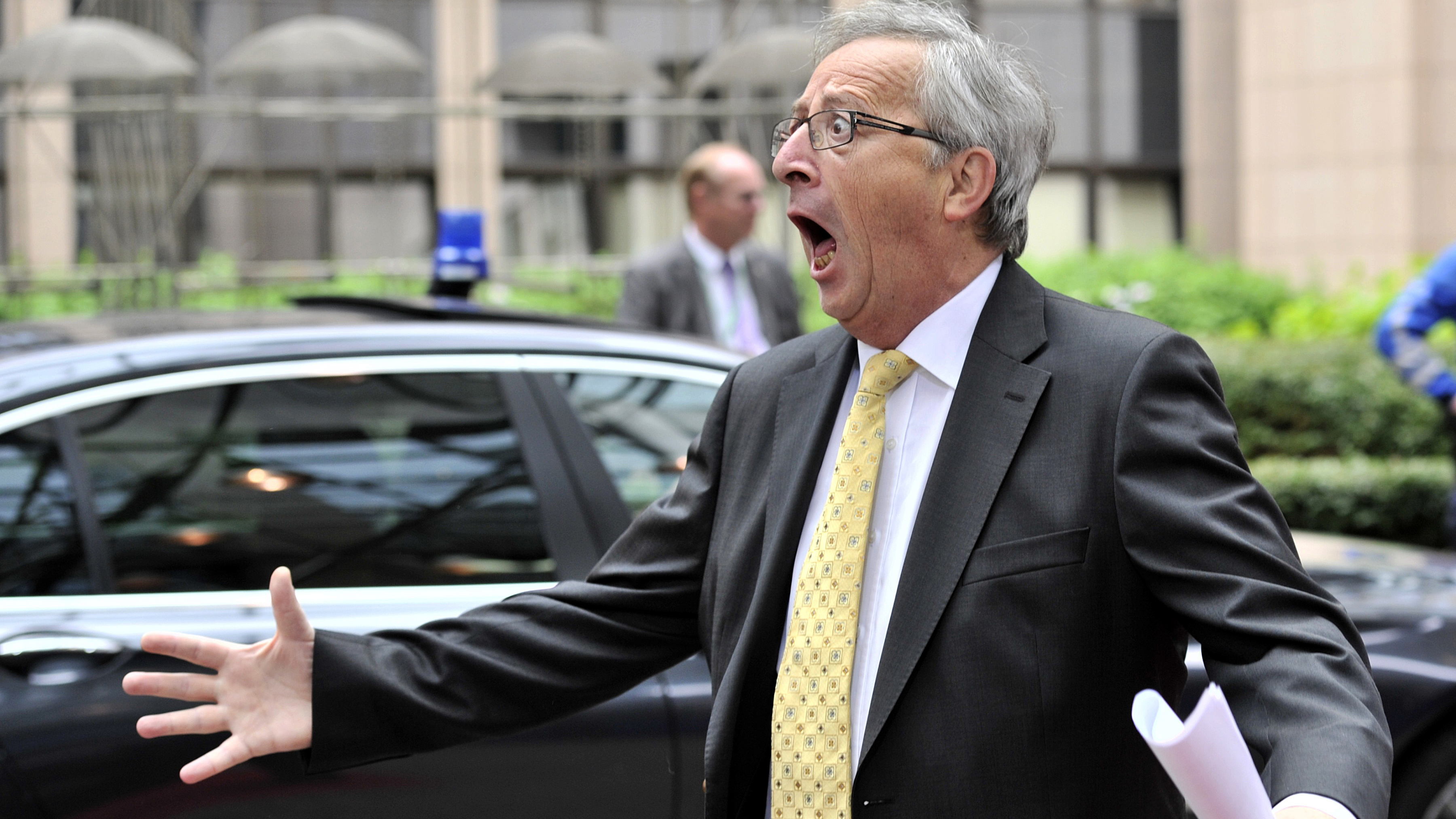
The British Prime Minister loses the struggle against the appointment of Jean-Claude Junker as the head of the European Commission
"Football is such a game in which 22 people play for 90 minutes, and Germany wins at the end." These words of the famous British striker Gary Lineker are now recalled in Britain, not only in connection with the World Cup in Brazil. "Exactly the same principles relate to politics in the European Union. 28 states pursue their national interests, but in the end we, Germans, always achieve our own."
Such words were invested by the Columonist of The Telegraph, Ian Martin in the mouth of Angel Merkel, imagining her dialogue with the British Prime Minister David Cameron about the candidacy of the new head of the European Commission. The vast majority of commentators agree that at the Summit of the European Union, which opens on Thursday evening in a solemn dinner in Belgian IPRA, Britain will have to drink the same bitter bowl as the English football team in the fields of Brazil.
The desperate attempt by David Cameron to prevent European leaders approve the candidacy of the former Prime Minister of Luxembourg Jean-Claude Junker to the post of new head of the European Commission will most likely fail. This was the on the eve of the summit on the newspaper The Guardian a high -ranking German representative: "As far as I understand, Britain insists on a vote. I believe that Mr. Junker's candidacy will win with a very great advantage."
Cameron’s allies in the struggle against the junker - in any case, those who are ready to support him publicly - there really are practically no left among the leaders of the EU countries. And still, the possible appointment of a junker contrary to the opinion of London will become a sensation. “Not a single head of the European Commission was previously appointed to the public and fundamental objections of a large state - a member of the EU, such as Britain,” said the Columnist The Guardian Ian Trainor . But the very fact is that the candidacy of the new head of the European Commission will be determined not by consensus, as usual, but by voting (if Cameron does not abandon his demand at the last minute), the depth of the split that arose in the EU emphasizes. And the point here is by no means in the candidacy of the junker. No matter how important the position of the head of the European Commission is - this is just one of the "gears" of a huge European mechanism. The problem is that this mechanism itself does not suit many in the British political elite and among voters.
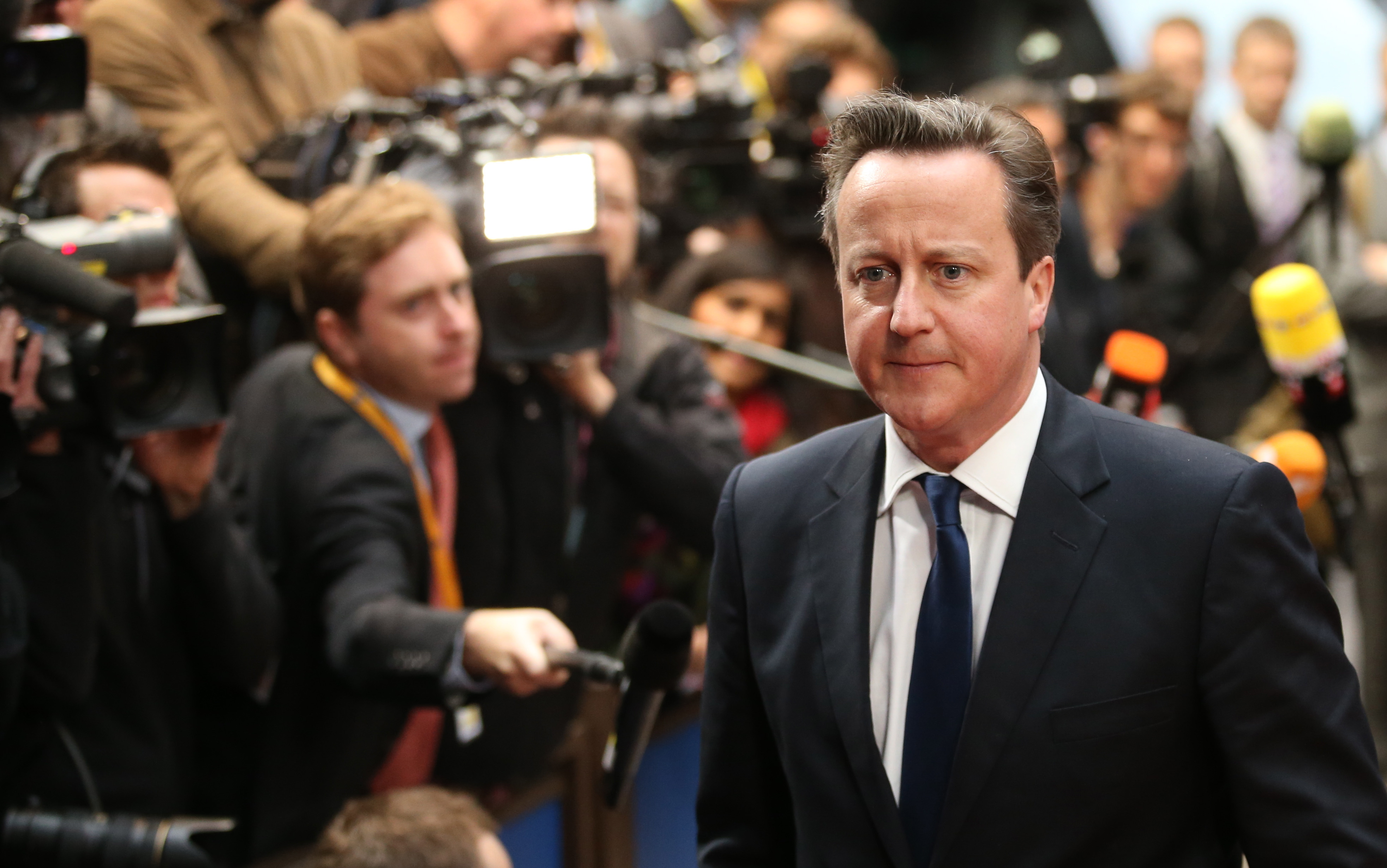
The solution of why Cameron put so much on the map of the junker on the map, should be sought in many ways in British domestic politics - for which, however, the topic of the relationship between London and Brussels, that is, the EU leading structures, has become one of the most fundamental in recent years. Cameron’s government, who came to power in the wake of disappointment, including the place of Britain in the EU, from the very beginning was at a crossroads. It realized the impossibility of both the country's exit from the European Union and the existence in its previous conditions, which would provide, for example, London’s participation in the rescue programs of Greece and other debtor countries, as well as the “transparency” of borders for citizens of the new EU countries, including Romania and Bulgaria. Cameron himself was at the crossroads. The EU concessions will not understand part of the voters who gravitate to the Independence Party of the United Kingdom (UKIP), but in the elections to the House of Commons, it still votes for conservatives. The course of exit from the EU will not approve the moderate part of the conservative party, and even business circles.
As a result, Cameron chose the Medic for example-he proposed to hold a referendum on the membership of Britain in the EU in the case of conservatives in the 2015 elections in 2015, but even before the vote, it would have to reach the redistribution of authority with the European Union, which would prevent Britain’s participation in any “federal” project, especially in the banking and financial sector. If such an agreement is reached, Cameron himself and most conservatives would certainly support the country's membership in the EU. Recent surveys show that voters are also of the same opinion - if, while maintaining the current EU membership conditions, the relative majority (48 percent versus 37) supports the country's exit from the European Union, then if these conditions are changed in a favorable side for London, more than half of the British would already support the preservation of the status of the EU member.
Cameron formulated his program in the machine-manifesto published in The Telegraph newspaper at the beginning of the campaign in the European Parliament-March 15.
Here is his vision of Europe of the future: “The transfer of powers from Brussels, and not to Brussels, as is usually the case. The opportunity for national parliaments to cooperate among themselves and block unwanted European norms ... The police and the judicial system, free from the unnecessary influence of European institutions. Free movement of people in order to find work rather than social benefits.”
Cameron's main complaint is to the concept of "more and more close union", a supporter of which is just a junker. This concept is laid down in the Lisbon agreement, but, according to Cameron, is not suitable for Britain: "Perhaps it is suitable for some countries, but not for us, and we must guarantee that this concept does not apply to us."
Cameron completes the article as a worthy heir to Margaret Thatcher with her famous No, No, No : “There is no more close alliance. There is no constant transfer of powers to Brussels. There is no unnecessary influence of the EU on our affairs. And, of course, there is no euro, the campaigns of the salvation of the Eurozone debtors or, for example, in the European army.” There is no refusal to participate in the alleged banking and credit union, as well as the Veto to join the European Union of new members, if the requirements are not tightened.
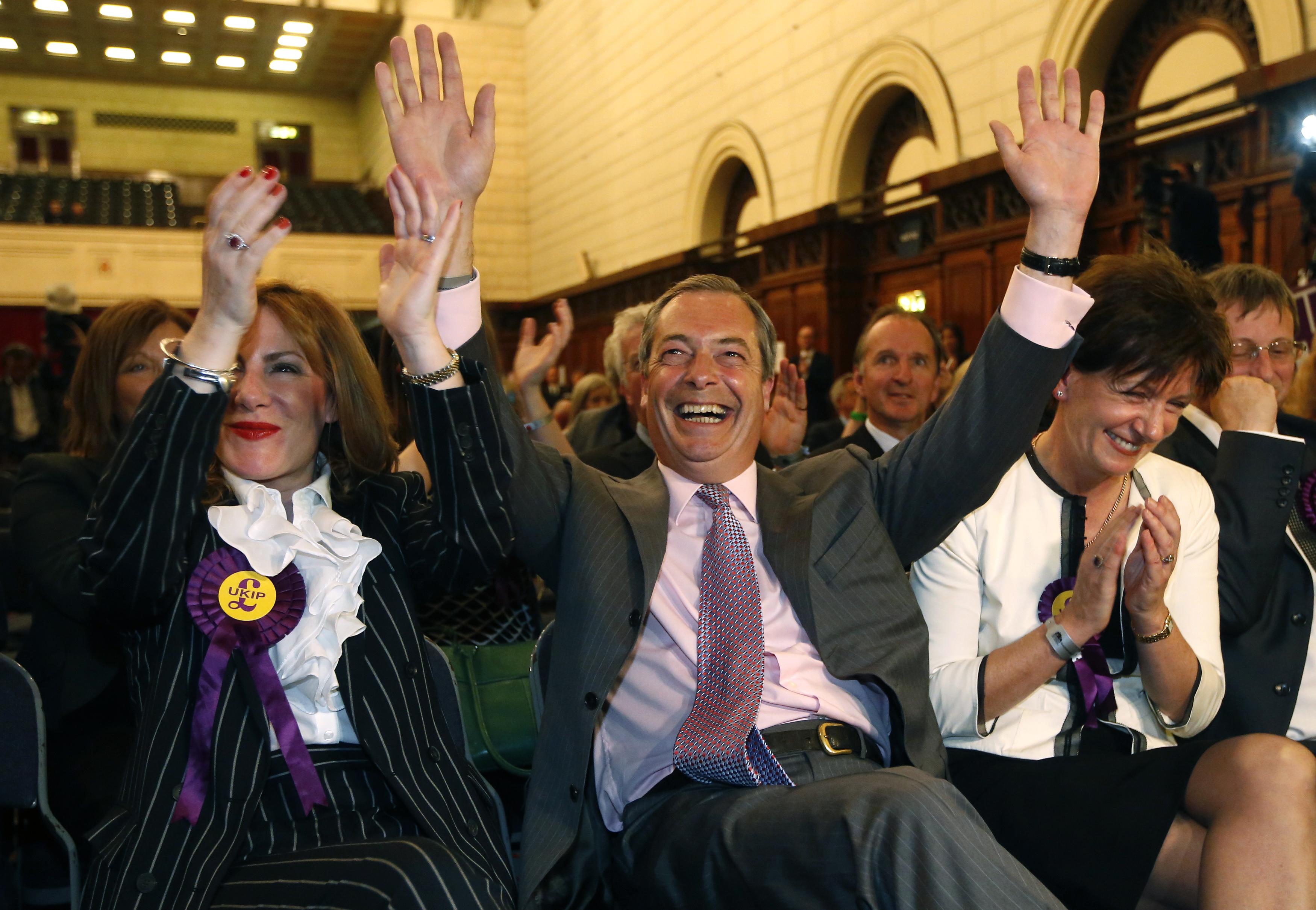
The results of the elections in the European Parliament on May 25, despite the relative failure of the conservatives (they took third place - as, however, was predicted), it would seem, strengthened Cameron's negotiation positions. The victory of UKIP clearly demonstrated that British voters want changes in relations with the EU. The success of Euroskeptic parties in other countries would also have to tighten European leaders to abandon the course of "more and more close alliance." However, most EU leaders decided to take into account the results of the elections in the European Parliament in a completely different way than Cameron imagined.
According to the Lisbon Treaty, the heads of European states and governments, when making a decision, must "keep in mind" elections in the European Parliament. Jean-Claude Junker during the election campaign was nominated by the European People’s Party, uniting Christian democrats and other right-centers (including the CDS Angels Merkel), as a candidate for the post of head of the European Commission. Other political forces nominated the same informal candidates. Voting in elections for this or that force did not at all suggest that the voter automatically casts his vote for her candidate in the head of the European Commission - there is no such norm in the Lisbon Treaty or other EU documents. However, it was precisely to the “will of voters”, according to which the European People’s Party defeated with a slight advantage, now Junker himself and those who insist on his appointment refer.
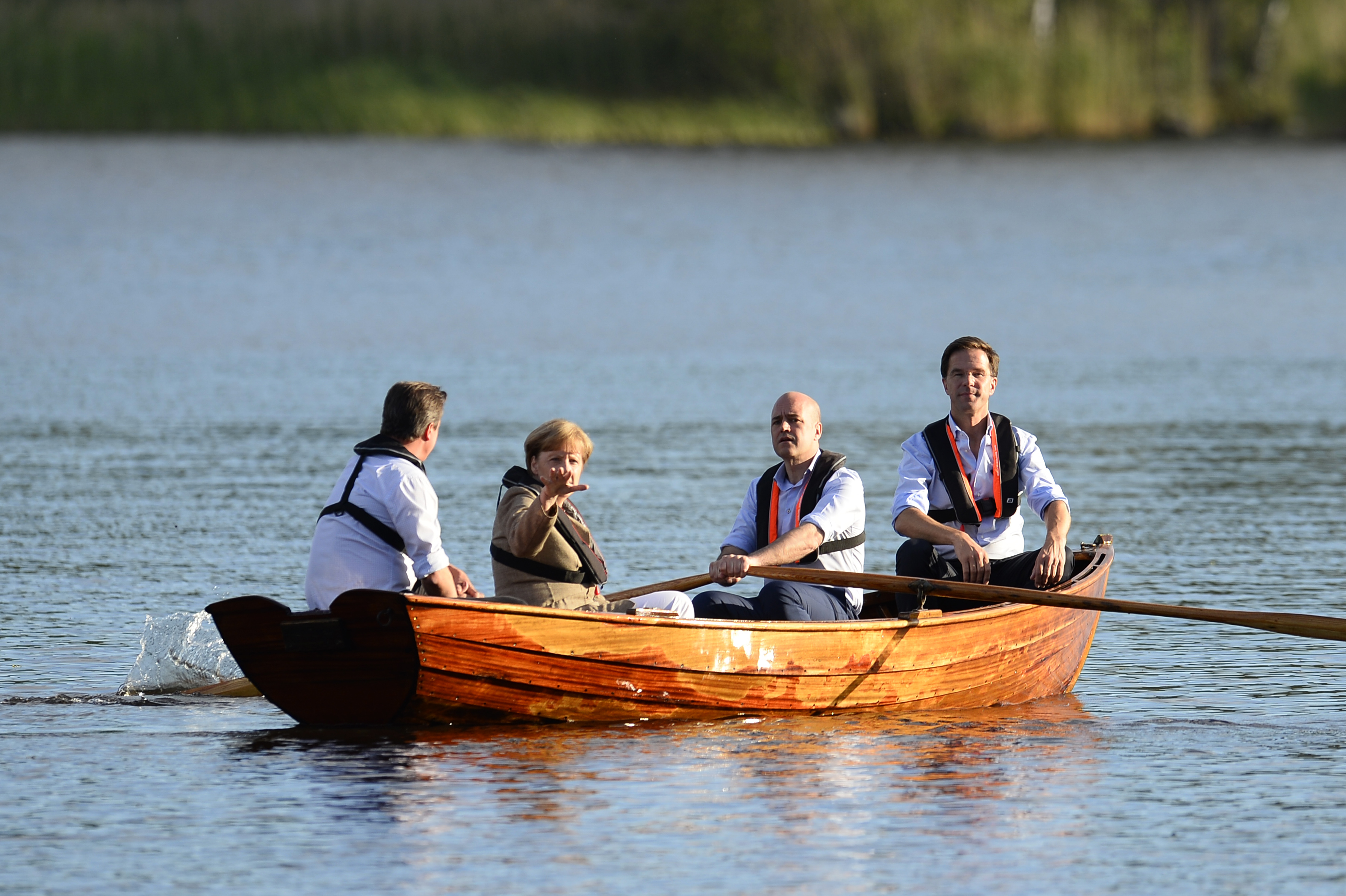
David Cameron from the very beginning opposed the candidacy of Junker. And at first it seemed that he had a success for success : influential representatives of the levocentrists (Italian Prime Minister Matteo Renzi and France President Hollande) made objections, and Angela Merkel took a wait -and -see position. Moreover, as one of the ministers of the British government, Yan Duncan Smith , "Germany and Italy, in private, assured Cameron that they support his struggle for the fact that Jean-Claude Junker did not become the head of the European Commission."
However, Junker himself was always sure of success.
I am More Confident than Ever that I Will Be the Next European Commission President.
-Jean-Claude JunCker (@junckeereu) June 4, 2014And soon his confidence was confirmed by leading European leaders, including Angela Merkel. Perhaps the decisive fracture occurred last week, when after a meeting in Paris, eight leaders of European countries representing the levocentric parties agreed to support the Junker, chaired by President Olland. The meeting concluded a classic transaction: "Social Democrats admit that the junker should be the head of the European Commission, but we expect other posts to be given to social democrats and socialists," said Germany Vice-Chancellor Zigmar Gabriel. And the Italian Prime Minister Renzi added that he expects a signal from the junker to weakening the policy of strict savings in the eurozone. As a result, a wide front was formed in the European Council in support of the junker, which practically excludes Cameron's success in case of open voting. “The candidacy of the junker is not discussed. If necessary, he will support the qualified majority. We cannot allow one person to dictate his will to us,” said Austria Chancellor Werner Faymann.
In response, the British prime minister sharply criticized the logic of his colleagues, who were referring to the election results in the European Parliament as the main reason for the support of the junker. In this, he was supported by many British political commentators, for example, Ian Martin : "I think that all European voters who knew that they were voting for the junkers could fit in the Munich beer, and there would still be a lot of space near the bar." The Minister Jan Duncan Smith spoke even more sharply: in his opinion, the European elites, on the contrary, spat on the opinion of voters who supported the changes: "We know how you voted, but you were wrong, and we will show you how wrong, and we will continue in the same spirit, as if nothing had happened."
But Cameron’s main objections are not formal, but fundamental. The British Prime Minister outlined his position in an article in The Guardia N June 13. "The position of Britain is very clear: we want the EU to succeed ... For this we need strong leadership - people should become the leaders who are ready to listen to the fears of voters and fight the problems that are facing Europe."
And it is precisely such a person, according to Cameron, Jean-Claude Junker is not. Firstly, because the procedure for his election contrary to the will of one of the largest EU countries will undermine trust in the European Commission as an independent and impartial authority of dispute resolution. Secondly, this is the most important thing-because Junker, according to Cameron, embodies all those negative features of the European Union, because of which, in fact, most British demands to reconsider the country's membership conditions in the EU.
First of all, the junker is a pronounced European federalist, a supporter of the same "more and more close union." Secondly, it is difficult to find a person who would be a more integral embodiment of the Brussels bureaucracy, the protest against which has become the main political content of elections in the European Parliament. Junker spent more than a dozen years in Brussels corridors, and in recent years, as the head of the Eurogroup, he had a key influence on the EU policy (of course, much more than in the role of the Prime Minister of Luxembourg)-the influence, according to Cameron, the detrimental.
But the most important thing is not even the views and experience of the junker, but the fact that Cameron believes with this person, Britain will be very difficult to agree on something. “If the junker is appointed,” writes Ian Martin in The Telegraph , “residents of other European countries should not be surprised if after some time the British decides that they have no alternative to leaving the EU.”
This position is supported by many other British political commentators (not to mention the "boulevard" press, which arranged a whole campaign against a junker, sometimes riding the grass). Endry Ronnley in The Observer remembered the junker of his old bureaucratic sins, for example, his disrespectful attitude to the referendum in France about the European Constitution: “If the answer is“ yes ”, we will say“ forward! ”, And if we say,“ we will continue ”.“ In current difficult times, smart and convincing reformers and vizioners are needed ... but this is definitely not Jean-Claude Junker ... Everyone with whom I spoke about him is called the former prime minister of Luxembourg "a perfect Brussels politician"-but what is previously sounding like a compliment is now more like a curse. "Finally, Ronnley notes that if Junker was not an adversary of a new agreement with Britain, then after Cameron openly opposed him, it will definitely be against him.
It is necessary, however, to pay tribute to the junker. He well understood what he was going on, and in his election program he paid much attention to the solution of the British issue, including him among his five main priorities as the head of the European Commission . The junker designated his goal as "working on achieving an honest agreement with Britain - such an agreement that recognizes the specifics of Britain in the EU, while not hindering the further integration of the Eurozone."
Further, Junker called the "Red Lines" in possible negotiations with Cameron - "The unity of the common market and four freedoms and the possibility of greater Europeanization in the eurozone, whose members will soon become 19 EU states." Obviously, the experience of communicating Cameron with the Brussels bureaucrats and Junker personally made the British prime minister doubt the success of these negotiations - so he decided to burn bridges.
On the eve of the summit, Jean-Claude Junker expressed cautious optimism , not forgetting to tease the British prime minister: "If common sense is prevailing, I will be nominated for the end of the week. But since common sense is distributed unevenly, you need to wait." Surrounded by Cameron, they confirmed that he did not refuse to fight and would insist on open discussion and vote of the EU leaders on the candidacy of the junker.
What will happen in the case of a probable lesion of Cameron? And what should Britain do? Many believe that the "middle path", which Cameron put on, is unlikely to become possible after the defeat at the summit. The British prime minister will either have to abandon great ambitions and ask voters to support the EU, or make a referendum on the fate of the European Union with the main slogan of the campaign before elections to the House of Commons in 2015. In this case, conservatives will have good chances of victory - but this means that they will have to take responsibility for the possible exit of the country from the EU.
The German analyst Wolfgang Münshau considers a similar outcome more likely: “Britain’s divorce with the EU began more than 20 years ago by the exit from the general currency project. The EU will not include countries that have not entered the eurozone, with absolutely different interests. The so -called Brexit (Britain’s exit from the words“ Britain ”and EXIT) is no longer a question“ yes ”or“ no ”... The question remains only what legal form will have a "branch of" Britain from the EU. "
Jeremy Hunt in the podcast in The Spectator claims that it is better to be isolated than to be wrong: “I think that Europeans will respect a person who is telling the truth-that Europe needs reforms ... And it is unacceptable to appoint a person who does not want reforms. I am proud that we have a prime minister, even if it is very difficult, even if it leads to it, even if it leads to this insulation ".
However, there are voices that call not to dramatize the impending defeat. John Bruton in The Guardian : "Cameron has the right to initiate a vote on the candidate of a junker, as European agreements prescribe. This is not a tragedy. But when the voting results are summed up, Cameron should start working with a junker."
In any case, it is obvious that European affairs will become the main content of the British general elections in 2015. Unless, of course, any new crisis bursts out, the overcoming of which will require the rally of forces from all over Europe-and supporters of "more and more close union" and Euro-digitics.