
Translated material
Memory of Khoras Silver
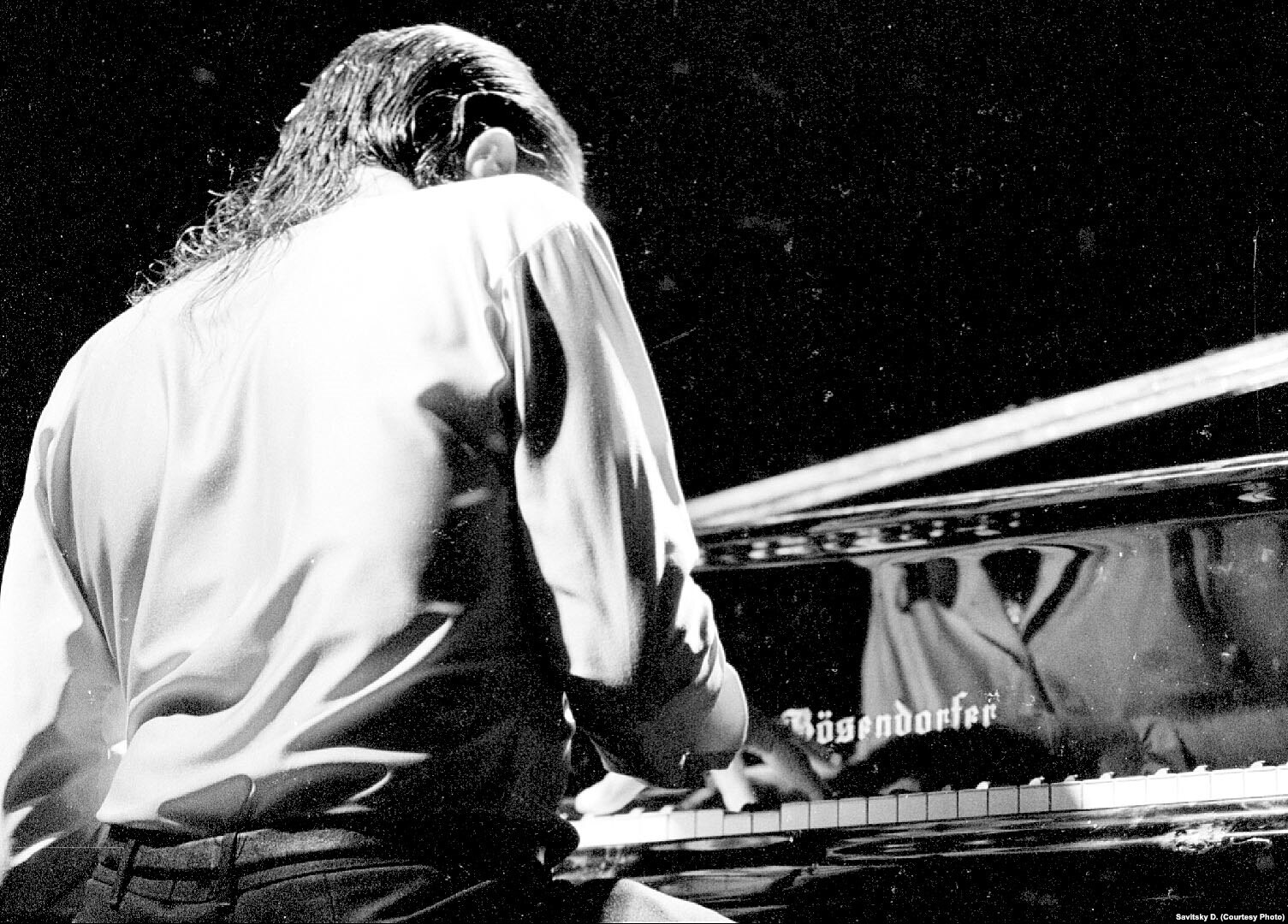
The ocean was visible from the window of his house to Malibu. Quiet. The Pacific Ocean and nothing else. There was a piano near the window. When he played, he looked at the ocean. When he did not play, he looked at the ocean. The ocean was outside and was inside. From now on - he himself is part of the ocean. Much Love, Horace ....
“Thousands of brilliant performers, musicians and composers make up the richest heritage of world music. But at the same time, each new generation gives the world a relatively limited number of individuals in which there is something so unique, so personal and instantly recognizable that when you hear their music, you not only know whose it is, but you have the feeling that you know this person. Most of them will always live in our memory. The author of this book belongs to this group of privileges, the hero of this book is Horace Silver. ”
Joe was twisted, the preface to the autobiography of Horave Silver “Let's Get to the Nitty Gritty”, “We will do the details ...”
Wherever you are and whatever you listen to us, welcome to short waves of “freedom” to the Jazz Time club. You can listen to us from the site of the radio station in direct relay or in the podcast.
Today's release of Jazz Time is dedicated to the memory of a pianist and composer, who had died on June 18, the founder, together with Art Blake, “Bulletin of Jazz”, leader of Hard-Bopa and Fanka-Horasu, Martin Tavares Silver ... Khoras was 85 years old.
Horace Silver - Señor Blue S - 6:59 (Horace Silver - 6 Pieces of Silver - Blue Note)
“Señor Blues”, “Mr. Blues” - Khoras Silver. His quintet recorded by Rudy Van Helder on November 10, 1956, Mono on LP, in Hakensak. In the two thousandth year, Rudy Van performed this recording, and she appeared on CD: “Six Coins of Silver” or “Six Silver plays”. The quintet entered: Donald Bird - a pipe; Hank Moucul-tenor Saxophone; Silver - piano; Dag Watkins - doublebas and Louis Heiz - drums. Señor Blues is one of Silver's most famous compositions.
Khoras’s father, Portuguese blood, left the islands of the Green Cape, the island of Mayo, and the sea, as Silver did not know, reached America. Most likely on a merchant ship. He was young, settled first in Massachusetts, moved to New York and, finally, donkey in Norouralka, Connecticut, where he met Silver's mother-Gertrudu. She was Irish and African American blood. Many Hollywood stars lived in Connecticut: Batt Davis, Boris Carloff, Patsy Kelly and Elleri Quin. Silver's mother was a housewife who spun north from the Sun and California, stars.
Father, John Tavers, was the fourth native of the islands of the Green Cape in Noroule and, when he met friends, they spoke Portuguese and recalled the music of the islands. Silver's father, apparently on the guitar, played folk songs with the hairdresser Nick Santos and Horaz remembered the motives and rhythms of Kaiso and Morne, which in the late era began to come in in his compositions.
In his memoirs, Horaz is not stingy with the details when the conversation is about parents, but his attention is more drawn to his half -brother, who was a very adult guy, so soon the nephews appeared at Khoras.
Horace Silver - Song for My Father - 7:18 (Horace Silver - Song for My Father - Blue Note)
“Song for My Father”, “Song for my father” - Khoras Silver. The rhythm of warm seas permeates this musical initiation. Carmel Jones played on the pipe; Joe Henderson-on tenor Saxes; Silver - piano; Teddy Smis - double bass and Roger Humphris - drums.
Horace Silver Vinille on Blue Note was called “Cantiga Para Meu Pai”, “Song for my father”. On the cover of the disk, dad Silver himself in a hat and with a cigar in his teeth. The disc was recorded in October 1963 after the tour of Silver in Brazil. Almost ten years before this entry, in 1954, Horara Silver, tenor Saxophonist Hank Muuchel and smuggler Dag Watkins in the Minton's Playhouse club recorded LP along with the trumpeter Kenny Dorem and the drummer art Blake. The disk came out under the name "Horara Silver and the messengers of jazz." A year later, Silver handed over the leadership of Combo Blake and left. Why? Answer after a reminder:
You listen to the weekly and booty “jazz time” on the short waves of “Freedom”, through satellites Hotbird and Asiasat-7, as well as from our website www.svoboda.org . The microphone in Lutetia has your ds.
Horace Silver - Creepin 'in - 7:28 (Horace Silver and the Jazz Messengers - Blue Note)
“Creepin 'in”, “creeping” - usually they say about mistakes, reservations, typos ... This can also be a hint of a musical introduction. Someone on tiptoe. Kenny Dorem - pipe; Hank Moucul-tenor Saxophone; Horara Silver - piano; Dag Watkins - double bass and art Blake - drums. December 13, 1954, the recording studio Rudy van Gelder.
First about the name of the combo. Since 1947, Art Blake has used for his orchestras, and in the first there were seventeen musicians, the expression "seventeen jazz messengers." The number 17 disappeared, and the "messengers" remained. They remained after the departure of Khoras. The quintet was simply called "Art Blakes and Jazz's Herald.
“I have to say,” writes Horara Silver in his autobiography, “that“ Jazz Messengers ”were the most magnificent and grandiose combo in which I have ever played, and they know, I played with the greatest jazzmen. Sometimes in the evenings we played so cool (he writes “densely” - ds), it was so incredible that it seemed that we were swimming in space. And I never signed up with any of the musicians, since with the "messengers of jazz": in such absolute harmony. " CC.
This is the end of the chapter about working with "messengers". It begins like this:
“A year and a half after I started to speak and tour with Jazz Messengers, I left the orchestra. I left not because I did not like the way we played or because of some friction in the quintet. I left because everyone was wrapped as frantic. The smuggler of Dag Watkins and I were the only musicians who had nothing to do with drugs. I was horrified by the fact that one day the cops would catch one of ours and the entire orchestra would rattle in jail. Hearing was already rolling from one lamp to another that “Jazz Messengers” were addicts. ” CC
A few details a little later, but now the ending of the first quote:
“I do not think that these cats played so brilliantly because they were chronic drug addicts. Drugs, just an obstacle, an obstacle. They played like gods, despite all these obstacles ... ” - Horara Silver, the end of the chapter.
Jazz Messengers - Mayreh - 6:19 (Art Blakey Quintet - A Night at Birdland - Blue Note)
"Mayreh" is the play of Khoras Silver. "Jazz Bulletin" at the Birdland club. Clifford Brown - pipe; Lou Donaldson is a quite Parker plastic sound alt-saxophone; Horara Silver - piano; Kurly Russell - double bass and art Blake - leader and drums. February 21, 1954, New York.
I am not the following chronology of ordinary events: childhood, adolescence, youth. There were many programs about Silver on Freedom and, including those in which the conversation was about how he became the godfather of “49”. Today I give little -known episodes from the life of a pianist and composer. Little -known, but key.
“I did not smoke, did not drink and never touched drugs. Of course, I tried. I started smoking at sixteen, but nineteen from tobacco began to feel sick. I changed the brand of cigarettes. No difference. I decided that this sign was tied. I could never get used to alcohol. He simply could not hold in my stomach. This was the second sign from above. A little wine or beer - where it did not go. But the half -grinder is strong - and I was just sick, like the last dog. I tried to smoke the grass, but my head began such chaos that in the end I decided that this was not for me. Once, at the end of dinner with friends, I smoked a jamb, and then we climbed the stage and began to tear me like a kitten. Everyone thought I was on the heroine. This was the last time I tempted fate. From that day, I have never tried to try anything stronger than mineral water ... "
Horace Silver, autobiography, chapter - "My mistress was music."
In relay from our website www.svoboda.org or in the podcast you listen to the weekly “jazz time” dedicated today to our godfather, pianist and composer Horas Silver. The microphone in Paris is your DS.
Horace Silver - Silver's Blue - 7:45 (Horace Silver - Silver's Blue - Columbia)
"Silver's Blue" - of course, the composition of Khoras. They played with him: Donald Bird - a pipe; Hank Moucul-tenor Saxophone; Dag Watkins - double bass and art Taylor - drums. The second of July 1956. New York.
And yet what Horaras was afraid of was alas. Once in Philadelphia, Art Blaika told him: “What devil to pay for a place on the train?” Go with us! And Horaz was in the car with Art, his servant, Ahmed and daughter of Baroness Rothschild - Yanko. Art was a serious commissar, Ahmed was both a consumer and a supplier. He does not write a word about Yuraz Yorah. The company did not have time to leave the suburbs of Fili, as the policeman stopped them on a motorcycle. The occasion is three black and white ladies in the car. Silver writes that if art would not be so Udolban, as they say in one country today, everything would have done. Alas, no. The policeman handed over all four in the lamp, and then began to study the insides of the car. He found in a charged revolver, a dozen cartridges and a pack of Benzedrin. Benzedrin was in the bag of the daughter of the Barononsa Pannonika. In the veins of Ahmed there were traces of injections with a syringe.
Horace Silver - The Dragon Lady - 7:04 (Horace Silver - Silver's Serenade - Blue Note)
“The Dragon Lady” is a record of Rudy van Gelder. Silver Quintet in Hakensak: Blue Mitchel - a pipe; Junior Cook-tenor Sax; Horace - piano; Jin Taylor - double bass and Roy Brooks - drums. May 8, 1963. Englwood Cliffs.
Horaz was in the same cell from Blake. The great art broke. Silver had the right to call one call. He called not home, but his father's friend. A few hours later, his father arrived in Fili and bought his son - that is, he paid for a pre -trial exit to freedom. The family lawyer said that “drugs, three black and white ladies” shine for five years. Then he explained that the judge takes at least six hundred. Money was paid. The court was a bad comedy and Silver left the "messengers" once and for all. It can be understood.
Wherever you are and at any frequencies, sorry, waves, you would never listen to us, welcome to the Jazz Time Club. “Jazz Time” is the story of American music: from the brothels of St. Louis, Honika Tonk New Orleans, from the wheelchairs of the Mississippi to the dance halls of Chicago and Kansas, and the nightclubs of New York and Los Angeles. This is a ragtime, blues, airsite, swing, bibop, hard-i-post-bop, avant-garde, Fuzhn and World Music. The microphone in Paris has Dmitry Savitsky.
Horace Silver's - Serenade - 9:19 (Horace Silver Quintet - Silver's Serenade - Blue Note)
“Serenade”, that is, the serenade ... the composition that escaped from the “messengers” of the jazzmen: Blue Mitchel is a pipe; Junior Cook - tenor; Horace - piano; Jin Taylor - double bass and Roy Brooks - drums. Rudy Van, May 1963.
What are we and we will part on. There are a lot of unspeakable. But to compress everything about, but the reason is clear - there is no point in. So we will wait.
If you are late by the beginning of this Jazz Time program, you will always find us at www.svoboda.org . All the best to you until next week. Chao, Bai-Bay!