
Translated material
What is a post -Soviet person?
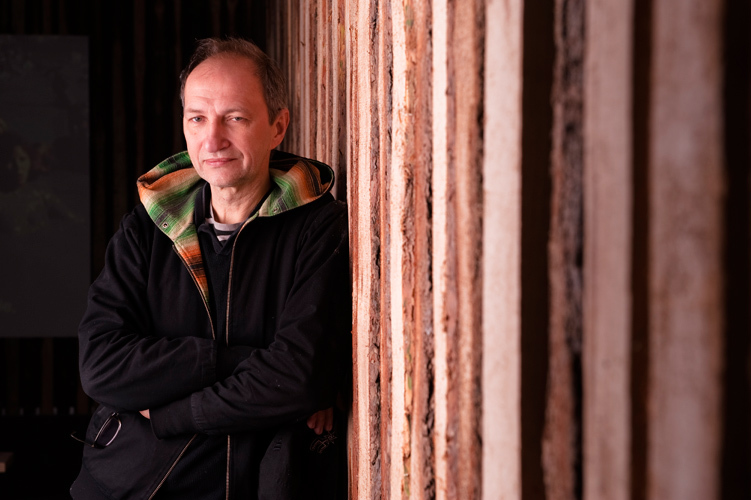
The artist Sergei Bratkov, who has been living and working in Moscow, is recognized in Russia and abroad portrait painter of the post -Soviet reality, witty and merciless. At the request of COLTA . Ru Sergei Bratkov summed up his creative experience and called some signs of a post -Soviet man.
All my heroes are post -Soviet people. There are no others. I do not shoot anything abroad.
I recently participated in the exhibition-it was held at the university, which used to be the oldest school in Germany, created by some bishop. 300 years passed, there was an anniversary of this school, and they called different artists so that they would make some kind of statement about childhood and in general pedagogy. Then I remembered how I became an artist. I wanted to make a movie about this.
I went to school in Kharkov. In an ordinary Soviet school - a standard building, poplar, trampled football field and horizontal bars. By the way, five years ago I came to Kharkov to look at her. Nothing has changed: the same school, all the same poplars, all the same horizontal bars - time seemed to be mothballed. Once in a physical education lesson in one of the primary grades, we passed the TRP standards, and I could not pull up 12 times. I hung on this horizontal bar as dead, and in front of me stood the line of my school comrades and physical education, who screamed at me so that I continued to pull myself up. Fizruk started more and more, already shouted something like “You will disgrace the class! You will disgrace the school! ”, And I hung on this horizontal bar and could not move. One of my school comrades by the name of Sokol left the line, came up to me and spat in the face. Here, of course, my hands clenched, I fell to the ground and roared from a bitter resentment. I remember how I walked in a stupid tracksuit past garages - walked and cried. At some point, I wiped the spit from my face and looked at the hand that successfully fell against the sun, and these saliva, which were dependent on the fingers, which suddenly looked in the contrasting sun, distracted me. I came home and said: "Mom, I do not want to study at this school anymore!" Mom, well done, said: "Okay, you will go to an art school." This is purely Soviet history - about collectivism, which is still invincible in the post -Soviet man. When you live with a sensation as in the Soviet song "Previously think about your homeland, and then about yourself." I myself still remain a collective person and now work at Rodchenko’s school, because we have a team there.
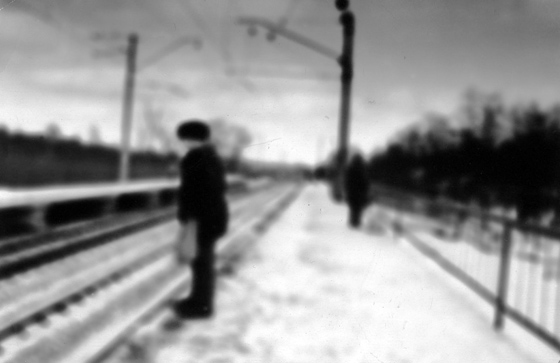
I took off a little Soviet people. There was a photo school in Kharkov. During the perestroika, many Kharkov photographers rushed to fill the niche of social justice: to remove marginal people, microdistricts - something that was not in the official press before. And then I was occupied by more formal things - I was engaged in the destruction of photography, its transformation and deformation: I painted photographs, glued, collaborated. For me, Soviet heroes were not important. When I shot people, I took pictures in Rasfokus. I found that with a certain deficus in the winter period of time, when the figures become contrasting, a fur hat is, as it were, it soars a black spot from their heads. By the way, a hat was a necessary element in the life of a Soviet man. A sign of social status. There was a certain ranking: who was richer - wore puffy hats, who are more victorious - rabbit or ondatur. The ex-president of Ukraine recently stole hats.
 © Sergey Bratkov
My experiments on deformation of the photographs continued until 1992. And in parallel I was engaged in painting - I painted the paintings. I sat, like all decent artists, in the workshop, I did not see the light of white and created such a semi -figure painting. It was the main thing for me. My father, a realist artist, never believed in me. He looked at my work as a daub. But in 1989, I went to an exhibition of painting in Nuremberg-to my first international exhibition. There, right at the opening, I bought five works, and I brought back a pack of money. It was a grand success - my mother and dad believed in me. My brother respected me - there was enough money to buy a brother an apartment. The time was difficult then-the 1990s began, and material success was incredibly important.
In Soviet times, the artist was the main person in the country. It was prestigious and honorable. Soviet people grew up on Master and Margarita: there is an artist, next to him - Muse, Margarita, she is ready to go to Siberia for this artist. Even Leonid Ilyich Brezhnev, who had 4 “golden stars”, wanted to be an artist - not without reason he sat down at the table and began to write “virgin lands”.
In the 1990s, the artist was overthrown from his throne. Other values came, post -Soviet: private property and sovereignty that protects this property. Girls have already begun to go out not for artists, but for bankers. In the 1990s, I had the feeling that something was not even stolen from me, but simply taken away. I remember - it was in Irkutsk - I was sitting at the airport at night, waiting for an airplane and read the magazine "Spark". I did not notice how some bald lane character came up to me and took a magazine from my hands-I simply pulled out and, without closing it, walked through the hall to another bald character, but more complete. He already held his hands spread out, his first bald put this magazine in his hands, and he began to read. This was my sensation from the 1990s.
In Soviet times, the artist was the main person in the country.
In 1993, the director of the Soros Fund in Kyiv Marta Kuzma was about to make an exhibition of Ukrainian artists on a military ship - the flagship of the Ukrainian fleet, hetman Sagaidachny in Sevastopol. She came to Kharkov and invited me and Boris Mikhailov to take part in the exhibition. Since we were familiar, we decided to do it together. After that, we created a “quick response group” and worked together for some time.
We thought for a long time that it could be shown at all on a warship - in an low space, where it is impossible to even drive a nail (it is all of metal) intended to destroy the enemy forces. As a result, we did the pacifist work “sacrifice to the god of war”-we decided to saturate this monster ship with blood. Make him an offering. Animal or human blood, on the contrary, increases aggression, and we wanted to pacify this wild beast, so we gathered on the Kharkov railway, cotton wools with menstrual female blood (women at that time, due to the lack of tampons, threw the wool used in the direction of the train). We filmed the process of collecting this cotton wool on the video - we were dressed in the cloaks of civil defense, prompted cotton wool skills and put it in a black bag, while I inarticulate Khlebnikov’s poems inarticulate. It was a kind of hygienic ritual. We brought this cotton wool to Sevastopol, put a ship guns to Zherlo and took a photo.
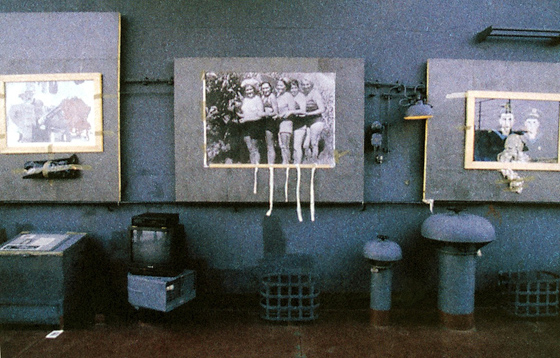 © Sergey Bratkov "Sacrificing the God of War", 1994
The “sacrifice of the god of war” caused several scandals. Before the opening of the exhibition, I was called to the political administration of the fleet. There was a first -rank captain in a white shirt, who strictly and indignantly asked me: "Why is women's menstrual blood on the ship?" I was ready for this issue-I previously read Levy-Strass-and answered him: “You know, there is a different attitude towards this subject in the culture of different peoples. For example, only one Africa has tribes where, if, God forbid, the cattle ate a leaves with this matter, then it was immediately killed as unclean, and women for a period of menstruation were simply expelled from the villages in reservation. Other tribes, on the contrary, collected this blood and lubricated her spears, going hunting. It was believed that such a weapon will never be dull or broken. So, on the one hand, your ship will never be sunk, and the guns will always shoot aptly, and on the other hand, we all agree? ” He looked at me like an idiot, but said: "Yes!"
The first day of the vernissage, the work sagged normally, and on the second, free access to the residents of Sevastopol was opened on the ship. In the morning, Martha woke me up in the hotel and said: “Sergey, this is the end. The work is gone. Everything is destroyed. " I arrived at the ship. Indeed, where there was a table under the TV, and there was documentation on the table under the glass and where there was a large bag with bloodied cotton wool, there was nothing. Everything disappeared somewhere.
Marta - an American of Ukrainian origin - with her American aplomb went to the ship commander and says: “Comrade commander, an emergency occurred - art work disappeared at night!” He says: "Come from here, do not bother to work, carry out a combat mission." Martha was persistent and threatened him with a call to the Minister of Defense of Ukraine. The commander of the ship had no choice but to press the red button, the siren sounded on the Sevastopol Bay, the personnel jumped out of all the hatches of the ship: sailors, sergeants and foremen built on a deck in two lines. The captain tells me: "Comrade artist, explain that you are gone!" And then I had long hair, I was in shorts, AC/DC T -shirt and round large iridescent glasses that my dad bought my mother in Moscow. I, such a miracle man, went out and say: “Comrades, such a story happened. We have a job ... we ... gathered these, you know, the cotton wools that women use on women's days, and they disappeared. ” The captain screams with a command voice with the composition: "I see?" In response, light moo is heard. He is even louder: “I see? Find urgently! " Everyone said: “I see” - and found the loss after five minutes. It turned out that some sailors took a bag of cotton to their kubrick what they did there is unknown, but everything returned to the place.
My galleryist recently bought “if I was a German” from German collectors, and it is impossible to show her now in Moscow. She pulls in five articles.
Another work, put up on the ship, was, one might say, anti -Russian. It was called "spit on Moscow." Then, after the collapse of the USSR, when Ukrainization began, there was a feeling that Russia was completely eliminated from the life of Ukraine - from Russia there was no support for the Russian language and Russian culture, no support of Russian schools and Russian art. Moreover, this support was not even during a decade of oil abundance, when, with the help of oil and gas money, it was possible to strengthen the cultural influence of Russia in Ukraine. This is still amazing me, and then we experienced an insult. We are Russians, we have forgotten us. And we decided to provoke. We took a compass, bought a large loaf and a rushnik in the store, climbed into the zoo in the evening, to the aviary to the camel. We were guided by the compass - when the camel became in the direction of Moscow, we were located parallel to him in space and spat in the direction of Moscow along with a camel, as if training a camel spit towards Moscow. In the end, he received a Ukrainian loaf as a gift from us.
The “quick response group” and anti -Ukrainian work had. Then the language question was more acute than now - Ukraine switched to Ukrainian in office work. We came up with the work "Box for three letters." The Ukrainian alphabet differs from Russian in three letters - ґ, є and I. We cast these letters in metal, wrote a slogan that was supposed to replace the “proletarians of all countries, connect”, it sounded like “lads, gurting! Words, I am unit! " With this box and slogan placed in the frame, we went to institutions. We came there with a very serious look, like some state designers, and severely asked: "Is there a red corner in your institution?" - "Yes, there is, of course!" - "It's clear. It needs to be changed. We brought a new symbol for him. Let's try on! " Employees of the institutions immediately opened the red corners and carried out banners from there, and we shot it on the video. It was a video work about how our people are ready to quickly rebuild and change banners and symbols - even for a certain stupidity.
Everything was “tired” - this is a good word that speaks a lot about post -Soviet people.
When Boris Mikhailov and I began to work together, we began to make performances and document them in video and photos. To shoot a video then for me and for Mikhailov was a new product, but we believed that art should be fast as a gun. It was extremely interesting. Then there was such a time - there was a public, very attentive, and for the production of art, by and large, the money was not needed. I needed a drive. It was possible to make art, provoking the audience and extracting a drive from this.
At that time in Moscow, contemporary art bloomed, and in the two -millionth Kharkov it took root very hard. There were three or four of us in the city-those who were engaged in them. We tried to dare and hooligan, and bumps flew endlessly in our direction. When I come to Kharkov now, I see that people have changed: time has passed, and they became tolerant to many things, and at that time they were aggressive. A strong rejection of the public caused a clash of modern and traditional art. And, probably, the greatest provocation was then to portray a homosexual - it is now terribly provoking people, and then the criminal article worked. At some point, Mikhailov brought abroad the book “A Thousand outstanding homosexuals in art”. We torn this book into pages and posted the work of our beloved authors to the museums of the work. Fans of Rembrandt approached the museum and saw what their favorite artist really is. There was a big scandal.
The most provocative work of the “quick response group” was the photo series “If I were a German”. We were then worried about national identity, living in Kharkov and declared independence to Ukraine, we asked ourselves the question: “Who are we in this city and in this country?” “Passing on Moscow” and “Box for three letters” were also about this.
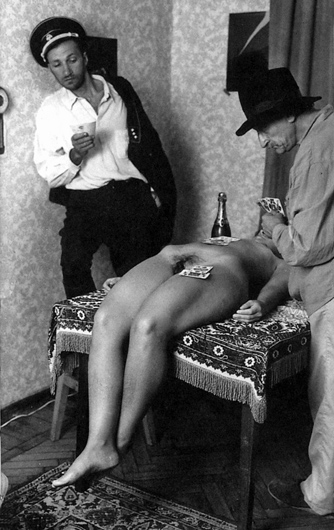 © Sergey Bratkov "If I were a German"
Ukrainians in their temperament are similar to the Germans - especially the Bavarian Germans - their merry and carefree. Therefore, when the German invaders entered Kharkov, they were able to establish some life there, despite the underground. The national roots of our art collection were confusing: my grandmother had a German, our second participant, Solonsky, grandfather had a German, Mikhailov’s dad had a Jew. In addition, Borya is half Ukrainian, and I am purely Russian. Such an explosive mixture: Germans, Jews, Russians and Ukrainians.
One friend of mine, who studied at the Art and Industry Institute, was a collector and gathered a military uniform. At that time, everyone raved up with a Stirlitz, and he had a costume of Obersturmbannführer, and I photographed him in him. He held a little girl in his arms-it turned out such an inverted "warrior-liberator." We discussed this photo with Mikhailov and decided to make a series about the occupied Kharkov - to imagine ourselves in the place of German invaders who would enjoy the opportunities that opened before them. What would we do if there were Germans in the conquered city? Well, they wouldn’t kill, of course, and they didn’t hang it. Starting to shoot, we expanded and expanded the series - we touched not only sick national questions, but also historical and sexual. The mixture turned out to be very strong. My galleryist recently bought “if I was a German” from German collectors, and it is impossible to show her now in Moscow. She pulls in five articles.
Well, let the resort is fenced with barbed wire - we do not act against its background.
The last work of the “quick response group” was the “guard”. In 1997, we ended up in Moscow. We stayed at the Russia hotel and, passing along Red Square, saw that they had removed the guards near the mausoleum. There are no more soldiers with rifles. Immediately there was a feeling that the homeland left and Red Square became a tourist place. We returned to the hotel, took two dining rooms in the cafe, stood with them in an honorary guard near the mausoleum, and then, highly lifting our legs, walked in a drill step to the middle of Red Square. Then we were arrested.
In the two thousandth relevance of provocations has already fallen. Everything was “tired” - this is a good word that speaks a lot about post -Soviet people. Another expression that characterizes the era and which I still often hear, especially in Moscow, where it is pronounced with special intonation, “Do not worry!” "Do not worry, Seryoga, do not worry!" - Oh, how I do not like him.
In the early 2000s, I sat a lot of time in my studio, doing painting, and then I suddenly saw that the world was full of emotions and people. People have become especially interesting for me. I understood that in the 1990s, despite all the drive in contemporary art, the artist had no place for the artist, so people were close to me who did not change themselves and their principles, remained in service and did their job. For example, having already moved to Russia, I shot metallurgists. I arrived at the metallurgical plant in the workshop, where there is a conveyor on which the wire is cut. This is a very dangerous production. It happens that the wire is cut off so that it flies away at the speed of the bullet. The entire ceiling of the workshop is pierced, as in war, and these metallurgists stand against the wall and smoke calmly. They seemed to be proud that their peers went to the markets to trade Chinese cowards, and for $ 100 they are on the front line. They were the heroes of the New Age. The fighters were the same without the rules that I shot right after the fights, and the paratroopers bathing in the fountain.
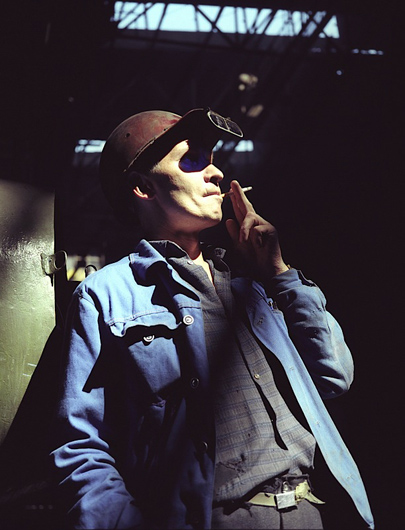 © Sergey Bratkov
Потом герои закончились, и мне стала интересна толпа. Я много снимал панорамной камерой толпы людей — от крестного хода до рок-фестивалей. Ярче всего о постсоветском человеке говорит парковка возле магазина «Ашан»: сотни автомобилей и толпа, которая с определенным достоинством и даже показухой загружает купленное в машины. Они кичатся материальным — и это типично постсоветская картина. Советские люди тоже были материалистами, но в основном их заботило только то, чтобы государство равномерно распределяло материальные блага. Постсоветские люди не полагаются на государство, они понимают, что надо надеяться только на себя. Одна из сегодняшних больших проблем — коррупция — происходит из-за того, что люди надеются только на себя. Они максимально устраивают свою жизнь с решимостью идти даже на преступления. В 1990-е они могли пойти на захват собственности — схватить какое-то производство или осуществить еще какой рейдерский акт. Сегодня, когда бесхозной собственности стало мало, можно захватить место чиновника, сделать липовую диссертацию и так далее.
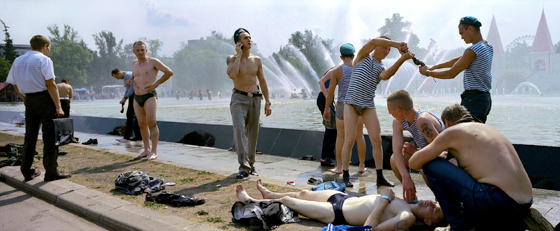 © Сергей Братков
Постсоветские люди привыкли жить с чувством подмены: подмены товаров и подмены понятий, над которыми производятся манипуляции. Сюрреализм этой двойной логики ни у кого не вызывает раздражения, да и вообще никакой реакции — его просто не замечают. В нашей стране сочетается несочетаемое — одновременно уживаются роскошь и нищета, опасность и защищенность, пафос и несуразность. Особенно ярко это видно в Москве. Когда я делал выставку о Москве «Шапито Moscow », я показал ее сюрреалистическим цирком, который никак никуда не уедет.
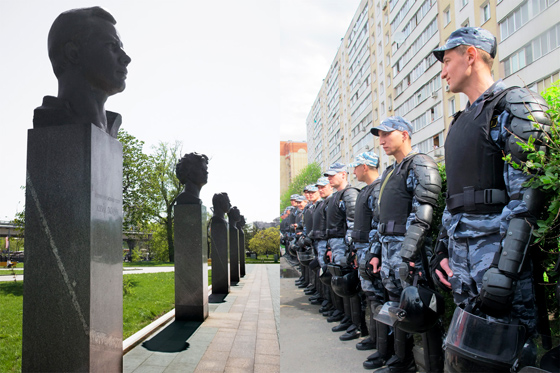 © Сергей Братков «Шапито Moscow»
Как-то я снимал толпу на грязевом курорте на Кубани. Раньше это было жерло потухшего вулкана, заполненное грязью, — дыра дырой. Потом какие-то предприимчивые люди сообразили, что на этом можно заработать деньги. Обнесли территорию колючей проволокой, добавили из шланга воды, развезли побольше грязи и установили вокруг помосты. Вроде бы не Баден-Баден, но туда повалили люди. Сработали свойства постсоветского человека, о которых мы говорим: одновременно стремление к стадности и индивидуализм, выраженный в культе оздоровления, слепота и глухота к подмене понятий. And what? Мы отдохнули, и неплохо, оздоровились, а главное — получили фотографии. Ну и пусть курорт огорожен колючей проволокой — мы на ее фоне не снимаемся. Постсоветский человек — это человек с фотоаппаратом как с ружьем.
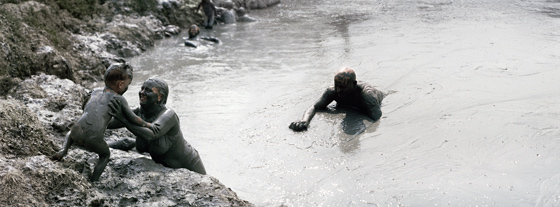 © Сергей Братков
Моя последняя выставка «Заговор», снятая в глухой деревне Цинеево, затрагивает еще одну примету постсоветских людей — это духовность. Слово «духовность» появилось еще в советское время. Причем представление о «духовном» в то время было достаточно нелепым и опять же сюрреалистическим. Оно одновременно включало в себя все что можно: православие, оккультизм, шаманизм, гипнотизм, сеансы Кашпировского и увлечение восточными философиями. А в постсоветском человеке это стремление к духовности еще больше усугубилось: люди, освободившиеся от уравнительной советской идеологии, захотели ощутить в себе инаковость: «Вот мы какие особенные!» Посмотрите, сколько в киосках продается журналов о магии, гороскопах, сколько объявлений о гадании и колдовстве — это целая индустрия, которой все охвачены. Такого нет, наверное, ни в какой другой стране, потому что представление о духе и о смерти у нас осталось с советских времен. Языческий «Заговор» — провокативная выставка, которая раздражает «духовность» и оседлавший ее сейчас патриотизм.
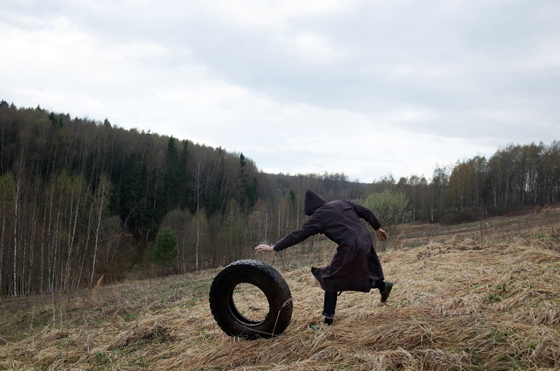 © Сергей Братков «Заговор»
В этой деревне, где я снимал «Заговор», живет персонаж, которого можно назвать образцом постсоветского человека. Там глубинка — дикая природа, она меня просто парализует. Попав туда, ощущаешь какую-то свою полную никчемность и понимаешь, что тут ты должен ухаживать за животными: корове подносить, гуся чухать, бобру поклоняться. Понимаешь, что человек перед этой природой — песчинка.
В этой деревне живут всего три мужика — как говорится, бобыли — без баб. Одного из них зовут Балалай — может быть, он тарахтел, как балалайка, в молодости, когда за девками бегал, а сейчас это испитой мужик с хриплым голосом. Когда я приехал в эту деревню, чтобы побыть в одиночестве и поснимать, я первым делом подумал: «Может быть, обратиться к нему, поговорить с ним, чтобы он что-то повспоминал, рассказал». Рано утром на Пасху я спрашиваю: а где Балалай? «Да он уже об бутылку споткнулся», — пояснили мне мужики. На следующий день я постучал к Балалаю в хату и увидел такую картину: в доме все по-черному — хуже, чем в общежитии у металлургов в день получки. Сидит мрачный Балалай перед телевизором. Я говорю: «А я бы хотел вас пофотографировать» А он: «Нет, новости дослушаю, вот тогда и поговорим! Не мешай мне просвещаться!»
Recorded Denis Boyarinov