
Translated material
The last in the lottery
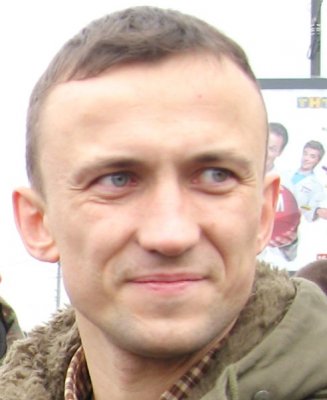
The Tver court sentenced the last accused in the case of events on Manezhnaya Square on December 11, 2010, a social psychologist Pavel Vazhenin. One of the thousands of people who were at the Manezhnaya during clashes with the police and the beating of the people of the “non -Slavic appearance” and one of the ten convicts was sentenced to three years in prison.
In December 2010, there were massive unrest that became the reaction of the murder of the football fan Yegor Sviridov and the not enough police of the police to investigate the crime (in particular, many were outraged that four of the five participants in the fight, during which the Sviridov were immediately released from the police department). The central events in this series are often called the mass riots, although they were not characterized by the use of weapons and arson, but mainly came down to fights with the police. At the same time, in the criminal case, the mass riots were mentioned only due to the fact that some organizers called for riots, but thanks to competent police actions, they could not realize their plans.
Meanwhile, despite the information about the prepared gathering on Manezhnaya actively spreading in social networks and on numerous forums, law enforcement agencies did not take any special security measures on the spot. The beating of passers -by on Manezhnaya and in the subway, clearly on the basis of national hatred, were not taken into account at all (despite the fact that passers -by suffered much more serious than security officials, none of which received serious injuries). According to the director of the information and analytical center “Owl” Alexander Verkhovsky, in the context of “the confrontation ended with a kind of peace agreement that the warring parties diverge, the police chief (Vladimir Kolokoltsev, the then head of the Moscow Central Internal Affairs Directorate of Moscow-ATS-INFO) agreed with the Masca man that everyone will go through the metro, apparently, apparently, no one tried To bring to justice some real leaders: none of the people, even similar to those who gathered people there, were attracted. ” In this situation, the pursuit of the organizers could be perceived as a violation of this promise, Verkhovsky believes.
[{“Type”: “Media”, “View_Mode”: “Media_large”, “FID”: “4700”, “Attributes”: {“Height”: “320”, “Width”: “480”, “media-image Media-Element File-Media-Large}}]]
Photo: "New Gazeta"
The decision to attract Vazhenin as the accused was issued on January 20, 2012, and detained him more than a year later - April 12, 2013, when the sentences were already issued to all other accused in the “manual case”. This happened the day before the inconsistent day of the Russian anger, which is the human rights center "Memorial", which recognized Vazhenin with political prisoners, sees the political motive. (Vazhenin is not a member of any nationalist movement-his mother in an interview says directly that he is not a nationalist-however, he participated in various events organized by nationalists.) He was accused of hooliganism, committed by a group of persons by preliminary conspiracy (part 2 of article 213), the use of violence that is not threatening to life and health, in relation to the representative of the authorities (part 1 of article 318), excitement. hatred or enmity (part 1 of article 282) and calls to the riots (part 3 of article 212). On June 5, 2014, the persecution in the last two articles was discontinued due to the expiration of the statute of limitations.
During the investigation, the defense of Vazhenin disputed his wanted list - the investigation stated that Vazhenin was wanted for more than a year, but human rights activists suggest that he was put on the wanted list back (it is difficult to explain that he freely crossed the border during the period of official being) to be accusing him to be charged under Articles 212 and 282. According to the convict’s mother, one of the convicted person. Witnesses in the case, a former riot police officer, at a confrontation stated that he did not remember Vazhenin, but three months later he remembered him from the photograph. Vazhenin’s lawyer Igor Popovsky told the OVD-Info that for the whole time that his client spent in the pre-trial detention center before the court-about nine months-only three or four investigative actions were carried out with him: confrontation with the victims, charges and psychiatric examination, which is appointed to all the accused.
According to article 318, Vazhenin was charged with several episodes. According to the investigation, Vazhenin, together with two people already convicted in this case, football fan Leonid Panin and another Russia activist Ruslan Khubaev, threw a “metallic structure that served as an artificial New Year’s spruce in the direction of OMON employees, causing an OMON GUVD in Moscow Antonov, V.S. to whom the fence abandoned by accomplices fell into the right leg, physical pain, that is, they used violence that was not dangerous for life and health. ” Vazhenin admitted the guilt that he was thrown by fences, as well as that he entered into a certain physical contact with riot police, Alexander Lalsky, who qualified the investigation as causing violence. Lalsky spoke in court and gave detailed testimony. However, as the lawyer indicates, in the investigation, Lalsky directly showed at Vazhenin, he said that he did not remember what harm he was caused. Vazhenin and other blows were charged with hands and legs, but the victims of this episode did not perform in court, there were no confrontations with them, there were discrepancies in their testimony, so it was not clear what exactly, according to the accusation, was committed by the defendant.
The sane valialism, according to Popovsky, fits the charge under Article 318, since "in the meaning of Article 213 itself, hooliganism cannot be committed in relation to police officers." (It should be added that in the decision to attract Vazhenin as the accused it was mentioned that on December 11, 2010 on Manezhnaya Square, he committed this hooliganism, using “clods of cherished snow” as a weapon.)
In the debate, the prosecution requested four years of imprisonment for Vazhenin. The defense did not insist on an acquittal - as the lawyer Popovsky explained, if we proceed from the realities of the existing judicial system, in conditions when a person has been detained for more than a year, and one of the victims gave detailed testimony, there can be no acquittal. Therefore, lawyers asked to free their client, taking into account the sewn and give him a conditional or minimum real term.
Despite the fact that accusations of calling for riots and the excitement of national hatred from Vazhenin were removed, the verdict mentions the cries of the slogans of the “unacceptable nature” “against the faces of the Caucasian nationality” (Vazhenin denies this), as well as the photograph in which he, “screaming, raises his hands up.”
Immediately after the events on the arena government, they tried to give them a political color: the deputy head of the presidential administration Vladislav Surkov said that “the 11th comes from the 31st”, referring to the “Strategy-31” campaign, and the Minister of Internal Affairs Rashid Nurgalievannounced that “to the mass confrontation and clashes” that took place on Manezhnaya, gathered “raised” "Levoradic youth." In the wake of events, three activists of another Russia were brought to criminal liability - Igor Berezyuk, Ruslan Khubaev and Kirill UNCHUK (they received from three to five and a half years in prison). In the “First Party” of the accused, whose sentence was announced on October 28, 2011, were also nationalists Alexander Kosevin (two and a half years) and Leonid Panin (two years). On August 8, 2012, when the events on Manezhnaya have already ceased to be an important event on the political agenda, a sentence was sentenced to four more accused - football fans Vitaly Vasin, Grigory Bilchenko, Vladimir Kirpichnikov and Nikolai Dvonikov. Bricks and doubles were sentenced to real terms - three and two years in colonies, respectively (both were accused of throwing objects against OMON employees), Vasin and Bilchenko received conditional punishment - also three and two years, respectively.
An employee of the Memorial human rights center Sergey Davidis notes selectivity in bringing people to justice: “Among many hundreds of people who have done the same thing, less than ten people have been identified who are sentenced to real terms.” According to Davidis, now there is no special task in pursuing participants in such an event that was already a long time ago, three years ago, ”“ this mission has exhausted this persecution ”-and Vazhenin himself was detained for a long time,“ and the falsification of the grounds for persecution in the “swamp business” is more relevant. Vazhenin, thus, was the last or one of the last in the Lottery.