Date
Author
Татьяна Вольтская; Иван Толстой
Source

Preserved copy
Translated material
Who is against the Tsarskoye Selo swans?
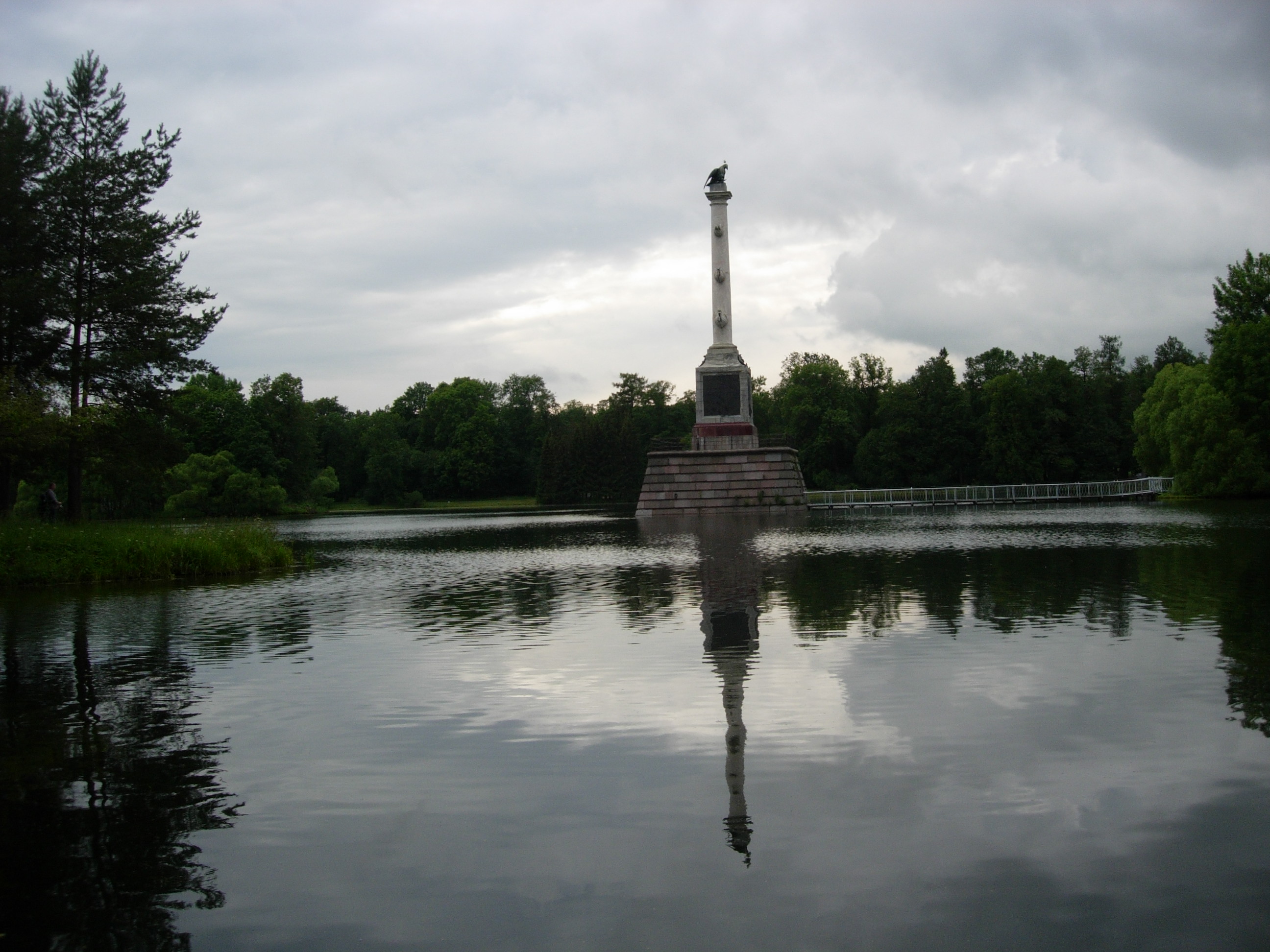
Is it possible to save the great parks of Tsarskoye village and Pavlovsk? The program was prepared by Tatyana Voltskaya.
Ivan Tolstoy: Who is against the Tsarskoye Selo swans? Radio Liberty has repeatedly raised the sharp topic of the threat to the great parks of Tsarskoye Selo (the city of Pushkin) and Pavlovsk.
Today it seems to us that the parks have always been and will remain forever. What is the point of destroying them? These are millions of tourists, which means multimillion -dollar income. This is a person of domestic culture, this is an object of cultural heritage of UNESCO. In the end, this is a source of inspiration of Russian poetry.
My sources are crowned
Eden is equal to beauty
Where the goddess plants the garden,
Cool, belonging to the place;
Fields where the sky is imitated
They are dotted with flowers.
Not Tokmo Tender Spring,
But autumn of the youth of the year;
Nature always luxuries
The art of hands is encouraged -
Lomonosov wrote, who was the first to compare the local places with the Paradise Garden. Then many poets followed him - Bogdanovich, Derzhavin, and Pushkin, and poets of the twentieth century. “City of Muses” - called his famous book Erich Hollerbach.
The parks of Pavlovsk and Tsarskoye Selo are not just not imagined without water, they will not live botanically without moisture and day. Ponds, rivers, streams, water labyrinths, channels with gazebos, bridges, pavilions and ruins ... There will be no water - there will be nothing to reflect the rotunds, nymphs and centaurs, Chinese arbors and medieval towers. Arts that grew up on the idea of water will die.
Having dropped the ballot box with water, her Virgin broke her a cliff.
Virgo sits sadly, idle holding a cherry.
Miracle! Water will not sit, pouring out of a broken urn;
Virgin, over the eternal stream, is always sad.
But not only this Pushkin masterpiece, but also a parody of it will lose meaning. In the middle of the XIX century, Alexei Konstantinovich Tolstoy Kozma-Putkovsky commented:
I don’t see a miracle in that:
Lieutenant General Zakharzhevsky
In the urn that hole, breaking through
He spent water through it.
And soon there will be nothing to gather over. If the public allows the construction of the satellite of the South between Pushkin and Gatchina. Not the new city itself is harmful, but the decision to place it on the Kondakopshinsky swamp. Unfended can happen before our eyes. And only because we are indifferent.
Fortunately, in St. Petersburg and in general in Russia the intelligentsia is alive. Let me remind you that under the intelligentsia it is traditionally customary to call not educated people, not bespectacles who are not able to work as a screwdriver, but people who are indifferent, social activists, and conscientious citizens. To protect the parks, they united in the Pushkin citizen group.
Today's program is about conscience against corruption. All interviews are recorded by our St. Petersburg correspondent Tatyana Voltskaya. Her first interlocutor is the head of the Center for Expertise EMC Alexander Karpov.
Alexander Karpov: The problem with the satellite of the South is that this is a project that arose from speculation with the ground. Such speculative Diveloper projects have the right to exist. In order for them to be useful for the city, they must be very well thought out and very well discussed with the city, but this did not happen. In the general plan and in terms of development of the city of St. Petersburg, no satellite cities were supposed, no core of dense buildings on agriculturalpols between Pushkin and Gatchina, no thought, no project about a new city for more than 200 thousand people in this territory between Pushkin and Gatchina N was supposed. Agricultural vehicles, the territory of future development, and so on. A man came, a company that bought these same agricultural vehicles. They bought them at a price, apparently not much exceeding the cadastral value, which at that time amounted to 6 rubles 49 kopecks per square meter of St. Petersburg land. And further, what they began to do - they began to offer changes to the general plan of St. Petersburg. Moreover, these changes ahead and are ahead of the concept of economic and social development of St. Petersburg, which did not imply such development. A sudden way was invented and amended in the general plan. And what was drawn there is essentially another largest sleeping area without any intelligible concept of a city organization, but not possessing the features of the city, although claiming such a request.
Further, this story has several consequences. If we talk about the consequences of economic, then the city is disadvantageous. Especially in the conditions of a falling economy, a stretched city is that which completely contradicts the idea of sustainable urban development. Now the fashion trend, the correct trend is a compact city in which there are no empty meaningless territories and stretched communications. It turns out that some mass buildings are settled from the center by 20 kilometers, and it seems that this site is located on the border of St. Petersburg, but the city will not be able to provide a full-fledged city life, just as the Slavs, residents have long, has long been able to provide the existing Kolpino. That is, it turns out such evictions.
Nevertheless, to solve the minimum problems arising in this case, providing road-transport infrastructure, social infrastructure, healthcare, culture, landscaping, you need to send dozens, and possibly hundreds of billions of rubles from the city budget, promise to attract federal money. Most likely, in the current situation, they will go to completely different projects, to completely different territories. It turns out that the city takes on budgetary obligations, despite the fact that many existing settled territories, new buildings, are not provided with socialists or roads. The question arises of honesty in relation to people who believed the promises, believed the general plan, and bought housing, invested their money in the territory of St. Petersburg, although they could buy housing somewhere in another city or in another country. St. Petersburg, it turns out, is deceiving the inhabitants of already existing new buildings, promising residents of the South satellite city, but sorrels once who will believe you. Promises are made that the entire banquet is exclusively at the expense of the investor, at the expense of the owner of the territory.
Tatyana Voltskaya: But it does not happen, he must also have a benefit.
Alexander Karpov: Then it turns out that it will not be cheap affordable housing. And then the question arises whether this whole project will be held in general. Because you need to build a new city in a clean field in the absence of some kind of anchor object for which this project can exist.
How do cities arise in a normal way, natural? Cities arise around some node that provides jobs. At some point, these were rivers, then it became railway stations, then it became an industrial unit, then became post-industrial centers, university towns, for example. Finally, the latest American concept, which did not, however, lasted, the cities that arise around the consumption centers, around the youth, the place where you consume something daily is fun. But there is nothing here. In the federal program, which is constantly referred to, this project is listed as a project to promote the development of housing construction, that is, just a square meter of housing.
Tatyana Voltskaya: The question arises: who is beneficial? Because simply, living in the city, walking around it not that the outskirts, but according to some Petrovsky Island, where there are a full of killed territories, factories, some garages, maintenance stations, that is, there can be so many things, the communications will not have to be pulled. The question arises: to whom it is beneficial to endure everything so far?
Alexander Karpov: Absolutely true question. This is beneficial exclusively to the person who bought 6.50 per meter and sell to developers, for example, 5-6 thousand per meter.
Tatyana Voltskaya: And the name of the lucky one is known?
Alexander Karpov: The company belongs to Mr. Smushkin, who is one of the co -owners of the Im Palp company, a company that was engaged in the forest business. Now the co-owners of this company, both Zakhar Yakovlevich, and the Zingsi brothers are quite active in the development business in St. Petersburg. This is largely explained not only by the fact that they have accumulated a certain capital that they want to place in a profitable way, but also by the presence of a serious administrative resource, because the current head of government once worked in this company. Are there any officials there, I am not ready to answer this question. The way these situations are processed, where signals and teams come from that this project is necessary for the city is quite unambiguous. Initially, we were neutral to this project, there were such projects, suggested paying attention to the reality that is on the ground. During the year, almost two of these attempts remained unheated, as a result of which we came to the conclusion that the customer was not interested in the real development of the city. He did not pursue the interests of the city, he pursued exclusively his interests, does not pay attention to everything else.
Ivan Tolstoy: The next interlocutor of Tatyana Voltskaya is the head of the public organization “Citizen Pushkin” Alexander Belyaev.
Alexander Belyaev: In 2009, the Lesnoye Tribal Plant is an agricultural enterprise, was bought up entirely by the Start Development structure, which is owned by Zakhar Smushkin, a almost dollar billionaire, a former, one might say, co -founder even Dmitry Anatolyevich Medvedev, second -person in the state. This is a very important moment here, because the further transformation of the “forest” into the satellite city “Yuzhny” clearly did not pass here without any administrative assistance. At first, these people stated that they would develop agricultural control on these lands, and, possibly, implement the cottage village. Literally a year later, a wonderful deal with the Americans, and 12 million rubles, 440 thousand dollars turned out, to develop the concept of the general plan for the development of the territory, these lands, in fact, the year is still a year, finally the first statements about the South satellite city begin to appear in 2011. This slipped so, of course, there was no full -scale campaign to cover this project. In 2012, Poltavchenko has already signed an agreement with the South satellite city. And as we find out, this agreement has an absolutely framework in nature. This is from the response of Oganesyan, builder, vice-governor, deputy Kovalev, there are allegedly described obligations between the parties. There is a lot of unclear and incomprehensible, in fact, what will happen and to whom will be for failure to fulfill these obligations. Plus, Oganesyan said that there would be an additional agreement. We understand that this does not give absolutely no guarantees to residents. Pavel Solopov, a resident of Kondakopshino directly, even then learned about it. They began to recognize information, communicate with the investor with might and main and understand what the whole thing is about. The first time I learned about this at the end of 2012. We traveled with the State Duma deputy Oksana Dmitrieva, city -defenders, journalists to that steppe, because we defended the park. I then went for the first time, visited the forest, there was also a representative of the press service “Start of the Development” of Streltsov, she saw everything - here is the forest, here is the swamps under it. There was a Reznikov with us, a candidate of geographical sciences, who, in fact, then made a conclusion on a swamp, investigated him as much as three times. He showed a metallic depth with a collar, she saw everything perfectly. This is, by the way, whether there was a dialogue between the investor and the population, power and so on.
2013 began, changes appeared in the general plan regarding the satellite city of Yuzhny. And then we already really found out where it is, what it is and what it really threatens us. Because the South satellite city is a project that is planned to be placed in two districts - Pushkinsky district of St. Petersburg and Gatchinsky district of the Leningrad region. But the Gatchinsky district of the Leningrad region is still frozen, that is, they have not yet received permits, it is not yet clear what is there. These are two thousand hectares in the Pushkin district and 900 hectares in the Gatchinsky district. So, two thousand in Pushkinsky is the land, south of the intersection of the Krasnoselsky highway and Kyiv, that is, Kondakopshino, the village of Lesnoy is literally 5 kilometers from Pushkino. And nearby a military airfield is another pain point. There is a repair plant where about 600 people work, they are worried that they will be forced to leave this territory simply because the houses that are going to build apartment buildings there practically adjust the aircraft. It turns out that either there will be no houses, or the airfield will cease to exist. It was stated that a project for 134 people is only in the Pushkin district, and the entire Pushkin district according to the latest census is 136 thousand people, that is, it is a huge new area, commensurate with Pushkinsky. This is a nightmare. Honestly, all the numbers that were declared are very few, the only figure that we heard was 20 thousand jobs for 134 thousand people. We understand in advance that everyone who will be resettled there will go to St. Petersburg, because in Pushkin and Pavlov such large -scale work, especially no enterprises. And again, where these 20 thousand will be placed, it is not known, because it is not known what the enterprises will be there, because everything is at the stage of negotiations. Everything that is at the stage of negotiations does not say anything to me.
Nevertheless, I believe that in this situation the city should come first of all from the opinions of residents, because the investor has the essence of the changes in the general plan of agricultural land. The investor proposed to transfer all these agricultural lands for residential development, business development, and production. And the city, such a kind soul, immediately agreed. We understand that the transfer of agricultural recognition for residential development is an automatically tremendous difference in financial, the price of these lands increases by hundred, two hundred times, that is, you can make a thousand out of the ruble. At the same time, the city allocates the federal budget in the aggregate, indicated a figure of 33 billion rubles, which they are ready to give for this project, for social infrastructure for transport infrastructure, and engineering.
Oksana Dmitrieva said on this score that, according to the most approximate estimates of the fact that they described the number of gardens, schools and so on, it turns out the figure clearly two to three times more. She suggests that it will be the same scam as “Zenit Arena”. It also seems to me that the figure was given so, just to get rid of, nate, get a figure. I am sure that everything is done exclusively not at the strategic level, but just someone from above said - but let's. Everything goes in an absolutely shock manner, that is, there is no serious approach. At this stage, we have no project. A beautiful booklet on their website and a project of changes in the general plan that was adopted. At public hearings, we raised all the issues that did not suit us in the project of changes in the general plan. In addition to social infrastructure, transport, the fact that, in principle, those changes that are laid down in the general plan, they do not solve the transport problem at all. Now in Pushkin and Pavlovsk constant transport collapses begin. South does not solve the transport problem in any way, on the contrary, it will only add it. Because the population that is voiced there, even these figures, and they can be really larger, because they made 35 square meters per person at the rate of 35 square meters, which is not feasible in the city so far. As the people who are associated with developing, with construction, say, they themselves say: it is realized, if only half of the population is killed.
Ivan Tolstoy: Alexander Belyaev. Hydrologist Vladimir Batuev.
Tatyana Voltskaya: Experts see the Kondakopshinsky swamp, but there are no officials.
Vladimir Batuev: Did the specialists see the swamp there? Nobody investigated the Kondakopshinsky swamp. In my opinion, of course, there is a swamp. It was partially drained - in 1918, and until 1925 peat was mined there, after the large massifs began to be mastered, they just drowned Petrograd. When the swamp massif is drained, it turns into a peat. Part of the swamp massif may begin to swallow again. That is, a piece remained a swamp, the rest is apparently peat. If this is a water object, how does it appear? They say that if there is no water object in the register, then it is not at all, but this is not so. When the topographers, surveyors make the selection of the site for its sale, they are required to indicate all water bodies there. The water body on the site according to 246 law can be filled up, you can remove, you can do anything. In this case, there is no water body on the site according to the documents. So the defenders of these places should not sue the owner, but on those who sold this land with violations, who formalized the cadastre without indicating the swamp. I am a reflector, if they give me a piece of land, if I suspect that somewhere a swamp, I indicate a swampy land or a swamp. When the documents are prepared for sale or for mastering the site is prepared, the one who sells, is insured and just in case orders a short note or report, is it really a swamp, then it is a water body or not. I always fear this way. А здесь не было отмечено ни болота, ни одного объекта, ничего.
Татьяна Вольтская: Я так понимаю, что это угрожает именно паркам Пушкино?
Александр Карпов: Угроза Павловскому парку тоже существует, но она менее значима. Речка Поповка, которая вытекает из этого болота, она впадает в речку Славянку, которая в свою очередь формирует пейзаж Павловского парка. Посетители Павловского парка, те, кто были там в детстве, сейчас отмечают очень большую разницу в том состоянии речки Славянки.
Татьяна Вольтская: То есть она просто обмелела?
Александр Карпов: Она обмелела со страшной силой, в том числе потому что вырубили леса, понасажали на той же самой Поповке садоводства, жители садоводства все обзавелись электрическими насосами и речку Поповку просто выкачивают, как и другие притоки Славянки. Неожиданный такой эффект. Люди, будучи хорошо технически и инженерно вооруженными, способны речку обнулить. Интересный момент про болото, люди не понимают — это верховое болото. What does it mean? На самом деле это холм мха, купол мха, который в самой высокой точке примерно на два метра выше окружающей территории. Благодаря этому он как губка напитывает в себя зимнюю и весеннюю воду, а потом отдает ее сразу в две речки. То есть болото — это не низина, а это возвышенность над окружающей территорией, интересный географический эффект. Он работает действительно как накопитель, как губка, как естественный фильтр. Потому что с юга с сельхозполей в него течет грязная жидкость, обильно унавоженная и снабженная всякими химикатами, а вытекает чистая вода.
Татьяна Вольтская: Очистное сооружение.
Александр Карпов: Естественное очистное сооружение. Болота вообще ценный природный ресурс, потому что они делают за бесплатно ту работу, за которую мы должны довольно много платить. Объем воды в этом болоте — это среднее суздальское озеро. Мы считали — очень много. Во-первых, местные жители в Пушкино и в Кондакопше, которые осознали эту проблему как свою беду, очень честно вступились за свою территорию. Со стороны жителей Пушкино там несколько групп работают в этом направлении, с одной стороны те, кто защищают парки, инициативная группа, движение «Гражданин Пушкин». Кстати, они добились уже больших успехов в защите Павловского парка и не намерены останавливаться, честь им и хвала.
Второй момент — это пушкинский бизнес, который видит большие проблемы от этого нового города-спутника, потому что их интересы игнорируют полностью. Местный бизнес видит, что на него совершенно не обращают внимания, этот город не создаст никаких дополнительных преимуществ, хотя вроде люди должны создавать преимущества для бизнеса, и поэтому они выступают против. Депутаты Законодательного собрания из фракции «Справедливая Россия», еще некоторые депутаты, они видят в этом проекте вред для городского развития. Потому что будут оттянуты ресурсы, которые должны были бы пойти в первую очередь на сшивку территорий города, на реконструкцию промышленного пояса, приведение в порядок вот этой всей заброшки в центре освоенных территорий. У моих людей это вызывает справедливое возмущение этой историей, выливающееся в действия.
Со стороны депутатов была подготовлена альтернативная версия Генплана. Ее даже не обсуждали, провалили, закрыли тему. Состоялся поход граждан в суд, судебное решение, вынесенное городским судом, было абсолютно тупым, оно дословно, как обычно бывает в таких ситуациях, повторяет аргументы правительства без какого-либо анализа данной ситуации. Я еще забыл сказать, есть группа в Кондакопше — это любители жизни на природе, которые честно посмотрели Генплан, условия, выяснили, что здесь ничего не будет развиваться, будет развиваться коттеджная застройка, продали квартиры в городе, купили земельные участки, строят там себе дома, сами строят себе дороги. Ответственные граждане. Город их не обеспечивает практически ничем, милиции нет, мусорку ставят сами. И на них падает этот инвестиционный проект, и они в какой-то момент обнаруживают, что вместо полей с одной стороны и леса с другой стороны у них со всех сторон будет городская многоэтажная застройка, от которой они убежали. Некоторые граждане в таких ситуациях садятся на бульдозер и берут в руки ружье. Наши пока идут через судебные инстанции в надежде, что судебные инстанции их защитят, а так разные могут быть сюжеты. Народ сильно раздражен. Тем более, что есть негативный опыт Славянки уже построенной, дома построены, дороги не построили и там образовалось такое гетто.
Кроме экологических соображений там у людей более прагматические. Потому что в той же Славянке огромный уровень преступности бытовой, связанный с временным населением, со строителями. Никто их не считал, никто не регистрировал, живут они в условиях, далеких от идеальных, такая благоприятная среда для криминала и бизнеса. Полиция говорит, что они дни и ночи проводят на регистрации преступлений в новостройках. В Пушкино это все известно, иллюзий ни у кого нет. В самом Кондакопшино люди жалуются: вот у нас стрельба чуть ли не из автомата, а полиция не приезжает. А мы что должны делать? И это еще не началось, никакая стройка не началась, а что будет, когда начнется, когда вокруг нас будут сотни и тысячи строительных рабочих, а у нас сейчас дома открыты.
Иван Толстой: Александр Карпов. 26 июня в Пушкине прошёл согласованный митинг за сохранение парков Пушкина и Павловска, Кондакопшинского леса и Таицкого водовода. На митинг пришло около 400 человек. Выступали представители движения "Гражданин Пушкин", пушкинского отделения КПРФ, Национал-Демократической партии, движений "РОТ Фронт" и "Левый Фронт". Организаторы выставили стенды с фотографиями и документами, доказывающими существование Кондакопшинского болота и его связь с гидросистемами исторических парков. На митинге выступила депутат Госдумы и кандидат в губернаторы Санкт-Петербурга от "Справедливой России" Оксана Дмитриева.
Оксана Дмитриева: Когда за бесценок был куплен племенной совхоз, просто земля досталась собственнику за копейки, а теперь насильственным образом был изменен Генеральный план, который прошел в Законодательном собрании с перевесом в один голос. На город будет обременение строительства инженерной и социальной инфраструктуры. И столько, сколько потребует строительство инженерной и социальной инфраструктуры, чтобы этот кусок земли в чистом поле действительно превратить в часть городской территории, нужно затратить столько средств, что нигде в городе ни детские сады, ни ремонт инженерной инфраструктуры, ни инженерной сети, ни капитального ремонта жилья, ничего не будет. То есть это просто подарить инвестору 30 миллиардов для того, чтобы он потом что-то построил, получив землю фактически за бесценок и все это продавал по коммерческой цене. Все эти совершенно астрономические разговоры по поводу того, что там будет миллион жителей, 300 тысяч, 200 тысяч — это опять же все разговоры для того, чтобы навязать городу огромные финансовые расходы.
В результате будет просто нарушен экологический баланс, потому что наступление на Кондапокшинское болото, на все остальные объекты — это экология, это система, которая необходима для нормальной экологической ситуации в городе. То есть это еще одна афера очень дорогостоящая, которая навязывается городу в ущерб интересам жителей, в ущерб финансовым интересам Санкт-Петербурга. Поэтому, естественно, этому нужно противостоять всеми силами, что мы и делаем на федеральном уровне, а наши депутаты в Законодательном собрании. И очень важно мнение и позиция граждан. Еще хочу подчеркнуть, что если город-спутник Южный не нужен городу Пушкину и Пушкинскому району, то всему остальному городу он точно не нужен.
Иван Толстой: Оксана Дмитриева. Слово – писателю, соредактору журнала «Звезда» Андрею Арьеву.
Андрей Арьев: Полтора века создавались эти дворцы, эти парки. То есть, то, что никогда нигде в пределах северо-запада никем создаться не могло ни при какой власти. Конечно, все это делалось для императоров, делалось подневольным трудом, но не в этом дело — это уже все создано. И разрушить это можно не за полтора века, а за 15 дней. Точнее говоря, за полтора года, потому что одно дело утверждение планов, а другое — их осуществление. Самое поразительное и самое ужасное то, что все это делается в тайне. Ужасно, что какие-то неведомые фирмы, какие-то шведские, не шведские, что само по себе безобразие, отчуждают от нас самое главное культурное наследие под Петербургом, отчуждают совершенно хамским образом, не сами дворцы разрушают или выколупывают из стен что-то, а где-то якобы вдалеке, не имея никакого отношения вроде бы к Царскому селу, к городу Пушкину, всего-навсего какое-то болото во благо нового города осушат, там построят замечательный новый город и все будет прекрасно, что якобы этого болота вообще не существует. Хотя оно, конечно, существует и для этого достаточно туда прогуляться пешком, чтобы увидеть, что это такое. Но тем не менее в каких-то планах, в каких-то кабинетах все это не существует, есть пустая земля, на которой прекрасно можно построить новый город.
Татьяна Вольтская: Правда, никто не сказал — зачем, и кому от этого будет польза.
Андрей Арьев: Видимо, строителям от этого будет польза, тем более это поблизости Пушкина и в хорошем месте, таким образом, можно будет продать и даже построить вполне приятное. Но дело в том, что после этого строительства весь наш замечательный Пушкинский, отчасти Павловский ансамбль просто исчезнет, потому что без воды он не существует, без воды это будет гнилое место, затянутое тиной. И тут как раз это место превратится в болото, которое якобы не существует в этих обширных угодьях, которое питает все эти речки и все эти замечательные пруды, воспетые Пушкиным, Ломоносовым, Тютчевым, Вяземским, вплоть до самых современных поэтов в блестящих стихах. Все это будет уже несуществующим, дохлым мертвым местом. Потом, конечно, после этого спохватятся, начнут говорить: ах, от этого туда можно было провести, что-нибудь начнут делать. Но уже однажды погибнувшее не восстанавливается в том блеске, в каком оно бывает существующим натуральном виде. Реставрация есть реставрация, копия есть копия, а не подлинник.
Иван Толстой: И в завершение – слова руководителя общественной организации «Гражданин Пушкин» Александра Беляева.
Александр Беляев: Такая ситуация с болотами повсеместная. Эта проблема уже была поднята, нами в том числе, прецедент создан. Все болота в государстве по Водному кодексу должны защищаться — это государственная собственность. Мы будем в любом случае продолжать бороться, будем использовать все возможности, чтобы донести это, достучаться до власти и хотя бы начать корректировать. Конечно, наша задача-минимум спасти лес с болотами.
Татьяна Вольтская: А максимум, чтобы вообще города не было?
Александр Беляев: Максимум, да, в том виде, в котором он представлен, а он даже не представлен в каком-то конечном виде, мы не согласны.